Profile of deliberate self-poisoning admissions in KwaZulu-Natal Province, South Africa (2018 - 2023) and the impact of COVID-19
BACKGROUND: Deliberate self-poisoning (DSP) is a common method of attempted suicide globally, particularly among young adults and women. In South Africa (SA), DSP is the second most frequent method of attempted suicide, after hanging. The COVID-19 pandemic raised concerns about potential increases in suicidal behaviour, but data on its impact on DSP in resource-constrained settings are limited OBJECTIVE: To describe the profile of DSP admissions at a large tertiary hospital in KwaZulu-Natal (KZN) Province, SA, over 2018 - 2023, and to assess whether the COVID-19 pandemic influenced the frequency or outcomes of these cases METHODS: I conducted a retrospective review of all DSP admissions from 2018 to 2023 at a large tertiary hospital in KZN, SA. All patients aged >13 years who intentionally ingested a toxic substance (overdose or poison) were included. Demographic information, substances ingested and clinical outcomes (intensive care unit (ICU) admission, acute medical complications, in-hospital mortality) were recorded. Descriptive statistics were used to characterise the patient cohort, and multivariate logistic regression was used to identify independent predictors of acute medical complications, including an assessment of the COVID-19 pandemic period as a potential risk factor RESULTS: A total of 716 DSP cases were analysed over the study period, with a median age of 26 years and a female predominance (64.7%). Medication overdose was the principal mechanism (81%), and the most frequently involved substances were paracetamol (17.6%) and antiretroviral (ARV) medications (16.8%). Acute clinical outcomes were generally favourable: 3.4% of patients required ICU admission, 1.3% developed serious medical complications and the in-hospital mortality rate was 0.7%. A history of psychiatric illness was a strong independent predictor of acute medical complications (odds ratio 9.4, p=0.007). The annual volume of DSP cases showed no significant difference across the pre-pandemic (2018 - 2019), pandemic (2020 - 2021) and post-pandemic (2022 - 2023) periods (p=0.18 CONCLUSION: DSP in this setting predominantly affects young adults, especially females, and often involves overdose of readily accessible medications (notably paracetamol and ARV drugs). While acute outcomes were largely favourable, with low rates of severe complications and death, the high involvement of common pharmaceuticals underscores the need for preventive strategies to reduce DSP incidents. Notably, no surge in DSP cases was observed during the COVID-19 pandemic, suggesting that the pandemic's impact on suicidal behaviour is context-specific
deliberate self-poisoning; suicide attempt; overdose; COVID-19; paracetamol; antiretroviral; South Africa
Profile of deliberate self-poisoning admissions in KwaZulu-Natal Province, South Africa (2018 - 2023) and the impact of COVID-19
S Pillay
MSc Endocrinology, PhD; Department of Internal Medicine, Victoria Mxenge Hospital, and Discipline of Internal Medicine, School of Medicine, University of KwaZulu-Natal, Durban, South Africa
ABSTRACTBACKGROUND: Deliberate self-poisoning (DSP) is a common method of attempted suicide globally, particularly among young adults and women. In South Africa (SA), DSP is the second most frequent method of attempted suicide, after hanging. The COVID-19 pandemic raised concerns about potential increases in suicidal behaviour, but data on its impact on DSP in resource-constrained settings are limited
OBJECTIVE: To describe the profile of DSP admissions at a large tertiary hospital in KwaZulu-Natal (KZN) Province, SA, over 2018 - 2023, and to assess whether the COVID-19 pandemic influenced the frequency or outcomes of these cases
METHODS: I conducted a retrospective review of all DSP admissions from 2018 to 2023 at a large tertiary hospital in KZN, SA. All patients aged >13 years who intentionally ingested a toxic substance (overdose or poison) were included. Demographic information, substances ingested and clinical outcomes (intensive care unit (ICU) admission, acute medical complications, in-hospital mortality) were recorded. Descriptive statistics were used to characterise the patient cohort, and multivariate logistic regression was used to identify independent predictors of acute medical complications, including an assessment of the COVID-19 pandemic period as a potential risk factor
RESULTS: A total of 716 DSP cases were analysed over the study period, with a median age of 26 years and a female predominance (64.7%). Medication overdose was the principal mechanism (81%), and the most frequently involved substances were paracetamol (17.6%) and antiretroviral (ARV) medications (16.8%). Acute clinical outcomes were generally favourable: 3.4% of patients required ICU admission, 1.3% developed serious medical complications and the in-hospital mortality rate was 0.7%. A history of psychiatric illness was a strong independent predictor of acute medical complications (odds ratio 9.4, p=0.007). The annual volume of DSP cases showed no significant difference across the pre-pandemic (2018 - 2019), pandemic (2020 - 2021) and post-pandemic (2022 - 2023) periods (p=0.18
CONCLUSION: DSP in this setting predominantly affects young adults, especially females, and often involves overdose of readily accessible medications (notably paracetamol and ARV drugs). While acute outcomes were largely favourable, with low rates of severe complications and death, the high involvement of common pharmaceuticals underscores the need for preventive strategies to reduce DSP incidents. Notably, no surge in DSP cases was observed during the COVID-19 pandemic, suggesting that the pandemic's impact on suicidal behaviour is context-specific
Keywords: deliberate self-poisoning, suicide attempt, overdose, COVID-19, paracetamol, antiretroviral, South Africa
Suicide is a major global public health concern, with an estimated 700 000 deaths annually, and significantly more non-fatal suicide attempts each year.[1] Deliberate self-poisoning (DSP) - defined as the intentional ingestion of a toxic substance or medication overdose -is among the most common methods of attempted suicide worldwide, particularly among young people and females.[2] Pesticide ingestion alone accounts for nearly 20% of global suicide deaths, largely concentrated in low- and middle-income countries.[1] In urban settings and higher-income regions, overdoses of pharmaceutical drugs, including analgesics, sedatives and antidepressants, are predominant.[3]
In South Africa (SA), suicide and DSP are also significant contributors to emergency medical workload. National data estimate 23 suicide deaths per day, with hundreds more surviving suicide attempts.[4] Hanging remains the leading method of suicide among men, while poisoning is a notable cause, particularly among women.[5] A retrospective review in Pretoria reported hanging in 73% of suicides, followed by poisoning in 13%.[5] However, this under-represents the total burden of DSP, as most cases do not result in death but still demand substantial emergency care resources.
Hospital-based studies across SA confirm the prominence of DSP presentations. A study at a district hospital in Cape Town identified a mean DSP patient age of 27.3 years, and a strong female predominance (68.8%). The majority of cases involved pharmaceutical agents, with paracetamol being the most frequently ingested toxin (25%).[6] Although most patients experienced mild toxicity, significant proportions required interventions such as N-acetylcysteine administration (14%) or mechanical ventilation (5.7%), with a mortality rate of ~2%.[6] These findings are consistent with international literature indicating that outcomes are generally favourable with timely care, although the resource implications remain substantial.[3]
A notable trend in SA is the increasing involvement of antiretroviral (ARV) medications in DSP. With the expansion of the country's national antiretroviral therapy (ART) programme - the largest globally - incidents of ARV overdose have risen.[7] A 2010 report from Charlotte Maxeke Johannesburg Academic Hospital indicated that ARVs accounted for ~6% of all overdose presentations.[7] While case reports suggest that newer ARVs such as dolutegravir may have low acute toxicity even at high doses,[8] systematic data on their use in DSP remain sparse.[2]
Another dimension that influenced suicidal behaviour was the COVID-19 pandemic. Worldwide, the pandemic introduced multiple stressors - economic hardship, social isolation and disruptions to mental health services - that were feared to increase suicidality.[9] International data revealed variable trends: some countries reported increased suicide attempts, while others showed stability or even reductions.[10] SA data suggest a context-specific response. A study in the Eastern Cape Province reported a decline in suicidal presentations to emergency departments during the early pandemic, from 1.8% in 2019 to 1.4% in 2021.[11] Hypotheses for this trend include family cohabitation during lockdowns, reduced access to alcohol and transient protective psychosocial effects, though the long-term impact remains unclear.[10,11]
Given these varying patterns, there is a need for comprehensive, time-stratified analysis of DSP trends in the SA context. This study was undertaken at a large tertiary hospital in KwaZulu-Natal Province (KZN), aiming to describe the demographic and clinical characteristics of DSP patients over a 6-year period. Particular attention was paid to the role of paracetamol and ARV medications, as well as potential shifts in patterns during the pre-COVID (2018 - 2019), COVID (2020 - 2021) and post-COVID (2022 - 2023) eras. Understanding these dynamics is critical to informing prevention strategies, optimising resource allocation and enhancing integrated mental health services for at-risk populations.
While several SA hospital-based studies have described the profile of DSP admissions - including district-level facilities in Cape Town,[6] regional centres such as Pelonomi Hospital in Bloemfontein[12] and urban tertiary hospitals in Johannesburg[2] - this study adds to the national understanding by offering the first 6-year, time-stratified analysis from KZN, the province with the highest HIV burden in the country. Unlike prior studies, this analysis captures the unique epidemiological context of high ARV accessibility, layered with the evolving impact of the COVID-19 pandemic on suicidal behaviours. By focusing on the temporal dynamics of DSP across the pre-pandemic, pandemic and post-pandemic periods, and highlighting the unusually high involvement of ARV drugs, our findings contribute novel insights to the SA DSP literature, and inform both toxicology preparedness and mental health service planning in high-burden, resource-limited settings.[2,10,11]
Methods
Study design and setting
This was a retrospective descriptive study of patients who presented with DSP to the adult medical departments of a large tertiary hospital in KZN, SA. The hospital serves the eThekwini metropolitan area and surrounding districts, providing 24-hour emergency services and intensive care. It also functions as a teaching hospital affiliated with the University of KZN. The study included presentations from 1 January 2018 through 31 December 2023, encompassing the pre-pandemic, pandemic and early post-pandemic periods. The research protocol was approved by the Biomedical Research Ethics Committee of the University of KZN (ref. no. BREC/00008430/2025) and the KZN Department of Health.
Participants
We identified cases by reviewing the hospital's admissions records for any entries related to overdose, poisoning, or self-harm. We included all adult and adolescent patients (age >13 years) who had intentionally ingested a toxic substance in an apparent suicide attempt. This encompassed overdoses of prescription or over-the-counter medications, ingestion of poisonous chemicals (e.g. pesticides, solvents), or non-ingestant poisoning if part of a mixed-method attempt (such as both overdose and self-injury). Patients who ingested substances accidentally (non-suicidal) or who had purely non-ingestive self-harm (e.g. hanging, laceration without any toxic ingestion) were excluded from the primary analysis. A few patients with primarily non-ingestive attempts captured in the dataset were excluded from substance-specific analyses, but are noted descriptively for completeness. For patients with multiple DSP admissions during the study period, each hospitalisation was counted as a separate, independent event, allowing for analysis of repeated attempts while preserving the integrity of episode-level data. Only patients admitted to the hospital were included in this analysis. DSP patients who were assessed and discharged directly from the emergency department without admission were not captured, nor were cases that presented to other healthcare facilities and were not referred to this hospital. As such, the dataset may be biased toward more clinically severe or socially complex cases requiring inpatient care. This limitation should be considered when interpreting the findings, particularly regarding the generalisability of complication rates and substance use patterns to the broader population of individuals engaging in self-poisoning, many of whom may receive only outpatient care.
Data collection
Data were abstracted from clinical case notes and pathology laboratory records using a standardised data capture sheet. For each patient, demographic variables included age (calculated from date of birth at admission), sex, race (as documented), residential area and employment status. Clinical history captured any previous suicide attempts, as well as documented psychiatric disorders, categorised into depression, bipolar disorder, schizophrenia, anxiety, or other specified conditions. Information on substance use was recorded, indicating whether the patient had a history of alcohol or drug use (including opioids, cocaine, cannabis, or others). Chronic medical illnesses such as diabetes, hypertension, chronic pain, cancer, or HIV were noted when available.
The nature of the poisoning was documented in detail, including the substance(s) ingested - categorised later as analgesics, ARVs, other pharmaceuticals, pesticides, household chemicals and so forth. Each component of combination ingestions was individually recorded. Where available, the source of the substance was classified as prescription medication, over-the-counter drug, or illicit/household chemical. The method of suicide attempt was coded according to predefined categories: medication overdose, chemical poisoning, self-inflicted injury, or other/unspecified.
Clinical management data included the use of activated charcoal, specific antidotes (e.g. N-acetylcysteine, atropine, ethanol) and advanced interventions such as mechanical ventilation, renal dialysis, or other supportive therapies. Laboratory investigations were recorded, including serum levels of paracetamol or salicylate (if measured), complete blood count, renal and liver function tests and electrolyte panels. These were later categorised as normal or abnormal based on reference ranges. Electrocardiogram findings, including QTc prolongation, were also noted when available.
Outcome data included level of admission (general ward or intensive care unit (ICU)), length of hospital stay, any documented in-hospital complications (such as seizures, aspiration pneumonia, arrhythmias, or organ failure) and final disposition (discharged or deceased). All data were double-entered and validated against the source documents to ensure accuracy. Identifying information was removed to preserve confidentiality, and each patient encounter was assigned a unique study identification number (ID) for analysis. Recurrent DSP episodes were treated as independent events if they occurred during different hospital admissions.
All data were double-entered and validated against source records to ensure accuracy. Identifying information (patient names, file numbers) was not included in the dataset to maintain confidentiality.
Data analysis
Data analysis was performed using SPSS Statistics software version 27 (IBM Corp, USA). Prior to analysis, data were cleaned and coded according to the coding schema defined in the study protocol. Categorical variables were summarised as counts and percentages. Continuous variables were tested for normality (Shapiro-Wilk test) and then summarised as mean and standard deviation (SD) if approximately normally distributed, or median and interquartile range (IQR) if skewed.
For inferential comparisons, we divided the dataset into three groups by time period: pre COVID (January 2018 - December 2019), COVID (January 2020 - December 2021) and post COVID (January 2022 - April 2023). These period definitions correspond to before the pandemic, the main pandemic years (including SA's lockdowns and waves in 2020 - 2021) and the period after widespread vaccine rollout when lockdowns had eased. We compared the frequency of DSP cases between these periods by calculating annualised incidence (cases per year) and performing χ22 2
A two-sided p-value <0.05 was considered statistically significant for all analyses. Results are presented with p-values and effect size measures where relevant. No imputation was done for missing data; analyses were performed on available data, with denominators indicated accordingly.
Results
Volume of cases and temporal trends
Over the 6-year study period, 716 cases of DSP met inclusion criteria. This averages ~119 cases per year, indicating that on average the hospital managed roughly 2 - 3 DSP cases per week. The annual case counts were: 2018: 120; 2019: 136; 2020: 116; 2021: 118; 2022: 142; and 2023: 84 cases. When grouped by pandemic period, there were 256 cases pre-COVID (2018 - 2019), 234 cases during COVID (2020 - 2021) and 221 cases post-COVID (2022 - April 2023). The rate of presentations was slightly lower during the COVID period compared with pre-COVID, as the combined 2020 - 2021 period saw ~117 cases/year, v. ~128 cases/year in 2018 - 2019. Statistically, there was no significant increase in case frequency during the pandemic; in fact, a modest decline was observed. A χ2
Seasonally, cases occurred throughout the year without pronounced spikes. Distribution by meteorological season was summer (December - February) 21.7%, autumn (March - May) 28.0%, winter (June - August) 23.4%, spring (September - November) 26.9%. Autumn had a slightly higher share of cases, peaking particularly in March (which had the single highest monthly total of cases: 81 over the years). Summer had the fewest, with February being the lowest month (39 cases). However, these variations did not reach statistical significance (χ2
Demographic profile
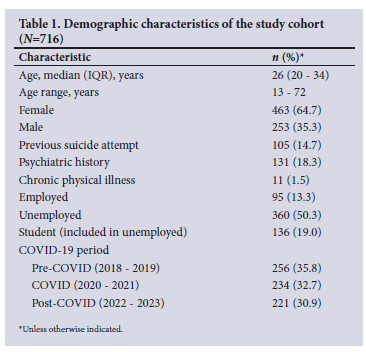
The demographic characteristics of the cohort are summarised in Table 1. The patients' ages ranged from 13 to 72 years. The median (IQR) age was 26.0 (20.0 - 34.0) years, and the mean (SD) age was 28.0 (11.8) years. Over half of the patients (55%) were in the youthful age bracket of 13 - 29 years. Only 8% of cases were >50 years old, and the oldest was 72. Adolescents (<18 years) constituted ~5% of cases -these were typically older teens.
There was a marked female predominance: 64.7% of cases (n=463) were female, and 35.3% (n=253) male. This roughly 2:1 female-to-male ratio is consistent with known gender patterns in overdose attempts. The gender gap was most pronounced in the pre-pandemic years (females ~69% of 2018 - 2019 cases), and narrowed somewhat post-pandemic (57% female in 2022 - 2023), but females remained the majority in every period. The mean age did not differ significantly by gender; both males and females had median ages in the mid-20s.
In terms of socioeconomic markers, employment status was documented for most patients: just 13.3% were formally employed, while 50.3% were unemployed. Students comprised 19.0%, and pensioners 1.3%. Employment status was not recorded for the remaining ~16% of patients.
The residential areas of patients spanned both urban townships and peri-urban/rural locales within KZN Province.
Clinical history and risk factors
Regarding prior history, only about one in seven patients (14.7%) had made >1 previous suicide attempt before the index poisoning, while 18.3% of patients had a documented psychiatric history. Depression was by far the most common diagnosis (66% of those with a psychiatric disorder), followed by bipolar disorder (~5%), anxiety disorders (~6%) and schizophrenia (~1%). Another 22% of those with psychiatric history were labelled 'other', including conditions such as personality disorders or substance-induced psychiatric conditions.
A significant portion of patients had a history of substance abuse or dependence (apart from the index poisoning substance). Overall, 38% had a positive history of substance abuse: among these, alcohol was the most common substance (reported by 53.5% of those with a use history, equating to ~20% of all patients), followed by cannabis (21.8% of those with a history, ~8% of all patients) and opioids (19.2% of those with a history, ~7% of all). A small number reported other substances (such as methamphetamine, cocaine, or unspecified drugs) as their primary substance of misuse.
Chronic physical illnesses were infrequent among this relatively young cohort: only ~1.5% had any chronic condition noted (besides psychiatric or substance use). We did not find a clear relationship between HIV status and severity of the attempt or outcome in this study.
Substances ingested
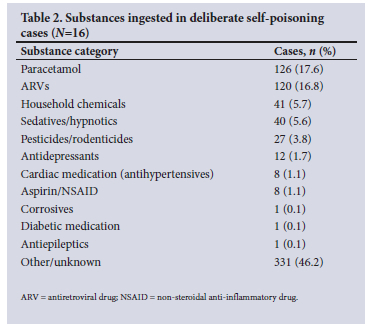
Table 2 provides a summary of the frequency of major substance categories and specific common agents. The source of substances was identifiable in most instances: ~60% of patients used prescription medications (their own or a family member's), 25% used over-the-counter drugs (painkillers, antihistamine cold medicines, etc.) and ~15% obtained or used illicit or non-medical poisons (such as pesticides or borrowed chemicals).
Medications
Medications were involved in the majority of cases (~81%).
Analgesic medications
This was the single largest category. Paracetamol (acetaminophen) was the most frequently involved substance: it was taken in some form in ~30% of all cases. This includes patients who took pure paracetamol tablets as well as those who ingested combination analgesic products containing paracetamol (for example, over-the-counter pain/cold remedies). Doses ranged from a few grams to well >10 grams in some cases. The next most common analgesic was aspirin (acetylsalicylic acid), involved in ~8% of cases. Non-steroidal anti-inflammatories such as ibuprofen were also frequent, often taken together with paracetamol or in multi-drug overdoses. Notably, Adco-Dol (a codeine-paracetamol-meprobamate-caffeine compound) and similar analgesic combinations appeared repeatedly in the data.
Antiretroviral medications
ARVs were implicated in ~19% of cases, reflecting the significant number of people who overdosed on their HIV treatment pills. The specific ARVs most often recorded were those from the common first-line regimen: tenofovir, lamivudine and dolutegravir (the TLD regimen). Additionally, older ARVs such as efavirenz (33 cases) and combination tablets such as Alluvia (lopinavir/ritonavir) and Atripla/ Truvada (efavirenz/emtricitabine/tenofovir) were present, albeit less commonly.
Sedatives and psychotropic medications
Many patients ingested benzodiazepines or other sedatives. Alprazolam (Xanax) was common (at least 12 cases explicitly, likely more as part of combinations), as were older antihistamine sedatives such as chlorpheniramine (a component of Allergex, found in ~27 cases, either alone or in cold medicine combos). Tricyclic antidepressants were involved less often; we noted amitriptyline in 8 cases. Antipsychotics such as olanzapine were occasionally present. Mood stabilisers/antiepileptics (e.g. sodium valproate, phenytoin) appeared rarely. Overall, sedative overdose often co-occurred with other substances (e.g. patients taking benzodiazepines plus analgesics).
Other prescription medications
A variety of chronic illness medications were used in attempts. Notably:
• antihypertensive drugs: amlodipine (a calcium-channel blocker) and enalapril (an angiotensin-converting enzyme inhibitor) were each involved in several cases
• oral hypoglycaemics: metformin, glibenclamide and glimepiride were each recorded in a number of cases
• insulin was mentioned in one case, indicating a patient injected a large dose as a suicide attempt
• anti-tuberculosis drugs: isoniazid (isonicotinic acid hydrazide (INH)) appeared in 25 cases, often in combination with other medications
• antiepileptics: phenytoin (12 cases) and sodium valproate (Epilim) in a few cases were taken, sometimes resulting in significant central nervous system depression
• others: beta-blockers, other calcium-channel blockers and miscellaneous drugs such as thyroid hormone pills or opioid painkillers were infrequent but present.
Non-pharmaceutical poisons
Non-pharmaceutical poisons accounted for ~15% of cases. Key substances in this category are listed below.
Household chemicals
The most frequent was paraffin (kerosene), ingested in 16 cases. Also notable were cases of drinking ethylene glycol (antifreeze, 15 cases) and methylated spirits or other alcohol-based solvents (at least one case described as 'methylated spirit, benzene' ingestion).
Pesticides and rodenticides
We observed organophosphate insecticides as the poison in multiple cases, often described just as 'organophosphate' or known products such as insect powder. Additionally, rat poison (commonly known by the trade name 'Rattex') was specifically noted in 21 cases. 'Rattex' in SA may contain anticoagulant rodenticides or the extremely toxic carbamate pesticide aldicarb (colloquially 'two-step'). In our data, some rat poison ingestions were associated with recorded components such as 'carbaryl' and 'permethrin' (likely ingredients in certain pest control products) - one of these cases was fatal. Herbicides such as paraquat were not explicitly mentioned in our dataset, which is fortunate given their lethality.
Corrosives
A few instances of ingesting solvents or caustic substances were present. For example, one patient drank acetone, and another ingested benzoyl peroxide (a 5% topical acne treatment) - the latter is an unusual ingestion that unfortunately proved fatal in that case.
Unknown substances
Here the exact substance was unclear ('unknown tablets' or a patient found unconscious without a history). These cases were managed supportively and often presumed to be some form of medication overdose based on the clinical syndrome.
Many patients took multiple substances together - e.g. a combination of analgesics and sedatives, or several different prescriptions. The data showed numerous entries indicating 'polypharmacy' or listing of 3 - 4 drugs. We found that 27% of patients had ingested >2 distinct substances.
Clinical management
On presentation, patients were assessed and managed according to standard toxicology protocols. Gastric decontamination with activated charcoal was administered in many cases (particularly if within 1 - 2 hours of ingestion and for charcoal-adsorbable substances), though our data extraction did not quantify this consistently. Symptomatic and supportive care (airway protection, intravenous fluids, anti-emetics, etc.) was provided as needed. Use of specific antidotes was documented as follows:
• N-acetylcysteine (NAC): a total of 142 patients (19.9%) received NAC. Indications were suspected significant paracetamol overdose or, in a few cases, as a general antioxidant treatment for unknown overdoses. No cases of acute liver failure occurred among those who received NAC early.
• Thiamine: 63 patients (8.8%) were recorded to have received thiamine (vitamin B1).
• Atropine: only 3 patients (0.4%) were treated with atropine, reflecting the small number of significant organophosphate or carbamate poisonings.
• Ethanol/fomepizole: only 1 patient was noted to receive an ethanol infusion (as an antidote for ethylene glycol poisoning).
• Dialysis: no case explicitly documented the use of haemodialysis. One ethylene glycol case had an elevated creatinine, but was managed without dialysis and recovered.
• Other treatments: a handful of patients received adjunctive measures such as benzodiazepines (for seizure control, e.g. in isoniazid overdose, or for severe agitation) and insulin-glucose therapy (for example, one beta-blocker overdose was treated with high-dose insulin euglycaemia therapy, according to notes). Supportive therapies such as antiemetics (metoclopramide given in 13 cases), proton-pump inhibitors (lansoprazole in 37 cases, possibly for gastric protection) and prophylactic anticoagulation (enoxaparin in 44 cases, likely for immobile patients) were also charted, though these are general supportive care measures and not specific antidotes.
Of the 716 patients, 18 (2.5%) required ICU admission owing to the severity of their poisoning. The primary reasons for ICU admission were either the need for airway protection (coma with Glasgow Coma Scale <8 requiring intubation) or haemodynamic support (e.g. vasopressors for shock in cases such as calcium-channel blocker overdose). The ICU admission rate was actually slightly higher during the COVID period (11 of the 18 ICU cases occurred in 2020 - 2021). The median (IQR) length of hospital stay for all patients was 2 (1 - 3) days. Most patients were managed and discharged within 48 - 72 hours, especially if no medical complications arose. Patients admitted to ICU or high-dependency units had longer stays (often 3 - 5 days in ICU, plus additional days on the ward).
Complications were uncommon. Only 9 patients (1.3%) had documented medical complications from the overdose, for example:
• A few had aspiration pneumonias after a decreased level of consciousness and vomiting.
• Cardiac arrhythmias were noted in some cases (one amitriptyline overdose had a widened QRS complex and a ventricular arrhythmia that was successfully treated; one organophosphate case had a prolonged atrioventricular block).
• Seizures occurred in isoniazid overdose cases (which responded to benzodiazepines and pyridoxine).
• Acute kidney injury occurred in at least one ethylene glycol case (transient creatinine rise) and one paracetamol case (with multi-organ involvement), but these resolved. No patients required cardiopulmonary resuscitation or suffered anoxic brain injury, except for those who ultimately died.
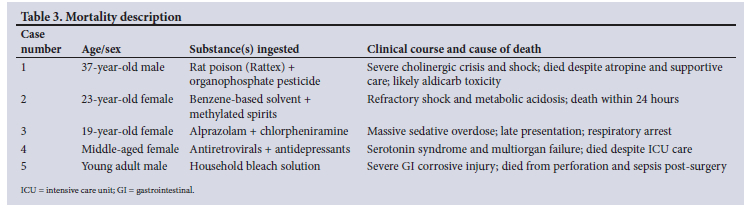
The in-hospital mortality rate was 5 out of 716 cases (0.7%). Table 3 provides a brief description of each mortality.
Each of the fatal cases corresponded to highly toxic ingestions. Notably, no deaths occurred in patients who overdosed solely on antiretroviral medication, in line with reports that even large ARV overdoses often result in minor symptoms.
In-hospital complications
Medical complications during the hospital stay were uncommon, occurring in only 9 patients (1.3%). These complications included serious outcomes such as organ failure (e.g. hepatic or respiratory failure) or other acute medical issues arising from the poisoning. Univariate analysis showed a noteworthy but borderline finding: patients with a pre-existing psychiatric disorder had a higher complication rate (~3.1%) compared with those without psychiatric history (0.9%). This difference corresponded to an unadjusted odds ratio (OR) of ~3.6 for complications in patients with a psychiatric history (95% confidence interval (CI) 0.96 - 13.64, p=0.065), just shy of significance. The absolute numbers were small (4 of 130 psychiatric-history patients v. 5 of 574 others experienced complications). Other factors - age, sex, prior attempts and substance category - did not show any significant univariate associations with complication incidence (p>0.1).
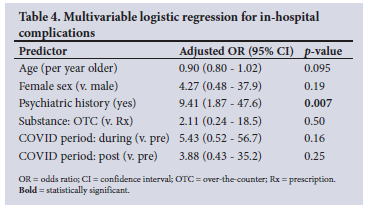
After adjusting for key covariates in a logistic regression model, psychiatric history emerged as a significant independent predictor of in-hospital complications (Table 4). Patients with a documented psychiatric disorder had an adjusted OR ~9.4 for medical complications compared with those with no psychiatric history (95% CI ~1.87 - 47.6, p=0.007). No other variables were significant in the multivariable model. Factors such as patient age and sex showed trends (younger and female patients had slightly higher adjusted odds of complications), but these did not reach significance (all p>0.1).
ICU admission
Of 716 patients, 24 (~3.4%) required ICU care during their hospitalisation. Univariate analysis did not identify any factor that reached statistical significance for predicting ICU admission. Patients who required ICU tended to be younger (mean ~23.8 v. 28.3 years for non-ICU patients), but this age difference was only marginal (~p=0.06). Neither gender nor clinical history showed a significant effect on ICU utilisation - for example, 4.6% of males v. 2.2% of females were admitted to ICU (unadjusted OR ~2.14, 95% CI 0.86 - 5.35, p=0.16). Patients with a psychiatric history had a higher ICU admission rate (6.2% v. 2.8% for no history, OR ~2.30, CI 0.96 - 5.49, p=0.10), and those with prior suicide attempts also trended higher (5.0% v. 2.6%, OR ~1.97, CI 0.87 - 4.46, p=0.15), but these differences did not reach significance.
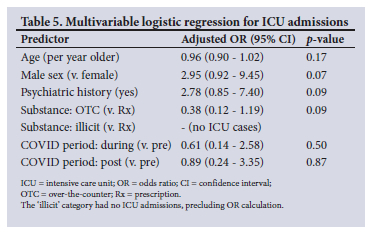
In a multivariable logistic regression adjusting for age, gender, psychiatric history, substance category and COVID period, no independent predictors of ICU admission were confirmed (Table 5). The adjusted model suggested higher odds in male patients and those with psychiatric history, but the confidence intervals were wide. For instance, being male was associated with about three-fold higher adjusted odds of ICU admission than females (adjusted OR ~2.95 for male v. female), but this did not achieve significance (p=0.07). Likewise, psychiatric history showed a trend toward increased ICU risk (OR ~2.78, p=0.09). Age showed a weak inverse association (OR ~0.96 per year older, p=0.17), indicating that ICU patients were slightly younger, but again this was not significant. Overall, the need for ICU-level care did not appear strongly linked to the baseline demographic or clinical variables analysed.
Discussion
DSP is a significant public health issue in SA, contributing to an estimated 460 non-fatal suicide attempts per day.[4] Consistent with national patterns, the majority of DSP cases in our study involved young adults, with a predominance of female patients. Most patients were in their late teens to early thirties, and over half were women -a finding in line with other SA hospital series, where ~60 - 70% of intentional overdose patients are female.[6,12] This gender skew reflects broader trends: poisoning is the leading method of suicide attempt among SA females (and the second leading method in males),[5] which mirrors international observations that women are more likely to engage in self-poisoning, whereas men tend to use more violent means.[13] Sociodemographic factors were notable: a large proportion of our patients were single and unemployed, indicating that social and economic stressors may be contributing precipitants. Interpersonal conflicts and acute stressful events were frequently documented as triggers for the overdose, corroborating findings from Johannesburg, where >80% of patients reported an acute precipitating event prior to their DSP episode. In addition, alcohol was found to be a prevalent co-factor in our DSP cohort, which aligns with known correlations between alcohol misuse and suicidal behaviour.[2]
Paracetamol (acetaminophen) emerged as the most common substance used in intentional overdoses in our cohort, which aligns with its ubiquitous availability and global patterns of use in DSP. Locally, we found paracetamol to account for a substantial portion of cases, comparable with the 21.7% of DSP cases involving paracetamol reported in a Bloemfontein hospital study[12] and the 25% reported in a Cape Town district hospital.[6] Easy access to over-the-counter analgesics such as paracetamol makes them a frequent choice for impulsive self-poisoning, a trend also observed internationally.[14] Notably, our setting also saw a high incidence of ARV medication overdoses. ARV overdoses constituted a significant subset of cases (in our study, the second most common substance category), reflecting the unique context of SA's HIV epidemic. Approximately 10% of DSP cases at a Free State Province hospital involved ARV ingestion,[12] and our findings suggest a similarly notable - if not higher - proportion. This contrasts with most international DSP studies, where ARVs are rarely reported as a means of overdose, highlighting a locally specific challenge. These findings underscore a decade-long trend: ARV overdoses have increased compared with earlier reports, likely due to expanded ART coverage. From a clinical perspective, although so many ARV ingestions occurred, it is notable that none led to fatal outcomes in our series. This aligns with the notion that many ARVs, particularly the newer agents like dolutegravir, have relatively low acute toxicity in overdoses. Other pharmaceuticals (such as antidepressants, sedatives and analgesics) collectively comprised the majority of ingestions, which is consistent with the 76% share of pharmaceuticals in intentional poisonings seen in a Cape Town hospital.[6]
The clinical outcomes in our study illustrate the typically low immediate mortality but significant healthcare burden of DSP. The vast majority of patients received prompt medical management and survived to discharge. Our in-hospital case fatality rate was very
low (~0.7%), which is substantially lower than the 2.1% mortality reported in a Cape Town district-level hospital,[6] and much lower than the 4.5% mortality at a tertiary Johannesburg hospital.[2] In the Johannesburg series, organophosphate pesticide ingestions - a highly lethal poison - were the single most common method and accounted for the majority of deaths.[2] In our cohort, the dominance of pharmaceutical overdoses (particularly paracetamol and ARVs) meant that although many patients required medical treatment, relatively few suffered irreversible toxicity. Indeed, a large portion of our patients were triaged with only mild to moderate symptoms, similar to findings from other centres, where >80% of DSP cases had minor clinical severity on presentation.[6] Nonetheless, resource utilisation was significant. A notable fraction of patients required admission for medical observation, and ~5% required higher levels of care, such as ICU monitoring or ventilatory support for severe toxin ingestion - similar to the ICU admission rate of 5.6% reported by Laher et al.[2] Approximately 20% of patients were treated with NAC, which is higher but of the same order as the 14.1% rate of NAC use reported in the Khayelitsha Hospital series.[6] Thanks to early intervention, we observed no cases of acute liver failure among paracetamol-ingested patients - a crucial outcome given that paracetamol is a common cause of acute liver failure if not promptly treated.[15]
Our study period (2018 - 2023) allowed us to observe the impact of the COVID-19 pandemic on DSP patterns. Notably, there was an initial decline in the number of DSP presentations during the strict lockdowns of 2020. This trend aligns with reports from other contexts that found a temporary drop in hospital-presenting suicidal behaviour during lockdown phases.[10,11] Movement restrictions, reduced alcohol availability and public fear of contracting COVID-19 in healthcare facilities likely contributed to fewer hospital visits for suicide attempts.[9] An SA emergency department analysis noted that the pandemic 'marginally reduced' suicidal presentations, contrary to initial fears of an immediate surge.[10.11] As the pandemic wore on, DSP cases rebounded to baseline or even above prior levels, coinciding with waves of the pandemic and protracted socioeconomic hardship. International studies have similarly documented complex temporal trends - for example, a study of adolescent self-poisoning in Romania found rising trends before 2020, a dip during the 2020 - 2021 lockdown period and then a resurgence afterwards.[14]
In our KZN cohort, a pre-existing psychiatric disorder emerged as a statistically significant predictor of in-hospital complications following DSP, with an adjusted OR of 9.4. However, this association should be interpreted with caution owing to the small number of complication events and the wide CI (95% CI 1.87 - 47.6), which limits the precision of the estimate. While the observed association aligns with findings from both SA and international literature, the small sample size in this subgroup analysis suggests that this result should be viewed as hypothesis-generating rather than conclusive. Nonetheless, this pattern is consistent with other SA studies, such as one from Cape Town, which reported that patients with known psychiatric illness were more likely to present with complex or recurrent DSP episodes and often required higher-level care.[6] International data further corroborate this relationship. A large Australian registry-based study noted that psychiatric comorbidity - particularly mood and personality disorders -was significantly associated with repeat overdoses and increased ICU admissions due to intentional poisoning.[16] Similarly, in Taiwan, individuals with pre-existing depressive disorders who ingested toxic herbicides (e.g. paraquat) exhibited a substantially higher mortality risk compared with non-depressed individuals, even after adjusting for ingested dose and clinical severity.[17]
An Indian tertiary care study also demonstrated a higher rate of complications - including seizures and arrhythmias - in DSP patients with psychiatric comorbidities v. those without.[18] The pathophysiological and clinical explanations for these trends include delayed presentation due to ambivalence or impaired insight, ingestion of more toxic combinations due to polypharmacy and increased intent severity among those with psychiatric disorders. Moreover, baseline physiological vulnerability, poor medication adherence and undernutrition in this group may predispose them to worse outcomes. Collectively, these findings highlight the need for heightened clinical vigilance and integrated psychiatric care in managing DSP patients with underlying mental illness.
Study limitations
This study has several important limitations. First, because only admitted DSP cases were included, the findings likely underrepresent the full burden of self-poisoning in the community. Patients assessed and discharged directly from the emergency department were not captured, nor were individuals who presented to peripheral hospitals or clinics and were not referred to this tertiary facility. This sampling strategy may have skewed the cohort toward more severe or complex cases, and limits the generalisability of findings, particularly regarding complication rates, ICU admission and substance use patterns. Second, post-discharge outcomes, such as recurrent DSP episodes, mental health referral uptake, medication adherence, or long-term psychosocial recovery, could not be assessed in this retrospective hospital-based dataset. These factors are critical to understanding the broader trajectory of suicide risk, and remain areas for future prospective research. Lastly, while the study stratified cases into pre-COVID (2018 - 2019), COVID (2020 - 2021) and post-COVID (2022 - 2023) periods, this grouping does not account for finer-grained variations in lockdown levels, pandemic waves, or other evolving sociopolitical factors during those years. Therefore, the analysis may not fully capture the nuanced impact of COVID-19 on DSP trends.
Implications
Despite these limitations, our study offers valuable insights. The consistency of patient profile and outcomes with prior data lends credibility to our findings and suggests that preventive measures identified elsewhere (such as restricting access to common overdose drugs, community education on suicide risk factors and integrating mental health into primary care) are applicable here. The high incidence of ARV overdoses points to a need for mental health screening in HIV clinics: patients might be collecting but not taking medication, and later using it to self-harm, indicating hidden depression. Simple screening tools for depression (e.g. the PHQ-9 questionnaire) and stronger support networks for people on ART could be beneficial.
From a clinical practice standpoint, our data reinforce the importance of having NAC readily available and protocols for its use, given paracetamol's ubiquity in DSP. They also underscore that emergency clinicians in SA must be adept at managing a spectrum of cases from sedative overdoses to organophosphate poisoning, as they encounter these scenarios regularly. Continued training in toxicology management, ready access to antidotes such as atropine and anticonvulsants and established referral pathways for ICU care when needed are all important components of improving DSP outcomes. On the preventive side, strengthening socioeconomic support and mental health resources for at-risk groups (young people, women, those with substance abuse or psychiatric history) could help reduce the incidence of DSP.
Conclusion
DSP predominantly affected young adults (especially women) in our setting, with medication overdoses (notably paracetamol and ARVs) being the most common method. The study underscores that acute outcomes were generally favourable (very low mortality and complication rates), and that no significant surge in DSP cases was observed during the COVID-19 pandemic.
Data availability. Data used for this study are available from the corresponding author on request.
Declaration. None.
Acknowledgements. Special thanks are extended to the medical management and the Department of Internal Medicine, Victoria Mxenge Hospital for use of their patient data.
Author contributions. Sole author.
Funding. None.
Conflicts of interest. None.
References
-
1. World Health Organization. Suicide worldwide in 2019: Global health estimates. Geneva: WHO. 2021. https://www.who.int/publications/i/item/9789240026643 (accessed 17 December 2025).
» https://www.who.int/publications/i/item/9789240026643 -
2. Laher D, Lalla U, Ally M, et al. Deliberate self-poisoning at a tertiary hospital in Johannesburg, South Africa. S Afr Med J 2022;112(5):347-351. https://doi.org/10.7196/SAMJ.2022.v112i5.16439
» https://doi.org/10.7196/SAMJ.2022.v112i5.16439 - 3. Hawton K, Casey D, Bale L, et al. Self-harm in youth: A prospective cohort study of characteristics, hospital management and repeat presentations. Lancet Child Adolesc Health 2021;5(7):519-528.
-
4. South African Depression and Anxiety Group. Suicide statistics in South Africa. SADAG, 2018. https://www.sadag.org/index.php?option=com_content&view=article&id=1687 (accessed 10 October 2025).
» https://www.sadag.org/index.php?option=com_content&view=article&id=1687 -
5. Onoya ED, Makwakwa NL, Motloba DP. Temporal variation in suicide in peri-urban Pretoria. S Afr Fam Pract 2021;63(1):e1-e7. https://doi.org/10.4102/safp.v63i1.5227
» https://doi.org/10.4102/safp.v63i1.5227 -
6. Van Hoving DJ, Hunter LD, Gerber RJ, Lategan HJ, Marks CJ. The burden of intentional self-poisoning on a district-level public hospital in Cape Town, South Africa. Afr J Emerg Med 2018;8(3):79-83. https://10.1016/j.afjem.2018.02.001
» https://10.1016/j.afjem.2018.02.001 -
7. Gabler T, Yudelowitz B, Mahomed A. Overdose with HAART: Are we managing these patients adequately? S Afr Med J 2011;101(8):520-521. https://pubmed.ncbi.nlm.nih.gov/21920122/ (accessed 20 January 2026).
» https://pubmed.ncbi.nlm.nih.gov/21920122/ -
8. Daimari R, Kwape L, Oyekunle AA. Suicidal overdose of dolutegravir: A case report. S Afr J HIV Med 2018;19(1):a799. https://doi.org/10.4102/sajhivmed.v19i1.799
» https://doi.org/10.4102/sajhivmed.v19i1.799 -
9. Holmes EA, O'Connor RC, Perry VH, et al. Multidisciplinary research priorities for the COVID-19 pandemic: A call for action for mental health science. Lancet Psychiatr 2020;7(6):547-560. https://doi.org/10.1016/S2215-0366(20)30168-1
» https://doi.org/10.1016/S2215-0366(20)30168-1 -
10. Pirkis J, John A, Shin S, et al. Suicide trends in the early months of the COVID-19 pandemic: An interrupted time-series analysis of 21 countries. Lancet Psychiatr 2021;8(7):579-588. https://doi.org/10.1016/S2215-0366(21)00164-5
» https://doi.org/10.1016/S2215-0366(21)00164-5 -
11. Els JR, Hendrikse C, Taljaard L. Impact of the COVID-19 pandemic on presentations with suicidal behaviour in an Emergency Centre in Eastern Cape, South Africa: A cross-sectional analysis. Afr J Emerg Med 2024;14(4):268-272. https://doi.org/10.1016/j.afjem.2024.05.003
» https://doi.org/10.1016/j.afjem.2024.05.003 -
12. Benedict MOA, van Loggerenberg CJ, Steinberg WJ. The profile of deliberate self-poisoning cases presenting at the emergency department of Pelonomi Regional Hospital, Bloemfontein. S Afr Fam Pract 2019;61(1):11-17. https://doi.org/10.1080/20786190.2018.1547283
» https://doi.org/10.1080/20786190.2018.1547283 -
13. Pieterse D, Hoare J, Louw K-A, et al. Methods of deliberate self-harm in a tertiary hospital in South Africa. S Afr J Psychiatr 2020;26(1):a1399. https://doi.org/10.4102/sajpsychiatry.v26i0.1399
» https://doi.org/10.4102/sajpsychiatry.v26i0.1399 -
14. Gunnell D, Appleby L, Arensman E, et al. Suicide risk and prevention during the COVID-19 pandemic. Lancet Psychiatr 2020;7(6):468-471. https://doi.org/10.1016/S2215-0366(20)30171-1
» https://doi.org/10.1016/S2215-0366(20)30171-1 -
15. Kotzé C, Swanepoel J, Kruger EC, Decloedt E. The management and clinical outcome of paracetamol poisoning in South African adults: A single-centre retrospective review. S Afr Med J 2024;114(12):e1986. https://doi.org/10.7196/SAMJ.2024.v114i12.1986
» https://doi.org/10.7196/SAMJ.2024.v114i12.1986 -
16. Pilgrim JL, Drummer OH. Self-poisoning and psychiatric disorders: Profile of cases and predictors of fatal outcome. Aust N Z J Psychiatry 2019;53(1):77-86. https://doi.org/10.1177/0004867418792056
» https://doi.org/10.1177/0004867418792056 -
17. Lin CL, Lin CC, Chen YH, et al. Depression increases the risk of mortality in patients with paraquat poisoning: A population-based study. Medicine 2015;94(8):e574. https://doi.org/10.1097/MD.0000000000000574
» https://doi.org/10.1097/MD.0000000000000574 -
18. Hiremath R, Dasar PL, Shankar R, Chidanand S, Ashok NC. Pattern and outcome of acute poisoning cases in a tertiary care hospital in Karnataka, India. Indian J Crit Care Med 2020;24(8):702-707. https://doi.org/10.5005/jp-journals-10071-23471
» https://doi.org/10.5005/jp-journals-10071-23471

Accepted 5 August 2025