Case management of malaria: Diagnosis
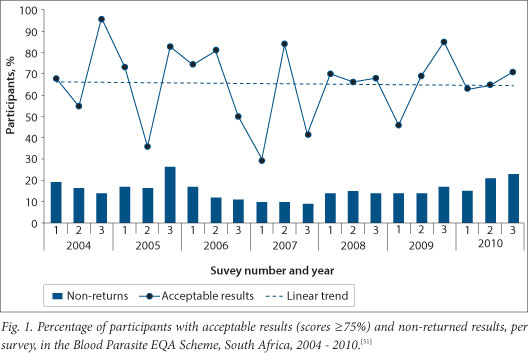
Laboratory diagnosis of malaria in South Africa has traditionally relied on microscopic examination of stained blood films. More recently, rapid diagnostic tests (RDTs) have been introduced into routine use, and molecular methods like polymerase chain reaction are useful in certain situations. As with all laboratory tests, each technique has its advantages and disadvantages. Microscopy and RDTs, if appropriately quality assured, are adequate for clinical case management. For elimination, active surveillance will need to be expanded substantially, with wider use of more sensitive diagnostic nucleic acid amplification techniques, and/or serology. To facilitate surveillance activities, techniques suitable for field or near-field use would be ideal. A long-running external quality assessment programme in South Africa has shown some deficiencies in the quality of malaria diagnosis in routine laboratories. Quality systems across the spectrum of diagnostic facilities in South Africa need strengthening, to ensure progress towards elimination.
SAMJ: South African Medical Journal
 Thumbnail