The dawn of preventing respiratory syncytial virus lower respiratory tract infections in children
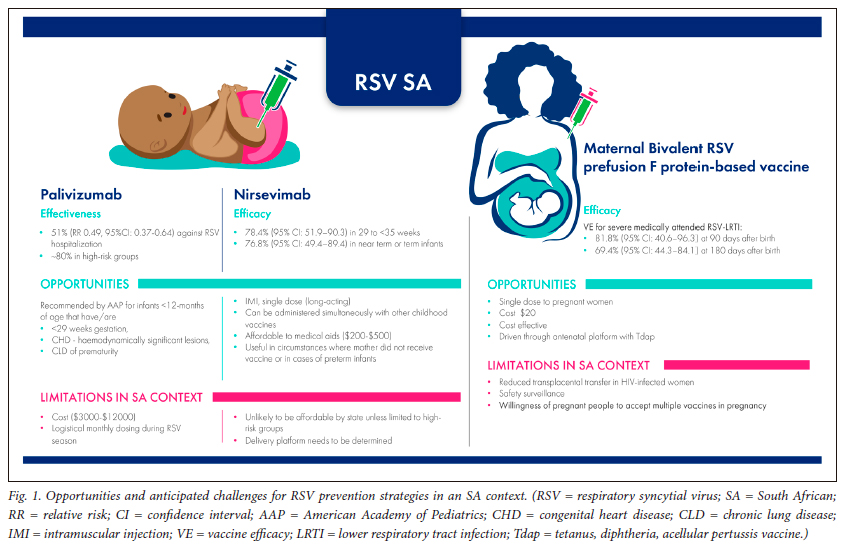
Respiratory syncytial virus (RSV) is the commonest cause of lower respiratory tract infection (LRTI) in children, particularly those aged <1 year. In South Africa (SA), increased hospitalisation rates during the RSV season, including access to intensive care facilities, place a huge burden on the healthcare system. Furthermore, RSV-LRTI during early childhood may lead to long-term respiratory sequelae, including recurrent wheezing, asthma, and impairment of lung function. Recently, two new RSV prevention strategies have emerged: nirsevimab, a long-acting monoclonal antibody, and a maternal RSV vaccine. Both strategies have shown high efficacy in reducing RSV-LRTI hospitalisation in infants and are being considered for licensure in SA. Implementation of these prevention strategies, combined with public engagement and collaboration between stakeholders, could significantly reduce RSV-related morbidity and mortality in SA.
Respiratory syncytial virus; RSV; children; pneumonia; bronchiolitis; nirsevimab; maternal vaccine
 Thumbnail