Odyssean malaria outbreaks in Gauteng Province, South Africa, 2007 - 2013
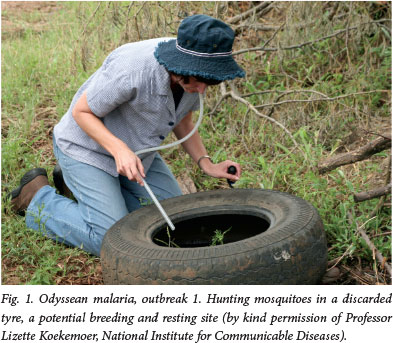
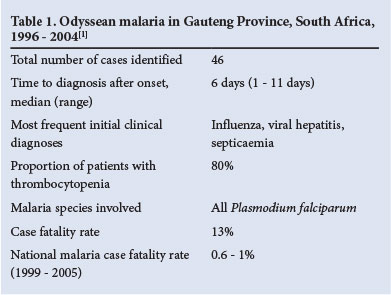
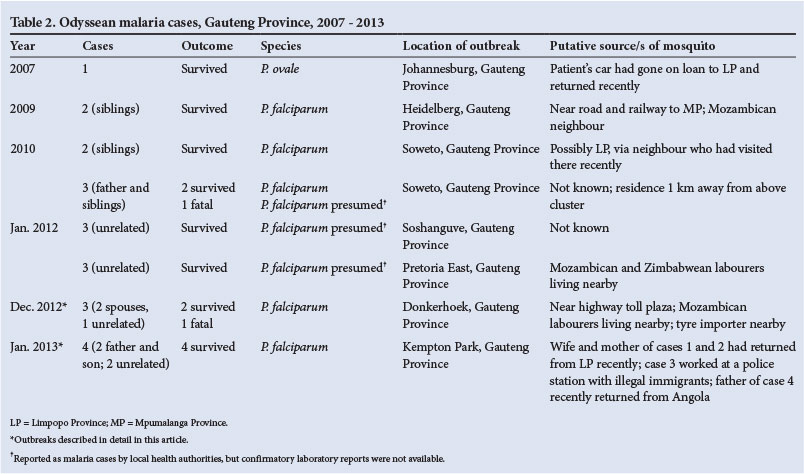
BACKGROUND: Odyssean malaria refers to malaria transmitted by translocated mosquitoes and is a diagnosis of exclusion, as the probability of finding the responsible vector is miniscule. We believe that road traffic from endemic areas in and around South Africa is the source of most of the infected mosquitoes. Because of the unexpected nature of the disease, diagnosis is often delayed and severe and complicated malaria is common. OBJECTIVES: To describe outbreaks of odyssean malaria during the period 2007 through 2013 in Gauteng Province, South Africa, and to educate healthcare workers about this form of malaria. METHODS: Site visits, environmental hygiene inspections, patient interviews, and entomological investigations for adult mosquitoes and larvae in potential breeding sites were done in each identified outbreak. RESULTS: Over the period, 14 laboratory-proven and 7 probable cases of odyssean malaria were investigated. There were 2 deaths (9.5% case fatality rate, approximately 10 times higher than the national fatality rate for malaria). We describe two recent clusters of cases in detail, and emphasise the importance of clinician awareness of this rare but frequently severe form of malaria. CONCLUSION: Odyssean malaria cases are inevitable in South Africa, given the volume of road, rail and air traffic from malaria risk areas into Gauteng and other non-endemic provinces. It is likely that many cases are missed, owing to the rare and sporadic nature of the condition. Malaria should always be kept in mind as a cause of unexplained fever and thrombocytopenia, even in the absence of a travel history.
SAMJ: South African Medical Journal
 Thumbnail