Nephrolithiasis (part 2): Diagnosis, management and prevention of recurrent nephrolithiasis
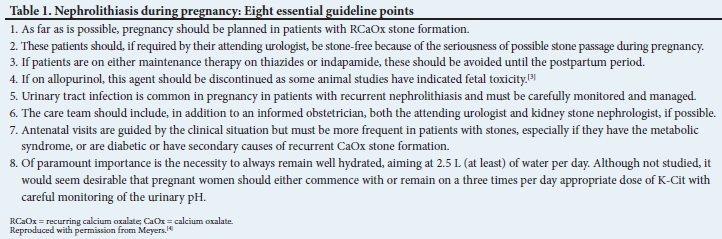
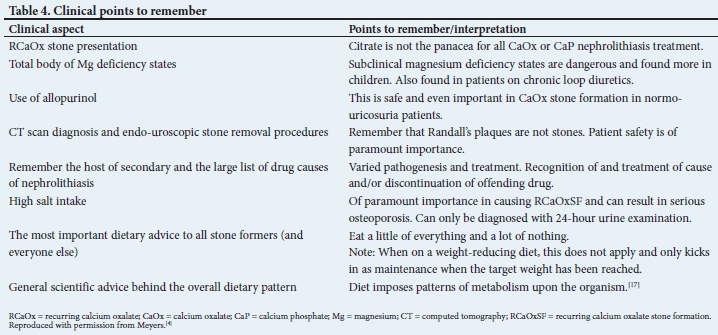
Work-up of patients with calcium oxalate stones should be restricted to those who have multiple episodes (50% of stone formers). There are exceptions, such as pilots, fire-workers, people in the armed forces, those with a single kidney and children (<19 years old). The most important aspect of therapy is to correct dietary aberrations, i.e. the 'clinic effect'. The four golden rules to correct dietary influences are to maintain an adequate 24-hour urine volume, to restrict salt intake, to avoid red meat and to avoid a diet high in oxalate. In particular, Ceylon tea is contraindicated, as it contains excess oxalate. Drink coffee instead. In patients with hypocitraturia, the drug of choice is potassium citrate, which is the only acceptable urinary alkaliser. Other preparations, such as Urolyte-U, Citrosoda, etc., all have a high sodium content, which will influence urinary calcium excretion. In patients with ongoing hypercalciuria, thiazides are contraindicated in the management of recurrent calcium oxalate stones, and indapamide is the drug of choice. The treatment and follow-up are lifelong. In addition, poor adherence to treatment, coupled with repeated urological procedures, may result in renal functional deterioration and even occasionally renal failure.
Continuing Medical Education • SAMJ, S. Afr. med. j. 111
(11)
• • https://doi.org/10.7196/samj.2021.v111i11.15992 copy