STR null alleles complicate parentage testing in South Africa
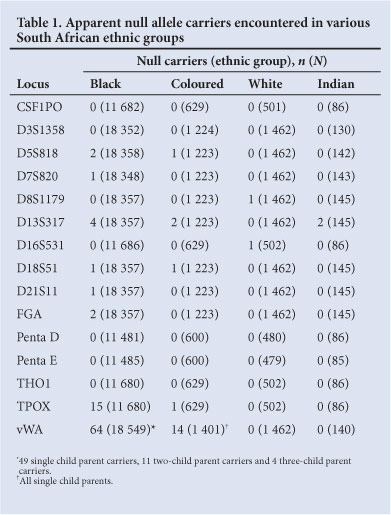
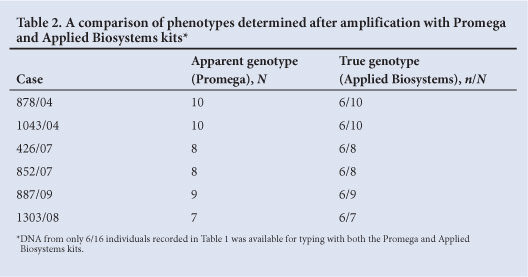
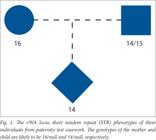
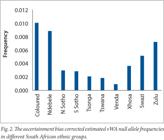
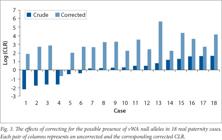
BACKGROUND: Null alleles complicate parentage testing because they do not contribute positively to phenotypes. OBJECTIVES: To survey South African populations for null alleles at short tandem repeat (STR) loci used in parentage testing. METHODS: Paternity case data were scanned for apparent contradictions compared with Mendelian inheritance that could be due to null alleles. Estimates of null allele frequencies were obtained from tallies of apparent carriers. RESULTS: Three of 15 loci appeared to have null alleles at appreciable frequencies and five showed no evidence of null alleles. A null allele at the vWA locus reached a frequency of ~0.3% in the black population and approximately three times this frequency in the coloured population. No apparent vWA null carriers were detected in whites suggesting that the Khoisan were the major contributors of the null alleles to coloureds. The apparent genotypes of a sample of TPOX null carriers changed from homozygous to heterozygous when they were retyped using different polymerase chain reaction primers. The revealed allele was allele 6 in every case. A D13S317 null allele was detected at relatively low frequencies in the black and coloured samples but 2/145 Indian (Asian) parents appear to be carriers, suggesting that it could be common in Indians. CONCLUSION: Three of the 15 forensically relevant STR loci investigated had null alleles at significant frequencies in South African populations. Failure to allow for the presence of null alleles can have a large impact on the outcome of parentage tests.
SAMJ: South African Medical Journal
 Thumbnail
 Thumbnail
 Thumbnail