Thrombocytopenia during pregnancy in women with HIV infection receiving no treatment
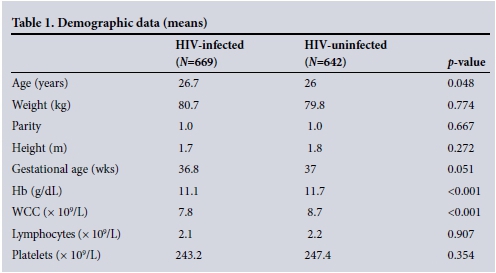
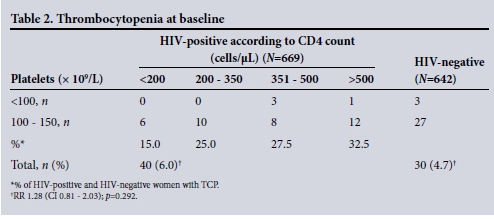
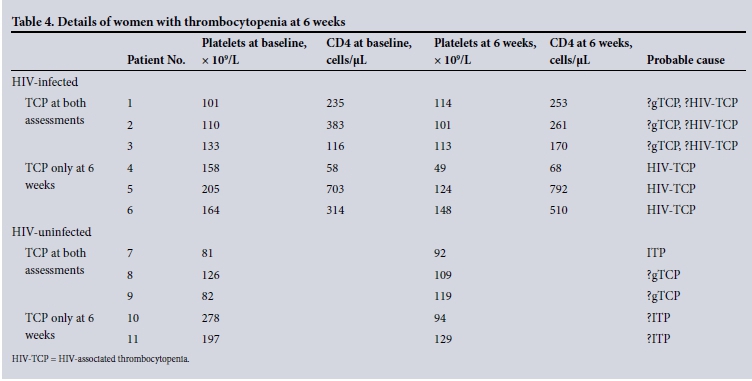
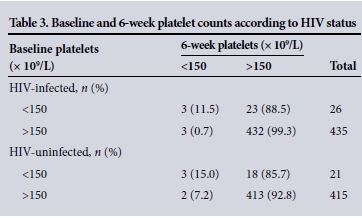
BACKGROUND: Thrombocytopenia (TCP) complicates 5 - 8% of pregnancies. Most cases of TCP are gestational, and the condition is usually mild and occurs in the latter part of pregnancy. Apart from pregnancy-associated medical complications such as pre-eclampsia, HIV infection is a recognised cause of TCP, and a relatively high prevalence of TCP during pregnancy would be expected in a setting with a high antenatal seroprevalence of HIV. METHODS: This was a sub-analysis of the data from a prospective trial in which the incidence of postpartum sepsis in HIV-infected women was compared with that in HIV-uninfected women. Women who were considered at low risk and eligible for vaginal delivery were recruited at 36 weeks' gestation, and followed up for 6 weeks after delivery. Full blood counts and CD4 counts of HIV-infected women were obtained at baseline and repeated 6 weeks after delivery. RESULTS: The prevalence of TCP was 5.3% during pregnancy and 1.2% 6 weeks after delivery. The prevalence was similar among HIV-infected (6.0%) and HIV-uninfected women (4.7%) (p=0.292). Among the HIV-infected women, who were not receiving antiretroviral therapy (mean CD4 cell count of 453 cells/μL), there was no significant association between immunosuppression and the severity of TCP. CONCLUSIONS: Most of the TCP seen during pregnancy is of the gestational variety, and in this study HIV infection did not increase its prevalence or its severity.
SAMJ: South African Medical Journal