Perceptions and views of key implementers on the implementation of the health-promoting school programme in the City of Tshwane, South Africa
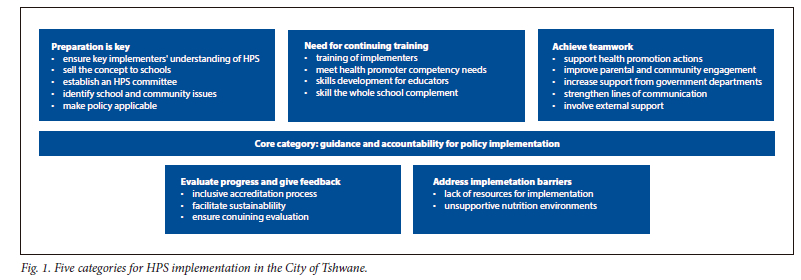
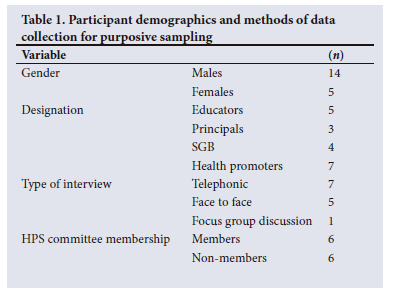
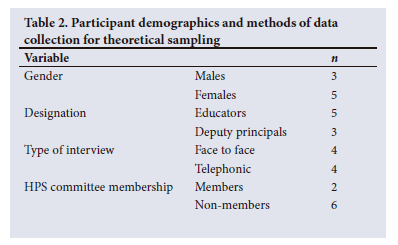
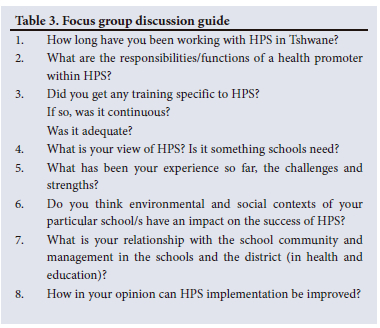
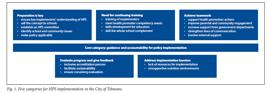
BACKGROUND. The health-promoting school programme has been associated with numerous benefits for school communities where it is well implemented. In Tshwane, the implementation processes have not been evaluated. OBJECTIVE. A qualitative research approach based on grounded theory was used to investigate the experiences of 27 health-promoting school programme implementers across Tshwane. METHODS. Data were collected through a combination of methods, including semi-structured interviews with principals (n=6), educators (n=10) and school governing body members (n=4), one focus group discussion with health promoters (n=7), field notes from school observations and memos. RESULTS. Implementation fidelity was weak in the City of Tshwane, as a result of poor training of implementers, poor leadership and collaboration, weak accountability structures, and lack of resources and communication. A grounded theory was developed which showed that schools needed guidance and accountability to properly implement the programme. The theory offers a framework that could be used to improve implementation and evaluation outcomes. CONCLUSION. Implementers were keen on improving the lives of learners - health-wise and academically. With proper guidance, support and accountability measures by government at district and provincial level, implementation of the programme is feasible in the City of Tshwane.
SAMJ: South African Medical Journal
 Thumbnail