Stakeholder engagement towards establishing a national thyroid cancer registry in South Africa
Abstract
BACKGROUND: Patient registries in South Africa (SA) are not common. This study explored the perceptions and experiences of thyroid clinicians and members of existing patient registries in SA, aiming to establish a national thyroid cancer registry. METHODS: This was an exploratory qualitative study based on surveys and semi-structured interviews of participants' experiences treating thyroid cancer and using registries in general. Convenience sampling was performed for the surveys (n = 27) and purposive sampling for the interviews (n = 20). Data collection and analysis were conducted concurrently, facilitating an iterative process. The thematic analysis followed the steps outlined by Braun and Clarke. RESULTS: Four themes were identified. The South African healthcare system, the perceived value of a patient registry, the role of various stakeholders, and barriers to registry implementation. Participants expressed the value of registries in SA for both clinical and research purposes. However, concerns were raised regarding perceived challenges, such as resource and time constraints. CONCLUSION: Developing a national thyroid cancer registry in SA requires responsiveness to national and local challenges and opportunities, necessitating an adaptable registry format. The principle of a registry is strongly supported by clinician stakeholders. The registry, as a clinical note-keeping system, will optimise clinicians' time efficiency in patient care, and standardisation of radiology and pathology reporting across a uniform platform will enhance patient care and data entry. The benefits of a registry strongly outweigh the challenges as it facilitates the development of local guidelines, improves patient outcomes, and promotes collaborative research among endocrine clinicians.
patient registry; experiences; barriers; South Africa; thyroid registry
Introduction
Surgical registries in South Africa (SA) are limited. Establishing a thyroid registry could promote collaborative research among endocrine clinicians, aid in risk stratification, and predict surgical complications.1,2 Clinical outcomes could be optimised by flagging high-risk patients for long-term surveillance while de-escalating the care of low-risk patients. A thyroid registry would facilitate the development of predictive scores and local guidelines, as current practices rely on recommendations from high-income countries (HICs).1,3
Several patient registries are currently operational in SA, including the National Cancer Registry (NCR), South African Heart Association Registry (SHARE) I and II, SA Renal Registry, Hernia Interest Group (HIG), and the SA Orthopaedic Association (SAOA) registry.4-7 The absence of a thyroid cancer registry is a critical gap. An audit by the Thyroid Cancer Group of South Africa (TCGSA) reviewed thyroid cancer surgeries in the public sector and highlighted the advanced disease at diagnosis and the lack of standardised ultrasound (US) reporting.8 The audit's retrospective design and public sector focus limited data quality and generalisability. Given SA's diverse population and healthcare landscape, ongoing real-world data collection and analysis are essential to inform context-appropriate approaches for managing thyroid conditions.
The Agency for Healthcare Research and Quality (AHRQ) developed a user guide for the development, implementation, and sustainability of registries.1 Davids et al.4 identified resource limitations as the most significant obstacle to the sustainability of the African Renal Registry. Unclear stakeholder roles and unstable funding are additional challenges.9 Over the last decade, international endocrine surgery registries, such as the Collaborative Endocrine Surgery Quality Improvement Programme (CESQIP), the Scandinavian Quality Register for Thyroid, Parathyroid and Adrenal Surgery (SQRTPA), Eurocrine, and the United Kingdom Registry of Endocrine and Thyroid Surgery (UKRETS), have enabled collaborative research and outcome reporting.10-13 These registries emerged from professional societies or healthcare institutions focused on measuring outcomes.3 There are notable differences between health systems and countries. Clinician engagement on the risks, benefits, barriers and facilitators of registry development is essential. This study explored the perceptions and experiences of thyroid clinicians and members of existing patient registries in SA, aiming to establish a national thyroid cancer registry.
Methods
This explorative study gathered qualitative data through an open-ended survey and semi-structured interviews. A qualitative research design provided an in-depth understanding of barriers and facilitators to implementing a patient registry in SA. Using an interpretive paradigm, the principal investigator (PI) explored the nuanced contextual understanding of participants' attitudes and experiences with patient registries from their perspectives.1415 The PI, an endocrine surgeon at an academic hospital, met regularly with supervisors, facilitating reflexive processing during her PhD research.16 Surveys and interviews among three different participant groups allowed for triangulation and verification of the data. These were Group 1: clinicians who were recently involved in the TCGSA audit (AP- audit participant), Group 2: clinicians who initially expressed interest in the TCGSA audit but could not participate (AnP - audit non-participant), and lastly, Group 3: individuals involved in existing patient registries in SA (ExP -experienced participant). Convenience sampling was used for the surveys, and purposive sampling for the interviews.8 The PI emailed potential participants requesting survey completion (Addendum A - Survey). Informed consent was obtained electronically using the Research Electronic Data Capture (REDCap) platform. Individual in-person semi-structured interviews were held at locations convenient for the participants (Addendum B - Interview Prompts).1718 Interviews were conducted over 11 months, allowing for prolonged engagement with the research materials. Data collection and analysis were performed concurrently, allowing for an iterative process.19-21 The interviews were recorded and transcribed by an independent professional transcriber. The anonymous survey included demographics and a question on "thyroid surgery annual volume" but excluded the province. The researchers analysed the survey and interview data inductively, identifying codes and themes. Thematic analysis, as described by Braun and Clarke, was followed.22
Results
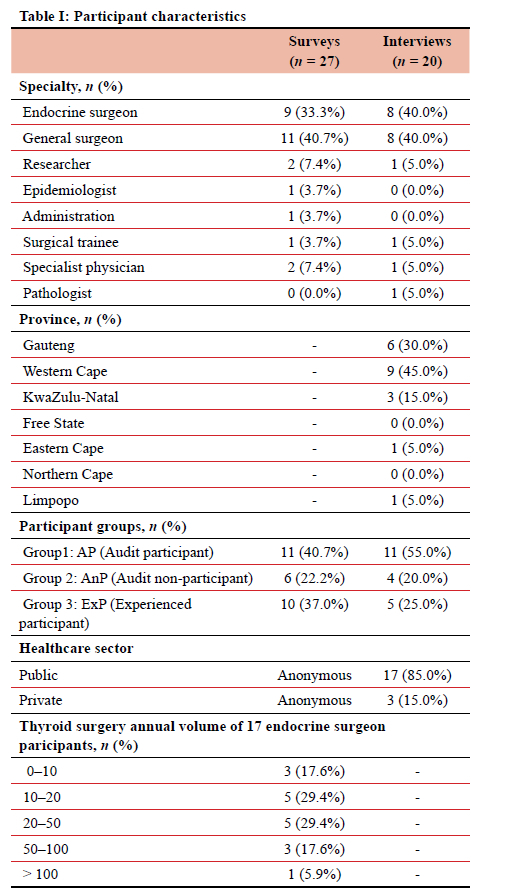
Twenty-seven individuals responded to the survey, and 20 participated in semi-structured interviews. The survey response rate for Group 1 was 79% (11/14), Group 2, 86% (6/7), and Group 3, 83% (10/12). Table I provides an overview of demographic information and the professional experience of participants.
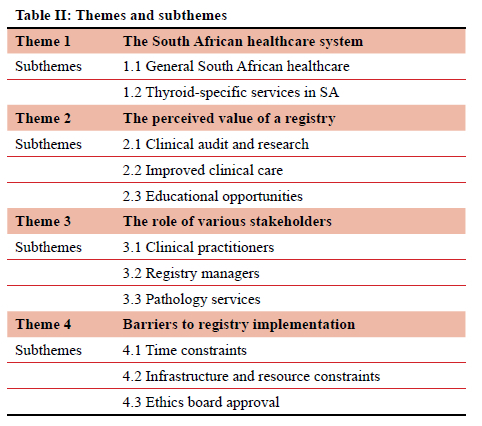
Four interconnected themes with subthemes were identified - the SA healthcare system, the perceived value of a registry, the role of various stakeholders, and barriers to registry implementation (Table II).
The following abbreviations are used for the identification of participants and their groups: S1: Survey Group 1
S2: Survey Group 2
S3: Survey Group 3
AP: Audit participant (Group 1)
AnP: Audit non-participant (Group 2)
ExP: Experienced participant (Group 3)
For each theme, illustrative quotes elucidate the participants' experiences and perceptions.
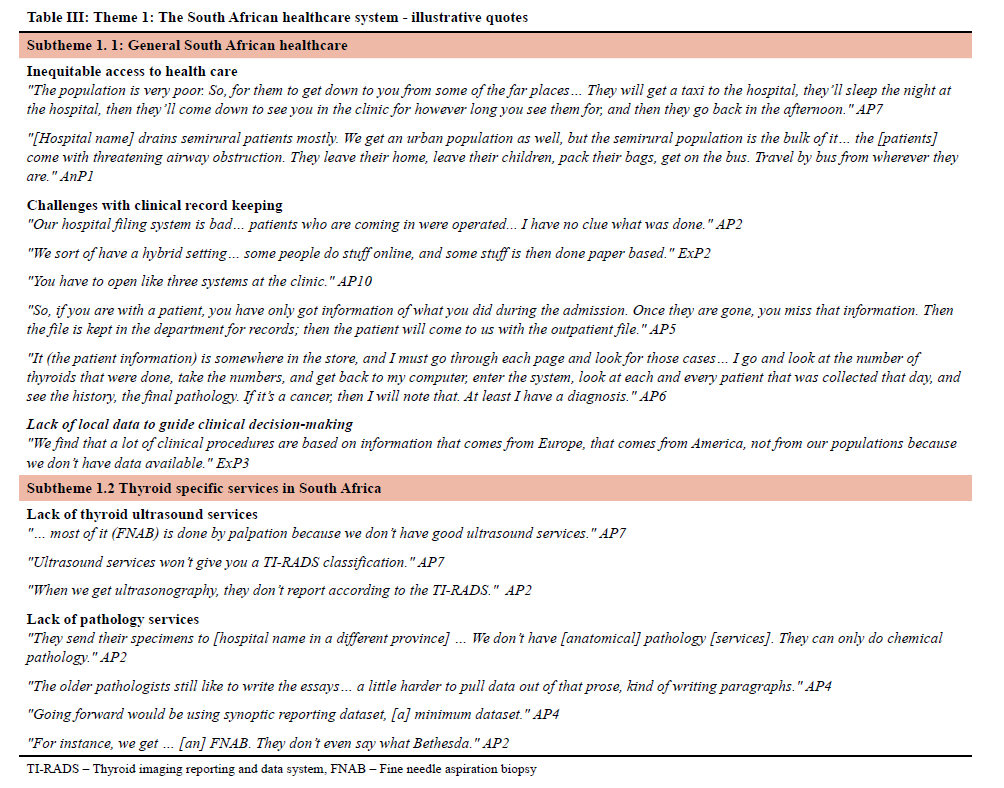
Theme 1: The South African healthcare system (See Table III)
Subtheme 1.1: General South African healthcare
Discussions regarding private and public healthcare systems included access to healthcare, clinical record-keeping systems, and data availability to guide clinical decisionmaking. It was clear that patients' access to healthcare is significantly impacted by geographical location, with rural populations facing more challenges and sometimes travelling up to two days to reach hospitals. Limited resources in these areas result in compromised care. Clinical note-keeping incorporates diverse systems; electronic notes are mainly used in the private sector, while paper-based systems are employed in the public sector. In the TCGSA audit, fragmented electronic platforms for special investigations, such as separate systems for radiology and pathology, hindered easy access to patient records.8 Existing registries were developed for private funder billing interests and mostly for administrative purposes. Ultimately, the lack of clinical data being captured, audited, and analysed limits the applicability of international guidelines to the SA population.
Subtheme 1.2: Thyroid-specific services in South Africa
Thyroid US and US-guided fine needle aspiration biopsy (FNAB) are seldom performed by clinicians. Radiology US reports are not standardised, although this varies significantly depending on practice settings. In some regions, pathology services are lacking, leading to thyroidectomy specimens being sent to other provinces for analysis. Furthermore, the reporting of pathology results differs across laboratories, and some cytopathologists have yet to adopt The Bethesda System for Reporting Thyroid Cytopathology (TBSRTC) to report FNAB results.
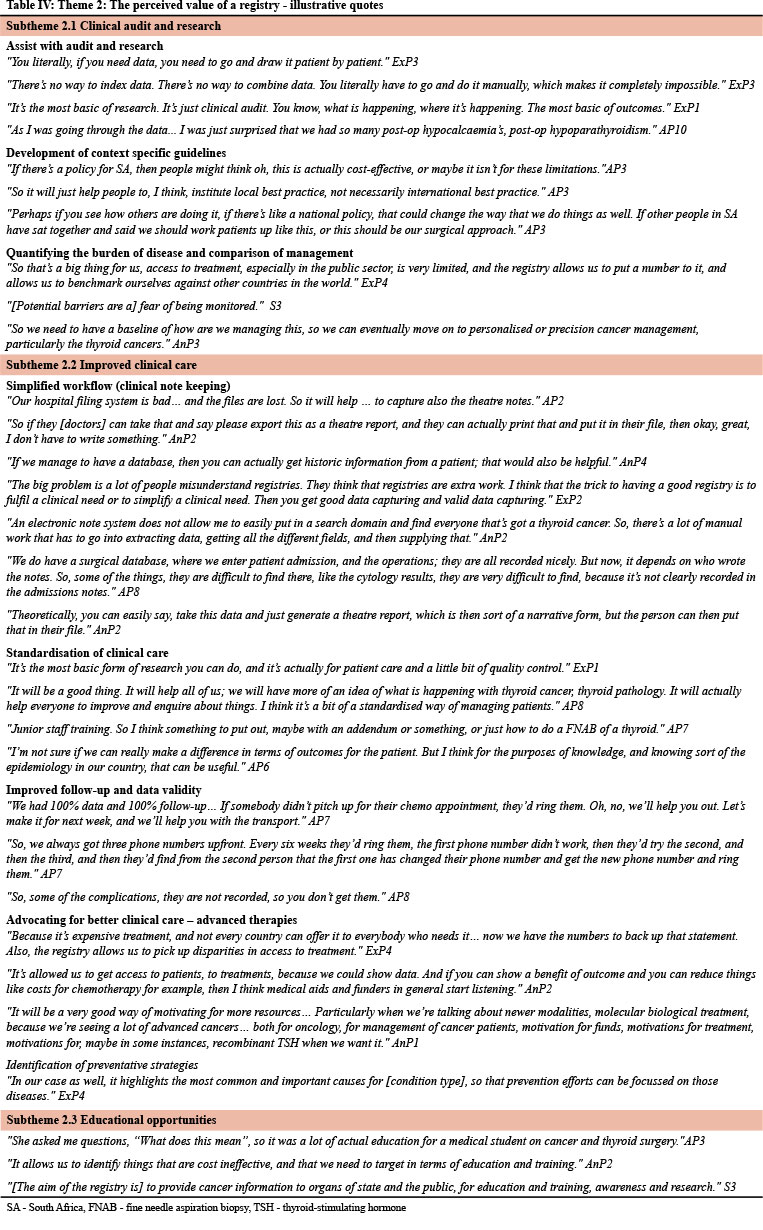
Theme 2: The perceived value of a registry (See Table IV)
Subtheme 2.1: Clinical audit and research
Benefits of a registry include the development of context-specific guidelines, quantifying the burden of disease, and comparison of clinical management strategies. Several participants noted that an electronic registry could replace current manual labour-intensive data capture to facilitate local audits and promote research and collaboration across health sectors and provinces. Some participants believed establishing a registry could improve thyroid cancer management in SA, support uniform care, and help quantify the burden of thyroid disease while allowing for regional and international comparisons. However, some expressed concerns that clinicians might fear being monitored, which could make them hesitant to input patient data. A more positive angle was that the registry could provide a baseline for management assessments and facilitate precision medicine tailored to the unique genetic, environmental, and lifestyle factors of individual patients.
Subtheme 2.2: Improved clinical care
The potential indirect clinical care benefits of the registry were discussed during the interviews. These included a note-keeping system that could simplify workflow, assist with standardised care, capture follow-up data and complications, and identify locally relevant and applicable advanced treatment and preventive strategies. Participants suggested that integrating clinical notes with the registry could mitigate limitations in current systems by enhancing record access, data quality and follow-up processes while avoiding duplication of efforts. Suggested features included standard operating procedures (SOPs) and templates for specific procedures such as thyroid US and FNAB, to ensure uniformity. While most participants agreed that the primary value of a registry lies in improving patient care and outcomes, some felt that another clinical note-keeping system was unnecessary. Those with existing registries reported better patient follow-up and data validity, with missing data prompting follow-ups, while improved patient contact details in the registry facilitated better patient care.
Subtheme 2.3: Educational opportunities
It was noted that the data collection process could be a positive experience because of the educational opportunity it provides, explaining the disease process when medical students are tasked with collecting data. Another educational advantage of the registry is its potential to identify target areas for education and training.
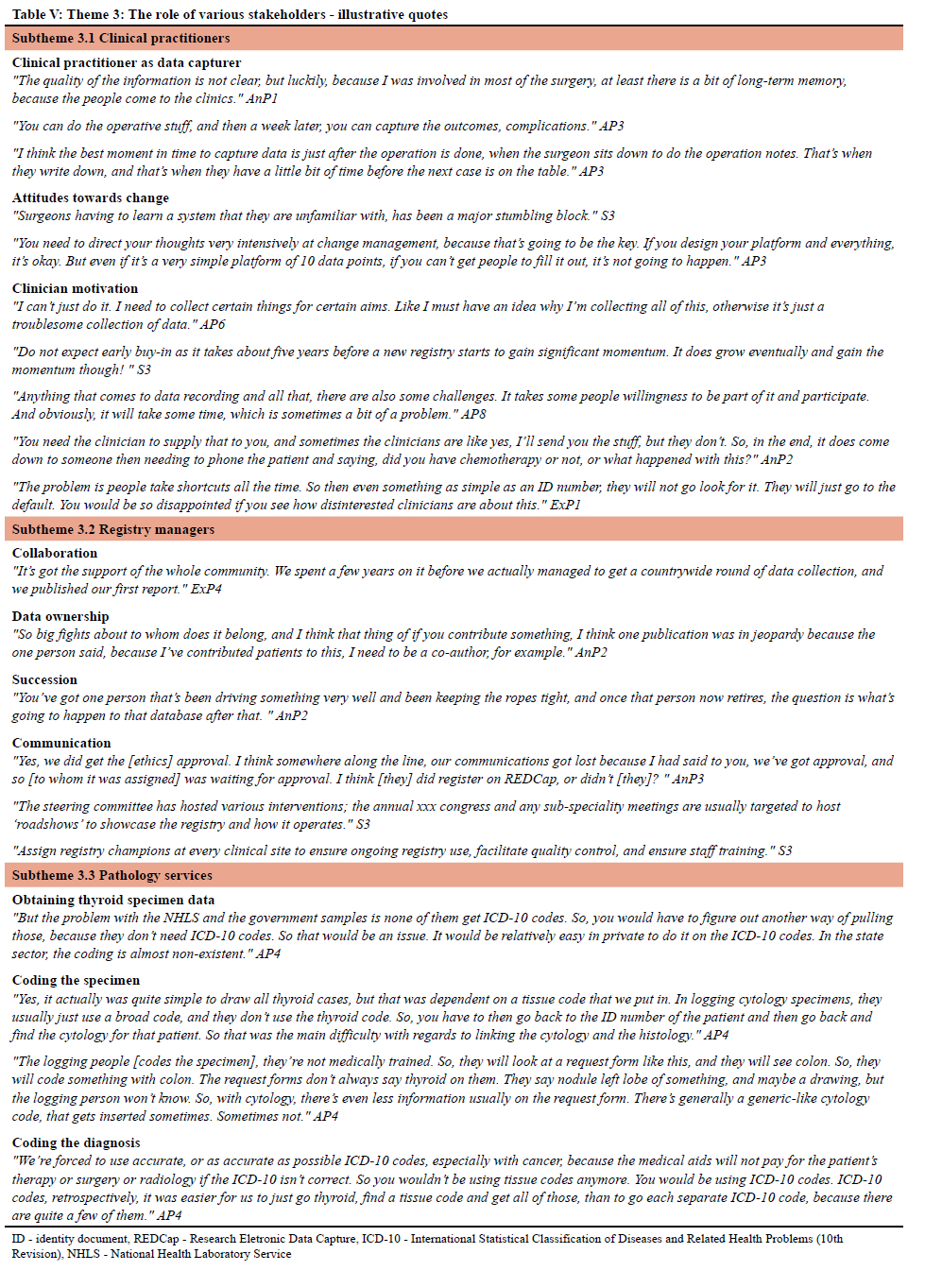
Theme 3: The role of various stakeholders (See Table V)
Subtheme 3.1: Clinical practitioners
If clinicians are the main users and data capturers of the registry, their attitude is vital for its success, and challenges such as a resistance to change and their motivation for registry involvement were considered. One participant recommended that operating surgeons should enter the data to ensure and increase data accuracy. However, some experienced registry participants recalled doctors expressing dissatisfaction with the transition from paper to electronic notes as they had to learn a new system, which might hinder their involvement. Participants predicted challenges in securing buy-in from contributors and engaging clinicians as data capturers. One participant remarked that people would only be motivated to enter data into a registry if there was a clear aim or objective. While many viewed the initiation of a registry positively, one warned of the potential lack of initial buy-in and emphasised that establishing a successful registry requires time.
Subtheme 3.2: Registry managers
Registry managers' attitudes are vital for collaboration, data ownership, succession planning, and communication. Their attitudes were seen as an essential factor for its success, emphasising leadership with a collaborative mindset. An experienced participant highlighted previous conflicts over data ownership. Some felt strongly that individual passion without succession planning would negatively impact the long-term sustainability of a registry. Continuous communication between registry managers and contributors, along with external outreach, is key to success. One site did not participate in the TCGSA audit due to poor communication, as the task was assigned to a junior member, and subsequent communication between role players failed. Enhancing registry visibility through road shows and conferences has proven beneficial. Most participants recommended appointing a dedicated registry champion at each site to communicate the registry's vision and facilitate local training and motivation.
Subtheme 3.3: Pathology services
Pathology specimen types are coded upon arrival at the laboratory, after which the results are also coded once analysed. Participants mentioned how this practice differed across specimen types and laboratories, affecting the data quality. A participant indicated that coding precision would improve significantly once a cancer diagnosis was confirmed as accurate, coding was necessary for medical aid reimbursement, and added that the coding of diagnostic procedures would continue to be problematic unless there was a confirmed histological diagnosis. Another participant believed that the International Statistical Classification of Diseases and Related Health Problems codes (10th Revision) (ICD-10) are used infrequently in the public sector.
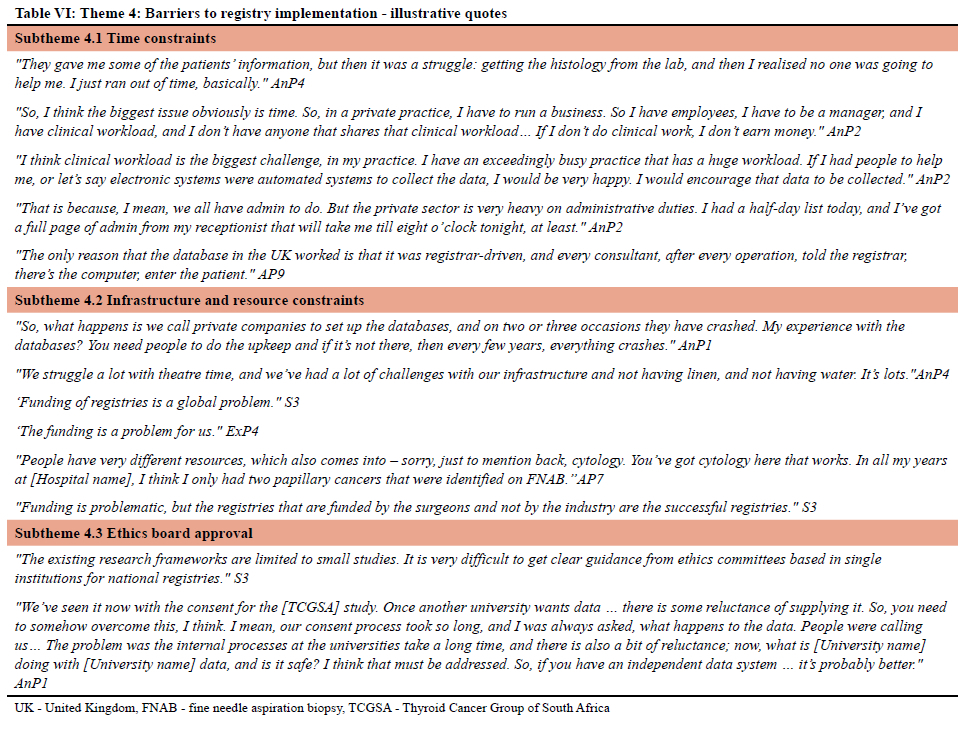
Theme 4: Barriers to registry implementation (See Table VI)
Subtheme 4.1: Time constraints
Lack of time was identified as a major problem, especially by participants invited to take part in the TCGSA audit, primarily due to the limited available time between clinical duties. The reasons for non-participation included feelings of isolation within their unit and a lack of administrative support. Most participants reported that an increased workload hinders participation in a registry.
Subtheme 4.2: Infrastructure and resource constraints
Some participants voiced their concerns about the technical reliability and sustainability of systems they had used in the past. Many interviewees described limited financial and other resources as barriers to registry participation. Participants identified other constraints, such as a lack of water and clean linen in hospitals, and technological challenges, including issues with computer systems and internet connectivity. One view expressed was that surgeon-funded registries were more successful than industry-funded registries.
Subtheme 4.3: Ethics board approval
Multisite ethical approval was identified as a barrier to national research. Obtaining multisite ethics committee approval for the retrospective research proved challenging, contributing to some sites opting out of the TCGSA audit. Updated guidance from ethics committees regarding individual institutions approving national registries was suggested.
Discussion
Establishing a national thyroid registry in SA is complex due to health inequalities, varying clinical practices, availability of specialist services between the public and private sectors, and rural and urban locations. Patients often rely on small government grants and struggle to afford childcare, transport to a hospital, or maintain a reliable contact number. A study of 27 490 people in Gauteng Province showed that income and place of residence did not affect healthcare access, whereas quality of healthcare, employment status, medical insurance, and immigration status did.23 Another study showed that only 86% of South Africans have access to emergency surgical care within two hours, emphasising the need for equitable surgical access.24 Additionally, the reported geographical variability in thyroid cancer subtypes further supports the development of an adaptable registry.8
This study revealed non-standardised US and FNAB reporting in some SA practices, affecting clinical decisionmaking. In the TCGSA audit, only 19.6% of US adhered to American College of Radiology, Thyroid Imaging Reporting and Data System (ACR TI-RADS) reporting, confirming our findings.8 Promoting clinician-performed US can improve access to US-guided FNAB for thyroid nodules. Following the ACR TI-RADS improves diagnostic accuracy and reduces unnecessary biopsies.25 27 TBSRTC improves communication between pathologists and clinicians, preventing unnecessary surgery.8,28
All participants unanimously supported the principle of a registry, recognising its scientific value and role in improving patient care. This aligns with others who noted the clinical benefit of tracking patients across disciplines and centres, saving time and enhancing the quality of care.29 The African Perioperative Research Group (APORG) identified the creation of a minimum dataset surgical registry among the top ten priorities to reduce perioperative mortality risks.30
Barriers and facilitators to registry implementation varied across health systems and regions. Lazem identified the most critical barriers to maintaining a patient registry as inadequate budgets, poor manager performance, low data quality, and low stakeholder interest.31 The clinician's commitment to adding data to the registry was seen as one of the biggest potential challenges.31 Participants in this study shared that other factors, such as technical and infrastructure challenges and financial and resource constraints, can influence clinicians' lack of motivation. Clinical group demonstrations can significantly increase registry involvement.7 Our findings concurred that insufficient financial resources and registry setup difficulties, such as data management and technological constraints, are more common in developing countries.31 Strategies for improvement include carefully designing an online system, establishing clear data definitions, user guides, real-time chat support, and co-opting junior doctors to enter patient information.232 Our study participants, from both the public and private health sectors, identified insufficient time as the most significant barrier. Other studies, including those from HICs, have recognised insufficient time and increased workload as barriers.31-33 Funding could help employ data collectors and registry managers to address this time constraint.
A pertinent barrier identified in this study, from both the public and private sectors, is the fragmentation of data sources. Most clinicians mentioned that they do not always have access to past clinical notes, although some have more efficient paper or electronic systems. No participant had access to a unified system integrating radiology, pathology, and nuclear medicine imaging. The TCGSA study also faced significant delays because clinicians needed to gather information from multiple sources for data entry.8 Participants suggested a registry as a potential platform for storing patient information and serving as a clinical note-keeping system. A unified platform can provide knowledge on outcomes, track patients across departments and healthcare facilities, save clinician time and strengthen the healthcare system.34-36
Ethics board approval is essential for registry research. Multi-institutional approval poses a significant barrier, preventing some interviewees from participating in the TCGSA study due to a lack of institutional ethics approval. This challenge is also noted in Lazem's systematic review.31 In SA, exploring national registry ethics approval is necessary, focusing on standardising multi-institutional ethics applications, with guidance from the National Health Research Ethics Council (NHREC).
Given the varying practices and workflows nationally, a one-size-fits-all approach to data entry may not be feasible. The registry should accommodate diverse data input methods, with each site tailoring its procedures based on internal systems, staffing, and workflows. To ensure accurate data collection, customisation is necessary to allow for local variations while meeting overall objectives. The suggested registry champion at each site could assist in streamlining this process.
Strengths and limitations
Various stakeholders are involved in clinical registries, each with distinct influences on and objectives for the registry. Although patient participation in registries is often promoted in the literature, this was not mentioned by any interviewee. In addition, several stakeholders, including policymakers and hospital managers, were also not included. Further exploration should seek their respective input. The PI's positionality as a colleague in endocrine surgery may have influenced responses.
Conclusions
Establishing a national thyroid registry in SA requires adaptability to unique challenges across practices, systems and provinces. The principle of a registry was strongly supported by clinician stakeholders, appreciating the clinical and scientific value. Additionally, constituting the registry as a clinical note-keeping system would save clinicians' time. Standardising radiology and pathology reporting on a single uniform platform would improve patient care and data entry. The benefits of a registry outweigh the challenges, aiding in local guideline development, enhancing patient outcomes and promoting collaborative research among endocrine clinicians.
Conflict of interest
The authors declare no conflict of interest.
Funding source
The authors disclosed receipt of the following financial support for this research: This work was supported by the HB and MJ Thom Award 2023; NRF Thuthuka Grant [grant number TTK23040589544]; Harry Crossley Foundation Fund [grant number US10089].
Ethical approval
This study was approved by the Health Research Ethics Committee of the Stellenbosch University (S23/05/115).
ORCIDW Conradie https://orcid.org/0000-0002-9220-331X
KJ Baatjes https://orcid.org/0000-0001-8432-8844
L Martin https://orcid.org/0000-0003-2887-647X
TLuvhengo https://orcid.org/0000-0002-2901-1809
Acknowledgments
Thank you to Leigh Story, who transcribed all the interviews. Thank you to all the participants in this study who were willing to take the time to complete the survey, participate in the interviews, and contribute to the plan for a thyroid registry in SA.
REFERENCES
-
1. Gliklich RE, Leavy 1MB, Dreyer NA. Registries for evaluating patient outcomes: A user's guide, 4th ed. Agency for Healthcare Research and Quality (AHRQ); 2020. https://doi.org/10.23970/AHRQEPCREGISTRIES4.
» https://doi.org/10.23970/AHRQEPCREGISTRIES4 -
2. Mandavia R, Knight A, Phillips J, et al. What are the essential features of a successful surgical registry? A systematic review. BMJ Open 2017;7(9):e017373. https://doi.org/10.1136/bmjopen-2017-017373.
» https://doi.org/10.1136/bmjopen-2017-017373 -
3. Delaunay C. Registries in orthopaedics. Orthop Traumatol Surg Res. 2015;101(1):S69-S75. https://doi.org/10.1016/j.otsr.2014.06.029.
» https://doi.org/10.1016/j.otsr.2014.06.029 -
4. Davids MR, Eastwood JB, Selwood NH, et al. A renal registry for Africa: First steps. Clin Kidney J. 2016;9(1):162-7. https://doi.org/10.1093/ckj/sfv122.
» https://doi.org/10.1093/ckj/sfv122 -
5. Singh E, Underwood JM, Nattey C, et al. South African National Cancer Registry: Effect of withheld data from private health systems on cancer incidence estimates. S Afr Med J. 2015;105(2):107-9. https://doi.org/10.7196/SAMJ.8858.
» https://doi.org/10.7196/SAMJ.8858 -
6. Du Toit R, Doubell A, Abelson M, et al. The South African SHARE-TAVI registry: incidence and risk factors leading to conduction disturbances requiring permanent pacemaker implantation. SA Heart J. 2021;18(2):88-95. https://doi.org/10.24170/18-2-4881.
» https://doi.org/10.24170/18-2-4881 - 7. Bussio HT, Swart X, O'Connor M, Khanyile S, Koch, O. The implementation of the South African Orthopaedic Registry (SAOR): Factors that improve usage. SA Orthop J.2024;23(2):99-104.
-
8. Conradie W, Luvhengo T, Lübbe JA, et al. The clinicopathological landscape of thyroid cancer in South Africa: A multi-institutional review. World J Surg. 2024;48(12):2863-70. https://doi.org/10.1002/wjs.12353.
» https://doi.org/10.1002/wjs.12353 -
9. Zaletel M, Kralj M. Methodological guidelines and recommendations for efficient and rationale governance of patient registries. Eur J Public Health. 2015;25(3):ckv169.006. https://doi.org/10.1093/eurpub/ckv169.006.
» https://doi.org/10.1093/eurpub/ckv169.006 -
10. Lee J, El-tamer M, Schifftner T, et al. Open and laparoscopic adrenalectomy : Analysis of the national surgical quality improvement programme. J Am Coll Surg. 2008;206(5):953-9. https://doi.org/10.1016/j.jamcollsurg.2008.01.018.
» https://doi.org/10.1016/j.jamcollsurg.2008.01.018 -
11. Staubitz JI, Poplawski A, Watzka F, Musholt TJ. Real-world EUROCRINE® registry data challenge the reliability of Bethesda cytopathology for thyroid surgery indication. Innov Surg Sci. 2022;7(3-4):99-106. https://doi.org/10.1515/iss-2021-0004.
» https://doi.org/10.1515/iss-2021-0004 -
12. Van Beek DJ, Almquist M, Bergenfelz A, et al. Complications after medullary thyroid carcinoma surgery: multicentre study of the SQRTPA and EUROCRINE® Databases. BJS. 2021;108(6):691-701. https://doi.org/10.1093/bjs/znaa195.
» https://doi.org/10.1093/bjs/znaa195 -
13. Aspinall S, Oweis D, Chadwick D. Effect of surgeons' annual operative volume on the risk of permanent hypoparathyroidism, recurrent laryngeal nerve palsy and haematoma following thyroidectomy: Analysis of United Kingdom Registry of Endocrine and Thyroid Surgery (UKRETS). Langenbecks Arch Surg. 2019;404(4):421-30. https://doi.org/10.1007/s00423-019-01798-7.
» https://doi.org/10.1007/s00423-019-01798-7 - 14. Masone, J. Qualitative Research. 1st ed. SAGE Publications Ltd; 1996.
-
15. Malterud K. Qualitative research: standards, challenges, and guidelines. Lancet. 2001;358 (9280):483-8. https://doi.org/10.1016/S0140-6736(01)05627-6.
» https://doi.org/10.1016/S0140-6736(01)05627-6 -
16. Cohen DJ, Crabtree BF. Evaluative criteria for qualitative research in health care: controversies and recommendations. Ann Fam Med. 2008;6(4):331-9. https://doi.org/10.1370/afm.818.
» https://doi.org/10.1370/afm.818 -
17. Gill SL. Qualitative sampling methods. J Hum Lact. 2020:36(4):579-81. https://doi.org/10.1177/0890334420949218.
» https://doi.org/10.1177/0890334420949218 -
18. Palinkas LA, Horwitz SM, Green CA, et al. Purposeful sampling for qualitative data collection and analysis in mixed method implementation research. Adm Policy Ment Health. 2015;42(5):533-44. https://doi.org/10.1007/s10488-013-0528-y.
» https://doi.org/10.1007/s10488-013-0528-y -
19. Mays N, Pope C. Assessing quality in qualitative research. BMJ. 2000;320(7226):50-2. https://doi.org/10.1136/bmj.320.7226.50.
» https://doi.org/10.1136/bmj.320.7226.50 -
20. Pope C. Qualitative research in health care: Analysing qualitative data. BMJ. 2000;320(7227):114-6. https://doi.org/10.1136/bmj.320.7227.114.
» https://doi.org/10.1136/bmj.320.7227.114 -
21. Vears DF, Gillam L. Inductive content analysis: a guide for beginning qualitative researchers. FoHPE. 2022;23(1):111-27. https://doi.org/10.11157/fohpe.v23i1.544.
» https://doi.org/10.11157/fohpe.v23i1.544 - 22. Clarke V, Braun V. Successful qualitative research: A practical guide for beginners. Successful Qualitative Research; 2013. p.1-400.
-
23. Abera AA, Ncayiyana J, Levin J. Health-care utilization and associated factors in Gauteng Province, South Africa. Glob Health Action. 2017;10(1):1305765. https://doi.org/10.1080/16549716.2017.1305765.
» https://doi.org/10.1080/16549716.2017.1305765 -
24. Chu KM, Dell AJ, Moultrie H, et al. A geospatial analysis of two-hour surgical access to district hospitals in South Africa. BMC Health Serv Res. 2020;20(1):744. https://doi.org/10.1186/s12913-020-05637-0.
» https://doi.org/10.1186/s12913-020-05637-0 -
25. Grant EG, Tessler FN, Hoang JK, et al. Thyroid ultrasound reporting lexicon: White paper of the ACR Thyroid Imaging, Reporting and Data System (TIRADS) Committee. J Am Coll Radiol. 2015:12(12):1272-9. https://doi.org/10.1016/j.jacr.2015.07.011.
» https://doi.org/10.1016/j.jacr.2015.07.011 -
26. Griffin AS, Mitsky J, Rawal U, et al. Improved quality of thyroid ultrasound reports after implementation of the ACR Thyroid Imaging Reporting and Data System Nodule Lexicon and Risk Stratification System. J Am Coll Radiol. 2018;15(5):743-8. https://doi.org/10.1016/joacr.2018.01.024.
» https://doi.org/10.1016/joacr.2018.01.024 -
27. Su HK, Dos Reis LL, Lupo MA, et al. Striving toward standardization of reporting of ultrasound features of thyroid nodules and lymph nodes: A multidisciplinary consensus statement. Thyroid. 2014;24(9):1341-9. https://doi.org/10.1089/thy.2014.0110.
» https://doi.org/10.1089/thy.2014.0110 -
28. Avior G, Dagan O, Shochat I, et al. Outcomes of the Bethesda System for reporting thyroid cytopathology: real-life experience. Clin Endocrinol. 2021;94(3):521-7. https://doi.org/10.1111/cen.14341.
» https://doi.org/10.1111/cen.14341 -
29. Mehra S, Tuttle RM, Milas M, et al. Database and registry research in thyroid cancer: Striving for a new and improved national thyroid cancer database. Thyroid 2015;25(2):157-68.https://doi.org/10.1089/thy.2014.0270.
» https://doi.org/10.1089/thy.2014.0270 -
30. Biccard BM. The Africa Peri-Operative Research Group (APORG) working group. Priorities for peri-operative research in Africa. Anaesthesia. 2020;75(S1):28-33. https://doi.org/10.1111/anae.14934.
» https://doi.org/10.1111/anae.14934 -
31. Lazem M, Sheikhtaheri A. Barriers and facilitators for disease registry systems: A mixed-method study. BMC Med Inform Decis Mak. 2022;22(1):97. https://doi.org/10.1186/s12911-022-01840-7.
» https://doi.org/10.1186/s12911-022-01840-7 -
32. Marques JP, Vaz-Pereira S, Costa J, et al. Challenges, facilitators and barriers to the adoption and use of a web- based national IRD registry: Lessons learned from the IRD- PT registry. Orphanet J Rare Dis. 2022;17(1):323. https://doi.org/10.1186/s13023-022-02489-1.
» https://doi.org/10.1186/s13023-022-02489-1 -
33. Rosenkrantz L, Schuurman N, Arenas C, Jimenez MF, Hameed MS. Understanding the Barriers and facilitators to trauma registry development in resource-constrained settings: A survey of trauma registry stewards and researchers. Injury. 2021;52(8):2215-24. https://doi.org/10.1016/j.injury.2021.03.034.3
» https://doi.org/10.1016/j.injury.2021.03.034.3 -
34. Pennathur PR, Cao D, Bisantz, AM, et al. Emergency department patient-tracking system evaluation. Int J Ind Ergon. 2011;41(4):360-9. https://doi.org/10.1016/j.ergon.2011.02.003.
» https://doi.org/10.1016/j.ergon.2011.02.003 -
35. Campbell IM, Karavite DJ, McManus ML, et al. Clinical decision support with a comprehensive In-EHR patient tracking system improves genetic testing follow up. J Am Med Inform Assoc. 2023;30(7):1274-83. https://doi.org/10.1093/jamia/ocad070.
» https://doi.org/10.1093/jamia/ocad070 -
36. Uslu A, Stausberg J. Value of the electronic medical record for hospital care: Update from the literature. J Med Internet Res. 2021;23(12):e26323. https://doi.org/10.2196/26323.
» https://doi.org/10.2196/26323