Temporary vascular shunting in vascular trauma: A 10-year review from a civilian trauma centre
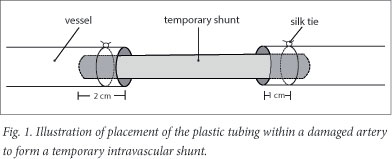
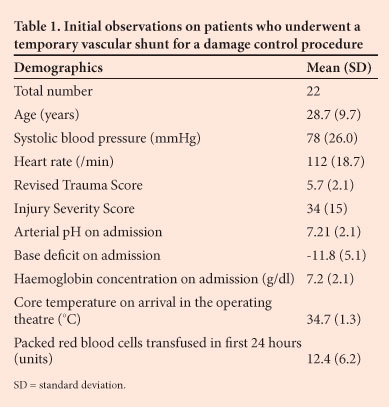
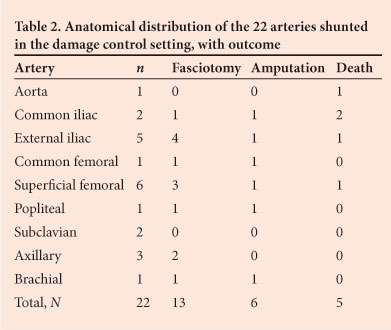
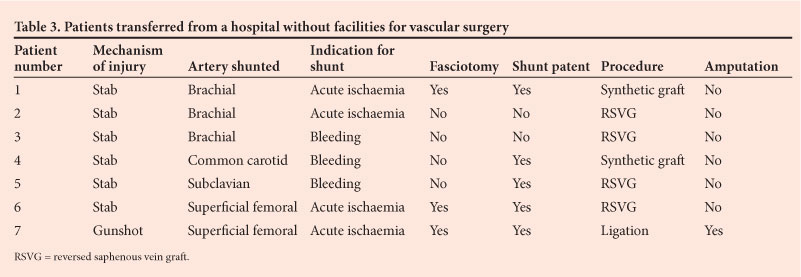
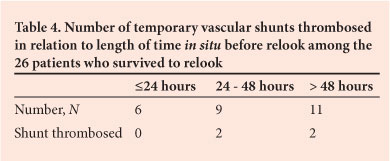
BACKGROUND: Temporary intravascular shunts (TIVSs) can replace immediate definitive repair as a damage control procedure in vascular trauma. We evaluated their use in an urban trauma centre with a high incidence of penetrating trauma. METHOD: A retrospective chart review of all patients treated with a TIVS in a single centre between January 2000 and December 2009. RESULTS: Thirty-five TIVSs were placed during the study period: 22 were part of a damage control procedure, 7 were inserted at a peripheral hospital without vascular surgical expertise prior to transfer, and 6 were used during fixation of a lower limb fracture with an associated vascular injury. There were 7 amputations and 5 deaths, 4 of the TIVSs thrombosed, and a further 3 dislodged or migrated. Twenty-five patients underwent definitive repair with an interposition graft, 1 primary anastomosis was achieved, and 1 extra-anatomical bypass was performed. Five patients with non-viable limbs had the vessel ligated. CONCLUSIONS: A TIVS in the damage control setting is both life- and limb-saving. These shunts can be inserted safely in a facility without access to a surgeon with vascular surgery experience if there is uncontrollable bleeding or the delay to definitive vascular surgery is likely to be more than 6 hours. A definitive procedure should be performed within 24 hours
South African Journal of Surgery
 Thumbnail