Gastrointestinal obstruction in neonates and infants - a four-year profile in Chris Hani Baragwanath Academic Hospital
Abstract
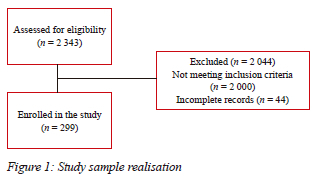
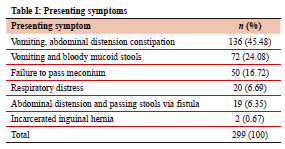
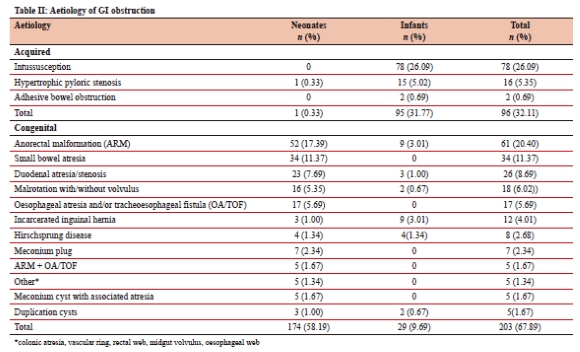
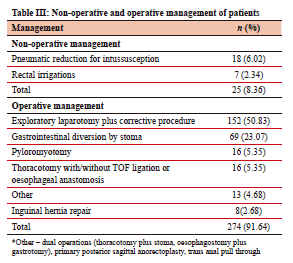
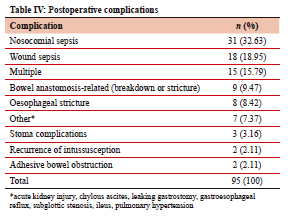
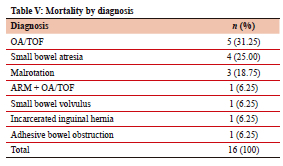
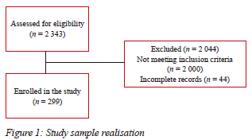
BACKGROUND: Different disease entities that cause gastrointestinal (GI) obstruction have been studied in isolation; however, no description of GI obstruction in neonates and infants in South Africa could be identified. This study aims to describe the profile of GI obstruction in neonates and infants at Chris Hani Baragwanath Academic Hospital (CHBAH) from January 2016 to December 2019. METHODOLOGY: This was a retrospective record review conducted on all patients < 1 year of age with GI obstruction admitted to CHBAH. Data on age at presentation, sex, presenting symptoms, aetiology, diagnostic imaging, operative and non-operative management, complications, and 30-day mortality were collected. RESULTS: A total of 299 patients were enrolled in this study. They were predominantly male (n = 175, 58.53%) and were neonates at presentation (n = 177, 59.20%). Congenital malformations (n = 203, 67.89%) were more common than acquired conditions (n = 96, 32.11%). Anorectal malformation (ARM) and small bowel atresia were the most common congenital condition (n = 61, 20.40%; n = 34, 11.37% respectively). Intussusception was the most common acquired condition (n = 78, 26.08%). The morbidity rate was 95 (31.77%) with nosocomial sepsis and surgical site sepsis accounting for 49 (51.58%) of the morbidities. Mortality rate was 16 (5.35%) and 10 (62,5%) of the mortalities had associated nosocomial sepsis. CONCLUSION: Congenital malformations of the GI tract are more common than acquired pathologies in neonates and infants in CHBAH. Sepsis causes significant morbidity in the postoperative period.
gastrointestinal obstruction; infants; acquired; congenital
 Thumbnail