A comparison of trauma scoring systems for trauma-related injuries presenting to a district-level urban public hospital in Western Cape, South Africa
Abstract
BACKGROUND: Trauma is a major public health issue and has an extensive burden on the health system in South Africa. Many trauma scoring systems have been developed to estimate trauma severity and predict mortality. The prediction of mortality between different trauma scoring systems have not been compared at district-level health facilities in South Africa. The objective was to compare four trauma scoring systems (injury severity score (ISS), revised trauma score (RTS), Kampala trauma score (KTS), trauma and injury severity score (TRISS)) in predicting mortality in trauma-related patients presenting to a district-level hospital in Cape TownMETHODS: A retrospective analysis of all trauma patients managed in the resuscitation unit of Khayelitsha Hospital during a six-month period. Logistic regression was done, and empirical cut of points used to maximise sensitivity and specificity on receiver operating characteristic curves. The outcome was all-cause in-hospital mortalityRESULTS: In total, 868 participants were analysed after 50 were excluded due to missing data. The mean (± SD) age was 28±11 years, 726 (83.6%) were males, and penetrating injuries (n = 492,56.6%) dominated. The mortality rate was 5.2% (n = 45). TRISS was the best mortality predictor (c-statistic 0.93, sensitivity 90%, specificity 87%). All scoring systems had overlapping confidence intervalsCONCLUSION: TRISS, ISS, RTS and KTS performed equivocally in predicting mortality in trauma-related patients managed at a district-level facility. The appropriate scoring system should be the simplest one which can be practically implemented and will likely differ between facilities
Introduction
Trauma is a global health problem and arguably affects low-and middle-income countries disproportionally more. Trauma accounts for 15% of deaths in Sub-Saharan Africa and for 11% of deaths in South Africa.12134445
The accuracy of trauma scores has been previously compared, with different results depending on the outcome used. For example, the ISS predicted hospitalisation better than TRISS and RTS,675
All trauma scoring systems have certain limitations, and none of them is ideal for every setting. The ISS and the RTS are widely used in trauma registries in high-income countries, while the KTS has specifically been developed for low-income countries with severe resource limitations, as it is a simple score that does not require many parameters.8
Methods
Study design
A nested diagnostic test accuracy study within a retrospective cross-sectional study of a prospectively collected database was performed. The study was approved by the Stellenbosch University Health Research Ethics Committee (Ref: S16/08/147).
Study setting and population
Khayelitsha Hospital is a 300-bed large urban district-level hospital located in the township of Khayelitsha, one of the biggest townships of Cape Town in the Western Cape. The population is predominantly black with a high unemployment rate.910
The Khayelitsha Hospital Emergency Centre database was established on 1 November 2014 and is registered at the Stellenbosch University Health Research Ethics committee (Ref: N15/10/107). It is an observational electronic database that prospectively collects data on all patients managed within the resuscitation unit of Khayelitsha Hospital; the exact methodology has been previously described.9
Data collection and management
All trauma patients managed in the resuscitation unit were extracted from the database for a six-month period (1 November 2014 to 30 April 2015). Data not yet captured or missing were retrospectively added after scrutinising the clinical notes. Incomplete data points were excluded from the relevant analysis and were indicated as such.
Collected variables included patients demographics (age, gender), date and time of presentation, patient acuity, mechanism of injury, time spent in the resuscitation unit, and disposition from the resuscitation unit. The predictor variables were injury severity score (ISS), revised trauma score (RTS), Kampala trauma score (KTS), and trauma and injury severity score (TRISS). The outcome variable was all-cause in-hospital mortality, and includes trauma patients that died in Khayelitsha Hospital and those transferred to the referral hospital (Tygerberg Hospital) for higher level of care and subsequently died. The triage early warning score (TEWS) was used to determine patient acuity. The TEWS is a composite score of physiologic parameters measured at arrival to the hospital. It forms part of the South African triage scale (SATS) and categorizes patients as non-urgent (green), urgent (yellow), very urgent (orange), and emergency (red).11 Appendix 1).
Analysis
Data were imported from Microsoft Excel (Microsoft Corp, Redmund WA) into STATA 14 (StataCorp, College Station, Texas) for analysis. Simple descriptive statistics were used to describe variables. Continuous variables were described using means and standard deviation (SD) or mean and inter-quartile range (IQR), where appropriate. Normality of variables was tested qualitatively and quantitatively. Diagnostic test accuracy analysis included only patients older than 14 years of age as the trauma scores are not validated in patients younger than 14 years. An empirical diagnostic cut-off point using receiver operating characteristics (ROC) curves to maximise the product of sensitivity and specificity for each trauma score was used. Univariate logistic regression was used to determine significant associations and predictive values of triage scores.
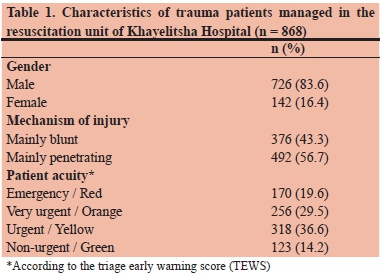
A total of 918 trauma-related patients were extracted from the database for the 6-month study period. Only 868 patients were included in the study after 50 (5.4%) patients were excluded due to missing records. The mean (± SD) age of patients was 28 ± 11 years and 726 (83.6%) were males. The acuity was at least very urgent (red and orange) in 426 (49.1%) patients and penetrating trauma (n = 492, 56.7%) was the prevailing mechanism of injury (Table 1). Patients spent a median (IQR) time in the resuscitation area of 151 minutes (90 to 241 minutes).
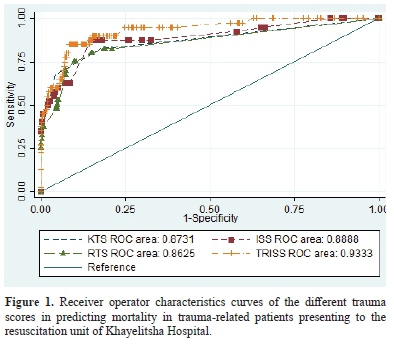
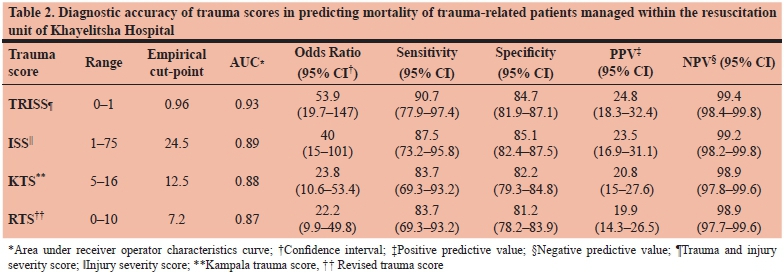
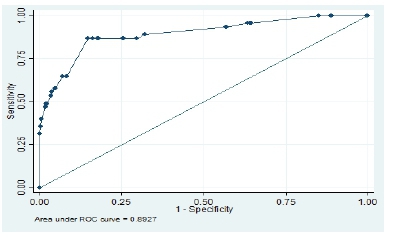
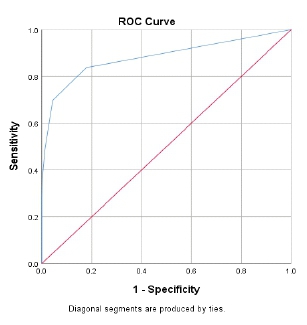
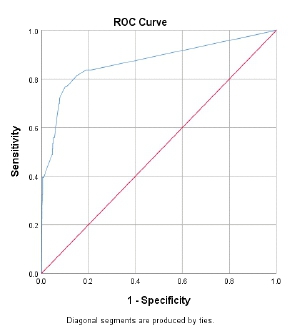
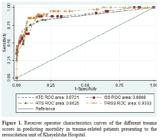
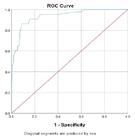
Overall, 45 (5.2%) patients died, of which 40 (88.9%) were males (n = 40, 88.9%) and most had an acuity of at least very urgent (n = 42, 93.4%).The mechanism of injury in patients who died was fairly evenly distributed between penetrating injuries (n = 23, 51.1%) and blunt injuries (n = 22, 48.9%). TRISS was the best predictor of mortality with an area under the ROC curve (AUC) of 0.93 (Table 2, Figure 1). If the estimates for TRISS at the empirical cut point of 0.96 are applied to a hypothetical cohort of 1000 trauma-related individuals, where 50 (5%) of those actually die from their injuries, TRISS would be expected to miss five cases (10%) and falsely predict death in 145 cases (15%). Although TRISS outperformed the other scores, the differences were not statistically significant as evident by the overlapping confidence intervals. The individual ROC curves for each score are presented in Appendix 2.
Discussion
This is the first study comparing the diagnostic performance of trauma scores in a district-level hospital in South Africa. Patients were typically young males with an equal spread between penetrating and blunt mechanism of injury. The trauma and injury severity score (TRISS) performed the best with regards to AUC, effect size and other diagnostics, although the difference was not statistically significant.
The equivalence of the diagnostic performances of the four trauma scores supports previous findings. Macleod et al. also indicated small differences between KTS, RTS, ISS and TRISS.125
Trauma scoring systems can be used for indications other than prognostic purposes. They may be used as a triage too 1 to improve the timely detection of patients that need prompt referral to higher level of care, although they still need to be tested formally.1213
The majority of the study population were young male patients. This is typical of trauma-related patients as described before.1414
The all-cause in-hospital mortality was almost double compared to an Indian study.1415
The study has various limitations and care should be taken to generalise the findings. Firstly, the low mortality rate limits the validity of the results as it is evident in the wide confidence intervals. Secondly, although missing data were limited by including a chart review, missing or limited details inevitably incorporate an inherent risk of error. More than 5% of cases were missing and, since it is impossible to determine their specific outcomes, the direction in which the results would have been influenced remains unknown. Thirdly, the study was conducted at one hospital with a small sample size for a short period of six months; this limits significantly the generalisability of the findings. Lastly, the study was only performed in a single district-level hospital due to logistical constraints. It further reflects a population with a high percentage of penetrating injuries that might be completely different to other settings.
Conclusion
The ISS, RTS, KTS and TRISS performed equivocally in predicting mortality in trauma-related patients managed in the resuscitation unit of Khayelitsha Hospital. Multicentred and large-scale studies are needed to confirm the results. The performance of trauma scores in the district-level hospital setting of South Africa needs further exploration.
Acknowledgements
I would like to express my appreciation to Dr DJ van Hoving for his patience, supervision and guidance during the study. I would also like to thank Michael McCaul for the statistics analysis. Lastly, thanks to Khayelitsha Hospital, especially Dr Sa'ad Lahri, who allowed me to collect data.
Declaration
By submitting this dissertation electronically, I, Suzan Nyema Mukonkole, declare that the entirety of the work contained therein is my own original work, that I am the authorship owner thereof (unless to the extent explicitly otherwise stated), and that I have not previously in its entirety or in part, submitted it for obtaining any qualification.
REFERENCES
-
1. Statistics South Africa. Mortality and causes of death in South Africa, 2012: Findings from death notification. Pretoria: Statistics South Africa, 2014. Available from: http://beta2.statssa.gov.za/publications/P03093/P030932012.pdf Accessed 11 December 2015
» http://beta2.statssa.gov.za/publications/P03093/P030932012.pdf -
2. Wesson HKH, Boikhutso N, Bachani AM, et al. The cost of injury and trauma care in low- and middle-income countries: a review of economic evidence. Health Policy Plan 2014;29(6):795-808. Available from: https://doi.org/10.1093/heapol/czt064 PMID: 24097794.
» https://doi.org/10.1093/heapol/czt064 -
3. Haagsma JA, Graetz N, Bolliger I, et al. The global burden of injury: incidence, mortality, disability- adjusted life years and time trends from the Global Burden of Disease study 2013. Inj Prev. 2016;22(1):3-18. Available from: https://doi.org/10.1136/injuryprev-2015-041616 PMID: 26635210.
» https://doi.org/10.1136/injuryprev-2015-041616 -
4. Pohlman TH, Bjerke HS, Offner P. Trauma Scoring Systems. Available from: https://emedicine.medscape.com/article/434076-overview. Accessed 25 November 2018
» https://emedicine.medscape.com/article/434076-overview -
5. Kobusingye OC, Lett RR. Hospital-based trauma registries in Uganda. J Trauma. 2000;48(3):498-502. Available from: https://doi.org/10.1097/00005373-200003000-00022 PMID: 10744292.
» https://doi.org/10.1097/00005373-200003000-00022 -
6. Orhon R, Eren ÇH, Karadayi Ç, et al. Comparison of trauma scores for predicting mortality and morbidity on trauma patients. Ulus Travma Acil Cerrahi Derg. 2014;20(4):258-64. Available from: https://doi:10.5505/tjtes.2014.22725 PMID: 25135020.
» https://doi:10.5505/tjtes.2014.22725 - 7. Köksal Ö, Özdemir F, Bulut M,et al. Comparison of trauma scoring systems for predicting mortality in firearm injuries. Ulus Travma ve Acil Cerrahi Derg. 2009;15(6):559-64. PMID: 20037873.
-
8. Weeks SR, Juillard CJ, Monono ME, et al. Is the Kampala Trauma Score an effective predictor of mortality in low-resource settings? A comparison of multiple trauma severity scores. World J Surg. 2014;38(8):1905-11. Available from: https://doi.org/10.1007/s00268-014-2496-0 PMID: 24715042.
» https://doi.org/10.1007/s00268-014-2496-0 -
9. Hunter LD, Lahri S, van Hoving DJ. Case mix of patients managed in the resuscitation area of a district-level public hospital in Cape Town. Afr J Emerg Med. 2017;7(1):19-23. Available from: https://doi.org/10.1016/j.afjem.2017.01.001 PMID: 30485864.
» https://doi.org/10.1016/j.afjem.2017.01.001 -
10. Coovadia H, Jewkes R, Barron P, Sanders D, Mcintyre D. The health and health system of South Africa: historical roots of current public health challenges. Lancet 2009;374(9692):817-34. Available from: https://doi.org/10.1016/S0140-6736(09)60951-X PMID: 1970972.
» https://doi.org/10.1016/S0140-6736(09)60951-X -
11. Twomey M, Wallis L, Thompson M, et al. The South African Triage Scale (adult version) provides reliable acuity ratings. Int Emerg Nurs. 2012;20(3):142-50. Available from: https://doi.org/10.1016/j.ienj.2011.08.002 PMID: 22726946.
» https://doi.org/10.1016/j.ienj.2011.08.002 -
12. MacLeod JBA, Kobusingye O, Frost C, et al. A Comparison of the Kampala Trauma Score (KTS) with the Revised Trauma Score (RTS), Injury Severity Score (ISS) and the TRISS Method in a Ugandan Trauma Registry. Eur J Trauma. 2003;29(6): 3928. Available from: https://doi.org/10.1007/s00068-003-1277-5
» https://doi.org/10.1007/s00068-003-1277-5 -
13. Bruijns SR, Wallis LA. The Kampala Trauma Score has poor diagnostic accuracy for most emergency presentations. Injury. 2017;48(10):2366-7. Available from: https://doi.org/10.1016/j.injury.2017.07.032 PMID:28855083.
» https://doi.org/10.1016/j.injury.2017.07.032 -
14. Abhilash KP, Chakraborthy N, Pandian GR, et al. Profile of trauma patients in the emergency department of a tertiary care hospital in South India. J Fam Med Prim Care. 2016;5(3):558-63. Available from: https://doi.org/10.4103/2249-4863.197279 PMID: 28217583.
» https://doi.org/10.4103/2249-4863.197279 -
15. Moodley NB, Clarke D, Aldous C. An audit of trauma-related mortality in a provincial capital in South Africa. S Afr J Surg. 2014;52(4):101-4. Available from: https://doi.org/10.7196/SAJS.1995 PMID 28876698
» https://doi.org/10.7196/SAJS.1995

Appendix 1 - Calculation of the different trauma scores
Injury severity score
Abbreviated injury scale (AIS)
The AIS is an anatomical scoring system first introduced in 1969. Since this time it has been revised and updated against survival so that it now provides a reasonably accurate ranking of the severity of injury.
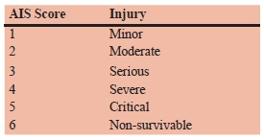
The AIS describes the severity of injury to one body region on a scale of 1 to 6, with 1 being minor, 5 severe and 6 a non-survivable injury. This represents the 'threat to life' associated with an injury and is not meant to represent a comprehensive measure of severity. The AIS is not an injury scale, in that the difference between AIS1 and AIS2 is not the same as that between AIS4 and AIS5.
ISS calculation
To calculate an ISS for an injured person, the body is divided into six regions. These body regions are:
• Head and neck, including cervical spine
• Face, including the facial skeleton, nose, mouth, eyes and ears
• Thorax, thoracic spine and diaphragm
• Abdomen, abdominal organs and lumbar spine
• Extremities including pelvic skeleton
• External soft tissue injury
An ISS is then calculated according to ISS = A2 + B2 + C2, where A, B, C are the AIS scores of the three most injured body regions. The ISS ranges from 0 to 75 (i.e. AIS scores of 5 for each category). If any of the three scores is a 6, the score is automatically set at 75. Since a score of 6 ("non-survivable") indicates the futility of further medical care in preserving life, this may mean a cessation of further care in triage for a patient with a score of 6 in any category.
Revised trauma score
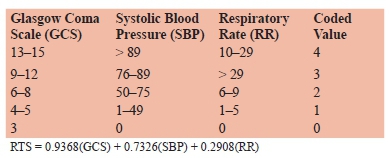
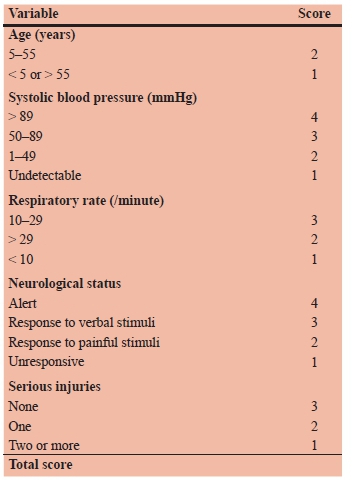
Based on Glasgow coma scale, systolic blood pressure and respiratory rate.
The RTS is heavily weighted towards the Glasgow coma scale to compensate for major head injury without multisystem injury or major physiological changes. Values for the RTS are in the range 0 to 7.8408. A decreasing score corresponds to a more severe injury. A threshold of RTS < 4 has been proposed to identify those patients who should be treated in a trauma centre, although this value may be somewhat low.
Trauma and injury severity score
TRISS determines the probability of survival (Ps) of a patient from the ISS and RTS.
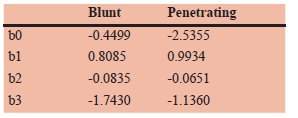
The formulae to use is Ps = 1 / 1(1+e-b) where 'b' is calculated from b = b0 + b1(RTS) + b2(ISS) + b3(Age Index). Age index is 0 if the patient is below 54 years of age or 1 if 55 years and over.
b0 to b3 are coefficients which are different for blunt and penetrating trauma.
Kampala trauma score
The KTS closely resembles the TRISS and is a composite of ISS and RTS. Possible score range from 5 to 16 and as with the RTS a decreasing score corresponds to a more severe injury.
Appendix 2 - Individual receiver operator characteristics curves for each trauma score
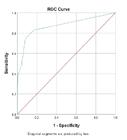
1. Receiver operator characteristics curve of trauma and injury severity score (TRISS) in predicting mortality in trauma-related patients presenting to the resuscitation unit of Khayelitsha Hospital, with area under the curve: 0.93
2. Receiver operator characteristics curve of inj ury severity score (ISS) in predicting mortality in trauma-related patients presenting to the resuscitation unit of Khayelitsha Hospital with area under the curve: 0.89
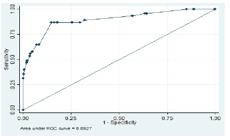
3. Receiver operator characteristics curve of Kampala trauma score (KTS) in predicting mortality in trauma-related patients presenting to the resuscitation unit of Khayelitsha Hospital with area under the curve: 0.88
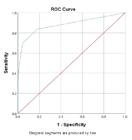
4. Receiver operator characteristics curve of revised trauma score (RTS) in predicting mortality in trauma-related patients presenting to the resuscitation unit of Khayelitsha Hospital with area under the curve: 0.87