Clinicopathological spectrum of small bowel obstruction and management outcomes in adults - experience at a regional academic hospital complex
Abstract
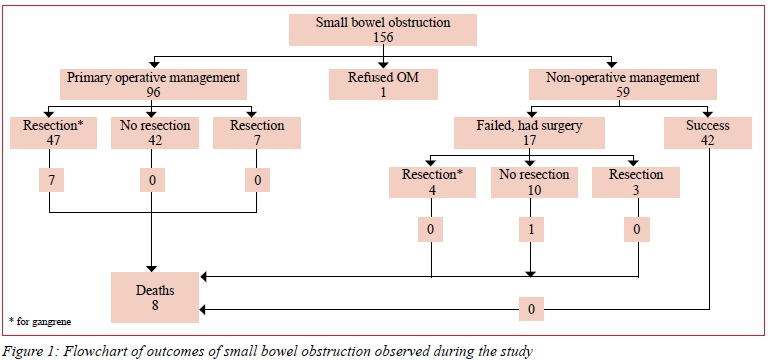
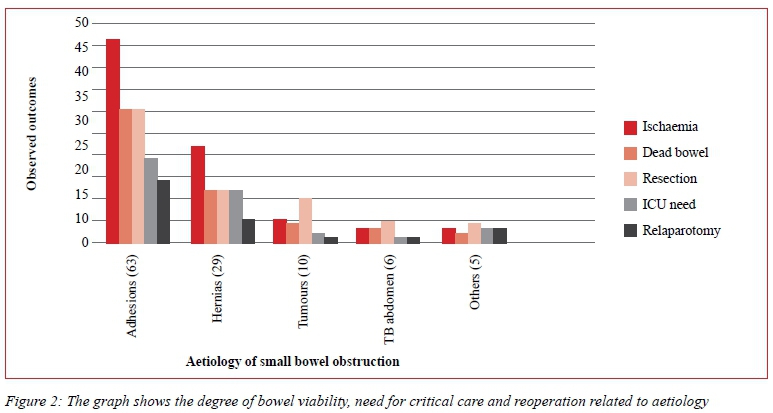
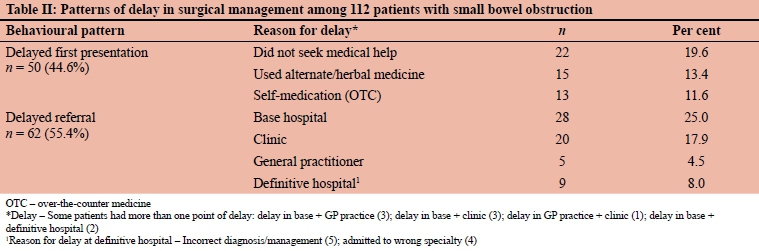
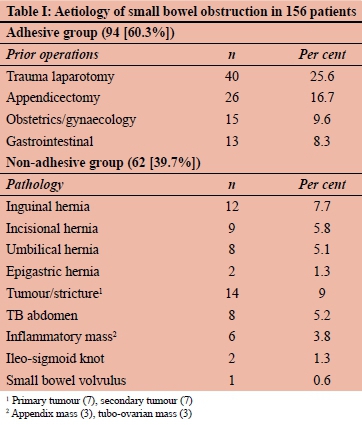
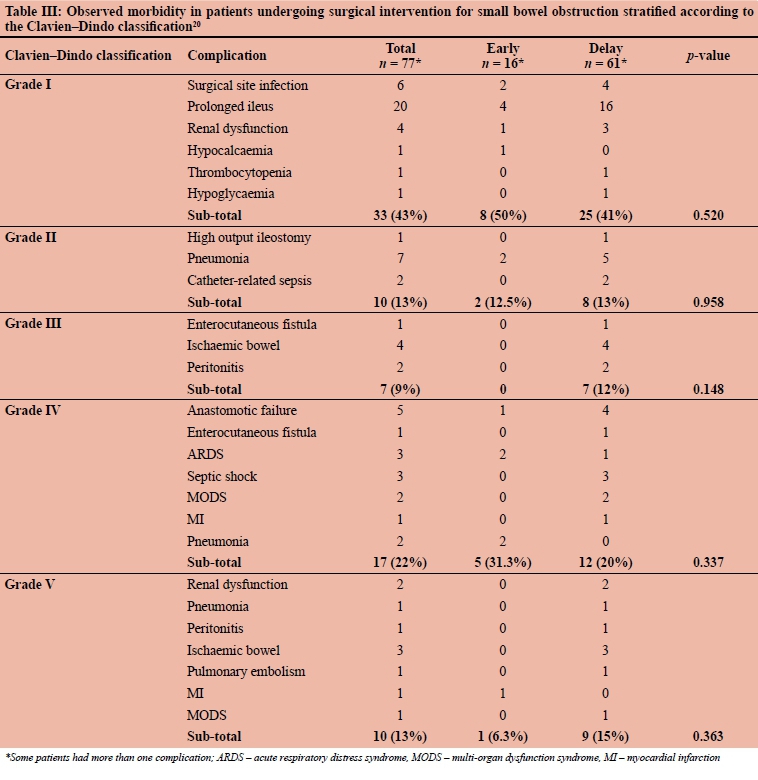
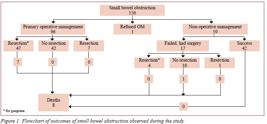
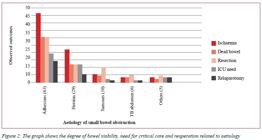
BACKGROUND: Delay in operative management of small bowel obstruction (SBO) results in increased morbidity and mortality. The objective was to evaluate clinical presentation and treatment outcome of SBOMETHOD: Prospective cohort study between 2013-2014. Adult patients presenting with SBO were included. Demographics, clinical details, investigations, operative findings, in-hospital progress and outcomes were documentedRESULTS: There were 156 patients (median age 37 [IQR 27-54 years]) with early (44) and delayed (112) presentation. :F ratio was 1.4:1. Common causes of obstruction were adhesions (94; 60.3%) and hernias (31; 19.9%). Non-operative management was feasible in 59 patients (37.3%) with a success rate of 71.2%. Nonviable bowel was present in 45.1% (early 31%, delayed 50%; p = 0.078). Sixty-one patients (54%) underwent bowel resection; nine patients (20.5%) in the early presentation group and 52 (46.4%) in the delayed group (p = 0.003). Thirty-one patients needed ICU admission (early 5, delayed 26; p = 0.091). The delayed group had longer ICU stay (p = 0.018) and longer hospital stay (p < 0.001). There were more complications (p = 0.084) and re-laparotomies (p = 0.156) in the delayed group. Eight patients died (5.1%CONCLUSION: The main causes of SBO were adhesions and hernias. Late presentation was associated with higher resection rate, higher critical care admission and longer hospital stay
small bowel obstruction; adhesive bowel obstruction; acute abdomen
 Thumbnail
 Thumbnail