Predictors of poor outcomes in intensive care unit patients with intra-abdominal infection
Abstract
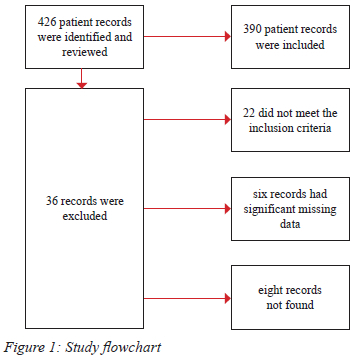
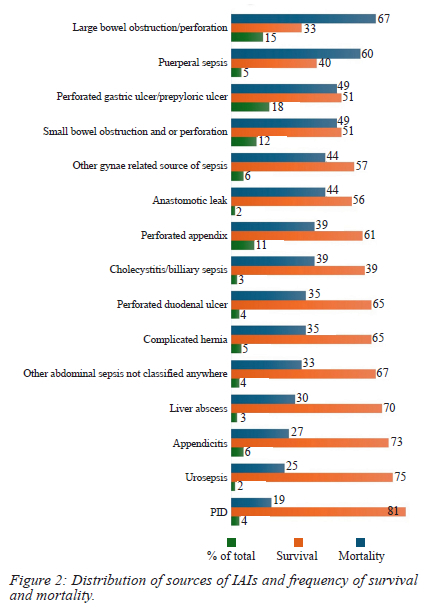
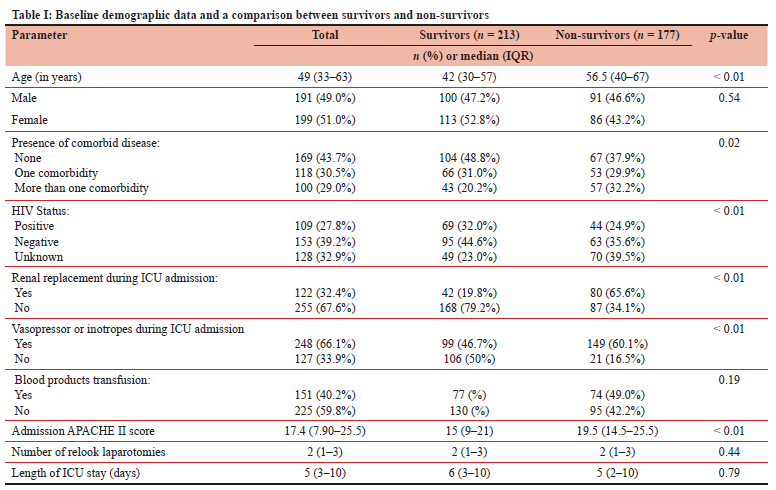
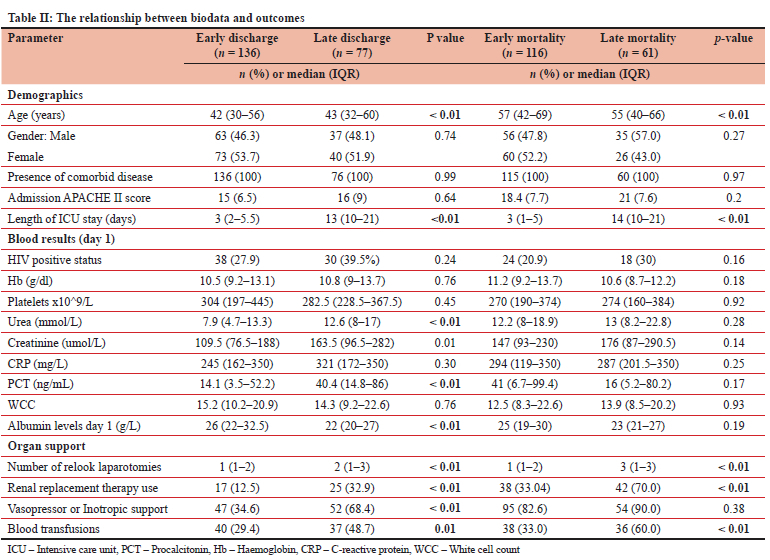
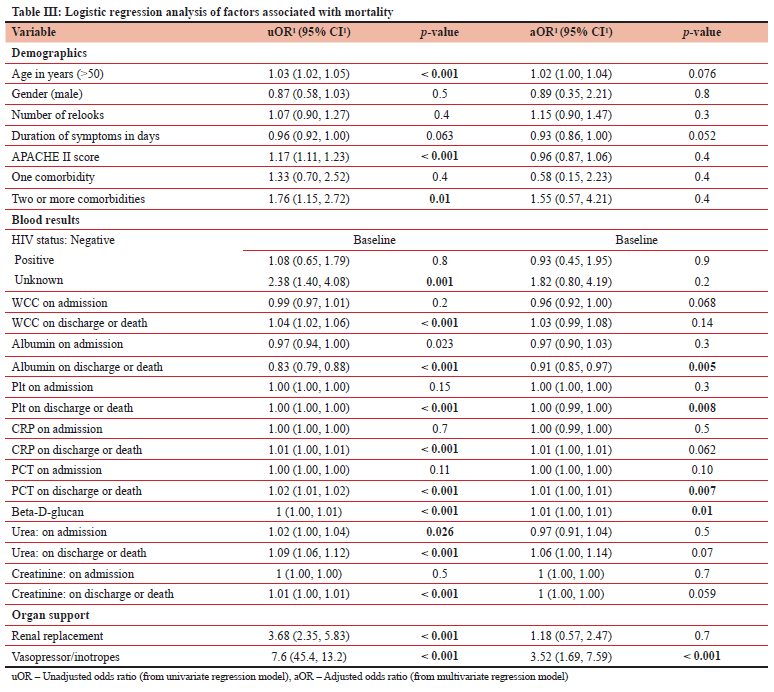
BACKGROUND: Intra-abdominal infections (IAIs) are second to respiratory-related infections as the leading cause of sepsis-related admissions to the intensive care unit (ICU). Multiple abdominal non-traumatic sources requiring intervention are responsible for these admissions. This study aims to describe the aetiology and ICU course of patients with non-traumatic intra-abdominal infections admitted to a multidisciplinary tertiary ICU. The secondary aim is to identify factors associated with mortality within this cohort of patients. METHODS: This was a single-centre, cross-sectional study conducted in a multidisciplinary ICU in a tertiary academic hospital in Johannesburg. All patients admitted to the ICU with non-traumatic secondary and tertiary IAIs post-intervention from January 2016 to December 2020 were included. The outcomes were classified ICU discharge or mortality (early, ≤ 7 days or late, if ≥ 8 days). Univariate and multivariate logistic regression screened for mortality-related factors. RESULTS: A total of 390 patients met the inclusion criteria. There were multiple aetiologies of IAIs, with the dominating contributors being perforated into gastric ulcers (18%), followed by large (15%) and small (12%) bowel pathology. The primary mode of source control was laparotomy. The course of this cohort included early discharge (35%), late discharge (20%), and the overall mortality was 45.0%. The univariate and multivariate regression analysis variables associated with mortality were low albumin, elevated beta-D-glucan, low platelets, higher procalcitonin (PCT) on the day of discharge/mortality and vasopressor use. CONCLUSION: The outcome of patients with IAIs admitted to the ICU is poor, with a 45% mortality. Multiple elevated biomarkers and vasopressor use were associated with mortality. This may suggest poor source control of IAI.
intra-abdominal infection; risk factors; mortality; outcomes; intensive care unit; sepsis
 Thumbnail
 Thumbnail