Predictors of poor outcomes in intensive care unit patients with intra-abdominal infection
Abstract
BACKGROUND: Intra-abdominal infections (IAIs) are second to respiratory-related infections as the leading cause of sepsis-related admissions to the intensive care unit (ICU). Multiple abdominal non-traumatic sources requiring intervention are responsible for these admissions. This study aims to describe the aetiology and ICU course of patients with non-traumatic intra-abdominal infections admitted to a multidisciplinary tertiary ICU. The secondary aim is to identify factors associated with mortality within this cohort of patients. METHODS: This was a single-centre, cross-sectional study conducted in a multidisciplinary ICU in a tertiary academic hospital in Johannesburg. All patients admitted to the ICU with non-traumatic secondary and tertiary IAIs post-intervention from January 2016 to December 2020 were included. The outcomes were classified ICU discharge or mortality (early, ≤ 7 days or late, if ≥ 8 days). Univariate and multivariate logistic regression screened for mortality-related factors. RESULTS: A total of 390 patients met the inclusion criteria. There were multiple aetiologies of IAIs, with the dominating contributors being perforated into gastric ulcers (18%), followed by large (15%) and small (12%) bowel pathology. The primary mode of source control was laparotomy. The course of this cohort included early discharge (35%), late discharge (20%), and the overall mortality was 45.0%. The univariate and multivariate regression analysis variables associated with mortality were low albumin, elevated beta-D-glucan, low platelets, higher procalcitonin (PCT) on the day of discharge/mortality and vasopressor use. CONCLUSION: The outcome of patients with IAIs admitted to the ICU is poor, with a 45% mortality. Multiple elevated biomarkers and vasopressor use were associated with mortality. This may suggest poor source control of IAI.
intra-abdominal infection; risk factors; mortality; outcomes; intensive care unit; sepsis
Introduction
Intra-abdominal infection (IAI) is second to respiratory-related infections as the leading cause of sepsis-related admissions to an intensive care unit.12,3 Various severity and prognostic scoring systems are used to identify factors associated with the risk of mortality in this patient group.4-6
The abdominal sepsis study (AbSeS) classification, physiological parameters for prognosis in abdominal sepsis (PIPAS) score, and a clinical prediction model for outcomes of complicated intra-abdominal infection by Ahmed et al.73,8,9 The physiological and operative severity score for the enumeration of mortality and morbidity (POSSUM) score is a good indicator of postoperative outcomes in perforation-related peritonitis. However, the newer disease-specific validated severity scoring systems for IAIs are complex and mainly used in research rather than daily clinical practice.10-14
The specific contributors to poor IAI patient outcomes are vast. They include advanced age, disease severity (high acute physiology assessment and chronic health evaluation (APACHE) II or high sequential organ failure assessment (SOFA) scores) on admission, prolonged time to first presentation in the hospital, inadequate source of sepsis control, associated bacteraemia, increased number of re-interventions required, deranged inflammatory markers (high C-reactive protein (CRP), high procalcitonin (PCT), low albumin) and inappropriate antibiotic use.11,14,15
Mortality in IAIs is also related to the development of sepsis or septic shock or both, which may lead to multiorgan failure.1617
Methods
This single-centre retrospective, cross-sectional study reviewed the clinical records of patients postintervention, diagnosed with non-traumatic IAI. These were patients admitted between 01 January 2016 and 31 December 2020 to an 18-bed multidisciplinary ICU at Charlotte Maxeke Johannesburg Academic Hospital (CMJAH), a tertiary academic hospital with a total bed capacity of 1088. Permission to conduct the study was obtained from the University of the Witwatersrand (Wits) Human Research Ethics Committee (Medical) (M2102669). The study was conducted per the Declaration of Helsinki1819
The minimum representative sample size was estimated at 150 patient records; however, all patients meeting the inclusion criteria were included in this study. A consecutive sampling method was employed for all patients meeting the inclusion criteria. The inclusion criteria for this study were: all patients 18 years and older post radiological or surgical intervention for secondary and tertiary peritonitis or IAIs. Patients initially admitted to the ward but later admitted to the ICU as a result of their IAI complications, such as relook laparotomy, were also included. The exclusion criteria in this study were: patients admitted to the general ward post-surgical intervention for IAIs who never required ICU admission, patients admitted to the ICU with primary peritonitis not requiring intervention, and patients with trauma-related secondary and tertiary peritonitis or IAIs. Documents with more than 50% missing data were also excluded.
Data collected included demographics, presence of comorbid disease, and haematological and biochemical blood results on the day of ICU admission, day seven in ICU, and the day of discharge or mortality. Other blood results collected included inflammatory markers such as CRP, PCT and albumin. The APACHE II score is used at our institution as a marker of disease severity, as it has shown an association with outcomes.14,15 Other included parameters on data collection were the length of ICU stay, organ support required while in ICU, whether the patient was discharged early (≤ seven days) or late (≥ eight days), and early or late mortality.
Data collected were captured and kept secure in REDCap® version 11.4.4, Vanderbilt University,20
Descriptive statistics were performed on continuous and categorical variables. Continuous variables found to be skewed are presented as medians and interquartile range (IQR). Categorical variables are presented in frequencies and percentages. Chi-square and Fisher's exact tests were used to test associations between severity and different parameters, such as reported comorbidities. An analysis of variance (ANOVA) was used to compare normally distributed continuous variables (e.g., APACHE II score), where the comparison was between more than two groups (early or late discharge, early or late mortality). Skewed continuous data were compared between groups using the Wilcoxon rank sum test or the nonparametric ANOVA, depending on the number of groups compared.
The logistic regression model was applied using univariate logistic regression to determine factors associated with ICU mortality, with calculated odds ratios and 95% CI. Identified associated factors with mortality from univariate analysis with p < 0.05 were included in the multivariate logistic regression analysis model. The factors related to outcomes were statistically significant if the p-value was less than 0.05.
Results
Recruited population demographics
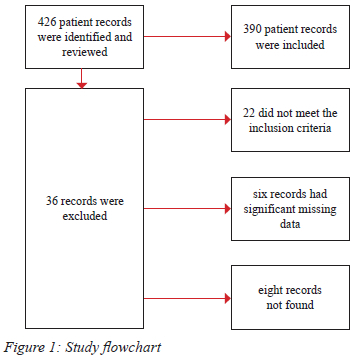
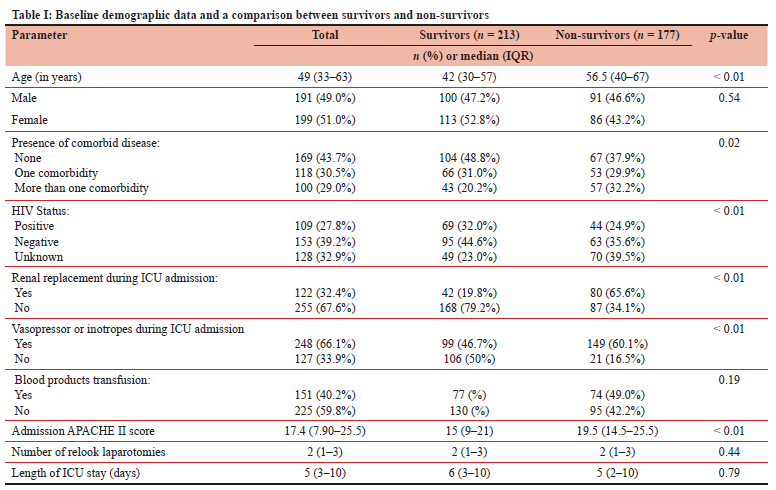
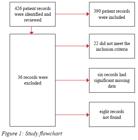
There were 390 patients included in the study (Figure 1). The gender distribution was 51% females and 49% males, and the median age of all patients was 49 years (IQR 33-63). A description of demographic variables and a comparison of survivors and non-survivors are shown in Table I. The overall mean APACHE II score was 17.4; a higher score was found in non-survivors. Older patients aged ≥ 50 years, patients requiring organ support, and those with more than one comorbid disease had reduced survival rates. Patients with known HIV status (negative or positive) had better survival (60.0% and 61.8% respectively) compared to those whose HIV status was unknown (53.0%), p < 0.01.
Sources of IAI
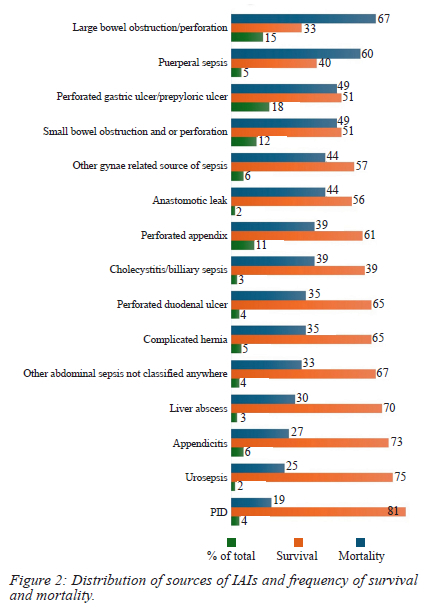
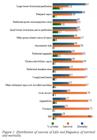
In terms of IAI source, the majority of patients admitted to ICU in this study resulted from perforated gastric/prepyloric ulcers (18%) followed by those with large bowel obstruction/perforation (15%). Pelvic inflammatory disease (PID), urosepsis and appendicitis-related IAIs had the highest survival rates (Figure 2). Laparotomy accounted for the majority of the mode of source control (94.4%), followed by radiologically assisted interventions (3.1%) and laparoscopic procedures (2.6%).
Patient outcomes
The overall ICU mortality was 45.0% (n = 177). Of the patients included in this study, 35% were discharged early and 20.0% were discharged late from the ICU.
There was a significantly higher mortality in patients with IAIs resulting from large bowel obstruction/perforation (38, 66.7%) vs survivors from the same cause (19, 33.3%) (p < 0.01). There was no significant difference between survivors and non-survivors in patients with small bowel obstruction or perforation, or both (p = 0.067).
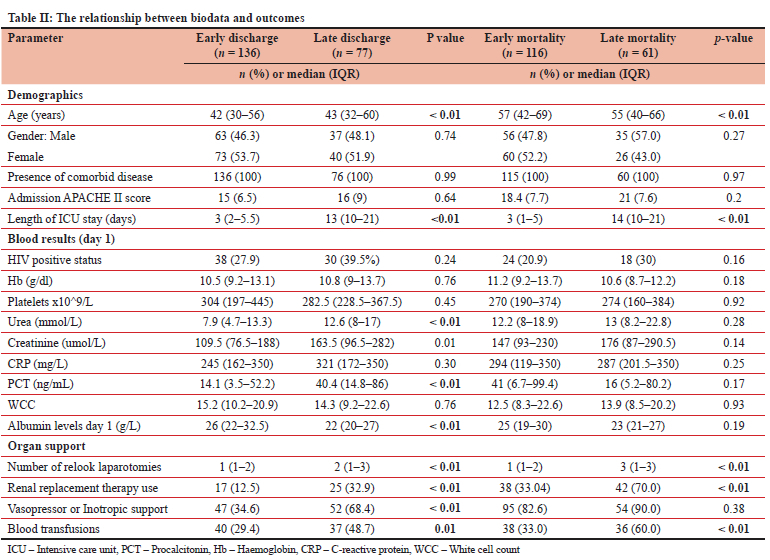
Patients who died early (within the first week of admission) were older, mostly in their 5th decade and were largely on inotropic support (Table II). Interventions such as renal replacement therapy, and blood transfusion, were predictive of delayed mortality.
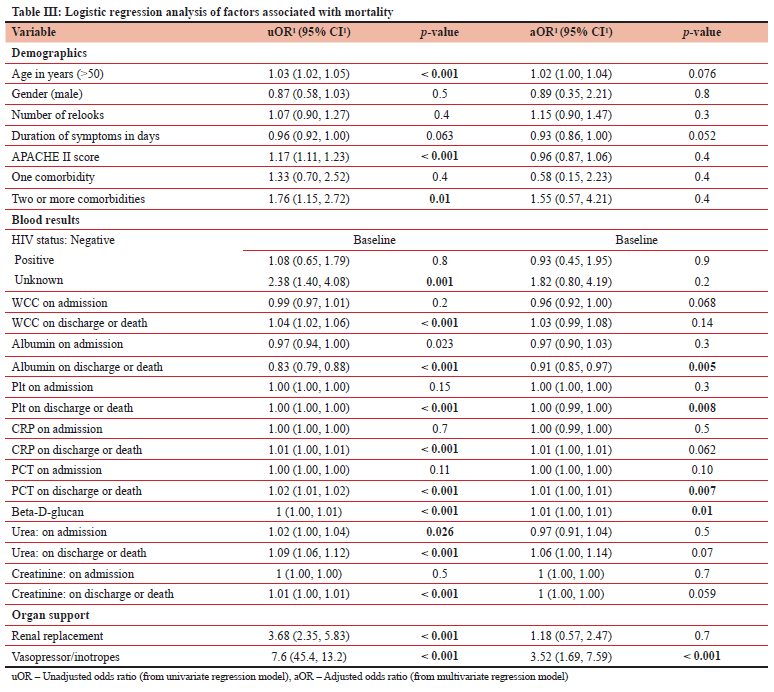
The univariate and multivariate regression models (Table III) highlight the independent effects of low albumin, low platelet count, higher PCT and beta-D-glucan, and use of vasopressors/inotropes with significantly higher odds of mortality.
Discussion
This study describes the aetiology and ICU course of patients with non-traumatic IAI admitted to a multidisciplinary tertiary ICU and identifies factors associated with mortality within this cohort of patients. Our patient ICU length of stay (LOS), which was the longest in the late mortality group with a median of 14 days and IQR (10-21), was longer compared to other studies.21,22 In a similar study conducted in Tanzania, the median LOS was seven days (IQR 5-11), the shortest was one day and the longest was 60 days.21
The overall mortality in our cohort was 45.0%, which is above the average mortality quoted worldwide and in high-income countries. The overall quoted mortality from IAI worldwide is between 6.0 and 29.0%.3,9,23 Mortality in patients with sepsis or septic shock at admission to hospital as a result of IAIs in high-income countries ranges between 7.6% and 32.4%.2411,21,25,26 Weledji et al.2727
Our study showed that patients diagnosed with IAIs secondary to large bowel obstruction/perforation had a higher likelihood of mortality. The in-between group comparison of other causes of IAIs showed no difference in outcomes, i.e., mortality and survival. However, in this study, patients with pelvic inflammatory disease as a cause of IAIs had favourable outcomes.
Factors associated with mortality in our study included advanced age, with all mortalities in patients in their 5th decade of life. Development of complications such as acute kidney injury (AKI) requiring renal replacement therapy, ongoing sepsis and septic shock, evidenced by high inflammatory markers, and use of inotropic support were also associated with mortality.
Inadequate source control, suggested by multiple relook laparotomies, was more common in the mortality group. Inadequate source control can be suspected from poor patient clinical progression, elevated inflammatory markers, worsening organ failure and positive findings from radiological investigations. Radiological investigation, such as computed tomography (CT) scans, may assist in diagnosing the source of IAI, identifying collections resulting from poor source control and managing IAI, such as using CT scan-directed percutaneous drainage.2828
The poorly identified ongoing abdominal sepsis resulting from failed or poor source control in IAIs has been previously identified as a risk factor for mortality.23, 29 De Pascale et al.3030
In this study, persistent IAI, as suggested by low albumin, use of vasopressors, elevated PCT and thrombocytopenia on the day of discharge/mortality, were independent predictors of mortality in this cohort. These markers could also suggest the presence of septic shock in the mortality group. The higher beta-D-glucan on the last day in the mortality group may suggest presence of fungal infections in these patients which also carries higher mortality, however false positive results cannot be excluded as there were no positive fungal culture results. The APACHE II score as a marker of disease severity was not predictive of mortality. The PIPAS study found that, among the ten variables included in their multivariate analysis, advanced age (> 80 years) and low platelet count were significant contributors to mortality.9
Age as a non-modifiable risk factor was also shown to be associated with high mortality in this patient group by Arvaniti et al.3131et al.1515
Limitations
This was a retrospective single-centre study, and the results cannot be generalised to other contexts. No data was collected on respiratory system support and ventilation challenges in these patients. We did not collect data on lactate levels and fluid status at admission, discharge or death, both of which are known to correlate with mortality. This study only focused on ICU outcomes and not hospital or long-term outcomes of patients with IAI.
Conclusion
Outcomes of patients with IAIs admitted to the ICU are poor, with a mortality of 45.0%. The aetiology of non-traumatic IAI in our institution is multifactorial. The factors found to be independent predictors of mortality were low albumin, use of vasopressors/inotropes, low platelet count, higher PCT and beta-D-glucan, which may suggest poor source control of IAI. Further collaborative studies from low- and middle-income countries are needed to validate these findings.
Conflict of interest
The authors declare no conflict of interest.
Funding source
No funding was required.
Ethical approval
Ethical approval was obtained from the University of Witwatersrand (Wits) Human Research Ethics Committee (M2102669).
ORCIDS Dingezweni https://orcid.org/0000-0002-9300-7724
Z Jooma https://orcid.org/0000-0002-1036-8744
MM Kebalepile https://orcid.org/0000-0002-5346-5798
PMV Motshabi Chakane https://orcid.org/0000-0001-9990-6336
Acknowledgements
All staff from CMJAH ICU and anaesthetic departments.
REFERENCES
-
1. De Waele JJ. Abdominal Sepsis. Curr Infect Dis Rep. 2016;18(8):23. https://doi.org/10.1007/s11908-016-0531-z.
» https://doi.org/10.1007/s11908-016-0531-z -
2. Blot S, Ruppé E, Harbarth S, et al. Healthcare-associated infections in adult intensive care unit patients: Changes in epidemiology, diagnosis, prevention and contributions of new technologies. Intensive Crit Care Nurs. 2022;70:103227. https://doi.org/10.1016/j.iccn.2022.103227.
» https://doi.org/10.1016/j.iccn.2022.103227 -
3. Blot S, Antonelli M, Arvaniti K, et al. Epidemiology of intra-abdominal infection and sepsis in critically ill patients: "AbSeS," a multinational observational cohort study and ESICM Trials Group Project. Intensive Care Med. 2019;45(12):1703-17. https://doi.org/10.1007/s00134-019-05819-3.
» https://doi.org/10.1007/s00134-019-05819-3 -
4. Tartaglia D, Marin JN, Nicoli AM, et al. Predictive factors of mortality in open abdomen for abdominal sepsis: A retrospective cohort study on 113 patients. Updates Surg. 2021;73(5):1975-82. https://doi.org/10.1007/s13304-021-01012-8.
» https://doi.org/10.1007/s13304-021-01012-8 -
5. Morais M, Gonçalves D, Bessa-Melo R, Devesa V, Costa-Maia J. The open abdomen: Analysis of risk factors for mortality and delayed fascial closure in 101 patients. Porto Biomed J. 2018;3(2). https://doi.org/10.1016/j.pbj.0000000000000014.
» https://doi.org/10.1016/j.pbj.0000000000000014 -
6. Tolonen M, Coccolini F, Ansaloni L, et al. Getting the invite list right: A discussion of sepsis severity scoring systems in severe complicated intra-abdominal sepsis and randomised trial inclusion criteria. World J Emerg Surg. 2018;13:17. https://doi.org/10.1186/s13017-018-0177-2.
» https://doi.org/10.1186/s13017-018-0177-2 -
7. Ahmed S, Bonnett L, Melhuish A, et al. Development and internal validation of clinical prediction models for outcomes of complicated intra-abdominal infection. Br J Surg. 2021;108(4):441-7. https://doi.org/10.1093/bjs/znaa117.
» https://doi.org/10.1093/bjs/znaa117 -
8. Blot S, De Waele JJ, Vogelaers D. Essentials for selecting antimicrobial therapy for intra-abdominal infections. Drugs. 2012;72(6):e17-32. https://doi.org/10.2165/11599800-000000000-00000.
» https://doi.org/10.2165/11599800-000000000-00000 -
9. Sartelli M, Abu-Zidan FM, Labricciosa FM, et al. Physiological parameters for prognosis in abdominal sepsis (PIPAS) study: A WSES observational study. World J Emerg Surg. 2019;14:34. https://doi.org/10.1186/s13017-019-0253-2.
» https://doi.org/10.1186/s13017-019-0253-2 -
10. Duggal A, Kast R, Van Ark E, et al. Identification of acute respiratory distress syndrome subphenotypes de novo using routine clinical data: A retrospective analysis of ARDS clinical trials. BMJ Open. 2022;12(1):e053297. https://doi.org/10.1136/bmjopen-2021-053297.
» https://doi.org/10.1136/bmjopen-2021-053297 -
11. Sartelli M, Catena F, Ansaloni L, et al. Complicated intra-abdominal infections worldwide: The definitive data of the CIAOW study. World J Emerg Surg. 2014;9:37. https://doi.org/10.1186/1749-7922-9-37.
» https://doi.org/10.1186/1749-7922-9-37 -
12. Mwenda KI, Ojuka D, Awori M. Utility of World Society of Emergency Surgery Sepsis Severity Score in predicting outcomes of intra-abdominal infections. Ann Afr Surg. 2020;17(2):65-8. https://doi.org/10.4314/aas.v17i2.5.
» https://doi.org/10.4314/aas.v17i2.5 -
13. Chatterjee AS, Renganathan DN. POSSUM: A scoring system for perforative peritonitis. J Clin Diagn Res. 2015;9(4):Pc05-9. https://doi.org/10.7860/JCDR/2015/12720.5854.
» https://doi.org/10.7860/JCDR/2015/12720.5854 -
14. Sartelli M, Chichom-Mefire A, Labricciosa FM, et al. The management of intra-abdominal infections from a global perspective: 2017 WSES guidelines for management of intra-abdominal infections. World J Emerg Surg. 2017;12:29. https://doi.org/10.1186/s13017-017-0141-6.
» https://doi.org/10.1186/s13017-017-0141-6 -
15. Luo X, Li L, Ou S, Zeng Z, Chen Z. Risk factors for mortality in abdominal infection patients in ICU: A retrospective study from 2011 to 2018. Front Med. 2022;9:839284. https://doi.org/10.3389/fmed.2022.839284.
» https://doi.org/10.3389/fmed.2022.839284 -
16. Tellor B, Skrupky LP, Symons W, et al. Inadequate source control and inappropriate antibiotics are key determinants of mortality in patients with intra-abdominal sepsis and associated bacteraemia. Surg Infect (Larchmt). 2015;16(6):785-93. https://doi.org/10.1089/sur.2014.166.
» https://doi.org/10.1089/sur.2014.166 -
17. Assfalg V, Wolf P, Reim D, et al. Procalcitonin ratio and on-demand relaparotomy for septic peritonitis: Validation of the focus index (FI). Surg Today. 2016;46(5):603-12. https://doi.org/10.1007/s00595-015-1226-z.
» https://doi.org/10.1007/s00595-015-1226-z -
18. World Medical Association Declaration of Helsinki. Ethical principles for medical research involving human subjects. JAMA.2013;310(20):2191-4. https://doi.org/10.1001/jama.2013.281053.
» https://doi.org/10.1001/jama.2013.281053 -
19. Department of Health, South Africa. South African Good Clinical Practice Guidelines Second Edition. 2016. Available from: http://www.kznhealth.gov.za/research/guideline2.pdf.
» http://www.kznhealth.gov.za/research/guideline2.pdf -
20. Harris PA, Taylor R, Minor BL, et al. The REDCap consortium: Building an international community of software platform partners. J Biomed Inform. 2019;95:103208. https://doi.org/10.1016/j.jbi.2019.103208.
» https://doi.org/10.1016/j.jbi.2019.103208 -
21. Mabewa A, Seni J, Chalya PL, Mshana SE, Gilyoma JM. Aetiology, treatment outcome and prognostic factors among patients with secondary peritonitis at Bugando Medical Centre, Mwanza, Tanzania. World J Emerg Surg. 2015;10:47. https://doi.org/10.1186/s13017-015-0042-5.
» https://doi.org/10.1186/s13017-015-0042-5 -
22. Payá-Llorente C, Martínez-López E, Sebastián-Tomás JC, et al. The impact of age and comorbidity on the postoperative outcomes after emergency surgical management of complicated intra-abdominal infections. Sci Rep. 2020;10(1):1631. https://doi.org/10.1038/s41598-020-58453-1.
» https://doi.org/10.1038/s41598-020-58453-1 -
23. De Waele J, Lipman J, Sakr Y, et al. Abdominal infections in the intensive care unit: Characteristics, treatment and determinants of outcome. BMC Infect Dis. 2014;14:420. https://doi.org/10.1186/1471-2334-14-420.
» https://doi.org/10.1186/1471-2334-14-420 -
24. Sartelli M, Catena F, Di Saverio S, et al. Current concept of abdominal sepsis: WSES position paper. World J Emerg Surg. 2014;9(1):22. https://doi.org/10.1186/1749-7922-9-22.
» https://doi.org/10.1186/1749-7922-9-22 -
25. Morar R, Richards GA, Galpin J, Herbert V. Outcome of patients with severe abdominal sepsis in intensive care experience at Charlotte Maxeke Johannesburg Academic Hospital. SAJEI. 2010;25(1):23-7. https://doi.org/10.1080/10158782.2010.11441373.
» https://doi.org/10.1080/10158782.2010.11441373 -
26. Green S, Kong VY, Clarke DL, et al. The spectrum and outcome of surgical sepsis in Pietermaritzburg, South Africa. S Afr Med J. 2017;107(2):134-6. https://doi.org/10.7196/SAMJ.2017.v107i2.11339.
» https://doi.org/10.7196/SAMJ.2017.v107i2.11339 -
27. Weledji EP, Ngowe MN. The challenge of intra-abdominal sepsis. Int J Surg. 2013;11(4):290-5. https://doi.org/10.1016/j.ijsu.2013.02.021.
» https://doi.org/10.1016/j.ijsu.2013.02.021 -
28. Coccolini F, Tranà C, Sartelli M, et al. Laparoscopic management of intra-abdominal infections: Systematic review of the literature. World J Gastrointest Surg. 2015;7(8):160-9. https://doi.org/10.4240/wjgs.v7.i8.160.
» https://doi.org/10.4240/wjgs.v7.i8.160 -
29. Mazuski JE, Tessier JM, May AK, et al. The Surgical Infection Society revised guidelines on the management of intra-abdominal infection. Surg Infect (Larchmt). 2017;18(1):1-76. https://doi.org/10.1089/sur.2016.261.
» https://doi.org/10.1089/sur.2016.261 -
30. De Pascale G, Antonelli M, Deschepper M, et al. Poor timing and failure of source control are risk factors for mortality in critically ill patients with secondary peritonitis. Intensive Care Med. 2022;48(11):1593-606. https://doi.org/10.1007/s00134-022-06883-y.
» https://doi.org/10.1007/s00134-022-06883-y -
31. Arvaniti K, Dimopoulos G, Antonelli M, et al. Epidemiology and age-related mortality in critically ill patients with intra-abdominal infection or sepsis: An international cohort study. Int J Antimicrob Agents. 2022;60(1):106591. https://doi.org/10.1016/j.ijantimicag.2022.106591.
» https://doi.org/10.1016/j.ijantimicag.2022.106591