Diagnostic yield and appropriate use of an upper endoscopy service in a resource-constrained setting
Abstract
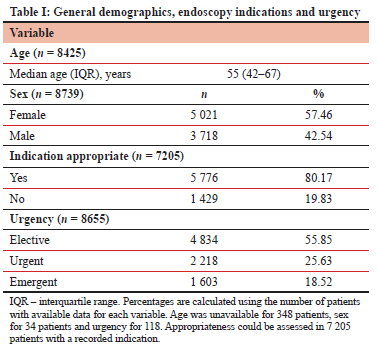
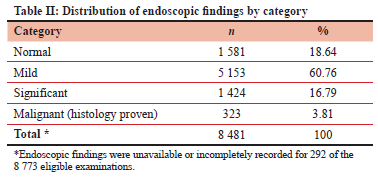
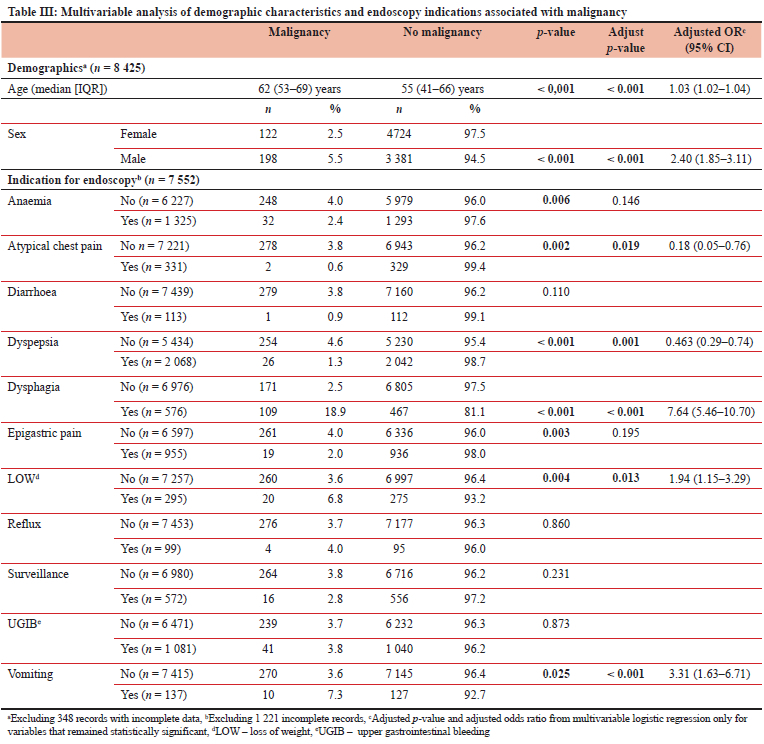
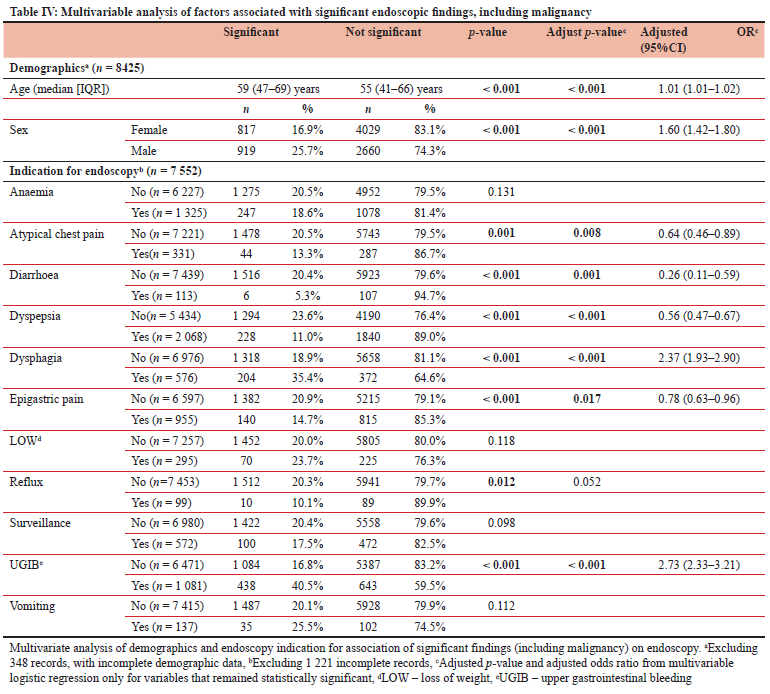
BACKGROUND: Oesophagogastroduodenoscopy (OGD) is an important diagnostic resource, but access remains limited in resource-constrained healthcare systems. Appropriate referral is therefore essential to maximise diagnostic yield while avoiding unnecessary use of limited endoscopic capacity. This study assessed the diagnostic yield and appropriateness of OGD referrals at a South African public-sector tertiary hospital. METHODS: A retrospective observational study was conducted of adults undergoing index diagnostic OGD at Groote Schuur Hospital between 26 March 2018 and 25 March 2022. Demographic characteristics, indications, urgency and endoscopic findings were obtained from a prospectively maintained endoscopy registry. Referral indications were assessed against predefined British Society of Gastroenterology (BSG) red-flag criteria. Endoscopic findings were categorised as normal, mild, significant or malignant, with malignancy requiring histopathological confirmation. Multivariable logistic regression was used to identify factors independently associated with confirmed malignancy and significant endoscopic findings. RESULTS: A total of 8 773 index diagnostic OGDs met the eligibility criteria. Among the 7 205 examinations for which appropriateness could be assessed, 80.2% met the BSG criteria. Complete endoscopic findings were available for 8 481 examinations; 18.6% were normal and 16.8% demonstrated significant non-malignant pathology. Of 406 examinations suspicious for malignancy, 323 were histologically confirmed (3.8% of the overall cohort). Older age and male sex were independently associated with malignancy. Dysphagia was the strongest indication associated with malignancy, with approximately eightfold higher odds, and was also independently associated with significant endoscopic pathology; weight loss and vomiting were additionally associated with malignancy. CONCLUSION: This South African tertiary OGD service had a lower rate of normal examinations than reported internationally, while the malignancy detection rate was comparable. Dysphagia was the strongest clinical predictor of malignancy and significant endoscopic pathology. These findings provide a local baseline for OGD utilisation and support further evaluation and local validation of referral criteria.
endoscopy; gastrointestinal; diagnostic yield; South Africa