Anal plasmablastic lymphoma with complete response to antiretroviral therapy - a case report
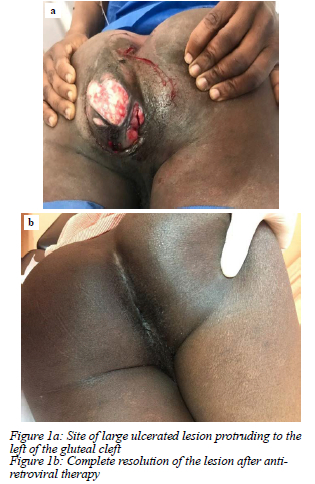
A 40-year-old male, known to be positive with the human immunodeficiency virus (HIV), presented with a large perianal mass and faecal obstruction. His CD4 count was 121 cells/mm3 suggesting advanced HIV disease, and he was started on second-line antiretroviral therapy. Magnetic resonance imaging (MRI) confirmed a large mass involving the anorectal junction. A biopsy of the tumor revealed a plasmablastic lymphoma (PBL). A diverting colostomy was performed for faecal obstruction. While awaiting chemotherapy treatment, the tumour rapidly decreased in size with complete clinical resolution. PBL is rare and has a dismal prognosis. Spontaneous regression of PBL has been reported but regression on second-line antiretroval therapy has not been previously described.
lymphoma; plasmablastic; human immunodeficiency virus; anal tumour; Ammon regression
 Thumbnail