Controversies in the emergency management of colorectal cancer and strategies for improved outcomes: a systematic review
Abstract
BACKGROUND: Colorectal cancer (CRC) is the third most commonly diagnosed cancer worldwide, with approximately 1.8 million new cases diagnosed annually and over 860 000 deaths per year. Despite established screening programmes, between 15% and 45% of patients present as emergencies due to obstruction or perforation, conditions associated with significantly increased morbidity and mortality compared with elective presentations. The objective was to evaluate the management of emergency CRC patients with obstruction or perforation and assess existing controversies. METHODS: A systematic search was conducted across PubMed, Cochrane Library, Embase, Scopus, and Google Scholar, focusing mainly on studies published between 2000 and 2024, including randomised controlled trials, meta-analyses, cohort studies, and clinical guidelines for managing adult emergency CRC cases. RESULTS: Emergency CRC is associated with significantly worse outcomes than elective surgery, with 30-day mortality ranging from 15-33% for obstruction and 26-77% for perforation. Management of obstruction and perforation differs substantially. Diverting stoma remains a standard and widely accepted intervention for left-sided and rectal obstruction, particularly in settings where self-expanding metal stents (SEMS) expertise or availability is limited. Although early trials raised concerns about SEMS-related perforation and tumour dissemination, large European randomised trials (ESCO and CReST) demonstrated comparable long-term oncologic outcomes between SEMS as a bridge to surgery and emergency resection when appropriately selected. CONCLUSIONS: To improve outcomes in patients with obstructed and perforated colorectal cancer, a multidisciplinary, evidence-based approach is critical. Strategies include reducing the incidence of advanced CRC through screening and early diagnostic pathways, optimising emergency surgical management protocols, increasing access to colorectal units, centralising care to specialised colorectal units, refining the use of SEMS, adapting enhanced recovery after surgery (ERAS) protocols for emergency settings, and refining bridge-to-surgery strategies.
colorectal cancer; emergency; obstructed; outcomes; perforated
Introduction
Colorectal cancer (CRC) remains a major global health burden, and it is the third most commonly diagnosed cancer worldwide, with approximately 1.8 million new cases diagnosed annually and over 860 000 deaths per year.123
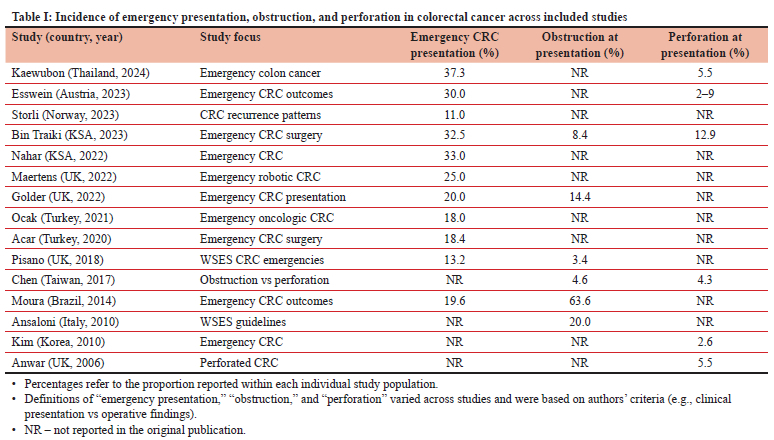
The definition of "obstructing colorectal cancer" varies significantly across studies. Some trials define obstruction endoscopically, whereas others require radiologic or clinical features of large bowel obstruction. This heterogeneity complicates the comparison of outcomes and the interpretation of management strategies.4Table I, demonstrating substantial inter-study variability in definitions and incidence.
Several factors contribute to the poor outcomes in emergency CRC patients, including advanced-stage tumours, sepsis, and the poor physiological status associated with obstruction and perforation. Patient-related factors, such as age, high American Society of Anaesthesiologists (ASA) score, body mass index (BMI), and comorbidities, contribute to the risk.1,5,6 Low socioeconomic status and limited access to healthcare and screening programmes lead to late diagnoses and higher rates of emergency presentations.72,8
Bowel obstruction and perforation in CRC patients are associated with severe complications, including peritonitis and septic shock, which significantly impact survival rates.910
For patients presenting with colonic obstruction or perforation, the possible surgical options are a diverting loop colostomy, Hartmann's procedure, or resection with primary anastomosis. The appropriate procedure is dictated by the patients' clinical status, physiological reserve, tumour location, and the surgeon's preference and level of experience.1112-14 Although they hold promise in emergency colorectal cases, their use is still limited by the physiological instability of patients requiring urgent personalised intervention.15
Obstruction and perforation represent distinct pathophysiological processes with different clinical priorities, surgical strategies, and prognostic implications. These entities should therefore be evaluated separately within management discussions.
This systematic review aims to evaluate the current management strategies for obstructed and perforated CRC, address controversies, and propose a roadmap for improving patient outcomes based on the latest evidence.
Objectives
The general objective of this systematic review is to assess the management strategies and challenges encountered in treating emergency CRC cases that present with colonic obstruction or perforation. Additionally, the review aims to evaluate opportunities to improve clinical outcomes in these patients.
The specific objectives of the study are as follows: first, to evaluate how presentations involving colonic obstruction or perforation influence final patient outcomes; second, to identify the key risk factors contributing to poor clinical outcomes in emergency CRC cases; third, to examine and analyse the ongoing debates and controversial issues in the management of CRC patients presenting with obstruction or perforation; and, finally, the study seeks to identify effective management protocols and strategies that could enhance clinical outcomes in this high-risk patient population.
Methodology
This review followed the Preferred Reporting Items for Systematic Reviews and Meta-Analyses (PRISMA) guidelines to evaluate existing articles. The review was not prospectively registered due to its narrative-synthesis design; however, PRISMA methodology and predefined eligibility criteria were strictly followed. The following protocol was used to avoid bias and ensure reproducibility.
Search strategy
The literature search included the electronic databases such as PubMed, Embase, Scopus, Google Scholar, and Cochrane Library. The target of the research was studies on the management of perforated and obstructed CRC patients, including meta-analyses, randomised controlled trials (RCTs), clinical guidelines, and cohort studies. The keywords used for the search included: emergency colorectal cancer, colonic obstruction, perforated colorectal cancer, emergency presentation, self-expanding metal stents, Hartmann's procedure, colostomy, primary anastomosis, clinical outcomes, postoperative morbidity, mortality, quality of life, and survival in emergency colorectal cancer. To reflect contemporary management practices, particularly following the introduction of SEMS around 2008, studies published between 2000 and 2025 were included. The treatment era (pre-SEMS vs. SEMS) was considered during synthesis.
Eligibility criteria
This systematic review analysed studies focusing on perforated or obstructed CRC cases. The types of studies included were meta-analyses, RCTs, cohort studies, and clinical guidelines on the management and outcomes of emergency CRC.
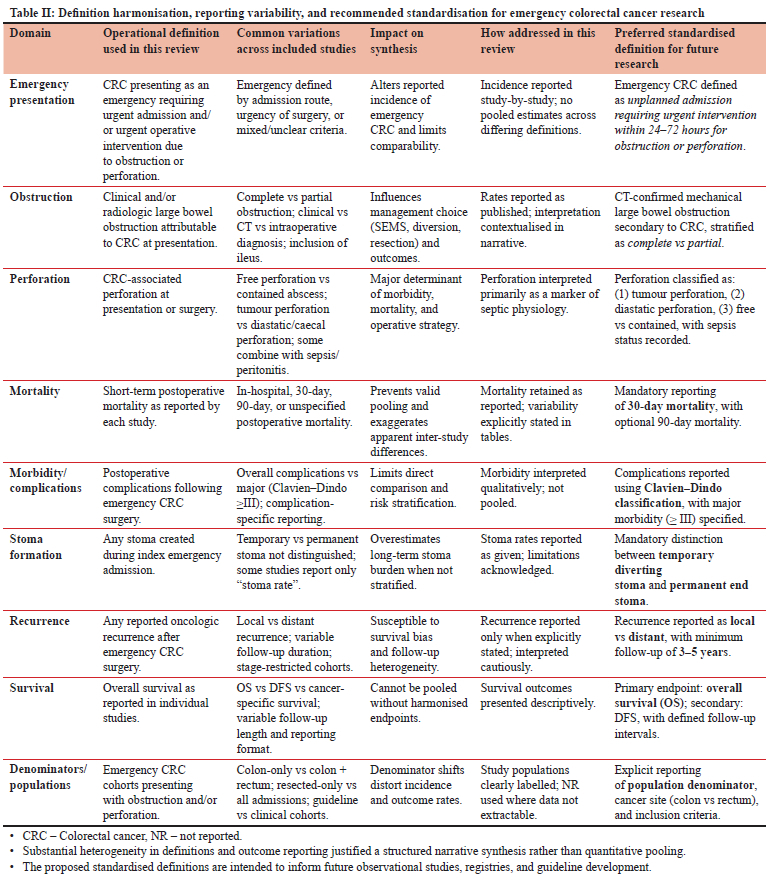
For the purposes of this review, studies were included if obstruction was defined clinically, radiologically, or endoscopically as reported by the original authors. Where possible, outcomes were interpreted according to the obstruction definition used in each study. Considerable heterogeneity was identified in the definitions of emergency presentation, obstruction, perforation, and the reported outcome measures across the included studies. To enhance transparency and interpretability, operational definitions used in this review and proposed standardisations for future research are summarised in Table II.
Inclusion criteria
In this systematic review, we included studies that reported the incidence of emergency CRC and assessed outcomes of CRC cases, including morbidity, mortality, quality of life, and survival. Additionally, the review included studies on treatment options for CRC cases presenting with obstruction or perforation, including colostomies and SEMS, studies on controversies in CRC emergency management, and studies comparing outcomes between elective and emergency cases. Studies discussing the importance of multidisciplinary care, studies on the role of enhanced recovery after surgery (ERAS) in managing cases with perforated or obstructed CRC were included in the study for the adult population.
Exclusion criteria
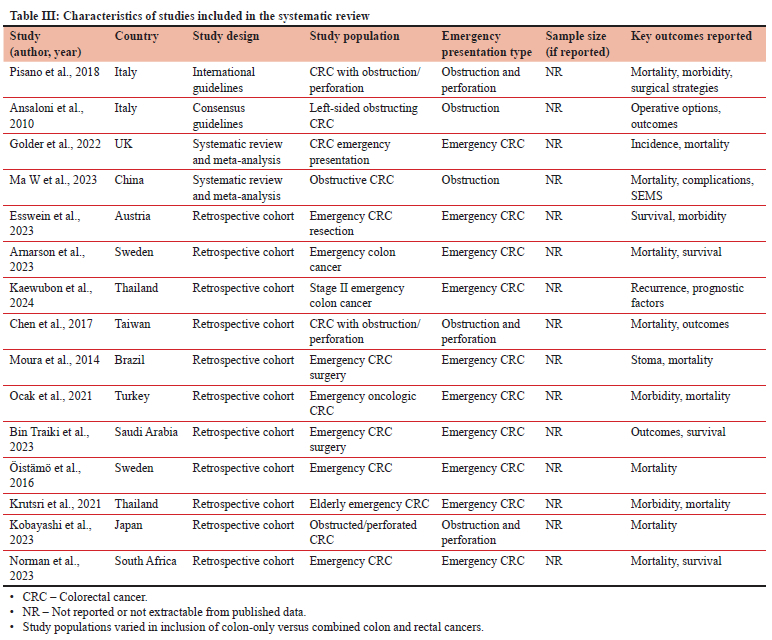
We excluded studies that included letters to the editor, case reports, personal opinions, studies of elective CRC cases, studies of benign colonic conditions, studies of paediatric cohorts, and studies published in non-English languages. The methodological characteristics, geographic distribution, and design of the included studies are summarised in Table III.
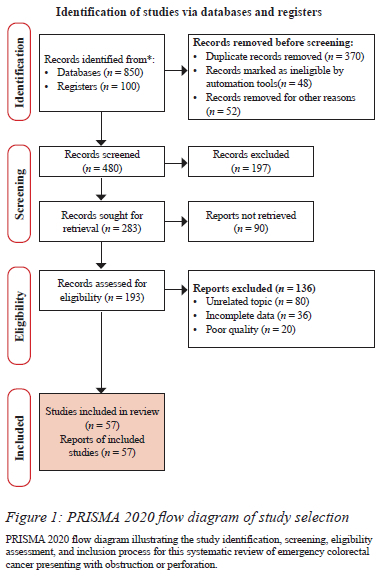
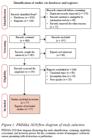
A PRISMA flow-chart diagram was used to illustrate the study selection process. A total of 950 records were identified (850 from database searches and 100 from other sources). After removal of duplicates, 480 records remained for title and abstract screening. Of these, 197 were excluded for irrelevance or language, leaving 283 articles for full-text review. After excluding 226 studies (case reports, paediatric studies, elective-only cohorts, and non-eligible designs), 57 studies were included in the final qualitative synthesis, as illustrated in Figure 1.
Data extraction
The extracted data included study information, patient demographics, presentation of emergency CRC, various management strategies, and clinical outcomes, including morbidity, mortality, and survival.
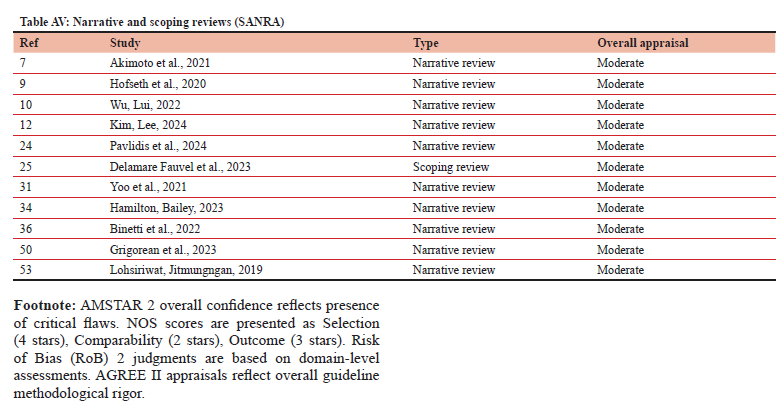
Quality assessment and risk of bias
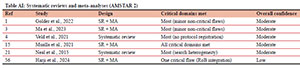
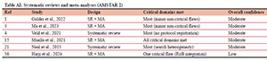
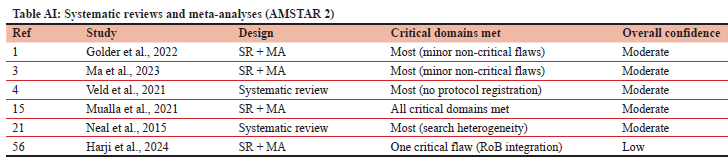
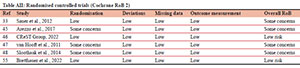
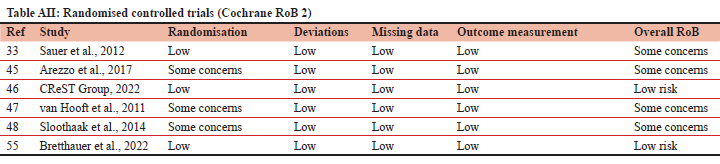
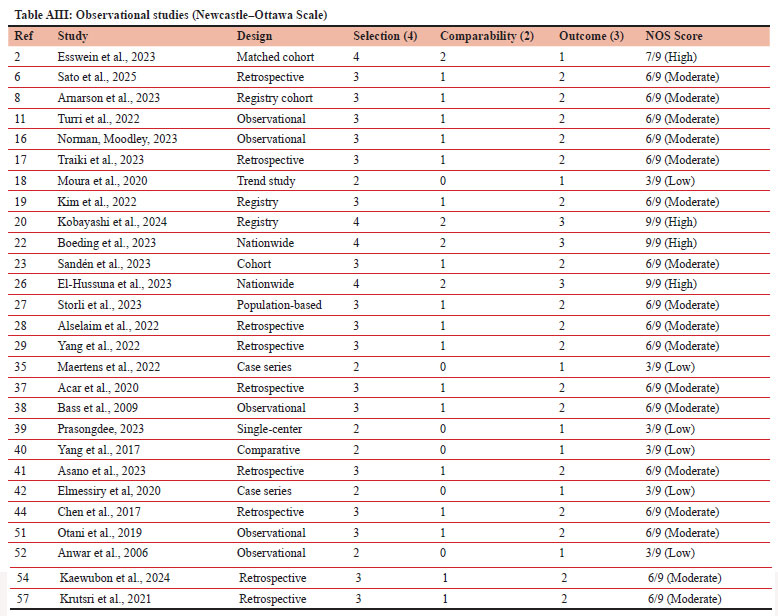
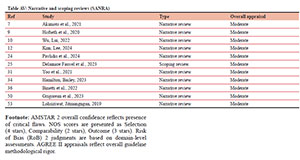
The included studies were evaluated using design-specific quality appraisal tools: AMSTAR 2 for meta-analyses and systematic reviews, the Cochrane Risk of Bias tool for RCTs, the Newcastle-Ottawa Scale for cohort studies, AGREE II for clinical guidelines, and SANRA for narrative and scoping reviews. To reduce risk of selection bias (Appendix 1), two reviewers independently and in duplicate screened titles and abstracts against predefined eligibility criteria. Full-text articles were then reviewed in the same manner. Discrepancies were resolved through discussion or, if needed, by consulting a third reviewer. The use of explicit inclusion and exclusion criteria, along with the PRISMA flow diagram, ensured methodological rigor and minimised selection bias. Duplicate reports were excluded, and only peer-reviewed, English-language articles reporting clear outcome data were considered.
Data synthesis and analysis
A qualitative synthesis was conducted, and the relevant findings were summarised in a narrative and presented in tables. Descriptive statistics were used for pooled data whenever possible. Meta-analysis was not done due to heterogeneity of the articles, their methods, and their outcomes. The qualitative analysis included evaluation of surgical procedures (colostomy, primary anastomosis, and SEMS), the impact of centre volume, and the impact of emergency surgery for CRC cases.
Results
Where comparative data were available, outcomes of emergency CRC surgery were interpreted in relation to elective surgery cohorts to contextualise differences in morbidity, mortality, and long-term survival.
Outcomes in obstructed and perforated CRC cases
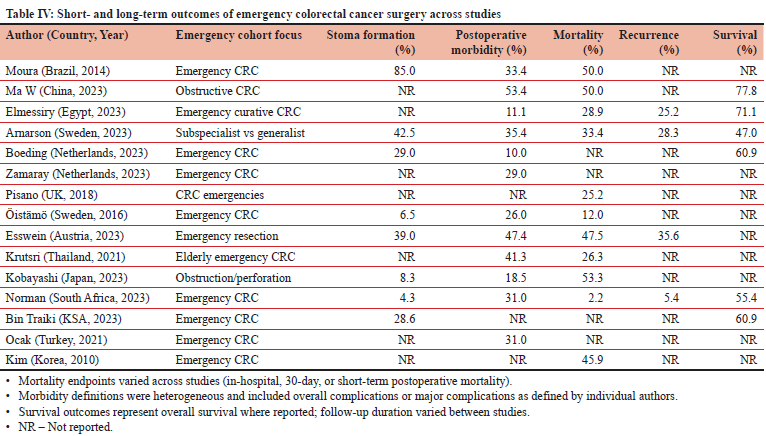
Emergency CRC cases involving obstruction and perforation are associated with significantly worse outcomes, as summarised in Table IV, which presents reported ranges for mortality, morbidity, stoma formation, recurrence, and survival across included cohorts. The primary outcome measures reviewed in this study include mortality, postoperative complications, length of hospital stay, stoma formation, quality of life, and long-term survival.
Mortality and morbidity in emergency CRC cases
Emergency CRC surgeries are associated with significantly higher mortality and morbidity compared to elective procedures. Thirty-day mortality ranges from 15-33% in obstruction and 26-77% in perforation, whereas in elective surgery it typically remains below 5%.2,6 The mortality rate increases further at 90 days, reaching up to 37%, particularly in patients presenting with complications such as sepsis and multi-organ failure.16-19 Among emergency presentations, patients with perforated CRC face the highest mortality risks, with reported rates ranging from 26-77%. This is primarily due to the presence of peritonitis, systemic infection, and resulting organ dysfunction.2,6 In contrast, patients with obstructed CRC have somewhat lower but still concerning mortality rates, reported between 15% and 30%, which is often attributed to delayed presentation and the inherent risks of emergency surgical intervention.1520
Postoperative complications
Postoperative complications are also markedly higher in emergency CRC surgeries compared to elective procedures. Anastomotic leakage occurs in approximately 13-27% of emergency primary anastomoses. Primary anastomosis should be performed only in hemodynamically stable patients with adequate physiological reserve. In unstable patients, staged procedures or diversion are preferred. Leak rates differ by tumour location: emergency right-sided anastomoses have leak rates comparable to those of elective surgery, whereas left-sided emergency anastomoses carry a higher risk.1555,21 Pulmonary complications, such as pneumonia and acute respiratory distress syndrome (ARDS), develop in 18-35% of emergency CRC patients, largely due to prolonged hospital stays and sepsis-related complications.2116
Length of hospital stay and ICU admissions
The length of hospital stay and the rate of ICU admission are also significantly higher in emergency CRC cases. The mean hospital stay ranges from 10-21 days, whereas for elective cases it is typically 5-9 days.15212122
Stoma formation and long-term functional outcomes
Stoma formation should not be considered inferior management in emergency CRC. In left-sided and rectal obstruction, diversion is standard practice in many healthcare systems and may significantly improve short- and long-term outcomes by allowing stabilisation before definitive resection. Stoma formation in emergency CRC cases significantly impacts both short- and long-term patient outcomes. Temporary or permanent stomas are created in 50-80% of cases, especially in unstable patients and those presenting with perforated tumours.151515,23,24 Recent research indicates that emergency CRC patients who undergo stoma formation report significantly lower quality of life compared to those who undergo primary anastomosis.17
Quality of life and long-term survival
In terms of long-term survival and quality of life, emergency CRC patients fare considerably worse than their elective counterparts. Reported five-year survival for emergency CRC ranges approximately from 20-45%, whereas elective cases generally demonstrate substantially higher survival rates, often exceeding 60-70% depending on stage and population characteristics.15,24 Stoma formation in emergency CRC cases may impact health-related quality of life, particularly in the early postoperative period. However, diversion remains a safe and widely accepted standard strategy in unstable patients or in left-sided obstruction and should not be considered inferior management. In many emergency scenarios, stoma formation represents the safest approach to achieve source control and reduce anastomotic risk.1525,26 A multicentre study further confirmed that elderly patients experience significantly higher recurrence rates and lower survival following emergency resection of CRC than those who undergo elective surgery.27
Factors contributing to poor outcomes in emergency CRC
The poor outcomes observed in emergency CRC cases are multifactorial. One major factor is the advanced stage of disease at presentation. More than 70% of emergency CRC cases present at stage III or IV, which significantly limits the potential for curative surgical intervention.1,2,6 A study in Saudi Arabia found that advanced-stage presentation notably increases 30-day mortality, particularly in low-resource healthcare settings.28529
Patient demographics and comorbidities also contribute to unfavourable outcomes. Patients aged 70 years or older with cardiovascular or pulmonary conditions have a 2.5-fold increased risk of mortality and postoperative complications.21308,26,29,30
Controversies in emergency CRC management
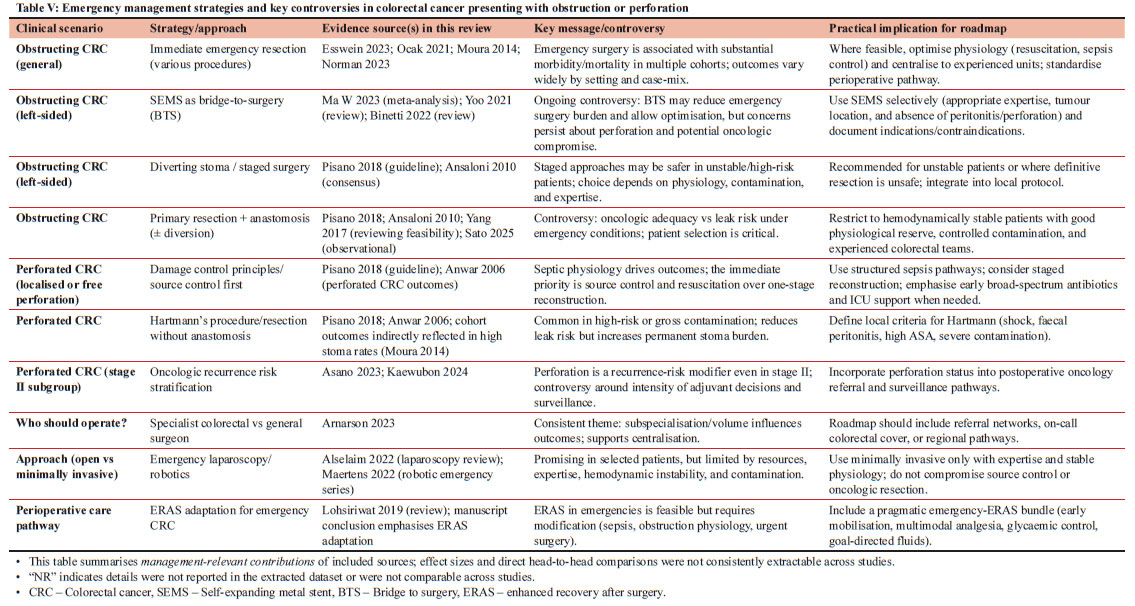
While many aspects of emergency CRC management are now guided by established principles, nuanced decision-making remains necessary regarding surgical timing, patient selection, and bridge-to-surgery strategies. Hartmann's procedure is the most commonly performed, reported in up to 60% of emergency resections in observational series, but it has a high permanent stoma rate - approximately 50% - which significantly affects patients' long-term quality of life.6,14,16,23,24 While resection and primary anastomosis offer better functional outcomes, they are associated with a higher anastomotic leakage rate (13-27%), requiring careful patient selection.11Table V, including diversion strategies, SEMS use, Hartmann's procedure, and the role of specialist units.
The use of SEMS as a bridge to surgery in obstructed CRC cases shows a 70% success rate in delaying surgical intervention. This approach allows time for patient optimisation and facilitates elective resection, thereby reducing the complications associated with emergency surgery.12-14 SEMS use is not without complications. Perforation rates ranging between 5% and 15% have been reported in earlier series and remain an important technical consideration.313233
Opportunities to improve outcomes
Improving outcomes in emergency CRC requires a multifaceted approach targeting early detection, optimised surgical care, institutional specialisation, and patient-centred strategies. One of the most impactful opportunities lies in early diagnosis. Expanding CRC screening programmes may reduce the incidence of advanced-stage colorectal cancer and potentially decrease the proportion of emergency presentations; however, screening does not improve outcomes once obstruction or perforation has occurred.15,24 Early detection through systematic screening facilitates elective intervention and reduces the likelihood of advanced-stage presentation; however, its population-level survival benefit varies across trials.
Another critical area is preoperative stabilisation and optimised perioperative care. The use of fluid resuscitation, prompt antibiotic administration, and comprehensive patient assessment plays a vital role in reducing perioperative mortality and enhancing surgical success.12
Minimally invasive approaches, when feasible and performed in experienced centres, may be associated with reduced short-term postoperative morbidity and faster recovery in carefully selected emergency CRC patients; however, high-quality comparative data remain limited.28,34,35 The centralisation of care in high-volume, specialised colorectal centres is another key strategy. Studies have shown that patients managed in specialised units have 30% lower mortality rates and shorter hospital stays than those treated in general surgical units.2617
Although originally developed for elective surgery, ERAS principles have been adapted for emergency colorectal surgery and have been associated with reduced postoperative morbidity and shorter hospital stays in pooled analyses, though the evidence remains largely observational.3636,37
A multidisciplinary approach and long-term follow-up are also essential for successful emergency CRC care. Involving specialists from multiple fields improves postoperative recovery, facilitates comprehensive care planning, and increases long-term survival.38
Lastly, improving public awareness and strengthening screening strategies can have a transformative effect. Increasing awareness of CRC symptoms and encouraging participation in screening programmes can significantly reduce the incidence of emergency presentations due to obstruction or perforation. Better-informed populations are more likely to seek care early, resulting in improved outcomes.38
Collectively, these opportunities represent actionable strategies that can significantly reduce the burden of emergency CRC and enhance both short- and long-term outcomes.
Discussion
Emergency presentation of CRC is linked to poor outcomes such as high morbidity and mortality rates, rendering its management a clinical challenge. This systematic review highlights the difficulties, controversies, and factors contributing to poor outcomes and suggests a roadmap for better outcomes.
Determinants of poor outcomes in emergency CRC
Emergency CRC presentations, including obstruction and perforation, are associated with significantly worse outcomes than elective cases. Several factors contribute to these poor outcomes, such as advanced disease at presentation, sepsis, delayed intervention, and limited access to specialised colorectal surgical teams. Retrospective analyses have demonstrated that, although emergency oncologic colorectal resections carry higher morbidity than elective surgery, acceptable oncologic outcomes can be achieved in appropriately selected patients.39
Advanced disease at presentation
Patients from low socioeconomic status usually present late as emergencies with locally advanced disease due to limited access to early screening programmes.1,2,6 Presentation with obstruction or perforation is associated with a poor prognosis, as patients have a lower chance of curative resection and optimal management, due to an increased incidence of peritoneal seedlings.183,5 Manual decompression techniques have been described in small retrospective series; however, the evidence is limited and insufficient to recommend routine use.40
CRC presenting with colonic obstruction is associated with unfavourable tumour biology and poor response to adjuvant treatment, rendering obstruction an independent poor prognostic factor.41
Importantly, perforation represents a distinct biological and clinical state compared with obstruction because it is frequently accompanied by peritoneal contamination, systemic inflammation, and septic physiology, which further worsens prognosis.2,6,18
Influence of comorbidities and age
Several patient factors contribute to poor outcomes in emergency CRC, including renal impairment, diabetes mellitus (DM), ischemic heart disease (IHD), and advanced age.211,2,5,6,21 In emergency settings, elderly patients have a higher recurrence rate compared to younger cohorts, which highlights the need for a tailored approach for this age group when presented with obstruction or perforation of CRC.42
While operative principles are broadly similar, older patients often require stricter physiological selection, enhanced preoperative optimisation, and careful balancing of definitive resection versus damage-control/staged strategies.21,42
Healthcare disparities and access to specialised care
Access to high-volume colorectal centres has been linked to improved patient outcomes, driven by specialised surgical expertise and multidisciplinary care.1-3,6,10 However, many emergency CRC patients are treated in non-specialist settings, where the lack of standardised protocols and colorectal surgical experience contributes to suboptimal postoperative outcomes.254319
Management of obstructing colorectal cancer
Management of obstructing CRC has evolved substantially and is no longer uniformly "highly controversial." Contemporary management is guided by tumour location, patient physiology, and local expertise, with several pathways considered standard of care.
Left-sided and rectal obstruction should be explicitly distinguished from right-sided obstruction because management options, anastomotic risk, and feasibility of BTS strategies differ.
Surgical options in obstruction
For left-sided and rectal obstruction, a diverting stoma remains a standard and widely accepted management strategy. In many healthcare systems, particularly where endoscopic expertise is limited, diverting patients and delaying resection improves both short- and long-term outcomes.
Resection with primary anastomosis may be considered in carefully selected hemodynamically stable patients with adequate physiological reserve.11
Right-sided obstructing tumours may be managed with right hemicolectomy and primary anastomosis in stable patients. Leak rates in emergency right-sided anastomoses are generally comparable to those of elective settings, whereas left-sided emergency anastomoses carry a higher risk and often require diversion or staged approaches.11
Self-expandable metal stents
SEMS are increasingly used for malignant large bowel obstruction as a BTS, allowing preoperative optimisation and staging.12-14 Early concerns regarding perforation (5-10%) and potential tumour dissemination were raised.311412,14
Consensus guidelines recommend avoiding SEMS in patients with signs of impending perforation, with careful consideration of tumour location and technical expertise.444546,47 However, subsequent randomised trials, including ESCO and CReST, demonstrated comparable long-term oncologic outcomes between SEMS and emergency surgery when used in appropriately selected patients.48,49
Minimally invasive surgery for obstruction
Evidence regarding minimally invasive surgery in emergency CRC remains limited and largely observational. Selected series suggest that laparoscopic approaches are technically feasible in hemodynamically stable patients when performed by experienced teams, particularly in high-volume centres.28,34,35 However, the need for advanced expertise, careful patient selection, and the potential for longer operative times limit widespread adoption in acute settings. Robust comparative data demonstrating long-term oncologic or survival benefit over open surgery are currently lacking.
Management of perforated colorectal cancer
Perforated CRC represents a distinct, more severe clinical entity characterised by peritonitis and septic physiology and may present along a spectrum ranging from localised contamination to feculent peritonitis502,6.
Surgical priorities in perforation
The primary objective in perforated CRC is urgent source control. Hartmann's procedure remains widely used for left-sided perforation in unstable patients.5,6,23 While associated with a high permanent stoma rate, it provides safe control of contamination and avoids a high-risk anastomosis in septic physiology.5,6,23
Right-sided perforations are typically managed with right hemicolectomy. Primary anastomosis in perforated CRC should be considered only in carefully selected, stable patients with minimal contamination and adequate physiological reserve; otherwise, staged approaches or diversion are preferred.5,6,11,23
Because perforation exists along a clinical spectrum (localised/contained vs diffuse feculent peritonitis), outcomes and operative decisions vary accordingly, and this heterogeneity should be acknowledged when interpreting the literature.50
Adjunctive and emerging therapies in emergency CRC
The role of neoadjuvant therapy in emergency settings
Neoadjuvant chemoradiotherapy is standard for locally advanced rectal cancer to reduce local recurrence but is not routinely used in colon cancer. In emergency obstructing or perforated presentations, oncologic sequencing is typically precluded by urgent surgical requirements, and neoadjuvant therapy is rarely feasible.3351
Where neoadjuvant therapy is considered, the discussion should explicitly differentiate rectal cancer (where chemoradiotherapy impacts local control) from colon cancer (where radiotherapy is not routine) and recognise that emergency physiology often precludes oncologic sequencing.33,51
Enhanced Recovery After Surgery in emergency CRC
Enhanced recovery after surgery (ERAS) protocols, originally developed for elective colorectal procedures, have increasingly been adapted to emergency colorectal surgery. A systematic review and meta-analysis demonstrated that the application of ERAS principles in emergency settings is associated with reduced postoperative morbidity and a shorter length of hospital stay compared with conventional care, although the available evidence remains largely observational.363752
Strategies to improve outcomes in emergency CRC
Reducing incidence of advanced CRC and emergency presentations
Strengthening CRC screening programmes, particularly in underserved populations with limited access to healthcare, may reduce the burden of emergency presentations by reducing the number of advanced-stage diagnoses.15,24 However, screening does not directly improve outcomes once obstruction or perforation has already occurred; its role is primarily in reducing the incidence of advanced disease and emergency presentation.5354
Standardising emergency CRC management protocols
Developing evidence-based guidelines for emergency CRC - particularly regarding SEMS use, diversion strategies, surgical decision-making, and perioperative optimisation - is critical to reducing care variability and improving patient outcomes.20,22,43
Centralisation of care and multidisciplinary approach
High-volume colorectal centres and specialised units consistently report better surgical and oncologic outcomes.25,26 Establishing referral pathways and centralising complex cases to specialised centres could significantly enhance patient survival.25,26 High-volume, tertiary, specialised colorectal units achieve better outcomes for emergency CRC cases, encouraging greater service centralisation. This improvement is demonstrated in improved overall survival and lower morbidity rates.1,2,6
Training general surgeons in emergency CRC care
Given the limited availability of colorectal specialists in many regions, training general surgeons in emergency CRC management is essential. Implementing structured surgical training programmes and standardised treatment algorithms will help bridge the expertise gap.5527
Public awareness and digital outreach for early diagnosis
Digital platforms that reach all community levels can significantly increase CRC awareness, educate the public about symptoms, and promote early medical consultation.7,10 Artificial intelligence and machine learning applications are increasingly being explored to enhance early CRC detection and guide clinical decision-making, potentially reducing advanced disease and emergency presentations.17
Future directions and research priorities
Continuing research is essential to refine emergency CRC management strategies and establish widely accepted clinical guidelines. Key areas requiring investigation include evaluating long-term oncologic outcomes of SEMS as a BTS, assessing the feasibility and efficacy of neoadjuvant strategies in selected emergency CRC cases, and defining the role of robotic and laparoscopic procedures in acute CRC management. Emerging reports of robotic and minimally invasive approaches in emergency settings suggest technical feasibility, though evidence remains limited to small retrospective series.5657
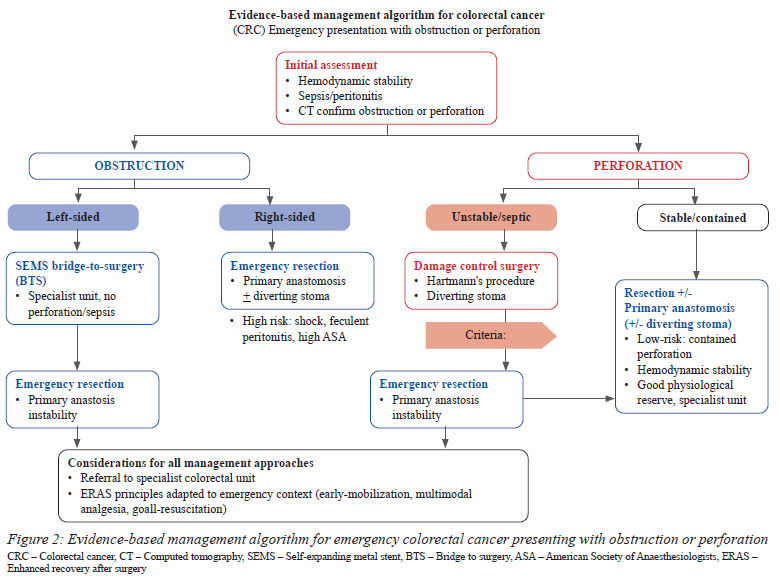
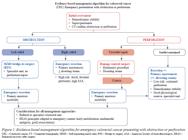
Future research should also separate outcomes by obstruction vs perforation and right-sided vs left-sided disease, because these subgroups have different decision pathways and complication profiles.22,26 An evidence-based management algorithm synthesising the reviewed literature is presented in Figure 2.
Recommendations
Implement national strategies to reduce advanced colorectal cancer incidence through improved awareness and context-appropriate screening, recognising that screening reduces incidence rather than outcomes in established emergencies.
Prioritise early diagnosis, rapid physiological optimisation, and timely access to specialised colorectal and multidisciplinary care.
Adopt patient-tailored management based on physiological status, disease severity, and tumour location.
In obstruction, guide resection strategy by hemodynamic stability, severity of obstruction, and surgical expertise; apply SEMS selectively in stable left-sided cases within experienced centres.
In perforation, follow damage-control principles with diversion or anastomosis guided by sepsis severity and contamination.
Centralise emergency CRC services to high-volume specialised centres with structured referral pathways.
Implement pragmatic ERAS adaptations following resuscitation to optimise recovery.
Develop standardised management protocols and definitions to enhance comparability and strengthen the evidence base for emergency CRC care.
Strengths
This systematic review included current articles from diverse health infrastructure with variable levels of specialised services for obstructed and perforated colorectal cancer patients. This review provides a global perspective by including different study designs, international guidelines, and studies from different geographical areas.
Limitations
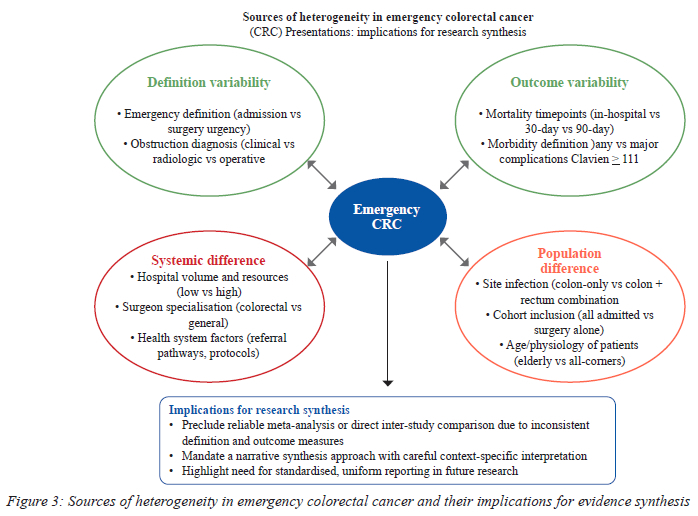
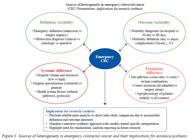
Several limitations of this systematic review should be acknowledged, including the heterogeneity of the reviewed studies with respect to patient cohorts, definitions of emergency presentation, operative strategies, and reported endpoints (Figure 3). This precluded formal meta-analysis and limited the ability to conduct quantitative analyses between management strategies. Additionally, confounding and selection bias are possible as most reviewed evidence was observational in nature, with few randomised controlled trials specifically addressing emergency CRC. Moreover, the inconsistent reporting of long-term oncologic endpoints, quality of life, and stoma-related functional outcomes further limited the meta-analysis, highlighting the need for standardised reporting and prospective, multicentre research in this field.
Conclusion
Management of obstructing and perforated CRC cases is a significant clinical challenge due to the associated high morbidity and mortality rates. Better outcomes are observed in high-volume centres and specialised units, with early detection and clinical optimisation. Adoption and adaptation of ERAS protocols and multidisciplinary guidelines have shown promising results. Future research should focus on SEMS use, minimally invasive procedures, and enhancing ERAS adaptation to improve outcomes and survival.
Conflict of interest
The authors declare no conflict of interest.
Funding source
No funding was required.
Ethical approval
Ethical approval is not required for this systematic review, as it reviews published articles that have undergone ethical clearance at the relevant institutes. However, this review conforms with the principles and guidelines of ethical considerations.
ORCIDALK Elnaim https://orcid.org/0000-0002-4763-6669
REFERENCES
-
1. Golder AM, McMillan DC, Horgan PG, Roxburgh CSD. Determinants of emergency presentation in patients with colorectal cancer: A systematic review and meta analysis. Sci Rep. 2022;12:4366. https://doi.org/10.1038/s41598-022-08447-y.
» https://doi.org/10.1038/s41598-022-08447-y -
2. Esswein K, Ninkovic M, Gasser E, et al. Emergency resection is an independent risk factor for decreased long term overall survival in colorectal cancer: A matched pair analysis. World J Surg Oncol. 2023;21:310. https://doi.org/10.1186/s12957-023-03182-8.
» https://doi.org/10.1186/s12957-023-03182-8 -
3. Ma W, Zhang JC, Luo K, et al. Self expanding metal stents versus decompression tubes as a bridge to surgery for patients with obstruction caused by colorectal cancer: A systematic review and meta analysis. World J Emerg Surg. 2023;18:46. https://doi.org/10.1186/s13017-023-00515-6.
» https://doi.org/10.1186/s13017-023-00515-6 -
4. Veld JV, Amelung FJ, Borstlap WAA, et al. Definition of large bowel obstruction by primary colorectal cancer: A systematic review. Colorectal Dis. 2021;23(4):787-804. https://doi.org/10.1111/codi.15479.
» https://doi.org/10.1111/codi.15479 -
5. Pisano M, Zorcolo L, Merli C, et al. 2017 WSES guidelines on colon and rectal cancer emergencies: Obstruction and perforation. World J Emerg Surg. 2018;13:36. https://doi.org/10.1186/s13017-018-0192-3.
» https://doi.org/10.1186/s13017-018-0192-3 -
6. Sato K, Fukunaga Y, Takamatsu M, et al. Short- and long-term outcomes of one-stage radical resection and anastomosis without preoperative decompression and diverting stoma between incomplete obstructive and non-obstructive left-sided colorectal cancer: A retrospective observational study. J Anus Rectum Colon. 2025;9(1):41-51. https://doi.org/10.23922/jarc.2024-076.
» https://doi.org/10.23922/jarc.2024-076 -
7. Akimoto N, Ugai T, Zhong R, et al. Rising incidence of early onset colorectal cancer: A call to action. Nat Rev Clin Oncol. 2021;18:230 43. https://doi.org/10.1038/s41571-020-00445-1.
» https://doi.org/10.1038/s41571-020-00445-1 -
8. Arnarson Ö, Syk I, Butt ST, et al. Who should operate on patients presenting with emergent colon cancer? A comparison of short and long term outcomes depending on surgical sub specialisation. World J Emerg Surg. 2023;18:3. https://doi.org/10.1186/s13017-023-00474-y.
» https://doi.org/10.1186/s13017-023-00474-y -
9. Hofseth LJ, Hebert JR, Chanda A, et al. Early onset colorectal cancer: Initial clues and current views. Nat Rev Gastroenterol Hepatol. 2020;17:352-64. https://doi.org/10.1038/s41575-019-0253-4.
» https://doi.org/10.1038/s41575-019-0253-4 -
10. Wu CW, Lui RN. Early onset colorectal cancer: Current insights and future directions. World J Gastrointest Oncol. 2022;14:230-41. https://doi.org/10.4251/wjgo.v14.i1.230.
» https://doi.org/10.4251/wjgo.v14.i1.230 -
11. Turri G, Caliskan G, Conti C, et al. Impact of age and comorbidities on short and long term outcomes of patients undergoing surgery for colorectal cancer. Front Oncol. 2022;12:959650. https://doi.org/10.3389/fonc.2022.959650.
» https://doi.org/10.3389/fonc.2022.959650 -
12. Kim DH, Lee HH. Colon stenting as a bridge to surgery in obstructive colorectal cancer management. Clin Endosc. 2024;57:424 33. https://doi.org/10.5946/ce.2023.138.
» https://doi.org/10.5946/ce.2023.138 -
13. Qaderi SM, Galjart B, Verhoef C, et al. Disease recurrence after colorectal cancer surgery in the modern era: A population-based study. Int J Colorectal Dis. 2021;36:2399-410. https://doi.org/10.1007/s00384-021-03914-w.
» https://doi.org/10.1007/s00384-021-03914-w -
14. Van Hooft JE, Veld JV, Arnold D, et al. Self expandable metal stents for obstructing colonic and extracolonic cancer: European Society of Gastrointestinal Endoscopy (ESGE) guideline - update 2020. Endoscopy. 2020;52:389-407. https://doi.org/10.1055/a-1140-3017.
» https://doi.org/10.1055/a-1140-3017 -
15. Mualla NM, Hussain MR, Akrmah M, et al. The impact of postoperative complications on long term oncological outcomes following curative resection of colorectal cancer (stage I III): A systematic review and meta-analysis. Cureus. 2021;13:e12837. https://doi.org/10.7759/cureus.12837.
» https://doi.org/10.7759/cureus.12837 -
16. Norman J, Moodley Y. Large bowel perforation in patients with colorectal cancer: A South African perspective. J Cancer Allied Spec. 2023;9:517. https://doi.org/10.37029/jcas.v9i1.517.
» https://doi.org/10.37029/jcas.v9i1.517 -
17. Traiki T, AlShammari A, AlRabah RN, et al. Oncological outcomes of elective versus emergency surgery for colon cancer: A tertiary academic centre experience. Saudi J Gastroenterol. 2023;29:316-22. https://doi.org/10.4103/sjg.sjg_31_23.
» https://doi.org/10.4103/sjg.sjg_31_23 -
18. Moura AR, Marques AD, Dantas MS, et al. Trends in the incidence and mortality of colorectal cancer in a Brazilian city. BMC Res Notes. 2020;13:560. https://doi.org/10.1186/s13104-020-05411-9.
» https://doi.org/10.1186/s13104-020-05411-9 -
19. Kim MH, Park S, Yi N, et al. Colorectal cancer mortality trends in the era of cancer survivorship in Korea: 2000-2020. Ann Coloproctol. 2022;38:343. https://doi.org/10.3393/ac.2022.00535.0076.
» https://doi.org/10.3393/ac.2022.00535.0076 -
20. Kobayashi H, Asano M, Ishiguro M, et al. Multi-institutional registry of large bowel cancer in Japan conducted by the Japanese Society for Cancer of the Colon and Rectum in 2023: Cases treated in 2015. J Anus Rectum Colon. 2024;8:265-70. https://doi.org/10.23922/jarc.2024-065.
» https://doi.org/10.23922/jarc.2024-065 -
21. Neal RD, Tharmanathan P, France B, et al. Is increased time to diagnosis and treatment in symptomatic cancer associated with poorer outcomes? Systematic review. Br J Cancer. 2015;112(Suppl 1):S92-107. https://doi.org/10.1038/bjc.2015.48.
» https://doi.org/10.1038/bjc.2015.48 -
22. Boeding JRE, Elferink MAG, Tanis PJ, et al. Surgical treatment and overall survival in patients with right sided obstructing colon cancer: A nationwide retrospective cohort study. Int J Colorectal Dis. 2023;38:248. https://doi.org/10.1007/s00384-023-04541-3.
» https://doi.org/10.1007/s00384-023-04541-3 -
23. Sandén G, Svensson J, Ljuslinder I, et al. Defunctioning stoma before neoadjuvant treatment or resection of endoscopically obstructing rectal cancer. Int J Colorectal Dis. 2023;38:24. https://doi.org/10.1007/s00384-023-04318-8.
» https://doi.org/10.1007/s00384-023-04318-8 -
24. Pavlidis ET, Galanis IN, Pavlidis TE. Management of obstructed colorectal carcinoma in an emergency setting: An update. World J Gastrointest Oncol. 2024;16:598-613. https://doi.org/10.4251/wjgo.v16.i3.598.
» https://doi.org/10.4251/wjgo.v16.i3.598 -
25. Delamare Fauvel A, Bischof JJ, Reinbolt RE, et al. Diagnosis of cancer in the emergency department: A scoping review. Cancer Med. 2023;12:8710-28. https://doi.org/10.1002/cam4.5600.
» https://doi.org/10.1002/cam4.5600 -
26. El Hussuna A, Knudsen M, Frasson M, Poulsen LØ. Outcomes of emergency surgical interventions in right-sided colonic cancer: Nationwide population-based study based on the Danish Colorectal Cancer Group register. BJS Open. 2023;7:zrac153. https://doi.org/10.1093/bjsopen/zrac153.
» https://doi.org/10.1093/bjsopen/zrac153 -
27. Storli PE, Dille Amdam RG, Skjærseth GH, et al. Cumulative incidence of first recurrence after curative treatment of stage I-III colorectal cancer. Competing risk analyses of temporal and anatomic patterns. Acta Oncol. 2023;62:1822-30. https://doi.org/10.1080/0284186X.2023.2269644.
» https://doi.org/10.1080/0284186X.2023.2269644 -
28. Alselaim NA, Altoub HA, Alhassan MK, et al. The role of laparoscopy in emergency colorectal surgery. Saudi Med J. 2022;43:1333-40. https://doi.org/10.15537/smj.2022.43.12.20220658.
» https://doi.org/10.15537/smj.2022.43.12.20220658 -
29. Yang KM, Jeong MJ, Yoon KH, et al. Oncologic outcome of colon cancer with perforation and obstruction. BMC Gastroenterol. 2022;22:247. https://doi.org/10.1186/s12876-022-02319-5.
» https://doi.org/10.1186/s12876-022-02319-5 -
30. Gunnarsson H, Ekholm A, Olsson L, et al. Emergency presentation and socioeconomic status in colon cancer. Eur J Surg Oncol. 2013;39:831-6. https://doi.org/10.1016/j.ejso.2013.04.004.
» https://doi.org/10.1016/j.ejso.2013.04.004 -
31. Yoo RN, Cho HM, Kye BH. Management of obstructive colon cancer: Current status, obstacles, and future directions. World J Gastrointest Oncol. 2021;13:1850-62. https://doi.org/10.4251/wjgo.v13.i12.1850.
» https://doi.org/10.4251/wjgo.v13.i12.1850 -
32. Kim EM, Park JH, Kim BC, et al. Self-expandable metallic stents as a bridge to surgery in obstructive right- and left-sided colorectal cancer: A multicentre cohort study. Sci Rep. 2023;13:438. https://doi.org/10.1038/s41598-023-27767-1.
» https://doi.org/10.1038/s41598-023-27767-1 -
33. Sauer R, Liersch T, Merkel S, et al. Preoperative versus postoperative chemoradiotherapy for locally advanced rectal cancer: Results of the German CAO/ARO/AIO 94 randomised phase III trial after a median follow-up of 11 years. J Clin Oncol. 2012;30:1926-33. https://doi.org/10.1200/JCO.2011.40.1836.
» https://doi.org/10.1200/JCO.2011.40.1836 -
34. Mikalonis M, Avlund TH, Løve US. Danish guidelines for treating acute colonic obstruction caused by colorectal cancer: A review. Front Surg. 2024;11:1400814. https://doi.org/10.3389/fsurg.2024.1400814.
» https://doi.org/10.3389/fsurg.2024.1400814 -
35. Grigorean VT, Erchid A, Coman IS, Liţescu M. Colorectal cancer-the "parent" of low bowel obstruction. Medicina (Kaunas). 2023;59:875. https://doi.org/10.3390/medicina59050875.
» https://doi.org/10.3390/medicina59050875 - 36. Shida D, Tagawa K, Inada K, et al. Enhanced recovery after surgery (ERAS) protocols for emergency colorectal surgery: A systematic review and meta-analysis. Int J Colorectal Dis. 2020;35(2):225-35.
- 37. Teixeira UF, Goldoni MB, Waechter FL, Sampaio JA, Utiyama EM, Rasslan S. Enhanced recovery (ERAS) protocol in emergency colorectal surgery: A prospective cohort study. Int J Colorectal Dis. 2021;36(5):1027-35.
-
38. Bass G, Fleming C, Conneely J, et al. Emergency first presentation of colorectal cancer predicts significantly poorer outcomes: A review of 356 consecutive Irish patients. Dis Colon Rectum. 2009;52:678-84. https://doi.org/10.1007/DCR.0b013e3181a1d8c9.
» https://doi.org/10.1007/DCR.0b013e3181a1d8c9 -
39. Acar N, Acar T, Kamer E, et al. Should we still doubt the success of emergency oncologic colorectal surgery? A retrospective review. Ulus Travma Acil Cerrahi Derg. 2020;26:55-62. https://doi.org/10.14744/tjtes.2019.04043.
» https://doi.org/10.14744/tjtes.2019.04043 - 40. Prasongdee R. Comparison of the short-term outcomes after primary anastomosis between an emergency operation with manual faecal decompression in completely obstructed left-sided colorectal cancer and non-obstructed colorectal cancer in elective bowel preparation: A retrospective single-centre study. Thai J Surg. 2023;44:76-81.
-
41. Awotar GK, Guan G, Sun W, et al. Reviewing the management of obstructive left colon cancer: Assessing the feasibility of the one-stage resection and anastomosis after intraoperative colonic irrigation. Clin Colorectal Cancer. 2017;16:e89-e103. https://doi.org/10.1016/j.clcc.2016.12.001.
» https://doi.org/10.1016/j.clcc.2016.12.001 -
42. Asano H, Fukano H, Takagi M, Takayama T. Risk factors for the recurrence of stage II perforated colorectal cancer: A retrospective observational study. Asian J Surg. 2023;46(1):201-6. https://doi.org/10.1016/j.asjsur.2022.03.026.
» https://doi.org/10.1016/j.asjsur.2022.03.026 -
43. Elmessiry MM, Mohamed EA. Emergency curative resection of colorectal cancer, do it with caution. A comparative case series. Ann Med Surg (Lond). 2020;55:70-6. https://doi.org/10.1016/j.amsu.2020.04.033.
» https://doi.org/10.1016/j.amsu.2020.04.033 -
44. Ansaloni L, Andersson RE, Bazzoli F, et al. Guidelines in the management of obstructing cancer of the left colon: Consensus conference of the World Society of Emergency Surgery (WSES) and Peritoneum and Surgery (PnS) society. World J Emerg Surg. 2010;5:29. https://doi.org/10.1186/1749-7922-5-29.
» https://doi.org/10.1186/1749-7922-5-29 -
45. Chen M, Huang T, Wang C. Outcome of colon cancer initially presenting as colon perforation and obstruction. World J Surg Oncol. 2017;15:164. https://doi.org/10.1186/s12957-017-1228-y.
» https://doi.org/10.1186/s12957-017-1228-y -
46. Van Hooft JE, Bemelman WA, Oldenburg B, et al. Colonic stenting versus emergency surgery for acute left-sided malignant colonic obstruction: A multicentre randomised trial. Lancet Oncol. 2011;12(4):344-52. https://doi.org/10.1016/S1470-2045(11)70035-3.
» https://doi.org/10.1016/S1470-2045(11)70035-3 -
47. Sloothaak DAM, van den Berg MW, Dijkgraaf MGW, et al. Oncological outcome of malignant colonic obstruction in the Dutch Stent-In 2 trial. Br J Surg. 2014;101(13):1751-7. https://doi.org/10.1002/bjs.9645.
» https://doi.org/10.1002/bjs.9645 -
48. Arezzo A, Passera R, Lo Secco G, et al. Colonic stenting as a bridge to surgery versus emergency surgery for malignant colonic obstruction: Results of a multicentre randomised controlled trial (ESCO trial). Surg Endosc. 2017;31(8):3297-305. https://doi.org/10.1007/s00464-016-5362-3.
» https://doi.org/10.1007/s00464-016-5362-3 -
49. CReST Collaborative Group. Colorectal Endoscopic Stenting Trial (CReST) for obstructing left-sided colorectal cancer: Randomized clinical trial. Br J Surg. 2022;109(11):1073-80. https://doi.org/10.1093/bjs/znac141.
» https://doi.org/10.1093/bjs/znac141 -
50. Otani K, Kawai K, Hata K, et al. Colon cancer with perforation. Surg Today. 2019;49(1):15-20. https://doi.org/10.1007/s00595-018-1661-8.
» https://doi.org/10.1007/s00595-018-1661-8 - 51. Zhang Z, Wu T, Cai X, et al. Feasibility of neoadjuvant chemotherapy for locally advanced, operable colon cancer: Pilot phase of a randomised controlled trial. eClinicalMedicine. 2024;63:102415.
-
52. Lohsiriwat V, Jitmungngan R. Enhanced recovery after surgery in emergency colorectal surgery: Review of literature and current practices. World J Gastrointest Surg. 2019;11:41 52. https://doi.org/10.4240/wjgs.v11.i2.41.
» https://doi.org/10.4240/wjgs.v11.i2.41 -
53. Brethauer M, Løberg M, Wieszczy P, et al. Effect of colonoscopy screening on risks of colorectal cancer and related death. N Engl J Med. 2022;387(17):1547-56. https://doi.org/10.1056/NEJMoa2208375.
» https://doi.org/10.1056/NEJMoa2208375 -
54. Hamilton W, Bailey SE. Colorectal cancer in symptomatic patients: How to improve the diagnostic pathway. Best Pract Res Clin Gastroenterol. 2023;66:101842. https://doi.org/10.1016/j.bpg.2023.101842.
» https://doi.org/10.1016/j.bpg.2023.101842 -
55. Harji DP, Griffiths B, Stocken D, et al. Protocolised care pathways in emergency general surgery: A systematic review and meta-analysis. Br J Surg. 2024;111:znae057. https://doi.org/10.1093/bjs/znae057.
» https://doi.org/10.1093/bjs/znae057 -
56. Maertens V, Stefan S, Rawlinson E, et al. Emergency robotic colorectal surgery during the COVID-19 pandemic: A retrospective case series study. J Laparoendosc Adv Surg Tech A. 2022;5:57-60. https://doi.org/10.1016/j.lers.2022.03.001.
» https://doi.org/10.1016/j.lers.2022.03.001 -
57. Krutsri C, Sumpritpradit P, Singhatas P, et al. Morbidity, mortality, and risk factors of emergency colorectal surgery among older patients in the acute care surgery service: A retrospective study. Ann Med Surg (Lond). 2021;62:485-9. https://doi.org/10.1016/j.amsu.2020.11.001.
» https://doi.org/10.1016/j.amsu.2020.11.001

Controversies in the emergency management of colorectal cancer and strategies for improved outcomes: a systematic review
Appendix 1: Risk of bias and quality appraisal tables (studies 1-57)