Regional anaesthesia for cleft lip surgery in a developing world setting
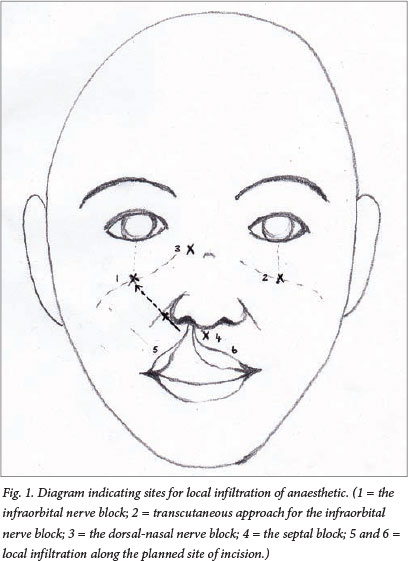
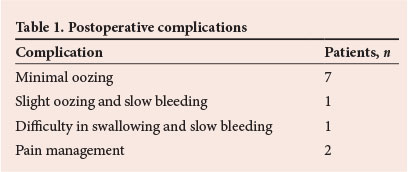
BACKGROUND: The role of regional anaesthesia in cleft lip surgery in the developing world is not well documented OBJECTIVE: To report on the use of regional anaesthesia in cleft lip surgery in adults and adolescents in a developing world setting. METHOD: A retrospective chart review of 100 patients aged >14 years who had cleft lip surgery during an Operation Smile South Africa (OSSA) volunteer surgical programme in Madagascar during 2007 and 2008. The nerve blocks used included a bilateral infraorbital nerve block, a dorsal-nasal nerve block and a septal block supplemented with peri-incisional local infiltration. Appropriateness of the regional anaesthesia alone for cleft lip surgery was determined by absence of any intraoperative complications, postoperative complications or conversions to general anaesthesia. RESULTS: Seventy-four patients commenced their operation under regional anaesthesia. There were no intraoperative or postoperative complications documented, and no patient required conversion to general anaesthesia. Two patients required additional analgesia in the immediate postoperative period. CONCLUSION: Regional anaesthesia for cleft lip surgery in patients >14 years of age was well tolerated and associated with few complications. It is a safe and effective option when used as the sole anaesthetic modality for cheiloplasty in the developing world.
South African Journal of Surgery
 Thumbnail