Microsurgical testicular sperm extraction for testicular failure: the South African experience and first successful pregnancy
Abstract
BACKGROUND: In men with non-obstructive azoospermia (NOA), biological fatherhood is only possibly by specialised microsurgical sperm retrieval techniques (micro-TESE), only recently introduced to South Africa. This study aimed to analyse the spectrum of causes of NOA and the outcomes of micro-TESE, including live births, following the use of this technique in South AfricaMETHODS: This was a retrospective review of all micro-TESE cases performed in South Africa by a single surgeon from 2014 to 2018. Data collected prospectively included: patient demographics, preoperative blood results, cause of azoospermia, intraoperative findings and postoperative complications. The primary outcome measured was surgical success of micro-TESE, which was defined as testicular sperm successfully retrieved and cryopreserved. Subsequent live births from assisted reproductive technology (ART) using the cryopreserved sperm were also documentedRESULTS: Twenty-six men with NOA underwent micro-TESE between May 2014 and April 2018. Mean preoperative total testosterone level was 12.0 nmol/l (IQR 5.2) and follicle-stimulating hormone level 23.5 IU/l (IQR 15.6). Genetic testing was performed as part of the preoperative work-up in only 10 of the 26 patients. A specific cause of NOA was identified in 9 of the 26 patients and included Klinefelter syndrome (1 patient), Y-chromosome AZFc microdeletion (1 patient), undescended testicles (5 patients) and chemotherapy (2 patients). The average testicular volume was 9.05 ml (IQR 5.6), and the mean duration of surgery 95.8 minutes (IQR 28.0). The overall sperm retrieval rate was 34.6%. A single pregnancy and subsequent live birth were recorded from a total of eight cycles of intracytoplasmic sperm injection (ICSI): four female partners had one ICSI cycle each and two females underwent two cycles each. Frozen and thawed sperm was used in seven of the ICSI cycles and fresh sperm in one cycleCONCLUSION: In this South African series, sperm retrieval rates of micro-TESE for non-obstructive azoospermia were comparable to those reported internationally. Preoperative genetic testing should be increased to optimise the selection of surgical candidates
microsurgical testicular sperm extraction; testicular failure; first successful pregnancy
Introduction
Azoospermia due to severely impaired or absent sperm production (non-obstructive azoospermia/NOA) affects approximately 1% of the male population and 15% of men who seek fertility evaluation.1
Until the late 1990s, no treatment was available for men with NOA and biological fatherhood was not a possibility. These patients were often referred to as being 'sterile' or having testicular failure. The only way for these couples to have children was through adoption or the use of donor sperm. However, over the last three decades, several innovations have changed the approach to NOA and its management.2
Jow et al.3
Based on these observations, investigators then moved in men with NOA to perform assisted reproductive technology (ART) procedures using sperm from testicular sperm extraction (TESE) for intracytoplasmic sperm injection (ICSI) into the ova that resulted in successful live births. In 1999, Schlegel5
In Africa, the burden of male infertility is higher than many developed nations but access to appropriate treatment is limited.6
The aim of this study was to analyse the South African experience with micro-TESE and to compare the primary outcome of successful sperm retrieval to international standards.
Methods
This was a retrospective review of all micro-TESE cases performed in South Africa by a single surgeon from 2014 to 2018. Data collected prospectively included patient demographics, preoperative blood results, cause of azoospermia, intraoperative findings and postoperative complications. The primary outcome measured was surgical success of micro-TESE, which was defined as testicular sperm successfully retrieved and cryopreserved. Subsequent live births from ART using fresh or cryopreserved sperm were also documented.
Surgical technique
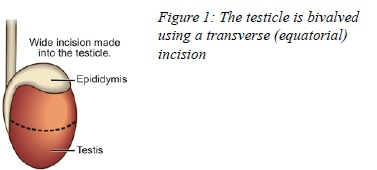
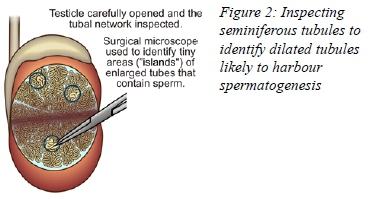
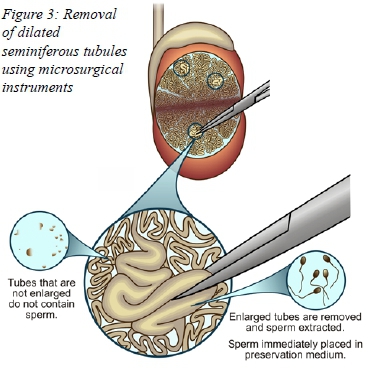
Procedures were performed on an outpatient basis with patients under general anaesthesia. Both a surgical microscope (6X to 40X magnification) and light microscope (400X magnification) were used for all cases. Surgical access was by means of a single vertical midline scrotal incision of ± 20 mm. Once delivered from the scrotum, the testicle was bivalved through an equatorial incision (Figure 1). The tunica albuginea of the testicle was opened using the surgical microscope and the seminiferous tubules of the entire testicular parenchyma were meticulously and systematically inspected for the presence of visibly dilated tubules (Figure 2) which are the ones likely to harbor islands of spermatogenesis. Single tubules considered to be dilated were removed (Figure 3).
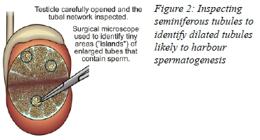
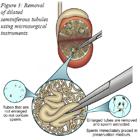
The small amount of testicular tissue removed was placed in HEPES buffer, which acted as a sperm preservation medium. Processing of the biopsy material was performed in the operating room; the aim of processing is to liberate sperm from the seminiferous tubule and this was accomplished by manual disruption of the tubules in a petri dish using fine-tipped scissors. This was followed by fixing two drops of the mixture on a glass microscope slide and subsequent light microscopy to check for the presence of sperm. Retrieved sperm was transported to a fertility laboratory where it was either cryopreserved for ART at a later stage or alternatively used immediately for a cycle of ART/ICSI.
If no sperm was found initially, dissection of the contralateral testicle was also performed. At the end of the procedure the tunica albuginea of the testicle was closed using a running, non-absorbable suture and thereafter the scrotum was closed in two layers. No wound drains were used and all patients were discharged home on the same day.
Patients were contacted on day seven postoperatively to check for early complications. Invasive testicular surgery may cause long-term decline in testicular androgen production and for this reason patients were requested to have serum testosterone (TT) levels checked at six, 12 and 18 months post-procedure. Demographic and intraoperative data was prospectively collected and updated postoperatively.
Results
Twenty-six patients with NOA underwent micro-TESE, performed by a single surgeon, from May 2014 to April 2018. The average patient age at the time of surgery was 37.1 years (IQR 5.6). The mean body mass index (BMI) was 28.6 kg/m2
Six of the 26 patients gave a history of having mumps in childhood, but none were able to definitively deny or confirm secondary mumps orchitis. One patient had a history of significant testicular trauma requiring hospitalisation. Two patients had a history of cancer and chemotherapy: one testicular cancer and one lymphoma; the time from chemotherapy to micro-TESE was 15 and 33 years, respectively. Five patients gave a history of undescended testicles (four bilateral, one unilateral). All but one had corrective surgery in childhood. Only one patient in this series had previously undergone micro-TESE.
Karyotyping was performed in eight of the 26 patients preoperatively: a normal chromosome complement was found in seven and one patient was diagnosed with 47 XXY Klinefelter syndrome. Six patients underwent testing for AZF microdeletions prior to surgery and one positive AZFc microdeletion was found. A specific cause of NOA was identified in nine of the 26 patients: five undescended testicle, one AZFc microdeletion, two chemotherapy, and one Klinefelter syndrome. The remaining 17 patients were considered to have idiopathic NOA.
Preoperative
Mean preoperative total testosterone (t-TT) level was 12.0 nmol/l (IQR 5.2; normal range 5.6-22.9 nmol/L) and follicle-stimulating hormone (FSH) level 23.5 IU/l (IQR 15.6; normal range 1.5-12.4 IU/L).
Fifteen of the 26 patients gave a history of previously undergoing a diagnostic conventional testis biopsy (TESE) but in only 10 of these were the histopathological reports available: Sertoli cell-only pattern (SCO) was reported in seven, diffuse maturation arrest in two and focal maturation arrest in one.
Intraoperative
The average testicular volume measured at the time of surgery was 9.05 ml (IQR 5.6; normal range 18.6 ± 4.8). The overall sperm retrieval rate (SRR) for the entire cohort of patients was 34.6% (9 of 26 patients). For the first 13 cases, the SRR was 23.1% (3/13), and for the last 13 cases, the SRR was 46.2% (6/13). Sperm was frozen in all the successful micro-TESE cases except for two, where the patients specifically requested fresh ICSI cycles. The average duration of surgery was 95.8 minutes (IQR 28.0).
Pregnancy outcome
A single pregnancy was recorded from a total of eight ICSI cycles: four female partners had one ICSI cycle each and two females underwent two cycles each. Frozen and thawed sperm was used in seven of the ICSI cycles and fresh sperm in one cycle. The patient in whom the pregnancy was achieved had a previous successful micro-TESE 12 months earlier but unsuccessful ICSI cycle using frozen and thawed sperm. He had SCO pattern on testicular histology, normal chromosomes, no AZF microdeletions and an FSH level of 30.3 IU/l. His preoperative testis sizes were 8.5 ml and 6.5 ml on the right and left, respectively.
The pregnancy resulted in a live birth of a healthy boy at term. This represents the first successful pregnancy and live birth in South Africa as a result of micro-TESE.
Discussion
This study represents the first data available in South Africa on the microsurgical treatment of patients with NOA. The causes of NOA were identified in nine of the 26 patients in the study. Other causes of NOA include varicocele, idiopathic hypogonadotropic hypogonadism, pituitary surgery, systemic disease, Kallmann syndrome, XX male and primary hypogonadism of unknown cause.78
Micro-TESE is an invasive procedure on the testicle that carries the risk of testicular compromise that may require lifelong testosterone supplementation postoperatively. Unfortunately, accurately predicting which patients are likely to have sperm successfully retrieved during micro-TESE is problematic. The following preoperative parameters have been investigated but have not proven to be reliable in predicting successful sperm retrieval during micro-TESE surgery:9-12 age, testicular size, serum FSH levels, cryptorchidism. In the current study, the same trends were observed in these parameters and no significant differences demonstrated when comparing the patients who had successful sperm retrieval to those where no sperm was found.
Y-chromosome microdeletion analysis has been found to be a good predictor of successful micro-TESE. For men with even partial deletions of the AZFb region or complete deletions of AZFa, the chances of finding sperm are exceedingly rare and patients need to be counselled appropriately prior to proceeding with surgery.13147
The histopathology of the diagnostic testis biopsy does have some value in predicting successful sperm retrieval. Cetinkaya et al.15
Men with post-chemotherapy NOA represent a challenging group for micro-TESE as their SRRs are low.14,16 Two patients in our study had chemotherapy-induced azoospermia and one of them (previous lymphoma) had successful sperm retrieval. The patient with a history of chemotherapy for testicular cancer had a single testis only and failed micro-TESE.
There is no consensus regarding the use of fresh versus frozen sperm for ICSI after micro-TESE. The main benefit of using fresh sperm is that the sperm are not subject to the stresses of the freeze-thaw cycle, which has been shown to substantially decrease the yield of viable sperm for ICSI.171819,20
Overall, SRRs reported in the literature vary widely and range from 30-60%.5,11,21-24 In our study, the overall SRR was 34.6%.
Despite successful sperm retrieved during micro-TESE, not all men will become biological fathers. Dabaja and Schelegel reported the following live birth rates after micro-TESE and subsequent ICSI in their high-volume centre:14 2
Follow-up in this study was available in 19 of the 26 patients. After undergoing micro-TESE, most patients will have a significant (though usually transient) decrease in serum testosterone levels, which may take 12 months or longer to recover.25
Conclusion
In this South African series, the SRRs of micro-TESE for NOA were comparable to those reported internationally. Preoperative genetic testing should be increased to optimise the selection of surgical candidates. The low live birth rate following micro-TESE in South Africa is likely related to a learning curve associated with this relatively new treatment modality.
Acknowledgements
We acknowledge the contribution of Greg Tinney-Crook, Fertility Laboratory Director at Aevitas Fertility Clinic in Cape Town, who, along with his team of fertility scientists, managed all aspects of the laboratory processing and cryopreservation of biopsy material.
Conflict of interest
The authors have no conflict of interest.
Funding source
None.
Ethical approval
Ethical approval was obtained from Stellenbosch University Health Research Ethics Committee (HREC), HREC Reference #: S18/01/006
ORCID
AD Zarrabi https://orcid.org/0000-0002-1504-6410
TF Kruger https://orcid.org/0000-0002-2990-3284
REFERENCES
- 1. Cedenho A. Evaluation of the subfertile male. In: Oehninger S, Kruger T, eds. Male Infertility Diagnosis and Treatment. London: Informa Healthcare; 2007. p.117-40.
-
2. Carpi A, Sabanegh E, Mechanick J. Controversies in the management of nonobstructive azoospermia. Fertil Steril. 2009;91(4):963-70. https://doi.org/10.1016/j.fertnstert.2009.01.083.
» https://doi.org/10.1016/j.fertnstert.2009.01.083 - 3. Jow WW, Steckel J, Schlegel PN, et al. Motile sperm in human testis biopsy specimens. J Androl. 1993;14(3):194-8.
- 4. Silber SJ, Nagy Z, Devroey P, et al. Distribution of spermatogenesis in the testicles of azoospermic men: the presence or absence of spermatids in the testes of men with germinal failure. Hum Reprod. 1997;12(11):2422-8.
- 5. Schlegel PN. Testicular sperm extraction: microdissection improves sperm yield with minimal tissue excision. Hum Reprod. 1999;14(1):131-5.
-
6. Zarrabi AD, Kruger TF. The challenges of supporting male infertility treatment in South Africa. Nat Rev Urol. 2018;15(12):719-20. https://doi.org/10.1038/s41585-018-0099-5.
» https://doi.org/10.1038/s41585-018-0099-5 -
7. Chiba K, Enatsu N, Fujisawa M. Management of nonobstructive azoospermia. Reprod Med Biol. 2016;15(3):165-73. https://doi.org/10.1007/s12522-016-0234-z.
» https://doi.org/10.1007/s12522-016-0234-z -
8. Barratt CLR, Björndahl L, De Jonge CJ, et al. The diagnosis of male infertility: an analysis of the evidence to support the development of global WHO guidance-challenges and future research opportunities. Hum Reprod Update. 2017;23(6):660-80. https://doi.org/10.1093/humupd/dmx021.
» https://doi.org/10.1093/humupd/dmx021 -
9. Ramasamy R, Trivedi NN, Reifsnyder JE, et al. Age does not adversely affect sperm retrieval in men undergoing microdissection testicular sperm extraction. Fertil Steril. 2014;101(3):653-5. https://doi.org/10.1016/j.fertnstert.2013.11.123.
» https://doi.org/10.1016/j.fertnstert.2013.11.123 -
10. Bryson CF, Ramasamy R, Sheehan M, et al. Severe testicular atrophy does not affect the success of microdissection testicular sperm extraction. J Urol. 2014;191(1):175-8. https://doi.org/10.1016/j.juro.2013.07.065.
» https://doi.org/10.1016/j.juro.2013.07.065 -
11. Ramasamy R, Lin K, Gosden LV, et al. High serum FSH levels in men with nonobstructive azoospermia does not affect success of microdissection testicular sperm extraction. Fertil Steril. 2009;92(2):590-3. https://doi.org/10.1016/j.fertnstert.2008.07.1703.
» https://doi.org/10.1016/j.fertnstert.2008.07.1703 -
12. Raman JD, Schlegel PN. Testicular sperm extraction with intracytoplasmic sperm injection is successful for the treatment of nonobstructive azoospermia associated with cryptorchidism. J Urol. 2003;170(4):1287-90. https://doi.org/10.1097/01.ju.0000080707.75753.ec.
» https://doi.org/10.1097/01.ju.0000080707.75753.ec - 13. Hopps CV, Mielnik A, Goldstein M, et al. Detection of sperm in men with Y-chromosome microdeletions of the AZFa, AZFb and AZFc regions. Hum Reprod. 2003;18(8):1660-5.
-
14. Dabaja AA, Schlegel PN. Microdissection testicular sperm extraction: an update. Asian J Androl. 2013;15(1):35-9. https://doi.org/10.1038/aja.2012.141.
» https://doi.org/10.1038/aja.2012.141 - 15. Cetinkaya M, Onem K, Zorba OU, et al. Evaluation of microdissection testicular sperm extraction results in patients with non-obstructive azoospermia: independent predictive factors and best cutoff values for sperm retrieval. Urol J. 2015;12(6):2436-43.
-
16. Shin T, Kobayashi T, Shimomura Y, et al. Microdissection testicular sperm extraction in Japanese patients with persistent azoospermia after chemotherapy. Int J Clin Oncol. 2016;21(6):1167-71. https://doi.org/10.1007/s10147-016-0998-5.
» https://doi.org/10.1007/s10147-016-0998-5 -
17. Sharma R, Kattoor AJ, Ghulmiyyah J, Agarwal A. Effect of sperm storage and selection techniques on sperm parameters. Syst Biol Reprod Med. 2015;61(1):1-12. https://doi.org/10.3109/19396368.2014.976720.
» https://doi.org/10.3109/19396368.2014.976720 - 18. Schlegel PN, Su LM. Physiological consequences of testicular sperm extraction. Hum Reprod. 1997;12(8):1688-92.
- 19. Tavukcuoglu S, AL-Azawi T, AL-Hasani S, et al. Using fresh and frozen testicular sperm samples in couples undergoing ICSI-MicroTESE treatment. J Reprod Infertil. 2013;14(2):79-84.
- 20. Esteves SC, Miyaoka R, Agarwal A. Sperm retrieval techniques for assisted reproduction. Int Braz J Urol. 2011;37(5):570-83.
-
21. Okada H, Dobashi M, Yamazaki T, et al. Conventional versus microdissection testicular sperm extraction for nonobstructive azoospermia. J Urol. 2002;168(3):1063-7. https://doi.org/10.1097/01.ju.0000025397.03586.c4.
» https://doi.org/10.1097/01.ju.0000025397.03586.c4 - 22. Tsujimura A, Matsumiya K, Miyagawa Y, et al. Conventional multiple or microdissection testicular sperm extraction: a comparative study. Hum Reprod. 2002;17(11):2924-9.
-
23. Ramasamy R, Yagan N, Schlegel PN. Structural and functional changes to the testis after conventional versus microdissection testicular sperm extraction. Urology. 2005;65(6):1190-4. https://doi.org/10.1016/j.urology.2004.12.059.
» https://doi.org/10.1016/j.urology.2004.12.059 - 24. Amer M, Ateyah A, Hany R, Zohdy W. Prospective comparative study between microsurgical and conventional testicular sperm extraction in non-obstructive azoospermia: follow-up by serial ultrasound examinations. Hum Reprod. 2000;15(3):653-6.
-
25. Komori K, Tsujimura A, Miura H, et al. Serial follow-up study of serum testosterone and antisperm antibodies in patients with non-obstructive azoospermia after conventional or microdissection testicular sperm extraction. Int J Androl. 2004;27(1):32-6. https://doi.org/10.1046/j.0105-6263.2003.00443.x.
» https://doi.org/10.1046/j.0105-6263.2003.00443.x