Lessons learned from the endovascular management of blunt thoracic aortic injuries: A single-centre experience
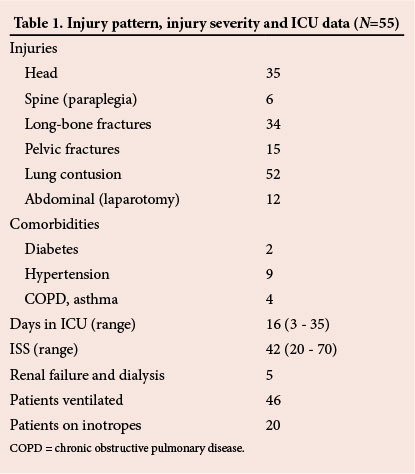
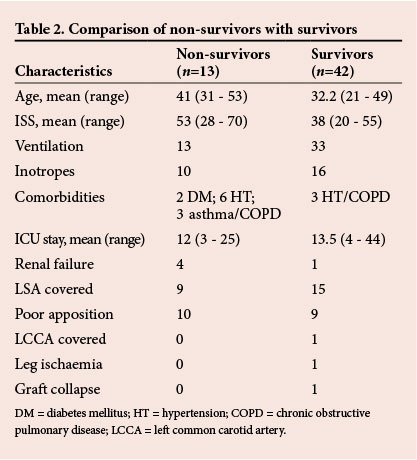
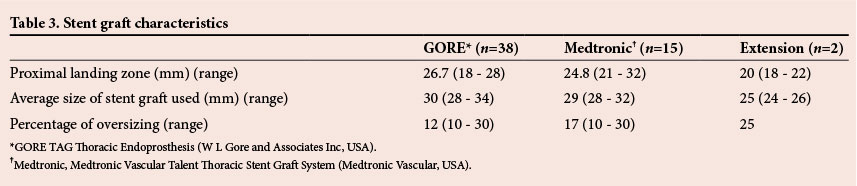
BACKGROUND: Blunt thoracic aortic injuries (BTAIs) remain a leading cause of death after blunt trauma. In severe injuries, thoracic endovascular aortic repair (TEVAR) has provided a less invasive alternative to conventional open repair. OBJECTIVE: To report the TEVAR-related complications and uncertainties in patients who presented with traumatic pseudoaneurysms (grade III BTAI). METHODS: From April 2004 to February 2012, 55 patients (42 male, mean age 34.7 years) with severe BTAI were treated with stent grafts. Computed tomography (CT) was used to diagnose the injuries, and follow-up scans were planned at 6 and 12 months. We report the complications and the technical uncertainties related to the procedure. RESULTS: Successful sealing of the injury sites was achieved in all patients, either with a thoracic stent graft (53/55) or infrarenal aortic aneurysm extender cuffs (2/55). During hospitalisation, 13 patients died after TEVAR (mean 14 days). Procedure-related complications included left common carotid artery coverage (1/55), ischaemic left leg (1/55) and graft collapse (1/55). The procedure-related uncertainties included excessive graft oversizing (15/55), poor graft apposition to the inner curve of the aorta (19/55) and left subclavian artery coverage (24/55). CONCLUSION: Stent grafts appear safe and effective in treating pseudoaneurysms caused by BTAI. However, they are likely to be associated with long-term complications and monitoring strategies of >30 years may be necessary.
South African Journal of Surgery