Relationship between ground reaction force, landing kinematics of the ankle, knee, and hip joints, and lower back strength in university-level female netball players
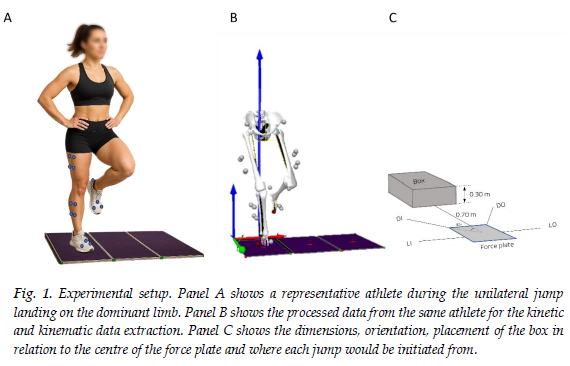
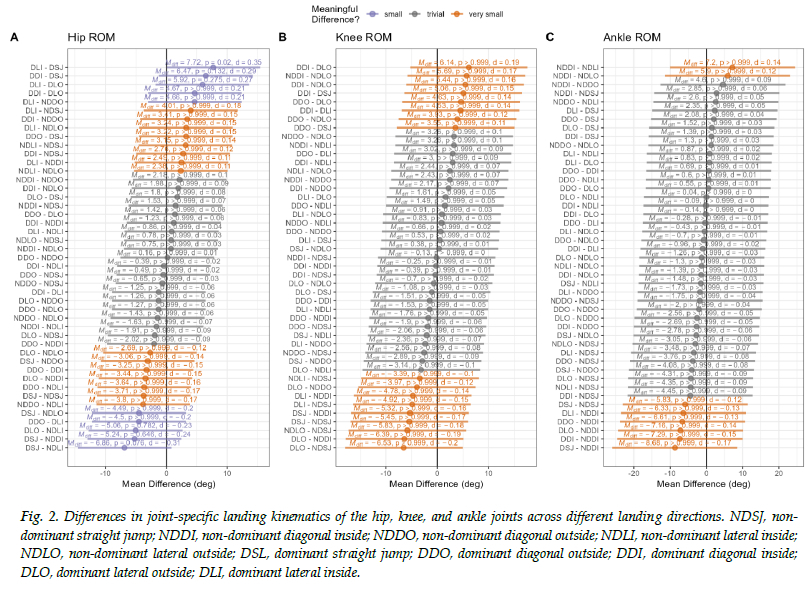
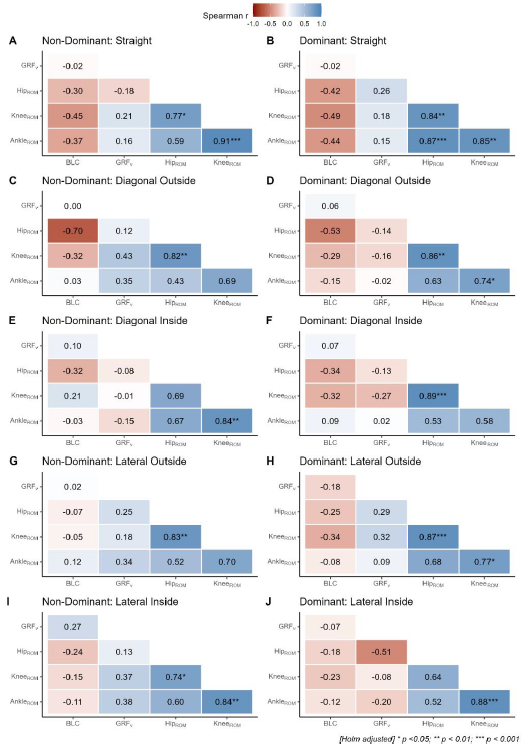
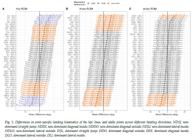
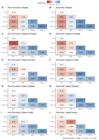
BACKGROUND: Netball is a physical, high-intensity, team sport of high concentration movements such as jumping, landing, passing, and catching. The two most common mechanisms of injury in female netball tend to be from high ground reaction forces (GRF) coupled with an incorrect landing technique. The landing technique employed in netball is furthermore influenced by lower back strength (LBS OBJECTIVES: To assess mean differences in ankle, knee, and hip joint kinematics and ranges of motion between dominant and non-dominant limbs across different landing directions, and secondly, to evaluate the relationships between GRF and LBS in different landing directions during one season in university-level female netball players METHODS: A cross-sectional, repeated-measures design was employed for this study. University-level female netball players (n=11) were recruited for this study. The back-leg-chest (BLC) dynamometer was used to measure LBS. Different landing kinematics were analysed using a motion capture and force plate system to collect kinematic GRF data, respectively RESULTS: Negative (r=-0.01 to -0.51) and positive (r=0.02 to 0.43) correlations were found between GRF and joint ROM. Additionally, negative correlations (r=-0.02 to -0.18) and positive correlations (r=0.00 to 0.27) were found between GRF and BLC strength. Furthermore, negative correlations were found between joint ROM and BLC strength (r=-0.11 to -0.70 CONCLUSION: The negative correlations found between joint ROM and BLC strength indicate that individuals with greater BLC strength require less joint ROM during multi-directional landing in elite female netball players. Furthermore, the positive and negative correlations found between GRF and BLC strength are only weak due to significant variability between participants. However, this information still highlights the importance of multi-directional landing within elite female netball players
multi-directional landings; BLC strength; landing kinematics; lower extremity
 Thumbnail
 Thumbnail
 Thumbnail