Study of electrocardiographic peculiarities associated with elite football refereeing in Burkina Faso
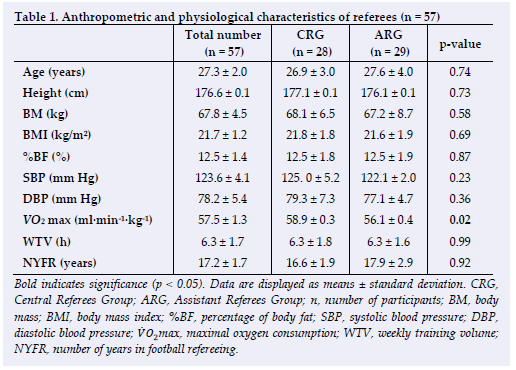
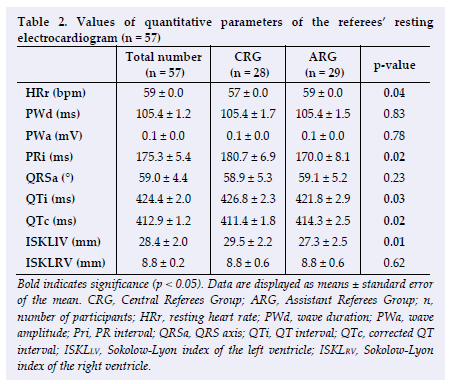
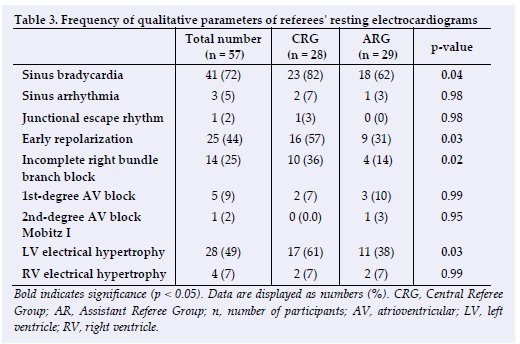
BACKGROUND: Knowledge of the electrical characteristics of the athlete's heart is essential for differential diagnosis with latent cardiac pathologies at risk OBJECTIVES: This study aimed to determine the electrical characteristics induced by refereeing in football METHODS: This was a cross-sectional study conducted with 57 Burkinabe elite referees divided into two groups: the central referees' group and the assistant referees' group. The recorded ECGs were interpreted according to the 2017 expert consensus criteria RESULTS: PR and QT intervals, then the Sokolow Lyon index of the left ventricle, were increased more (p < 0.05) in the central referees' group than in the assistant referees group. Resting heart rate and corrected QT interval were lower (p < 0.05) in central referees. The number of referees with sinus bradycardia (23 vs 18; p = 0.04), early repolarisation (16 vs 9; p = 0.03), incomplete right bundle branch block (14 vs 6; p = 0.02) and left ventricular electrical hypertrophy (17 vs 11; p = 0.03) were higher in the central referees group than in the assistant referees group CONCLUSION: The results indicated that football refereeing was associated with myocardial electrical adaptations, but these adaptations are more frequent in central referees. An evaluation of Doppler echocardiography parameters is recommended to complement these findings
central and assistant referees; electrocardiogram; athlete's heart