
 Non-traumatic injury profile of amateur cyclists
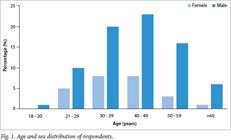
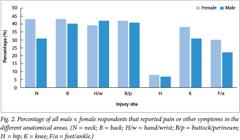
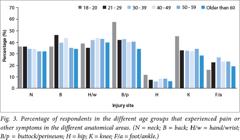
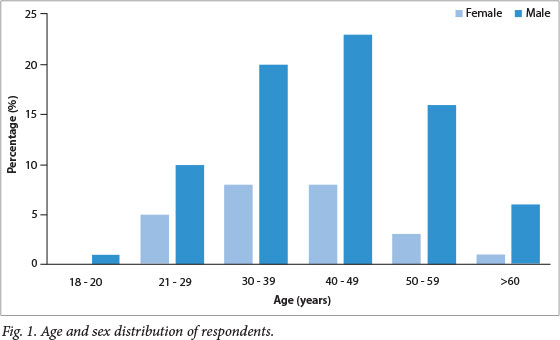
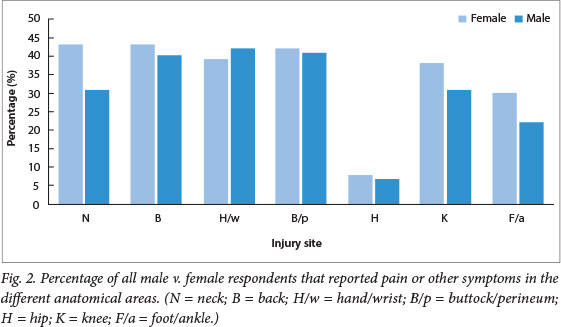
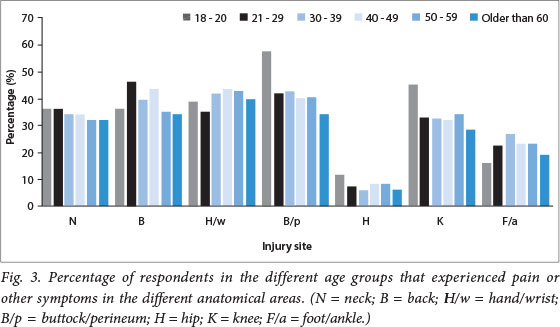
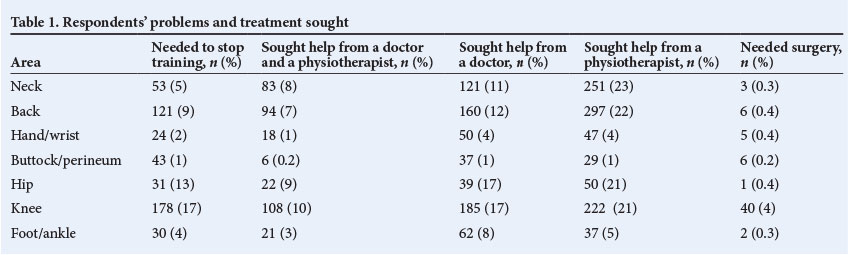
BACKGROUND: Non-traumatic bicycle injuries are common. However, research available on non-traumatic injuries in amateur cyclists is more than a decade old, and most of the research on this topic has been done in Europe and America on professional cyclists in multi-day cycling events. An understanding of the common injuries may lead to appropriate prevention intervention OBJECTIVE: To determine the incidence of overuse injuries in amateur cyclists preparing for participation in a 1-day cycle challenge METHODS: A questionnaire was emailed to participants of the 2012 Momentum 94.7 Cycle Challenge, which amateur participants >18 years old were invited to complete. Data on demographics, training habits and the participants' injury profile in the preceding year were collected RESULTS: Of the 3 300 respondents, 75% were male and 59% were between 30 and 50 years old. Non-traumatic injury, pain or neurological symptoms were reported by 88% of the respondents. The percentages of all respondents who experienced problems in the following anatomical areas were as follows: neck 34%, back 41%, hand/wrist 41%, buttock/perineum 41%, hip 7%, knee 33% and foot/ankle 24%. Knee pain was responsible for the need to stop training for the largest percentage of respondents. Neurological complaints were common in respondents who experienced neck, back, hand/wrist, buttock/perineum and foot/ankle problems CONCLUSION: Non-traumatic injuries in amateur cyclists are common, with back, hand/wrist and buttock/perineal symptoms the most frequent problems. Knee problems caused the greatest need to stop training and seek medical help
 Thumbnail
 Thumbnail
 Thumbnail
The South African Sports Medicine Association
South African Sports Medicine Association, Research Unit for Exercise Science & Sports Medicine (ESSM), PO Box 115, Newlands, University of Cape Town, Cape Town, Western Cape, ZA, 7725, Tel: +27 21 650 4558 -
E-mail: mike.lambert@uct.ac.za