The role of selected pre-match covariates on the outcome of One-day International (ODI) cricket matches
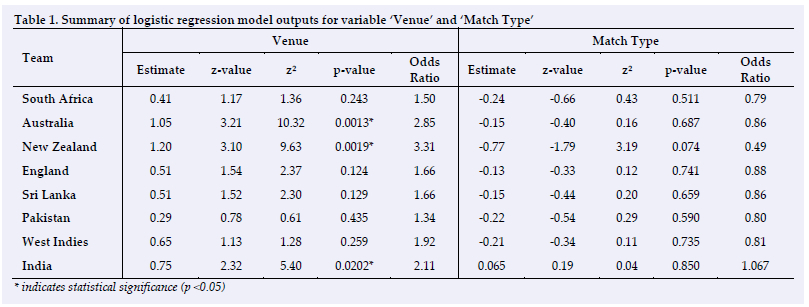
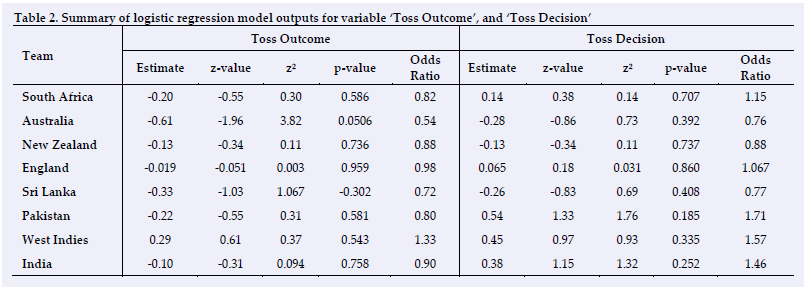
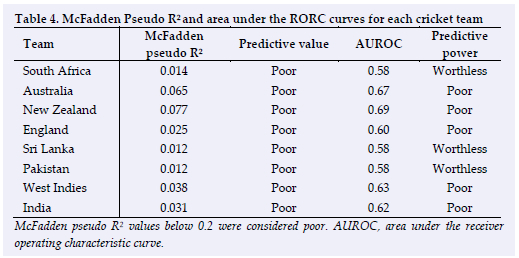
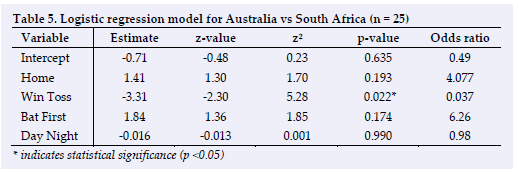
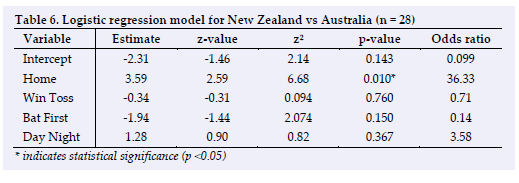
BACKGROUND: The identification of key factors that systematically influence a team's success is important and has led to the application of statistical models in sport. Predicting the outcome of a One Day International (ODI) cricket match, using only pre-match covariates, has been minimally investigated OBJECTIVES: This research sought to investigate the impact that venue, toss outcome, toss decision, and match type have on the chances of winning an ODI match METHODS: A total of 1228 men's international ODI matches were analysed. A logistic regression model was used to identify the significance of these pre-match covariates on the result of the matches RESULTS: The results varied across all teams, suggesting that there are individualised factors driving these differences and that generalising the impact pre-match covariates have in every team is unrealistic. New Zealand and India displayed a significant home advantage effect, whereas Australia had a strong tendency towards a significant disadvantage when they won the toss. However, for most teams, toss outcome, toss decision, and match type did not significantly impact the outcome of an ODI match CONCLUSION: New Zealand and Australia were the most predictable teams, whereas South Africa and Pakistan were regarded as unpredictable when pre-match covariates were used to forecast the outcome of their ODI matches
cricket; match type; toss decision; toss outcome; venue