Kinematic differences between left- and right-handed cricket fast bowlers during the bowling action
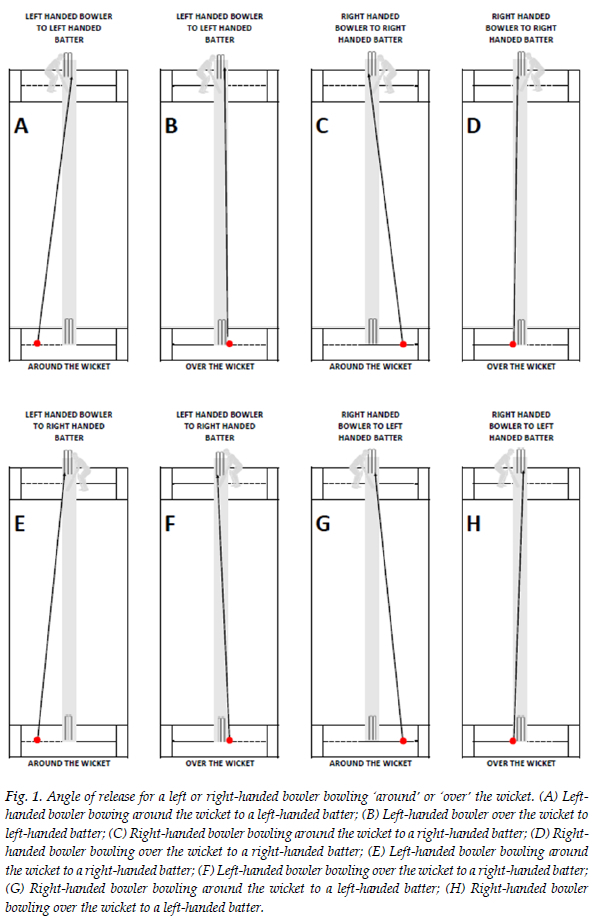
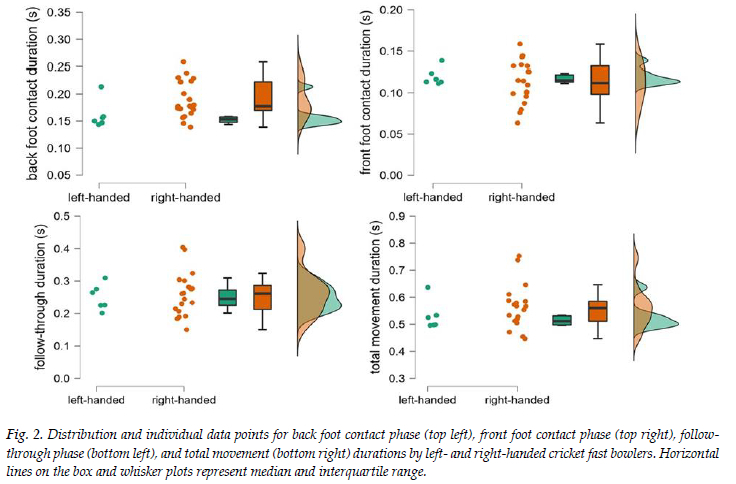
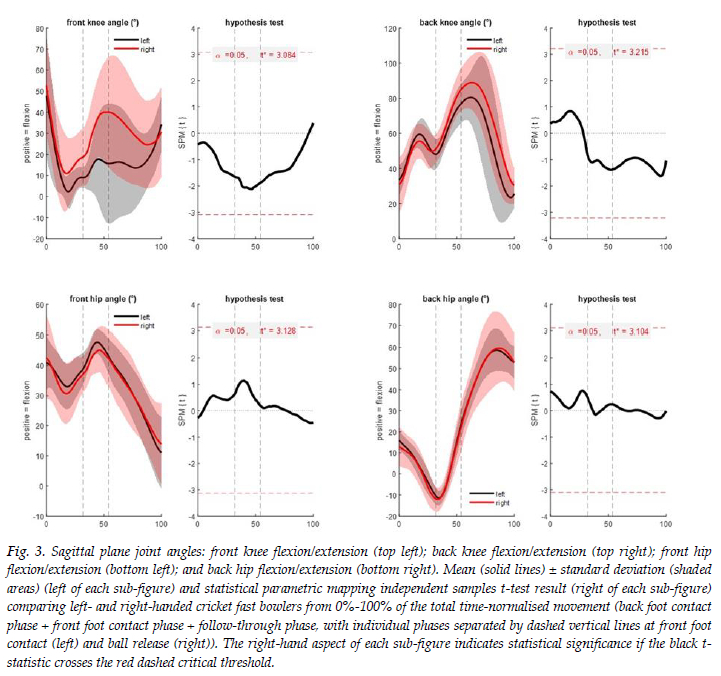
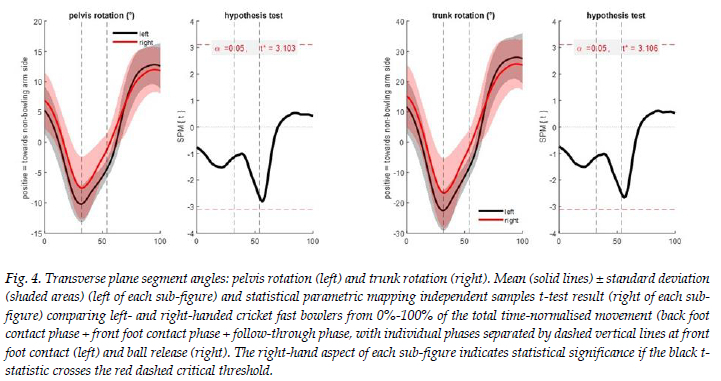
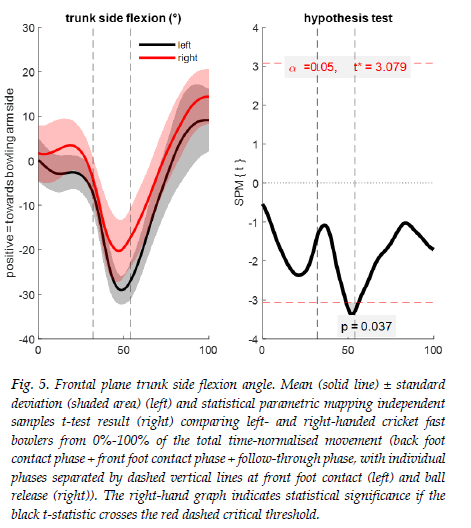
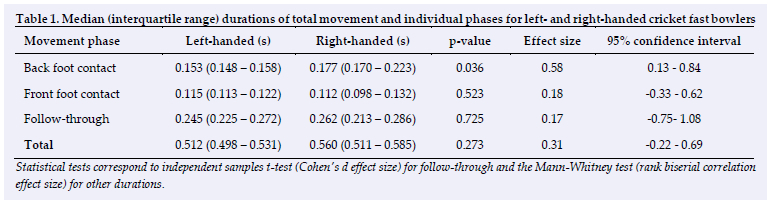
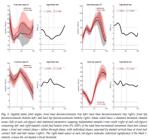
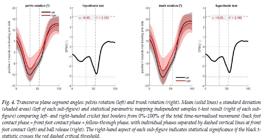
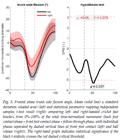
BACKGROUND: Despite differences between left- and right-handed athletes in other sports, minimal evidence exists regarding biomechanical similarities and differences between left- and right-handed cricket fast bowlers performing an equivalent task OBJECTIVES: This study aimed to compare the kinematics between left and right-handed fast bowlers performing an equivalent task (i.e. bowling 'over the wicket' to a batter of the same handedness as the bowler METHODS: Full body, three-dimensional kinematic data for six left-handed and 20 right-handed adolescent, male, fast bowlers were collected using the Xsens inertial measurement system. Time-normalised joint and segment angle time histories from back foot contact to follow-through ground contacts were compared between groups via statistical parametric mapping. Whole movement and subphase durations were also compared RESULTS: Left-handed players displayed significantly more trunk flexion from 49%-56% of the total movement (ball release occurred at 54%; p = 0.037) and had shorter back foot contact durations on average (0.153 vs 0.177 s; p = 0.036) compared to right-handed players CONCLUSION: Left- and right-handed bowlers displayed similar sagittal plane kinematics but appeared to use non-sagittal plane movements differently around the time of ball release. The kinematic differences identified in this study can inform future research investigating the effect of hand dominance on bowling performance and injury risk
biomechanics; dominance; handedness; laterality
 Thumbnail
 Thumbnail
 Thumbnail
 Thumbnail
 Thumbnail