
 Dynamic plantar pressure profiles of South African university students
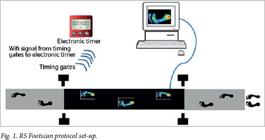
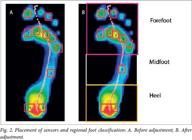
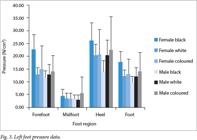
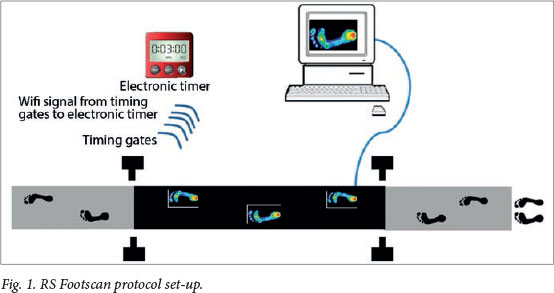
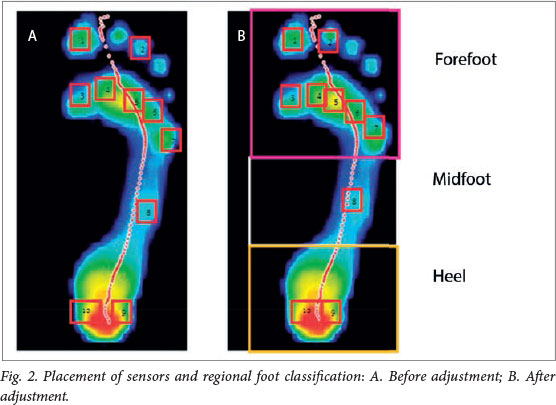
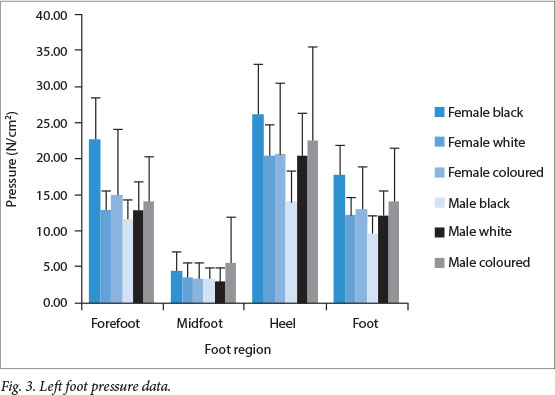
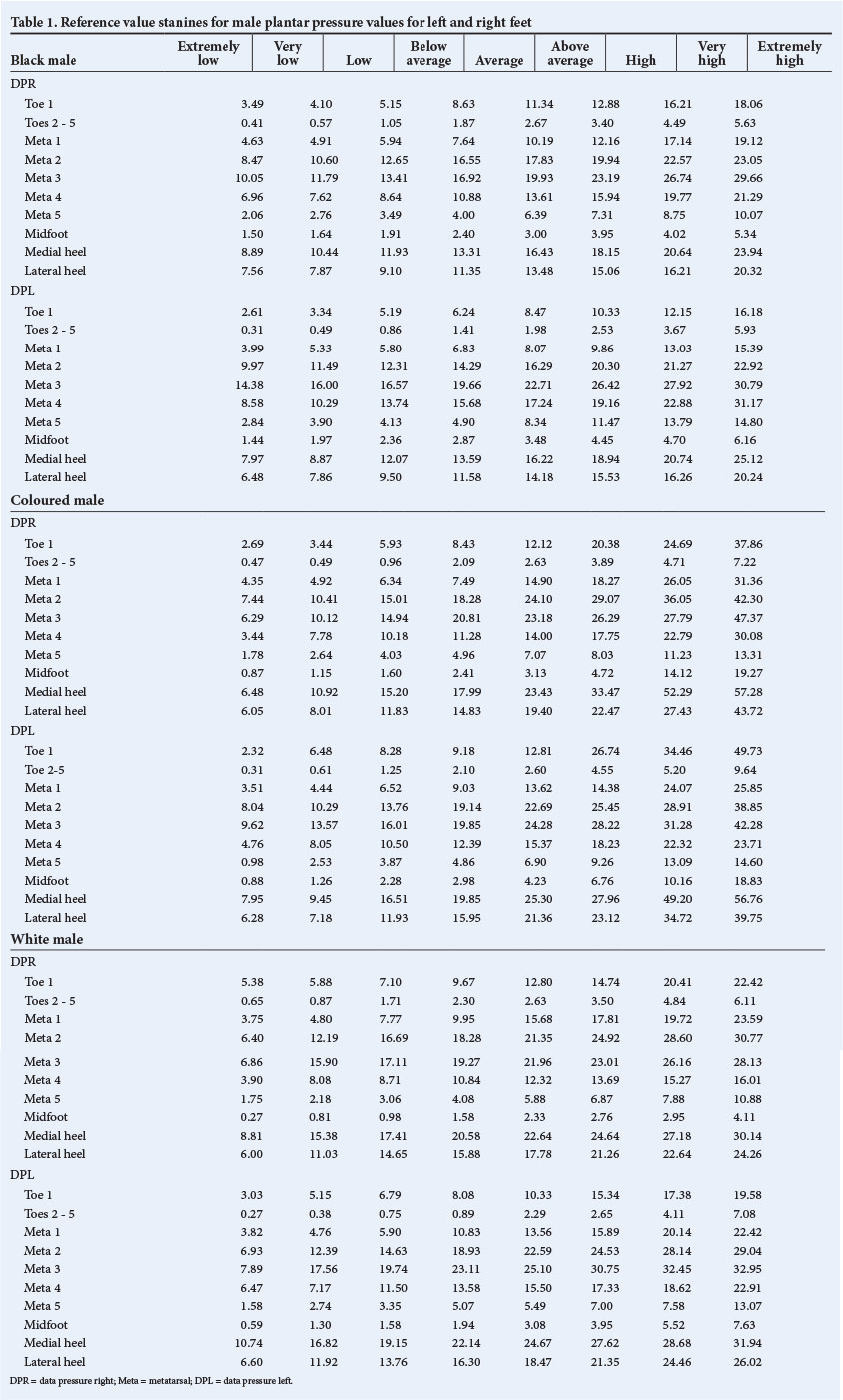
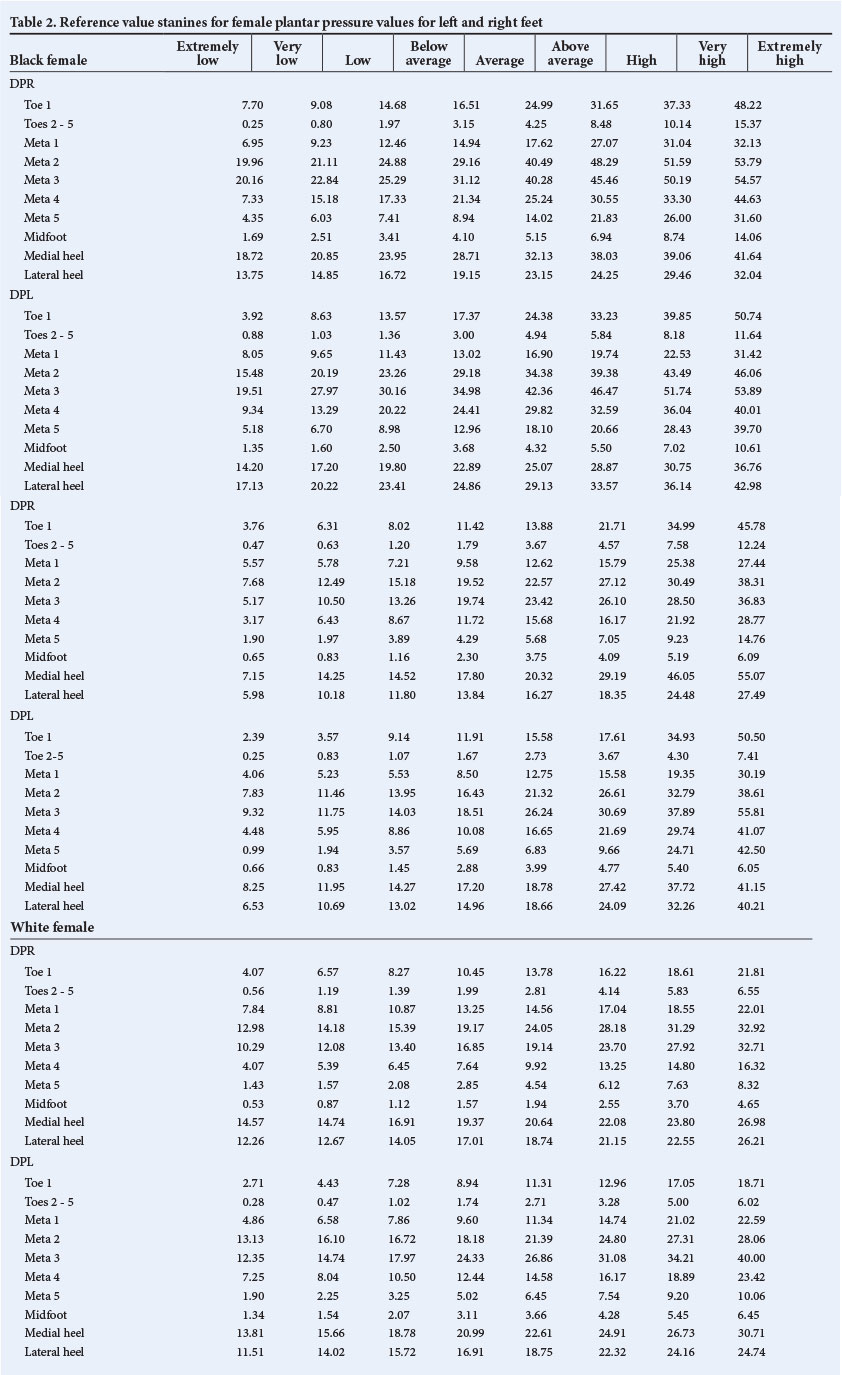
BACKGROUND: Footscan technology allows for assessment of injury risk and walking mechanics, yet there is a dearth of normative data pertaining to the normal, injury-free foot in a South African (SA) context. OBJECTIVE: To generate normative tables from plantar pressure profile data gathered from students at an SA university. METHODS: The RS Footscan (RSscan, Belgium) system was used to measure the plantar pressure values of the foot. Ten anatomical landmarks of the foot were analysed: the hallux, lateral toes, five metatarsal heads, midfoot, and medial and lateral heel. These ten areas were grouped into one of three regions: forefoot, midfoot and heel. A total of 180 participants were subdivided as follows: gender (males, n=90; females, n=90); race (black, n=60; white, n=60; coloured, n=60). Each race group comprised 30 males and 30 females. RESULTS: Of the ten individual plantar pressure areas, the second and third metatarsal heads demonstrated the highest mean peak plantar pressure values. Of the three regions, the heel region was ascribed with the largest plantar pressure values. Black females, coloured males and coloured females yielded the highest pressure values, especially under the midfoot region of the foot. Black and white males and white females exhibited the lowest pressure under the foot, especially under the midfoot region. CONCLUSION: The plantar pressure profile data generated in this study could serve to provide clinicians with a frame of reference when evaluating participants within the age range of 18 - 30 years.
 Thumbnail
 Thumbnail
 Thumbnail
The South African Sports Medicine Association
South African Sports Medicine Association, Research Unit for Exercise Science & Sports Medicine (ESSM), PO Box 115, Newlands, University of Cape Town, Cape Town, Western Cape, ZA, 7725, Tel: +27 21 650 4558 -
E-mail: mike.lambert@uct.ac.za