The influence of psychological readiness of athletes when returning to sport after injury
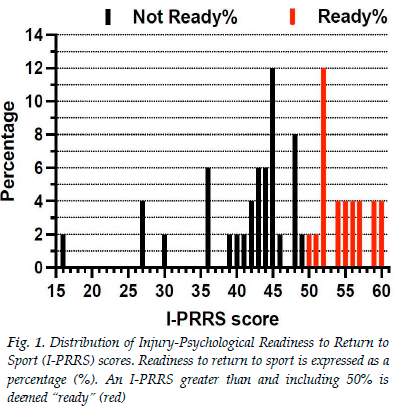
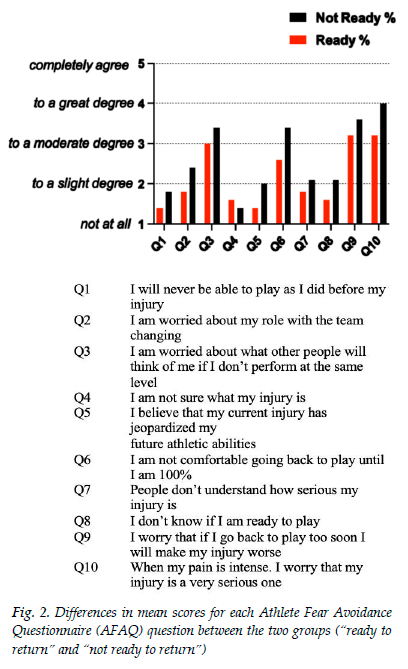
BACKGROUND: Injuries are a common occurrence in sports participation; however, they have the potential to be accompanied by negative thoughts and feelings, which may play a part in the athletes' state of mind when they return to their sport. Assessing the degree to which this occurs provides an opportunity to evaluate and address athletes' state of mind before their return to play OBJECTIVES: To determine if athletes are psychologically ready to return to play after an injury and if there are differences in fear avoidance behaviour between those who were and were not ready to return METHODS: Eighty-eight athletes participated in this descriptive survey. Athletes' confidence to return to play was measured by the Injury-Psychological Readiness to Return to Play (I-PRRS) questionnaire and their fear avoidance was measured by the Athlete Fear Avoidance Questionnaire (AFAQ RESULTS: Fifty injured athletes with a mean age of 23.3±4.0 years old responded to the I-PRRS and the AFAQ questionnaires. The average I-PRRS score was 46.5±9.1 AU. The evidence suggests that 60% of the athletes were not ready to return to sport (41.0±7.5 AU), whereas 40% were ready to return (54.8±3.1 AU). The difference in scores was not significant. The relationship between the AFAQ scores and the I-PRRS score for the 'ready' and 'not ready' groups was not significant (p=0.066). The mean AFAQ score (26.1±8.6 AU) for the 'not ready' group is marginally greater than the mean AFAQ score (21.6±7.5 AU) for the 'ready' group. There was a negative correlation between psychological readiness to return to sport and athletic fear avoidance (r =-0.508, p<0.001 CONCLUSION: There needs to be a greater utilisation of psychological assessment tools like the Injury-Psychological Readiness to Return to Play (I-PRRS) questionnaire, which can assist the athlete's support team, who can help identify athletes who are apprehensive about returning to sport after injury
fear avoidance; athlete confidence; psychological assessment tools
 Thumbnail
 Thumbnail