A bibliometric study of the South African Journal of Science
Abstract
We present a bibliometric analysis of the South African Journal of Science (SAJS) from its inception in 1903 to 2024. Using data from the Web of Science, the South African Knowledgebase and a custom SAJS archive, we examined publication output, authorship and collaboration trends, citation impact, thematic changes, and demographic representation. Journal metrics from the Journal Citation Reports were also evaluated. The results show a gradual increase in research outputs published in SAJS, with a stabilisation in later years. A marked increase in the proportion of multi-authored papers is observed from the late 1960s, reflecting the growing collaboration and institutionalisation of South African science. Thematic analysis using the Web of Science citation topics shows the truly multidisciplinary nature of SAJS. Articles have been published across all the macro scientific fields, with the major contributions coming from agriculture, environmental science, earth sciences, clinical and life sciences, and the social sciences. Demographic analysis shows that while female authorships in SAJS remain below national targets, the proportion has steadily increased in line with broader transformation in the higher education sector. Overall, both the Journal Impact Factor and field-normalised Journal Citation Index have shown consistent and significant improvement since 2017. Despite these metrics appearing modest relative to leading global publications, they demonstrate the growing impact and reach of SAJS. SIGNIFICANCE: The South African Journal of Science (SAJS) provides a valuable longitudinal history of the development of research in South Africa, reflecting both the change and continuity of the country's scientific enterprise. By tracing publication trends, authorship patterns and citation topics, this study provides insight into the development of one of South Africa's oldest journals. The analysis of SAJS represents a 'proxy' of the growing inclusivity and internationalisation of South African science.
bibliometric analysis; publication trends; research collaboration; authorship patterns; citation analysis; South African Journal of Science; South Africa
Introduction
The South African Journal of Science (SAJS) is one of the oldest continuously published academic journals on the African continent. It started life as a Report of the South African Association for the Advancement of Science (S2A3) in 1903, and was originally intended as a record of annual meetings and discussion of scientific matters, but has been carried through the evolutionary process to become a peer-reviewed journal publishing primary original scientific research. Throughout the 20th century, SAJS became an established national scientific journal, publishing across the full spectrum of scientific disciplines, while maintaining a strong focus on fields of particular relevance to South Africa. In 2024, the Journal reached the age of 120. A special issue on the 120th anniversary of SAJS demonstrated how this Journal has always provided a home across a range of fields from chemistry and palaeoscience to the humanities and social sciences, adapting to changes in publishing models and editorial practices.1
As an added important aspect of its historical significance, a bibliometric review of SAJS is especially warranted, not only because of its historical significance but also because of the topicality of the study and its contribution to science policy debates in South Africa. South Africa is seeking to establish itself as a knowledge economy and the provision of a national publications policy pivots increasingly on rigorous indicators of research performance and visibility.2,3 Building on the reflections presented in the 120th anniversary special issue and drawing on established methodological guidelines for bibliometric research2,4, this paper provides quantifiable indicators of the Journal's progression over more than a century. The specific aims of this study were to:
Provide a descriptive overview of the SAJS's publication trends, including volumes and document types over time.
Analyse authorship and collaboration patterns, with attention to institutional and geographical distribution.
Evaluate the Journal's citation impact and visibility.
Identify thematic clusters and shifts in research focus, situating SAJS within the broader development of South African and African scholarship.
Over the past two decades, a substantial body of South African bibliometric research has been conducted. Boshoff and Ngwenya5South African Journal of Industrial Psychology (2004-2013), the South African Journal of Economic and Management Sciences (multiple content/methods studies), South African Journal of Libraries and Information Science (referencing patterns, 1996-2007), South African Journal of Human Resource Management (research trends) and the South African Journal of Agricultural Extension (themes/authors/methods, 1999-2014).
Despite South Africa's growing tradition of bibliometric studies across disciplines and at the national level, there has been no comprehensive journal-level bibliometric review of SAJS. This absence is striking given the Journal's status as one of the oldest and most prominent multidisciplinary publications in the country. This study responds to this gap.
Methodology
Data
This study draws on a custom-built bibliometric data set of the SAJS compiled by the Centre for Research on Evaluation, Science and Technology (CREST) at Stellenbosch University. The database contains comprehensive article and authorship level information covering the entire history of the Journal from 1903 to 2024. To enable deeper analysis, three complementary data sources were used:
1. CREST SAJS data set (1903-2003): Provides article and authorship information for all journal publications since inception.
2. Web of Science (WoS) indexing (1980-2024): Since the Journal's inclusion in WoS in 1980, SAJS articles and reviews have been linked to Clarivate's bibliometric records, enabling the study of citations, institutional affiliations, collaboration patterns, citation topics and journal-level metrics.
3. SA Knowledgebase (SAK, 2005-2023): SAK is a database maintained by CREST, covering all publications by researchers at South Africa's 26 public universities that are submitted for subsidy under the Department of Higher Education and Training (DHET)'s Research Outputs Policy of 2015. The SAK contains demographic metadata (gender, race, age, nationality) that allow demographic and transformative analyses.
Following the guidelines for bibliometric-systematic literature reviews (B-SLRs), the study proceeded in three main stages:
Data selection and preparation: Only documents classified as 'articles' and 'review articles' were retained, consistent with best practice in bibliometric research. Conference papers, editorials and other non-citable outputs were excluded. Duplicate records across data sets were removed, and author affiliations and demographic data were harmonised.
Bibliometric analysis: Using WoS and Clarivate's 'citation topic classification system' (introduced in 2020), SAJS publications were mapped to a three-level taxonomy (10 macro-, 326 meso- and 2444 micro-topics). This allowed a fine-grained analysis of disciplinary breadth and topic evolution. Complementary indicators such as annual publication counts, citations and Journal Impact Factor (JIF) values were also examined.
Equity representation analysis: Drawing on the SAK, trends in gender representation among SAJS authorships were compared with the authorships of the entire public university sector in South Africa. We could also benchmark gender participation against the academic workforce data from the DHET's Higher Education Management Information System (HEMIS) database.
Results
Publication output: Distribution by document type
Journal publication history represents the foundation for any bibliometric study. It reflects both the productivity of the journal and the changes in scientific authorship and collaboration patterns over time.2,4 In the case of SAJS, publication trends provide a historical perspective on how the Journal developed from the early days as the Proceedings of the South African Association for the Advancement of Science (S2A3) to the current status as a peer-reviewed, multidisciplinary journal.
Variations in proportions of article types, reviews, conference proceedings and other, represent not only a journal's editorial policies but also changes in the scientific system itself. Document-type trends enable the researcher to see long-term trends in a journal's evolving content as a result of disciplinary diversification, institutional change and the policy environment.4
For SAJS, the document types serve as an historical indicator of the various roles of the Journal, which include the collection of original research, being a platform for scholarly discussion, and capturing a record of professional and institutional activity. By tracking the various document categories over more than 100 years of publication, the researcher can identify both stability and change in the role of SAJS in the South African and regional science systems (Table 1).
Table 1 presents the distribution of publications in SAJS by document type and decade, covering the period from 1905 to 2023. It includes 13 768 individual records, including research and other content. The data are distinguished between different categories of outputs, including Research Articles, Review Articles, conference materials, Editorials, Correspondence and other forms of commentary or supplementary items. Research Articles form the largest single category, amounting to 6587 items, nearly half of all indexed records. These are present in every decade, increasing steadily during the mid- to late-20th century and remaining a dominant component thereafter. News and Views items represent the next most frequent category, with 2549 entries. Conference abstracts are also numerous, concentrated particularly in the 1980s when more than 1700 such items were recorded. Research Letters appear primarily from the 1970s onward, totalling over 1000. Review Articles were first recorded in the 1970s and show consistent representation across subsequent decades.
Other categories appear less frequently but contribute to the Journal's overall diversity of content. Book Reviews (272), Correspondence (222), Editorials (152) and Obituaries (141) occur intermittently throughout the period, while Presidential Addresses (119) are mainly confined to earlier decades. Leaders, Errata, and occasional items such as reports or reprints are sparsely represented. A small number of miscellaneous items, including plates, prefaces and supplementary material, complete the record.
When looking at the temporal distribution of content, the total number of publications increases gradually from 219 items in the 1900s to a peak of 3722 items in the 1980s. The total number of publications then declines across the 1990s (1702), 2000s (1605), 2010s (1185), and 2020s (620, partial decade). The 1980s represent the most productive decade in terms of total output, largely due to an increase in conference abstracts (1725).
Figure 1 provides a proportional look at the document types across the entire data set. Research Articles make up 48% of all records, while News and Views make up 18%, and conference abstracts make up 14%. Research Letters make up 8%, and Review Articles make up 3%. Each of the remaining categories (conference papers, Book Reviews, Correspondence, Editorials, Obituaries and Presidential Addresses) make up 1-2% of all records. Errata and minor entries are less than 1%. Together, Table 1 and Figure 1 provide a quantitative look at the change in the content of the SAJS over more than a century of publication.
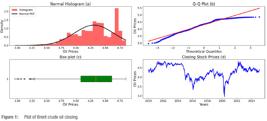
The primary outputs of research (Research Articles, Review Articles and Research Letters) have consistently constituted the majority of the content of SAJS. Although the absolute number of research outputs has changed little over time, the share has fluctuated over time due to changes in the other categories. Editorial and commentary items (News and Views, Correspondence, Editorials, Book Reviews, Presidential Addresses) have shown a significant upward trend over the last century. From a relatively small share in the early decades of the Journal, they began to be much more prominently represented in later decades, from about 1970. In recent decades, they account for about 40-45% of publications. This may be indicative of the Journal's increasing role as a platform for discussion, reflection and scientific communication.
Conference items have followed a unique trend, with a large increase in the 1980s. At this point in time, conference items made up nearly half of all content in the Journal. The decrease in conference materials following the 1990s returned the Journal's content to a greater balance between research articles and other categories of content such as editorial commentary and reports on conferences.
Overall, the findings indicate that although the volume of peer-reviewed research in SAJS has increased substantially from the early years, it has reached a fairly consistent level since 2010. While it consistently retains the largest share of publications, the relative prominence of the other content forms has changed over time. These changes are reflective of changes in the Journal's editorial and functional role rather than a decrease in scientific contribution.
Scientific publication and authorship trends
Figure 2 presents the annual number of research outputs (Research Articles, Research Letters and Review Articles) in SAJS, alongside the total number of authorships, from 1905. A linear model was found to best represent the trend in publication counts, whereas a non-linear (polynomial) model provided a better fit for authorship trends.
Two clear patterns emerge from the data. Firstly, the overall number of scientific publications has gradually increased over the period. While there are fluctuations in individual years, the long-term trend is slightly upward. However, it is evident that the annual output has flattened off since around 2005. This pattern likely reflects stable editorial capacity over time, with only moderate variation between decades.
By contrast, there is a clear shift in authorship patterns over time. The number of authorships shows a much steeper upward trajectory. In the early decades of the Journal, most contributions were single-authored contributions, with authorship counts tracking publication counts very closely. From the late 1960s onwards, however, there is a visible divergence. Authorships increasingly outnumber publications, pointing to a rise in multi-authored papers. In the most recent decades, single-authored contributions are far less common, and most articles now include multiple authors.
Occasional spikes in the authorship curve suggest that particular years included special issues or unusually large collaborations, although these do not alter the overall trend. This trend is similar to what has been reported globally. The increasing level of collaboration in the SAJS is likely due to the increasing size of research teams and the increasing amount of interdisciplinary research being done.
The increasing number of multi-authored publications is a significant indicator of a country's growing institutionalised research environment and increasing collaboration among researchers. As scientific disciplines become more mature, collaboration networks expand and the number of co-authors per publication rises, signalling a shift towards collective and often multidisciplinary research. Figure 3 illustrates the average number of authors per article (blue line - primary y-axis), and the percentage of single-authored publications (red line - secondary y-axis). Each line includes a 10-period moving average trend line.
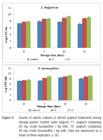
As illustrated in Figure 3, there has been a steady increase in the number of authors per article published in SAJS. Prior to the 1960s, approximately 90% or more of the articles published in the SAJS were single-authored contributions. These authors were representative of the individualistic and fragmented research community in South Africa at that time.3
Starting in the late 1960s, the percentage of single-authored articles decreased while the number of authors per article began to increase. By the early 1980s, the number of single-authored articles decreased to 50% or less, and by the year 2000, single-authored articles represented only about 20% of all articles published. During the same time frame, the number of authors per article dramatically increased and reached a high of more than two authors per article by the late 1980s and from three to four authors per article in the 2000s and 2010s.
In addition to the increase in authors per article, the overall number of publications in SAJS has remained relatively constant. The reason for the increase in authors per article and the corresponding decrease in single-authored articles can be attributed to changes in publication practice and not due to an overall increase in the number of publications. The publication practices of SAJS have shifted toward more collaborative research efforts, which mirrors global trends that show a steady increase in multiple authorships of papers in most fields.6,7
There are several contributing factors to these trends. Firstly, the transition of South African science from an industrialised/individualistic model to an organised/institutionalised model occurred in the mid-20th century. The organisational structure of South African science during this time facilitated the formation of research groups instead of individual research efforts.14
Trends in gender representation in authorships of SAJS articles
The Decadal Plan for Science, Technology and Innovation (2022-2032) recognises that, although there has been significant progress made in increasing the number of women participating in science and technology, women continue to be underrepresented among the country's research producers and authors of scientific publications. According to the plan, only 34% of university scientific papers in 2016 had at least one female author, underscoring the persistence of gender disparities across disciplines and institutions.
To assess whether SAJS is aligned with these transformation goals, the percentage of female authorships in SAJS from 2005 to 2023 was examined. This measure can be seen as a proxy for assessing how well SAJS is meeting the national ambition for transformation in terms of gender diversity in science and technology.
Table 2 and Figure 4 show the proportion of female authorships in the SAJS from 2005 to 2023, alongside two reference indicators: the proportion of female-authored journal articles across all South African public universities, and the percentage of women among permanent academic university staff.
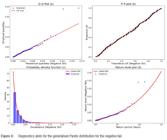
Over the 19-year period, there has been a consistent and steady increase in female participation across all three indicators. The linear trend of SAJS female authorship closely tracks the trend of the share of authorships in the South African university sector. In 2005, female authorships had a share of 32% of both SAJS authorships and all university journal articles. By 2023, SAJS had increased that share to 48%, marginally higher than the 45% achieved by the university sector.
It should be noted that the apparent decline in SAJS female authorships between 2018 and 2020 does not necessarily reflect a real decline in women's participation. During this period, the underlying authorship data set contains incomplete or inconsistent gender classifications, as many records lack gender-linked author profiles in the South African Knowledgebase. As a result, a portion of female authorships were coded as "unknown" rather than "male", leading to an artificial dip in the calculated percentages for those years. Once gender attribution was improved through enhanced data matching after 2021, the share of female authorships rose sharply, restoring continuity with the long-term trend.
Top contributing institutions
Institutional authorship data do more than identify where most papers originate. They also provide some insight into the structure and breadth of the Journal's contributor base, and the areas in which there is a concentration of activity in this regard. It is to be expected that leading contributions would come from South African public universities, but it is interesting to note which institutions produce the highest number of scientific publications. A strong showing from research councils usually indicates an applied and policy nature of the type of research, while institutions from other countries have a bearing on international visibility and integration into the overall scientific network. The analysis of this feature in the SAJS therefore indicates both the depth of the national research base and the extent of involvement from other countries.
Table 3 shows full article counts for all institutions that have contributed more than 10 articles or reviews to the SAJS. Coverage before 2000 is limited, hence we have confined this analysis to the period between 2000 and 2024.
The distribution of institutional contributors reflects a concentration of research activity at South Africa's research universities. The University of the Witwatersrand (Wits) is the greatest contributor, with no less than 211 articles (or reviews) having authors who are affiliated to that institution. The other top five contributors to the SAJS are the University of Cape Town (188), Stellenbosch University (173), University of Pretoria (168) and University of KwaZulu-Natal (154). The trend per decade (keeping in mind that we are in one-half of the current decade), indicates that contributions from these institutions are continuing to increase over the years.
Many other universities, such as North West University, University of Johannesburg and Nelson Mandela University, show appreciable growth, which points to the gradual broadening of the research base in South Africa beyond the formerly academically dominant institutions. The fact that universities of technology such as Tshwane and Cape Peninsula are included, although they show lower publication figures, gives an indication that there is a widening diversity in the institutional factors contributing.
There are eight public research councils and national facilities shown in this list of 28 top contributors. These are the Council for Scientific & Industrial Research (CSIR) (74 publications), Agricultural Research Council (27), South African National Biodiversity Institute (SANBI) (23), South African Medical Research Council (SAMRC) (21), Council for Geoscience (19), South African Weather Service (18), South African Environmental Observation Network (SAEON) (17) and the Human Sciences Research Council (HSRC) (15). This indicates the role played by government-funded research organisations in applied and mission-orientated science, that is, the cumulative contribution indicates that the SAJS is a medium for the dissipation of research relevant to national priorities in various fields like environmental sciences, agriculture, health, biodiversity, etc. The top contributing research council is the CSIR, which is responsible for at least 74 publications. It would also appear from the above that the volume of contributions from the CSIR, SAEON and HSRC has begun on a slowdown in the present decade.
Although the international contributions are still on a moderate scale, there are contributions from institutions like the University of Wisconsin-Madison and various co-authorship links with overseas researchers, which indicates a gradual increase in international engagement and visibility. These trends taken together indicate that the SAJS is a journal which is firmly embedded in the South African higher education and public research system, while maintaining meaningful connections to the global scientific community.
Country-level contributions
Table 4 presents the number of distinct articles published in the SAJS over the 25 years spanning 2000-2024, divided into five 5-year periods and disaggregated by the countries represented in the author affiliations. To avoid overcounting, a distinct count of article titles was used. Therefore, if multiple authors from the same country co-authored a paper, it was counted only once. In this way, the table represents the number of unique SAJS publications with at least one author affiliated to each country in that period, rather than the total number of authorships.
As expected, South Africa dominates the data set, contributing at least 1477 distinct articles across the 25 years. This accounts for the overwhelming majority of all publications and reflects the SAJS's national focus. There are marked increases in output from South Africa in the periods starting 2005 (27%) and 2015 (20%). This suggests a period of growth in national research output. It is evident that this trend is continuing in the 2020s, with South Africa already contributing 378 articles - up 14% from the previous period.
Figure 5 presents the regional distribution of distinct scientific publications published in SAJS over five 5-year periods from 2000 through 2024.
South Africa naturally dominates the publication count, with a 79% share of scientific publications over the 25-year period. However, it is evident that this proportion is gradually declining over time. While South Africa contributed 92% of publications between 2000 and 2004, this share has consistently declined, reaching 69% for the period 2020-2024. In absolute terms, South African article counts rose steadily from 216 in 2000-2004 to 378 in 2020-2024, reflecting increased national output even as the Journal broadened its reach.
Together, the figures depict a gradual broadening of SAJS's geographic reach. The Journal has evolved from being almost exclusively South African at the turn of the century to hosting an increasingly diverse authorship base, particularly within Africa. The rise of continental participation without a corresponding drop in South African output suggests genuine expansion rather than substitution. Meanwhile, the stable level of global collaboration underscores SAJS's niche as a regional publication with selective international partnerships rather than a fully globalised publication outlet.
Thematic analysis
The distribution of SAJS scientific articles across the 10 WoS macro citation topics is summarised in Table 5, grouped by decade for the period from 1980 to 2024. The data are presented both as the number of distinct articles per decade, as well as the proportional share of articles for each topic within the decade.
Across the entire period, there are four macro topics that together account for more than 80% of all scientific publications. These are Agriculture, Environment & Ecology (31%), Earth Sciences (24%), Clinical & Life Sciences (17%), and Social Sciences (10%). The remaining six macro topics account for approximately 17%. It is interesting to note that the Journal has published articles in all ten macro citation topics. The smallest representation is Arts and Humanities with 18 articles.
Journal-level metrics: Journal Impact Factor
Despite having several shortcomings, the Journal Impact Factor (JIF) is still recognised as a major indicator of a journal's visibility and influence within a particular field. In addition to providing a proxy for the short-term scholarly influence of a journal, the JIF measures the average number of citations per article in a journal over the previous 2 years. For a multidisciplinary journal such as the SAJS, the JIF can provide information about the reach of the journal in terms of different scientific disciplines and whether it has the ability to identify and publish influential research. Due to the variability in citation behaviour among disciplines, however, the JIF of a multidisciplinary journal like the SAJS must be viewed cautiously and in relation to that of its category peers.
Figure 6 presents the SAJS's two-year JIF values from 1997 to 2023, alongside the JIF percentile within the Multidisciplinary Sciences category. To visualise the underlying pattern more clearly, an exponential trend line was fitted to the JIF values. This exponential trend line best captures the accelerating increase in the Journal's impact over the period, particularly from 2016 onwards, and provides a better fit than a linear or polynomial trend line.
As shown in Figure 6, the data show a long period of relative stability in the JIF values of the SAJS followed by a large increase from 2017 to 2022. The JIF peaked at 2.4 in 2022 but declined slightly to 2.3 by 2024. This represents a remarkable increase for SAJS, which maintained a JIF value of 1 or below for the 20 years before 2017.
Journal Citation Index
The Journal Citation Index (JCI) is a standardised measure for journal citation rate (citations per article) using a "field-normalised" approach so that the citation rates can be compared across different disciplines that may have differing citation densities. An average JCI of 1.00 indicates that the journal's citation rate is on par with all other journals in that field. A JCI greater than 1.00 means that the journal has a higher citation rate than would be expected for that particular field, while a JCI less than 1.00 means that the journal has a lower citation rate than would be expected for that particular field. The JCI also reports a "percentile", which is the per cent ranking of the journal within its Web of Science category.
As shown in Figure 7, both the JCI and the JCI percentile of the SAJS show a positive trend over the 8 years from 2017 to 2024. While the SAJS had a JCI of only 0.15 in 2017, it rose to 0.49 in 2024, representing a 227% increase.
Over the same period, the JCI percentile has remained fairly constant, fluctuating between the 52nd and 60th percentile. This positions SAJS near the median of the Multidisciplinary Sciences category in the Web of Science classification of subject categories.
Although the absolute number of citations (as measured by the Journal Impact Factor) increased significantly during the past few years, the field-normalised citation rate of the SAJS was still well below the global norm. The SAJS's modest citation rate is likely due to its regional focus and its interdisciplinary nature, where citation patterns vary greatly between disciplines.
It is worth noting that the Multidisciplinary Sciences category contains many of the world's top and most highly cited journals (e.g. Nature and Science), creating a much higher standard for comparison purposes. Therefore, great care must be taken when making conclusions based upon the JCI. Nevertheless, the upward trend in JCI, along with the increasing international visibility and citation rate for the SAJS in its disciplinary context, are encouraging trends.
Discussion and conclusion
Overall reflections
Collectively, the results reflect a journal (SAJS) that has developed in conjunction with the development of the scientific community in South Africa. SAJS has transitioned from a vehicle for colonial and early national science to a contemporary, multidisciplinary journal with a global audience. It has expanded the scope of topics it covers; its authors have collaborated in greater numbers and with increasing diversity; and the Journal's citation impact has grown within the limitations imposed by a very competitive global publishing environment. The SAJS has managed to increase its geographical reach within and outside Africa. The increase in foreign co-authorships attests to its growing recognition and visibility of a multi- and interdisciplinary journal of high standing. In terms of its role in reflecting the increasing inclusivity of South African scientists, it is especially noteworthy that the Journal performs very well on the increasing representation of female authors. Thus, SAJS provides a valuable longitudinal history of the development of research in South Africa. The Journal is one of a few academic journals that originated in the early decades of the 20th century and has sustained publication over a long period. It shows that South African science has a rich history of strong institutions (not only universities and science councils, but also scientific journals) that have stood the test of time.
Data availability
Summarised data can be provided on request. The microdata from Clarivate Analytics Web of Science™ (2024) were used under licence for research purposes and cannot be made available.
Declarations
We have no competing interests to declare. We have no AI or LLM use to declare.
Authors' contributions
G.M.: Conceptualisation, methodology, data curation, investigation, visualisation, writing - original draft, writing - review and editing. J.M.: Conceptualisation, methodology, validation, writing - original draft, writing - review and editing. Both authors read and approved the final manuscript.
References
Literature review
-
1. Carruthers J. The South African Journal of Science: A biography. S Afr J Sci. 2024;120(Special issue: Celebrating 120 years), Art. #18378. https://doi.org/10.17159/sajs.2024/18378
» https://doi.org/10.17159/sajs.2024/18378 -
2. Marzi G, Balzano M, Caputo A, Pellegrini MM. Guidelines for bibliometric-systematic literature reviews: 10 steps to combine analysis, synthesis and theory development. Int J Manag Rev. 2025;27(1):81-103. https://doi.org/10.1111/ijmr.12381
» https://doi.org/10.1111/ijmr.12381 - 3. Mouton J, Waast R. Science in South Africa: History, institutions and statistics. Stellenbosch: Stellenbosch University and IRD Paris; 2000.
-
4. Öztürk O, Kocaman R, Kanbach DK. How to design bibliometric research: An overview and a framework proposal. Rev Manag Sci. 2024;18(11):3333-3361. https://doi.org/10.1007/s11846-024-00738-0
» https://doi.org/10.1007/s11846-024-00738-0 -
5. Boshoff N, Ngwenya S. A bibliometric study of bibliometric studies at South African universities. In: Oancea A, Derrick GE, Nuseibeh N, Xu X, editors. Handbook of meta-research. Cheltenham: Edward Elgar Publishing; 2024. p. 263-278. https://doi.org/10.4337/9781839105722.00029
» https://doi.org/10.4337/9781839105722.00029 -
6. Zupic I, Čater T. Bibliometric methods in management and organization. Organ Res Methods. 2015;18(3):429-472. https://doi.org/10.1177/1094428114562629
» https://doi.org/10.1177/1094428114562629 -
7. Donthu N, Kumar S, Mukherjee D, Pandey N, Lim WM. How to conduct a bibliometric analysis: An overview and guidelines. J Bus Res. 2021;133:285-296. https://doi.org/10.1016/j.jbusres.2021.04.070
» https://doi.org/10.1016/j.jbusres.2021.04.070

Revised: 30 Jan. 2026
Accepted: 06 Feb. 2026
Published: 17 June 2026
Funding: None