
 Democracy's current Achilles' heel
Steven Friedman
Department of Politics and International Relations, Faculty of Humanities, University of Johannesburg, Johannesburg, South Africa. Email:
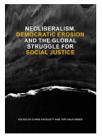
Book Title: Neoliberalism, Democratic Erosion and the Global Struggle for Social Justice
Editors: Chris Tapscott and Tor Halvorsen
ISBN: 9780639891347 (open access ebook, 248pp)
Publisher: African Minds, Cape Town
Published: 2026
Democracy is in trouble - throughout the world - not because citizens are rejecting it but because the version on offer is not nearly as democratic as it claims to be.
For decades, much of humanity has been expected to accept a democracy in which we can vote, enjoy freedom from government coercion, and say what we like - as long as we do nothing to disturb the power of owners of private wealth.
This erodes democracy. One of its core tenets is that people are entitled to an equal say in the decisions which affect them. This includes the decisions of private power holders whose choices can determine whether people can feed themselves, breathe clean air and drink pure water. Allowing them to act as they please has left governments powerless to meet the needs of most of their voters.
It has also imperilled their futures. Many voters, convinced that parties which claim to value democracy will not rein in the private decisions which impoverish them, give up on voting and leave the field clear to those who, if they value freedom at all, want it to be available to some at the expense of others.
The hollowed-out democracy with which we have been expected to make do is underpinned by, and gives expression to, an economic ideology which assumes that economies grow best when governments leave the owners of wealth free to do as they please.
Neoliberalism, Democratic Erosion and the Global Struggle for Social Justice, the product of a seminar in honour of Norwegian scholar Ole Johnny Olsen, is a timely attempt to analyse this reality.
Its message is that 'neoliberalism', a term it never defines but which it understands as "a substantive belief that politics, and hence democratic processes, should not be involved in the economy and that markets should be left to follow their own course" erodes democracy by denying citizens control over key aspects of their lives.
This is not novel - American political theorist Wendy Brown argued over a decade ago that 'neoliberalism' destroyed democracy. But this volume adds flesh to the bone by examining this ideology's current impact on democracies and on what governments do. Topics include impacts on the trade union movement, education, urban policy and global development.
An important theme is the degree to which the preference for markets over democratic decision-making is limiting democracy and increasing inequality in Norway, which, like other Scandinavian countries, has long been seen as the epicentre of social democracy, in which democratic governments regulate private economic power.
It also contains an important South African case study - Chris Tapscott's analysis of the impact of 'glocalisation', which seeks to grow urban economies by making cities more attractive to international investors, in Cape Town.
The city is often hailed as a model of effective governance which is friendly to business but offers benefits to all. Tapscott convincingly demolishes this claim, showing that a strategy which relies on wooing the wealthy has widened inequality and deprived citizens living in poverty of opportunity. He warns against "isomorphic mimicry in the adoption of the neoliberal economic growth models from the Global North and their implementation in unadapted form in the Global South" - a point which also applies to much national policy in this country.
Some of the authors invite us to consider alternatives to the current version of democracy. They do not necessarily agree on the antidote. While Olsen favours 'democratic socialism', the authors insist that the book does not "reject capitalism per se but critiques the ideology that it can function best when insulated from democracy". But they do agree that democracy will be saved, not by a return to the watered-down version available in the recent past, but to a more vigorous form which offers citizens a say in economic decisions.
All of this makes this book a welcome resource to anyone concerned about the way in which a failure or refusal to rein in private power is driving democracies towards authoritarianism.
The book has some obvious weaknesses. Perhaps most important is that, while the sub-title promises a discussion of "the global struggle for social justice", it offers very little on this crucial topic. The title implies a thorough treatment of the battle for a more just and democratic order - the interests which are championing change, the obstacles they face and the conditions under which they may make progress. But the book limits itself to criticising what we have and building a case for an alternative. As important as this is, it does not tell us whether a different order is possible and, if so, how it may come about.
Similarly, it does not offer an account of why forces which encourage bigotry and hate, rather than those which want a fairer world for all, gain ground when democracies fail to serve their citizens.
Another is that the book could have benefitted from more contributions from scholars in the Global South. While it seeks to offer a universal view, it is clearly written largely from the Norwegian perspective. There is a chapter on the Global South, but it is too given to sweeping claims and lacks a firm grounding in the societies in which much of the planet lives.
The only chapter other than Tapscott's by a scholar based in the Global South is by University of Cape Town scholar John Higgins on the Fees Must Fall protests of a decade ago. One of Higgins's chief concerns, which underpins his chapter, is what he sees as destructive and anti-democratic tendencies in movements to change the university. While the topic is important, his chapter does appear to have strayed into the wrong volume: its link to the book's theme is not clear despite Higgins's attempts to relate the two.
While the Norwegian perspective offers valuable insights, the book does discuss a global topic and so it needed more perspectives from the Global South to offer a fully rounded picture of the realities which it discusses.
Despite these shortcomings, the book offers valuable perspectives on an issue which lies at the heart of democracy's current travails.
Published: 29 September 2026
