Were Malagasy Uncarina fruits dispersed by the extinct elephant bird?
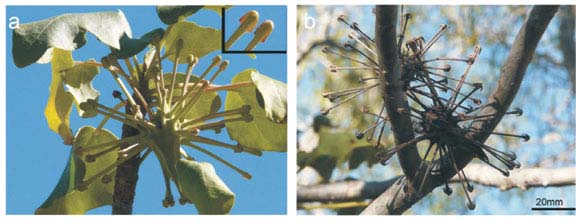
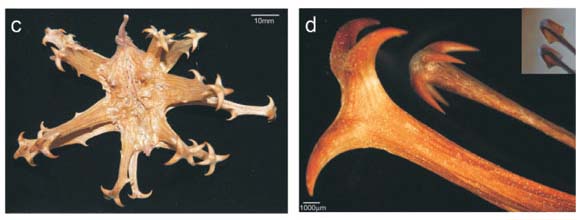
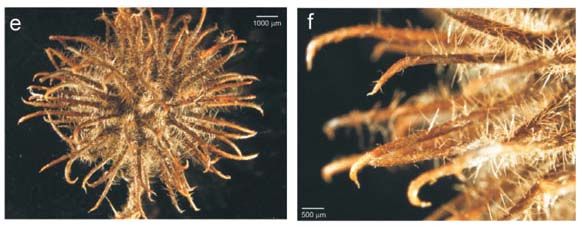
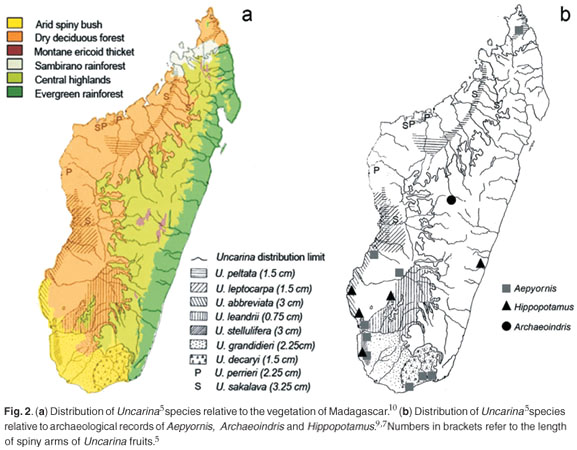
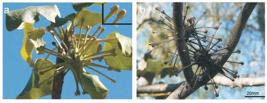
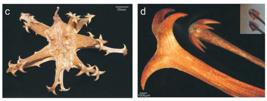
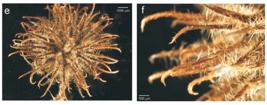
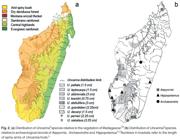
We hypothesise that the spiny fruits of the endemic Madagascar genus Uncarina (Pedaliaceae) are trample burrs that evolved to be dispersed on the feet of the extinct elephant bird (Aepyornis). Our evidence is: i) the morphology of the fruit with its large grapple hooks is more likely to attach to a foot than to adhere to fur and ii) the presentation of mature fruits on the ground rather than in the canopy. These differences to adhesive burrs make lemurs unlikely dispersers. We argue, given the absence of other large terrestrial mammals in Madagascar, that the most likely dispersers of Uncarina fruits were the extinct large birds. If correct, our hypothesis has implications for conservation of Uncarina, the biogeography of the elephant birds and dispersal biology. For example, we predict that the demography of Uncarina will be skewed towards adult plants, and that the dispersal mutualism could possibly be rescued by domestic animals.
Madagascar; Aepyornis; burrs; seed dispersal
 Thumbnail
 Thumbnail
 Thumbnail
 Thumbnail