Food cultures of southern Africa
Hettie C. SchönfeldtI, II, III
IARUA Centre of Excellence in Food Security, University of Pretoria, Pretoria, South Africa.
IIDST/NRF/NDP South African Research Chair in Nutrition and Food Security, University of Pretoria, Pretoria, South Africa
IIIDepartment of Animal and Wildlife Sciences, University of Pretoria, Pretoria, South Africa
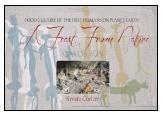
Book title: A feast from nature - food culture of the first humans on planet earth
Author: Renata Coetzee
ISBN: 9780620790734 (hardcover)
Publisher: African SunMedia, Cape Town;ZAR650
Published: 2018
'Let food be thy medicine, and let medicine be thy food.' Although it is debatable whether Hippocrates (460 - c. 370 BC) actually spoke these words, scholars today agree that quality of life depends in part on the food choices that are made every day. Currently, diet is the number one risk factor in the global burden of disease12
In considering current health objectives - increased life expectancy whilst being free from illness and injury with the capacity to enjoy life - as well as agriculture production worldwide, there is new appreciation for promoting and maintaining local crop varieties, indigenous animal breeds and under-utilised crop species. Harnessing our food heritage to produce more sustainable and biodiverse food for the future is steadily gaining momentum.
For this reason, the book by the late Renata Coetzee on the food culture of early Homo sapiens has come at an opportune time. The book is organised in five parts. The information draws on original food composition data contributed by Pinkie Wehmeyer on the nutritional value of an edible bulb (bobbejaanuintjie, Babiana hypogea), a flower bud (veldkool, Trachyandra ciliata), a seed (maramaboon, Tylosema esculentum) and a berry (rosyntjiebos, Grewia flava). Using these species, it is clear that these, and many other, veld plants have a higher nutritive content than comparable modern agricultural crops (Part 5). Currently, only 30 crops supply 95% of the energy that people obtain from food, with only four, namely maize (Zea mays L.), wheat (Triticum aestivum L.), rice (Oryza sativa L.) and potatoes (Solanum tuberosum) - supplying over 60% of calorific energy in the diet. The increase in homogenous diets and the reduction in biodiversity means that commercial agriculture may become more vulnerable to drought, pests and diseases, thus threatening food and nutrition security.3(Ficus sur), and animal breeds, such as fat-tailed sheep (Part 4), are well adapted to local conditions and are thus less reliant on chemical fertilisers, pesticides and antibiotics. These indigenous species are being replaced by a small number of so-called 'improved varieties' which are not adapted to area specific conditions and are therefore reliant on stable abiotic factors along with an array of chemicals and pesticides to deliver high yields.4
The culinary and cultural history of South African food is a subject that was close to Coetzee's heart. For many years she documented the lifestyles of past societies, the role that food played in their lives and the culture of local food consumption. In this, her final book, Coetzee explores the food culture and lifestyles of early Homo sapiens in Africa, hunter-gatherers and early cultivators (Part 1). Edible plant veld foods consisting of leaves, flowers, stems, bulbs, berries and fruits; as well as roots, tubers and bulbs; and bread, cakes and porridges made from some of these as harvested, preserved and prepared by Khoi-Khoin communities are recorded by Coetzee (Part 2). There is also discussion on pre-colonial protein sources that included insects, reptiles, rodents, small antelope, birds, as well as fish (Part 3).
Coetzee has combined many decades of knowledge as a nutritionist and food culture expert in this book and has brought together aspects of archaeology, palaeontology, botany, genetics, history, language and culture in a unique manner. With beautiful referenced photographs, illustrations and text, she has portrayed her content in a way that will appeal to a wider audience.
References
-
1. GBD 2013 Risk Factors Collaborators. Global, regional, and national comparative risk assessment of 79 behavioural, environmental and occupational, and metabolic risks or clusters of risks in 188 countries, 1990-2013: A systematic analysis for the Global Burden of Disease Study 2013. Lancet. 2015;386:2287-2323. https://doi.org/10.1016/S0140-6736(15)00128-2
» https://doi.org/10.1016/S0140-6736(15)00128-2 -
2. Global Nutrition Report. Global nutrition report 2018 [webpage on the Internet]. c2019 [cited 2019 Oct 27]. Available from: https://globalnutritionreport.org/reports/global-nutrition-report-2018/
» https://globalnutritionreport.org/reports/global-nutrition-report-2018/ - 3. Raneri JE, Kennedy G. Agricultural biodiversity for healthy diets and healthy food systems. London: Routledge; 2017.
- 4. Cook S. The spice of life: The fundamental role of diversity on the farm and on the plate. London and The Hague: IIED and Hivos; 2018.