"Boy, You Are on Your Own": Reimagining black masculinity in South Africa
Malose Langa
Department of Psychology, University of the Witwatersrand, Johannesburg, South Africa. Email:
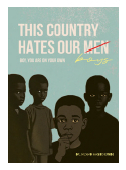
Book Title: This Country Hates Our Men/Boys: Boy, You are on your Own
Author: Mzamo Masito
ISBN: 9781067229061 (paperback, 300pp)
Publisher: Tracey McDonald Publishers, Johannesburg; ZAR360
Published: 2026
Dr Mzamo Masito's book, This Country Hates Our Men/Boys: Boy, You Are on Your Own, offers a thought-provoking reflection on what it means to be a black boy and man in South Africa.
The book is divided into multiple short chapters that are easy to read and connected in a coherent manner. It opens with an imaginative chapter called 'Moonshot', in which the author imagines a South Africa in which women no longer describe men as useless, mothers do not insult fathers in front of children, and men no longer refer to women in degrading ways or deny paternity of their children. Although ambitious, this vision reflects the central message of the book, namely, "transforming the very fabric of how black women and men relate to one another" (p. 2). Masito argues that many relationships between black women and men are characterised by pain, mistrust and unresolved trauma that are often passed intergenerationally.
The book is clearly rooted within critical studies on men and masculinities (CSMM), a field that critically examines how masculinities are socially constructed and maintained within systems of power.1
Throughout the book, Masito argues that empowering both girls and boys is essential for true gender liberation. South African scholars such as Morrell234
One of the strengths of the book is its accessible language. The author writes in a conversational style that makes the text accessible even to readers outside academia. The use of Xhosa and Zulu words throughout the book helps ground the experiences of boys and men within local cultural contexts. The inclusion of poetry also strengthens the emotional and reflective nature of the book.
A central argument in the book is that society often claims to love boys while simultaneously hating men. Masito challenges this contradiction by asking how boys whom society loves (I do not hate boys) eventually become men whom society fears (I hate men). He argues that homes, schools, churches and communities often socialise boys in ways that disconnect them from their humanity and emotional lives. This argument resonates with the work of Ratele5
At the same time, the book acknowledges the pain and fear experienced by women in South Africa. Gqola's6
Like many South African writers, Masito also raises the question of absent fathers and the ways in which father absence may contribute to the emotional pain experienced by many boys. Father absence remains a significant social concern in South Africa. However, the State of South Africa's Fathers 2024 report7
Another strength of the book is the inclusion of the author's own personal experiences. Masito reflects on his relationship with his father, the loss of his brother through suicide, his experiences with depression, and his own journey as a father. By including himself in the narrative, the author demonstrates that he is not detached from the realities he analyses.
The book strongly advocates interventions such as mentoring, coaching and therapy to support boys and men. Central to this argument is the need for men to attend to their mental health needs and develop emotional awareness. This resonates with recent scholarship on masculinity and affect, which argues that emotions, vulnerability, care and intimacy are central to understanding masculinities.8
Some criticisms of the book can nevertheless be raised. The title of the book is provocative and catchy, but this is likely to evoke backlash from readers who may interpret it as portraying boys and men as victims, while women and girls continue to experience violence at the hands of some boys and men. However, it was not necessarily Masito's intention for the title to be interpreted in this way. The symbolic cancellation of the word "men" in red ink in the title could perhaps have been engaged with more critically within the book itself to help clearly understand why it was done.
Certain chapters are occasionally vague and anecdotal, which may make it difficult for readers seeking stronger theoretical engagement to follow the argument consistently. At times, these chapters also rely heavily on 'pop' psychology literature rather than grounding arguments within a clear theoretical framework, which runs the risk of reproducing deficit-based narratives about black boys and men, particularly when discussing the topic of love and emotional expression.
Recent scholarship, however, has increasingly challenged deficit-based representations of black boys and men by demonstrating their capacity for love, care, intimacy, emotional openness and vulnerability.9,10 This body of work challenges stereotypes that portray black masculinities only in pathological terms - a trap which some sections of the book appear to have fallen into unintentionally.
Despite these criticisms, Masito's book remains an important contribution to South African scholarship on masculinities, boyhood and manhood. It offers a compelling reflection on the burdens that many boys and men carry, while also providing practical recommendations for social change. The book will be valuable for policymakers, researchers, community leaders, educators and practitioners interested in promoting healthier masculinities and gender justice in South Africa.
References
-
1. Hearn J. So what has been, is, and might be going on in studying men and masculinities? Some continuities and discontinuities. Men Masc. 2019; 22(1):53-63. https://doi.org/10.1177/1097184X18805550
» https://doi.org/10.1177/1097184X18805550 -
2. Morrell R. Of boys and men: Masculinity and gender in southern African studies. J South Afr Stud. 1998;24(4):605-630. https://doi.org/10.1080/03057079808708593
» https://doi.org/10.1080/03057079808708593 - 3. Shefer T, Ratele K, Strebel A, Shabalala N, Buikema R. From boys to men: Social constructions of masculinity in contemporary society. Cape Town: UCT Press; 2007.
- 4. Macleod C. The risk of phallocentrism in masculinities studies: How a revision of the concept of patriarchy may help. Psychol Soc. 2007;35:11-22.
-
5. Ratele K. Masculinity and male mortality in South Africa. Afr Saf Promot. 2008;6(2):19-41. https://doi.org/10.4314/asp.v6i2.31587
» https://doi.org/10.4314/asp.v6i2.31587 - 6. Gqola PD. Female fear factory. Johannesburg: Melinda Ferguson Books; 2021.
- 7. Sonke Gender Justice (SGJ). State of South Africa's fathers 2024. Johannesburg: SGJ; 2024.
-
8. Reeser TW, Gottzén L. Masculinity and affect: New possibilities, new agendas. NORMA. 2018;13(3-4):145-157. https://doi.org/10.1080/18902138.2018.1528722
» https://doi.org/10.1080/18902138.2018.1528722 -
9. Dlamini MA. I show her my feelings: Young black men and the doing of love in a South African township. Fem Encounters. 2023;7(2), Art. #24. https://doi.org/10.20897/femenc/13552
» https://doi.org/10.20897/femenc/13552 - 10. Malinga M, Ratele K. Love and the construction of young black masculinities. Pretoria: University of South Africa; 2012.