Treatment technology for brewery wastewater in a water-scarce country: A review
Abstract
Water is a scarce resource in many parts of the world; consequently the application of innovative strategies to treat wastewater for reuse is a priority. The brewery industry is one of the largest industrial users of water, but its effluent is characterised by high levels of organic contaminants which require remediation before reuse. Various conventional treatment methods such as anaerobic and aerobic systems, which are effective options because of their high removal efficiencies, are discussed in this study. Other methods such as membrane based technologies, carbon nanotubes, activated carbon, electrochemical methods, algal ponds and constructed wetlands are also analysed. Their efficiency as well as advantages and disadvantages are highlighted and evaluated. Combinations of various treatment processes to improve the quality of the final effluent are discussed.
brewery effluent; anaerobic treatment; aerobic treatment; membrane technology; activated carbon
Introduction
The availability of usable fresh water is a worldwide concern, but it is especially important for countries like South Africa that have both limited water resources and a steadily growing population. According to the Strategic Water Partners Network, South Africa, by the year 2030 the demand for fresh water in South Africa will exceed supply by 17% because of population growth, rapid industrialisation, mechanisation and urbanisation.1
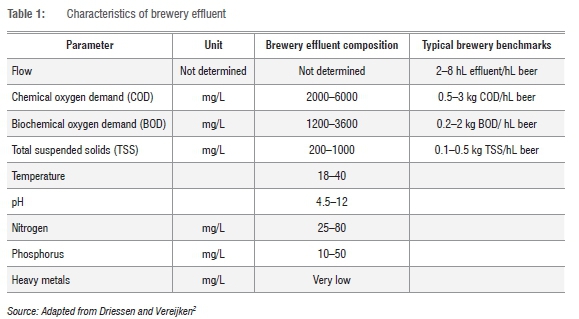
For such countries, it is extremely important to develop means for reducing water consumption by industries such as the brewing industry. The production of beer on a commercial scale requires much more water than just what is contained in the beer itself if one takes into account the water used for cooling and hygienic purposes. Brewery effluent is loaded with high levels of organic matter, nutrients and solids, as shown in Table 1, which are not easy to remove using traditional methods.
An example of a brewing company that is making an effort to minimise the water requirements of the beer production process is the South African Breweries, which is now the world's second-largest beer producer after merging with Miller Brewing of the USA to become SABMiller. However, it is a very challenging task because of the high consumption of water recorded during beer production. The average usage by the SABMiller Group is reported to be around 4.6 L of water per 1 L of beer.33,4
The treatment of effluent for reuse is the preferred and most widely supported methodology. Wastewater from brewery operations has a high nutrient concentration and the traditional method of disposal by delivering the water to a municipal sewage treatment plant is both wasteful and a source of concern for downstream recipients. In addition, treatment of wastewater by municipal treatment plants represents a very significant cost to brewery operators. Given the potential value of nutrient-rich brewery wastewater, and the need to conserve water usage, it therefore makes a great deal of sense to find other uses for the wastewater as well as a means of using less water overall.
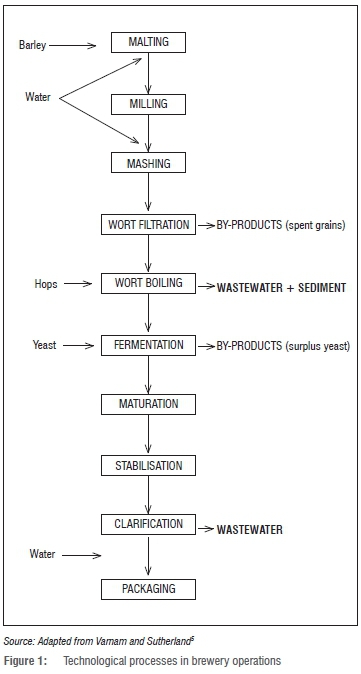
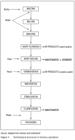
Brewery operations generate large volumes of wastewater through a sequence of processes represented in Figure 1. This study analyses various conventional treatment methods for brewery wastewater and highlights the strengths and weaknesses of each method. The analysis describes the processes with technical details including some aspects related to costs, trends and achieved performance.
Analysis of various treatment processes
Generally, the commercial beer-making process goes through the chemical and biochemical stages of mashing, boiling, fermentation and maturation, as well as separation of the wort, clarification of the wort and clarification of the rough beer product.6
Another important consideration of brewery wastewater effluent is its chloride salt and ammonia content. According to a report from SABMiller regarding the performance of a pilot treatment plant initiated at Port Elizabeth in 2008, the majority of this effluent is only suitable for discharge into saline estuaries, because of the concentration of chlorides.7
Disposal, pre-treatment and treatment
To date, there have been few options available for the treatment of effluent from the brewery industry. The primary mode of treatment has been to simply dump the wastewater into the environment without any kind of treatment. However, this practice has the major drawback of environmental pollution. Pressure for beer production to satisfy increasing consumer demand generates large volumes of effluent. This has forced the beer brewing industry to implement a pre-treatment option before disposal. Generally, this pre-treatment aims to remove solids and reduce the pollutants in the water. Simple dumping has been replaced by disposal of the pre-treated effluent to municipal water resource recovery facilities, where it is added to the municipal wastewater stream for treatment before release into the environment. The mixture goes through a traditional municipal wastewater treatment process of primary, secondary and tertiary treatments, which are physico-chemical and biological treatments. The chemical oxygen demand (COD) of brewery wastewater is relatively high, generally between 2000 mg/L and 6000 mg/L, because of the presence of organic materials as by-products of the brewing process.8
Anaerobic and aerobic treatment
The abundance of organic substances in brewery wastewater is the main cause of high COD which requires efficient treatment methods that can easily remove organic pollutants. Generally, biological methods are a more viable option than physico-chemical methods regarding the efficient removal of organic matter from wastewater. Therefore, treatment by passing the wastewater through an anaerobic digestion process using anaerobic bacteria and then through an aerobic process using 'activated sludge' has become the standard and most recommended process for brewery effluent. Both anaerobic and aerobic methods are widely used today, aiming to reduce the COD of brewery effluent before it is transported to municipal water resource recovery facilities.
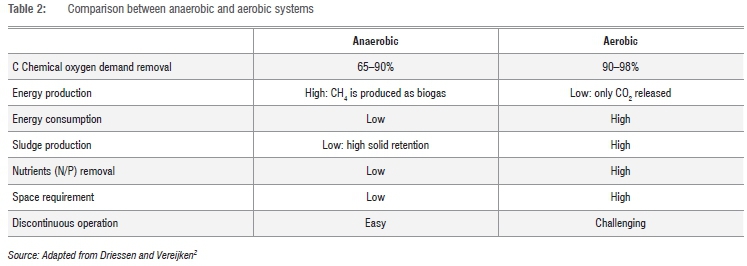
Haydon9Table 2, aerobic systems are more efficient in terms of removal of organic pollutants but require the use of oxygen which increases operating and capital costs. Both anaerobic and aerobic processes require high capital costs, however, they differ on operating costs which are lower for anaerobic compared to aerobic processes. The start-up cost of anaerobic digestion is high because of the laborious seeding process required for an appropriate culture of microorganisms and anaerobic processes are unable to efficiently reduce the level of some nutrients such as nitrates.
In the search for efficient brewery effluent treatment methods, the treatment of brewery effluents has been able to draw from the experience of other applications and industries, particularly the treatment of acid rock drainage through the use of aerobic and anaerobic digestion structures.
Aerobic digestion structures are typically wetlands and shallow settling ponds that provide an oxidative environment for entrained contaminants, while anaerobic digestion structures use anaerobic bacteria to digest many of the nutrients that are found in brewery wastewater. These methods are separate from the anaerobic digestion and activated sludge processes used to treat brewery wastewater.
Cowan and Rende,10
High rate algal ponds and constructed wetlands treatment
Jones et al.11
The SAB Miller experiment is unique and represents the first case study of a commercial brewery treating brewery effluent in South Africa. The method proved to be effective in reducing both ammonia and phosphate levels in the effluent water to regulated standards. However, the method is unable to remove chlorides and sodium salts from the effluent. Hence, the effluent remains only suitable for discharge into a saline estuary. The advantage of this technology is its extremely low cost and reliability. The technology is adapted from the remediation of acid mine drainage and uses both a bacterial phase to reduce organic components in the wastewater and an aerobic algal pond phase to consume mineral components such as phosphates. Kivaisi1213
Similarly, Shepherd et al.14
Carbon nanotubes based treatment
Simate152), which is another important by-product of the beer brewing industry. The nanotubes were found to be very effective as a flocculating agent and as a granular filtration medium during treatment. It was reported that treatment using carbon nanotubes reduced the turbidity of the effluent to less than 5 NTU and removed 96.% of the effluent COD. Given the current attention to carbon nanotubes/graphene technology, this is a promising alternative for the treatment of brewery effluents in the near future. The strength of this technology is the fact that carbon nanotubes can be produced from purified CO2 as a carbon source. Furthermore, it is a possible means of using up large amounts of the CO2 produced by the brewing industry from the fermentation process. Therefore, this could contribute to the attenuation of global warming effects from the brewing industry. However, carbon nanotube treatment for effluent from the brewing industry is not yet a viable option. The technology requires large amounts of energy for CO2 purification and carbon nanotube synthesis. Therefore, the costs of scaling up to a commercial treatment operation would be exorbitant. Also, the unavoidable release of carbon nanotubes into the environment might result in massive environmental and health effects with unexpected consequences. Carbon nanotubes and other fullerene-type compounds are naturally occurring products in soot from carbon combustion, while graphene is the basic molecular building block of graphite and coal. The challenge with this carbon nanotubes technology is the fact that the environment has never been exposed to it on a large scale. For this reason, more investigations are required on capital and operating costs as well as environmental impact and process safety of carbon nanotubes.
Advanced oxidation treatment process
Advanced oxidation treatment processes (AOP) are widely used in wastewater treatment, especially in alcohol distilleries, which generate almost the same type of effluent as the brewing industry, with high levels of organic compounds. The production process in distilleries is almost same as breweries because they both involve fermentation.16 3/H2O2), ozone/ultraviolet irradiation (O3/UV) and hydrogen peroxide/ultraviolet irradiation (H2O2/UV).1717
Pala and Erden182318182/UV, catalytic ozonation and boron doped diamond electrodes; however, they are still only on a laboratory scale. Oxidation processes show a promising future for their application in many wastewater treatment projects. They are emerging technologies with great potential to remove pollutants from many types of wastewater including brewery effluent. These processes utilise the strong oxidising power of hydroxyl radicals to oxidise organic compounds to the preferred end products of carbon dioxide and water. However, sometimes they can be costly because supplementary treatment may be necessary to remove ozone. In addition, there is a problem of turbidity/NO3 interference to resolve.
Membrane filtration treatment
Membrane filtration can be an effective treatment depending on the type of effluent. This method can achieve up to 99% COD, Biochemical oxygen demand (BOD), and total suspended solids (TSS) removal. If the required final product is potable water, reverse osmosis can be added to the process. Microfiltration (MF), Ultrafiltration (UF) and Nanofiltration (NF) membranes have been used successfully to remediate brewery effluent.4,19,20 The challenge with membrane technologies is fouling and energy consumption, but new types of membranes with anti-fouling properties make the membrane process a viable treatment option. More studies are required in this area to produce membranes that can work with minimum fouling and efficient use of energy. Conversely, membrane technologies should only be used as a polishing step after a pre-treatment option involving anaerobic or aerobic processes or a combined anaerobic/aerobic process.
Membrane bioreactor treatment
Membrane bioreactor (MBR) treatment is a successful technology for wastewater treatment and during the last decade has also produced successful results for drinking water.22,23 It is a combination of two proven technologies: enhanced biological treatment using activated sludge or an anaerobic unit, and membrane filtration. The development of various combinations of membranes with other conventional treatment components is justified by the increasing water price and continuous depletion of water resources. Therefore, MBR is seen as an economical and technically viable option for wastewater treatment.2425,26 Submerged MBRs use more membrane area and operate at lower flux levels.25
Dai et al.2728,29,30 In most of these studies, significant amounts of COD removal of up to 90% were recorded which indicates that the MBR process can be a successful option for the treatment and reuse of brewery effluent. However, as with any membrane process, fouling is the greatest challenge and needs to be managed with routine cleaning and maintenance. Energy consumption can also be a weakness especially when it comes to side stream membranes. Capital costs can also be higher because of the combination of two units: membrane, and anaerobic or aerobic reactor.
Microalgae based treatment
Mata et al.31Scenedesmus obliquus for brewery effluent treatment. Usually, microalgae can grow in the brewery effluent using contaminants as nutrients. According to Mata et al.312 was recorded after 14 days. The final values of COD and total nitrogen were found to be 1692 mg O2L and 47 mg N2/L respectively. Compared to discharge standards, which are 150 mg O2/L and 15 mg N2/lL, respectively, final values of COD and total nitrogen were higher. As a result, wastewater treatment by microalgae can be achieved in either the secondary or a tertiary phase of the treatment, combined with other treatments. Membrane technologies can easily be added, in this case, for the polishing step. After utilisation, the resulting algal biomass can be collected and used for biofuel production. Algae treatment for wastewater is an emerging method that can also help to solve the challenge of brewery effluent treatment at lower costs. More investigations are required to find suitable strains that are able to efficiently remove large amounts of organic contaminants from brewery effluents, but there is a potential and promising future regarding this type of treatment.
Treatment using air cathode microbial fuel cells
Activated carbon based treatment
Activated carbon is one of the most powerful adsorbents for removing a wide range of contaminants from industrial and municipal wastewater, landfill leachate and contaminated groundwater. This powerful adsorbent can cope with a wide range of contaminants including organic contaminants present in brewery effluent. Different contaminants may be present in the same discharge and carbon may be used to treat the total flow, or it may be utilised to remove specific contaminants as part of a multistage approach.888
Treatment of brewery effluent using electrochemical methods
The electrochemical method of wastewater treatment was first used to treat sewage generated on board ships.3435 36
Non-thermal quenched plasma technology treatment
Plasma usually results from the increased energy of a gas provided by various sources, such as electric, magnetic, shock waves, ultrasound, thermal and optical (laser) sources.37383939.NO and . OH radicals with strong oxidising characteristics. The .OH radical is a very powerful oxidising agent that is responsible for oxidation reactions with organic contaminants considered as targets during treatment. The study recorded BOD removal efficiencies of 74% and 98%. The technology is also effective in the neutralisation process of alkaline effluents because of the pH lowering effect of the plasma treatment originating from the production of nitrate ions. This method can be combined with biological treatments to further remove organic pollutants easily and quickly to an acceptable level for effluent reuse.39
Discussion
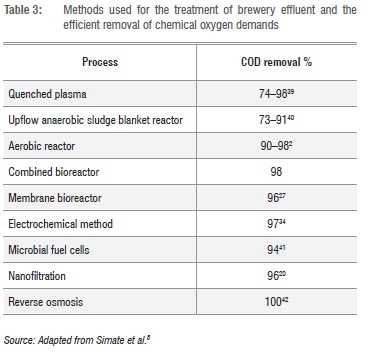
Brewery effluent still needs efficient solutions for remediation that are low cost. Table 3 shows the performance of the various methods discussed in this study in terms of COD removal. These methods show promise but each have weaknesses that need to be addressed for a better outcome. As the demand for beer and other brewery products increases, so does the amount of generated effluent. The brewing industry is focused on producing more beer but most brewers are ignoring the optimisation of water used in the process and the development of an efficient treatment for the generated effluent. Generally, brewery effluent is simply dumped into the nearest municipal water treatment plant for processing along with sewage and other wastes.
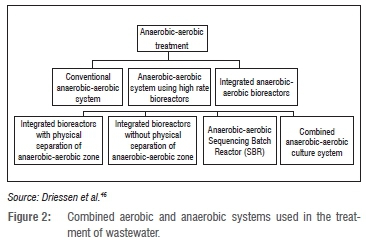
Some efforts have been made in the recovery of economic value from the solid organic residues of the brewing industry, such as the sale of malting and yeast residues for incorporation into animal feedstock. However, these efforts do not have any impact on water consumption and wastewater remediation in the brewery environment. According to Haydon91464344453Figure 2.46
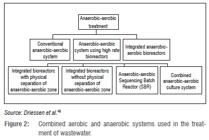
Figure 2 shows that there are basically four types of integrated aerobic-anaerobic bioreactors and the properties of these integrated bioreactors as outlined by Driessen et al.4622Table 3, which shows that recorded COD removals are between 73% and 100%. These values are very high and there is no questioning their effectiveness when looking at the methodological approach and equipment used to achieve such results. Some methods are suitable for pre-treatment and others can be used as a polishing step. This supports the option of combining processes to achieve the high quality required for rendering effluent suitable for reuse in the brewing process. However, in these studies, the economic aspects are not always meticulously analysed, which makes it difficult to confirm with certainty if a method or a combination of methods would be economically viable for treating brewery effluent. There is an absence of adequate economic analysis on operating and capital costs to help make an effective choice for treatment, especially when dealing with large volumes of effluent.
Conclusions and recommendations
Researchers must continue to discover effective ways to reduce the amount of brewery effluent that is produced annually. Improvements must be found to recover brewery effluent as much as possible so that it can be reused. Water scarce countries like South Africa, and its brewing industry, face a crisis of clean water availability. While new technologies such as the application of carbon nanotubes appear to have the potential to achieve highly desirable results in laboratory tests, the technology is not even close to being ready for application in the brewery industry and would be enormously expensive on a large scale. In addition, there are the unidentified health risks of carbon nanotubes presence in the environment. Similarly, the 'low technology' approach for remediation is not capable of achieving the desired results. Biological methods such as aerobic and anaerobic treatments are widely used because of their capacity to remove organic contaminants, achieving high COD removal, but are characterised by high capital or operating costs. These methods are used as pre-treatment options and further treatments may be required.
This review has shown some promising results from MBR, quenched plasma, MFC and the electrochemical method. There is a great potential in these methods; however, the technology costs resulting from energy consumption and maintenance may be inhibitory. The Algal ponds and constructed wetland method is reliable and has the advantage of lower costs. This method shows effectiveness in the removal of ammonia and phosphates but it is unable to remove chlorides and sodium salts. Membrane filtration is being used for industrial wastewater treatment including brewery effluent. Membrane technology has found application in drinking water and wastewater reuse and has undergone rapid development and improvement in quality and costs over the last decade, and could be used as a polishing step after pre-treatment options. Activated carbon based treatment methods can be an appropriate treatment option for the brewery industry. It is a cheap option that could easily allow the removal of organic contaminants from brewery effluents. However, it may be challenged by health and environmental concerns related to the use of carbon or coal for the treatment of large amounts of effluent.
The integration of technologies or processes can also be an option to improve the quality of the final product. This option needs more investigation, especially regarding operating and capital costs including energy consumption, maintenance, process efficiency, water consumption and optimisation. It is incumbent upon the brewery industry to invest in developing alternatives for treatment of brewery effluent, looking at the effluent as a commodity resource rather than as waste. Breweries around the world would do well to form a research consortium to address the problem of brewery wastewater, its remediation and reuse. While the largest breweries are located in the wealthiest economic regions of the world, they do not face the eventual water shortages of less water-affluent countries like South Africa. The growth of breweries in developing countries demands that water conservation and remediation methods in the brewery industry be developed sooner rather than later. It is further recommended that a thorough or a more detailed cost analysis of the various treatment processes in this review be carried out to help determine the most cost-effective way to treat wastewater from breweries.
Authors' Contributions
The authors worked together from topic development, collection of information, discussion, critical analyses, writing of the manuscript up to the final corrections. The article is a result of synergy of both authors.
References
- 1. Department of Water Affairs. Strategic Water Partners Network, South Africa: Closing the water gap by 2030. Johannesburg: NEPD Business Foundation
- 2. Driessen W, Vereijken T. Recent developments in biological treatment of brewery effluent. The Institute and Guild of Brewing Convention; 2003 March 2-7; Livingstone, Zambia. The Netherlands: Paques Water Systems; 2003. p. 10.
-
3. SAB Miller Group. SAB Miller position paper - water: Make more beer but use less water [paper on the Internet]. c2009 [cited 2016 Feb 06]. Available from: http://www.sabmiller.com/docs/default-source/sustainability-documents/position-paper-water.pdf?sfvrsn=2
» http://www.sabmiller.com/docs/default-source/sustainability-documents/position-paper-water.pdf?sfvrsn=2 -
4. SAB Miller PLC. Annual Report 2015 [report on the Internet]. c2015 [cited 2016 Feb 06]. Available from: http://www.sabmiller.com/docs/default-source/investor-documents/financing-documents/annual-report-2015.pdf?sfvrsn=2
» http://www.sabmiller.com/docs/default-source/investor-documents/financing-documents/annual-report-2015.pdf?sfvrsn=2 - 5. Varnam AH, Sutherland JP Alcoholic beverages: Vol 1 Beer. In beverages - technology, chemistry and microbiology, Vol 2. Food products series. London: Chapman & Hall; 1994. p. 296-261.
-
6. Fillaudeau L, Blanpain-Avet P, Daufin G. Water, wastewater and waste management in brewing industries. J Clean Prod. 2006;14:463-471. http://dx.doi.org/10.1016/j.jclepro.2005.01.002
» http://dx.doi.org/10.1016/j.jclepro.2005.01.002 -
7. Engineering News. Wastewater treatment pilot making green brewing strides at PE in 2008. Engineering News. 2011 April 15. Available from: http://www.engineeringnews.co.za/article/environmentally-friendly-plant-treats-brewery-effluent-2011-04-15
» http://www.engineeringnews.co.za/article/environmentally-friendly-plant-treats-brewery-effluent-2011-04-15 -
8. Simate GS, Cluett J, Iyuke SE, Musapatika ET, Ndlovu S, Walubita LF. The treatment of brewery wastewater for reuse: State of the art. Desalination. 2011;273(2-3):235-247. http://dx.doi.org/10.1016/j.desal.2011.02.035
» http://dx.doi.org/10.1016/j.desal.2011.02.035 -
9. Haydon P The Boom in Biogas. Brewers' Guardian. 2011 Sept/Oct;37-40. Available from: http://www.brewersguardian.com/features/biogas-production-waste-water-brewing.html
» http://www.brewersguardian.com/features/biogas-production-waste-water-brewing.html -
10. Cowan AK, Rende DS. Integrated algae ponding system: Technical description. Grahamstown: Institute for Environmental Biotechnology, Rhodes University; 2012. Available from: https://www.ru.ac.za/media/rhodesuniversity/content/ebru/documents/IAPS%20Technical%20Description.pdf.pdf
» https://www.ru.ac.za/media/rhodesuniversity/content/ebru/documents/IAPS%20Technical%20Description.pdf.pdf - 11. Jones CLW, Britz P Davies MTT, Scheepers R, Cilliers A, Crous L, et al. 2011. The wealth in brewery effluent - Water and nutrient recovery using alternative technologies. Fifteenth International Water Technology Conference, IWTC-15; 2011 May 28-30; Alexandria, Egypt.
-
12. Kivaisi AK. The potential for constructed wetlands for wastewater treatment and reuse in developing countries: A review. Ecol Eng. 2001;16:545-560. http://dx.doi.org/10.1016/S0925-8574(00)00113-0
» http://dx.doi.org/10.1016/S0925-8574(00)00113-0 - 13. Shrestha RR, Haberl R, Laber J, Manadhar R, Mader J. Application of constructed wetlands for wastewater in Nepal. Water Sci Technol. 2001;44:381-386.
-
14. Shepherd HL, Grismer ME, Tchobanoglous GG. Treatment of high strength winery wastewater usinga subsurface-flow constructedwetland. Water Environ Res. 2001;73:394-403. http://dx.doi.org/10.2175/106143001X139434
» http://dx.doi.org/10.2175/106143001X139434 -
15. Simate G. The treatment of brewery wastewater using carbon nanotubes synthesized from carbon dioxide carbon source [PhD Thesis]. Johannesburg: University of the Witwatersrand; 2012. http://dx.doi.org/10.1016/j.watres.2011.12.023
» http://dx.doi.org/10.1016/j.watres.2011.12.023 -
16. Mohana S, Acharya BK, Madamwar D. Distillery spent wash: Treatment technologies and potential applications. J Hazard Mater. 2009;163(1):12-25. http://dx.doi.org/10.1016/j.jhazmat.2008.06.079
» http://dx.doi.org/10.1016/j.jhazmat.2008.06.079 -
17. Bes-Piá A, Mendoza-Roca JA, Roig-Alcover L, Iborra-Clar A, Iborra-Cla MI, Alcaina-Miranda MI. Comparison between nanofiltration and ozonation of biologically treated textile wastewater for its reuse in the industry. Desalination. 2003;157:81-86. http://dx.doi.org/10.1016/S0011-9164(03)00386-2
» http://dx.doi.org/10.1016/S0011-9164(03)00386-2 -
18. Pala A, Erden G. Decolorization of a baker's yeast industry effluent by Fenton's oxidation. J Hazard Mater. 2005;127:141-148. http://dx.doi.org/10.1016/j.jhazmat.2005.06.033
» http://dx.doi.org/10.1016/j.jhazmat.2005.06.033 -
19. Ince BK, Ince O, Sallis PJ, Anderson GK. Inert COD production in a membrane anaerobic reactor treating brewery wastewater. Water Res. 2000;34:3943-3948. http://dx.doi.org/10.1016/S0043-1354(00)00170-6
» http://dx.doi.org/10.1016/S0043-1354(00)00170-6 -
20. Braeken L, Van Der Bruggen B, Vandecasteele C. Regeneration of brewery waste water using nanofiltration. Water Res. 2004;38:3075-3082. http://dx.doi.org/10.1016/j.watres.2004.03.028
» http://dx.doi.org/10.1016/j.watres.2004.03.028 -
21. Daufin G, Escudier J-P Carrère H, Bérot S, Fillaudeau L, Decloux M.. Recent and emerging applications of membrane processes in the food and dairy industry. Food Bioprod Process. 2001;79:89-102. http://dx.doi.org/10.1205/096030801750286131
» http://dx.doi.org/10.1205/096030801750286131 -
22. Li X, Chu, HP. Membrane bioreactor for the drinking water treatment of polluted surface water supplies. Water Res. 2003;37:4781-1791. http://dx.doi.org/10.1016/S0043-1354(03)00424-X
» http://dx.doi.org/10.1016/S0043-1354(03)00424-X -
23. Fan F, Zhou H. Interrelated effects of aeration and mixed liquor fractions on membrane fouling for submerged membrane bioreactor processes in wastewater treatment. Environ Sci Technol. 2007;41:2523-2528. http://dx.doi.org/10.1021/es062035q
» http://dx.doi.org/10.1021/es062035q -
24. Visvanathan C, Pokhrel D. Role of membrane bioreactors in environmental engineering applications. In: Roussos S, Soccol CR, Pandey A, Augur, C, editors. New horizons in biotechnology. Dordrecht: Kluwer Academic Publishers; 2003. http://dx.doi.org/10.1007/978-94-017-0203-4_21
» http://dx.doi.org/10.1007/978-94-017-0203-4_21 - 25. Jeison D. Anaerobic membrane bioreactors for wastewater treatment: Feasibility and potential applications [PhD Thesis]. Wageningen: Wageningen University; 2007.
-
26. Seneviratne MA. Practical approach to water conservation for commercial and industrial facilities. City East: Queensland Water Commission; 2006. http://dx.doi.org/10.1016/B978-185617489-3.50011-4
» http://dx.doi.org/10.1016/B978-185617489-3.50011-4 -
27. Dai H, Yang X, Dong T, Ke Y Wang T.. Engineering application of MBR process to the treatment of beer brewing wastewater. Mod Appl Sci. 2010;4(9):103-109. http://dx.doi.org/10.5539/mas.v4n9p103
» http://dx.doi.org/10.5539/mas.v4n9p103 - 28. Kimura S. Japan's aqua renaissance '90 project. Water Sci Technol. 1991;23(7-9):1573-1582.
- 29. Nagano A, Arikawa E, Kobayashi H. The treatment of liquor wastewater containing high-strength suspended solids by membrane bioreactor system. Water Sci Technol. 1992;26(3-l):887-895.
- 30. Fakhru'l-Razi A. Ultrafiltration membrane separation for anaerobic wastewater treatment. Water Sci Technol. 1994;30(12):321-327.
-
31. Mata TM, Melo AC, Simões M, Caetano NS. Parametric study of a brewery effluent treatment by microalgae Scenedesmus obliquus. Bioresource Technol. 2012;107:151-158. http://dx.doi.org/10.1016/j.biortech.2011.12.109
» http://dx.doi.org/10.1016/j.biortech.2011.12.109 -
32. Feng Y Wang X, Logan BE, Lee H. Brewery wastewater treatment using air-cathode microbial fuel cells. Appl Microbiol Biot. 2008;78:873-880. http://dx.doi.org/10.1007/s00253-008-1360-2
» http://dx.doi.org/10.1007/s00253-008-1360-2 - 33. Mathuriya AS, Sharma VN. Treatment of brewery wastewater and production of electricity through microbial fuel cell technology. Int J Biotech Bioch. 2010;6(1):71-80.
-
34. Bockris JOH. Environmental Chemistry. New York: Plenum Press; 1977. http://dx.doi.org/10.1007/978-1-4615-6921-3
» http://dx.doi.org/10.1007/978-1-4615-6921-3 -
35. Barrera-Díaz C, Linares-Hernández I, Roa-Morales G, Bilyeu B, Balderas-Hernández P. Removal of biorefractory compounds in industrial wastewater by chemical and electrochemical pretreatments. Ind Eng Chem Res. 2009;48:1253-1258. http://dx.doi.org/10.1021/ie800560n
» http://dx.doi.org/10.1021/ie800560n -
36. Vijayaraghavan K, Ahmad D, Lesa R. Electrolytic treatment of beer brewery wastewater. Ind Eng Chem Res. 2006;45:6854-6859. http://dx.doi.org/10.1021/ie0604371
» http://dx.doi.org/10.1021/ie0604371 -
37. Benstaali B, Moussa D, Addou A, Brisset JL. Plasma treatment of aqueous solutes: Some chemical properties of a gliding arc in humid air. Eur Phys J-Appl Phys. 1998;4:171-179. http://dx.doi.org/10.1051/epjap:1998258
» http://dx.doi.org/10.1051/epjap:1998258 - 38. Sutton AP. Electronic structure of materials. Oxford: Clarendon Press; 1993.
-
39. Doubla A, Laminsi S, Nzali S, Njoyim E, Kamsu-Kom J, Brisset JL. Organic pollutants abatement and biodecontamination of brewery effluents by a non-thermal quenched plasma at atmospheric pressure. Chemosphere. 2007;69:332-337. http://dx.doi.org/10.1016/j.chemosphere.2007.04.007
» http://dx.doi.org/10.1016/j.chemosphere.2007.04.007 -
40. Cronin C, Lo KV. Anaerobic treatment of brewery wastewater using UASB reactors seeded with activated sludge. Bioresource Technol. 1998;64:33-38 http://dx.doi.org/10.1016/S0960-8524(97)00154-5
» http://dx.doi.org/10.1016/S0960-8524(97)00154-5 -
41. Wang X, Feng YJ, Lee H. Electricity production from beer brewery wastewater using single chamber microbial fuel cell. Water Sci Technol. 2008;57:1117-1121. http://dx.doi.org/10.2166/wst.2008.064
» http://dx.doi.org/10.2166/wst.2008.064 -
42. Madaeni SS, Mansourpanah Y. Screening membranes for COD removal from dilute wastewater. Desalination. 2006;197:23-32. http://dx.doi.org/10.1016/j.desal.2006.01.015
» http://dx.doi.org/10.1016/j.desal.2006.01.015 - 43. Environment Canada (EC). Technical pollution prevention guide for brewery and wine operations in the Lower Fraser Basin. ECDOE, FRAP 97-20. Vancouver: EC. 1997; p. 97-20.
-
44. Kanagachandran K, Jayaratne R. Utilization potential of brewery waste water sludge as an organic fertilizer. J I Brewing. 2006;112(2):92-96. http://dx.doi.org/10.1002/j.2050-0416.2006.tb00236.x
» http://dx.doi.org/10.1002/j.2050-0416.2006.tb00236.x -
45. Fakoya MB, Van der Poll HM. Integrating ERP and MFCA systems for improved waste-reduction in a brewery in South Africa. J Clean Prod. 2013;40:136-140. http://dx.doi.org/10.1016/j.jclepro.2012.09.013
» http://dx.doi.org/10.1016/j.jclepro.2012.09.013 - 46. Driessen W, Yspeert P, Yspeert Y, Vereijken T. Compact combined anaerobic and aerobic process for the treatment of industrial effluent. Environmental Forum, Columbia-Canada: Solutions to Environmental Problems in Latin America; 2000 May 24-26; Cartegena de Indias, Columbia. The Netherlands: Paques Water Systems.
Adesoji T. Jaiyeola
Department of Civil Engineering, Mangosuthu University of Technology
PO Box 12363, Jacobs 4026, Durban. South Africa

Revised: 11 June 2015
Accepted: 18 Aug. 2015