Struvite infection calculi in dogs: problems with urinary calculus identification, and the value of the results
Abstract
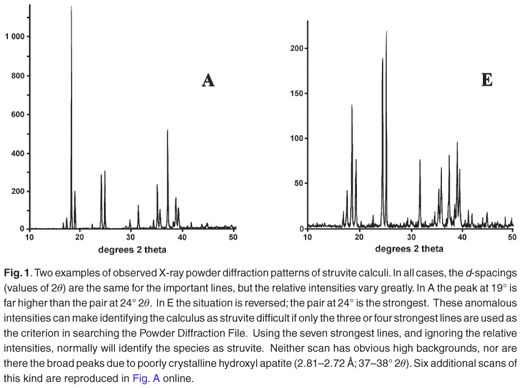
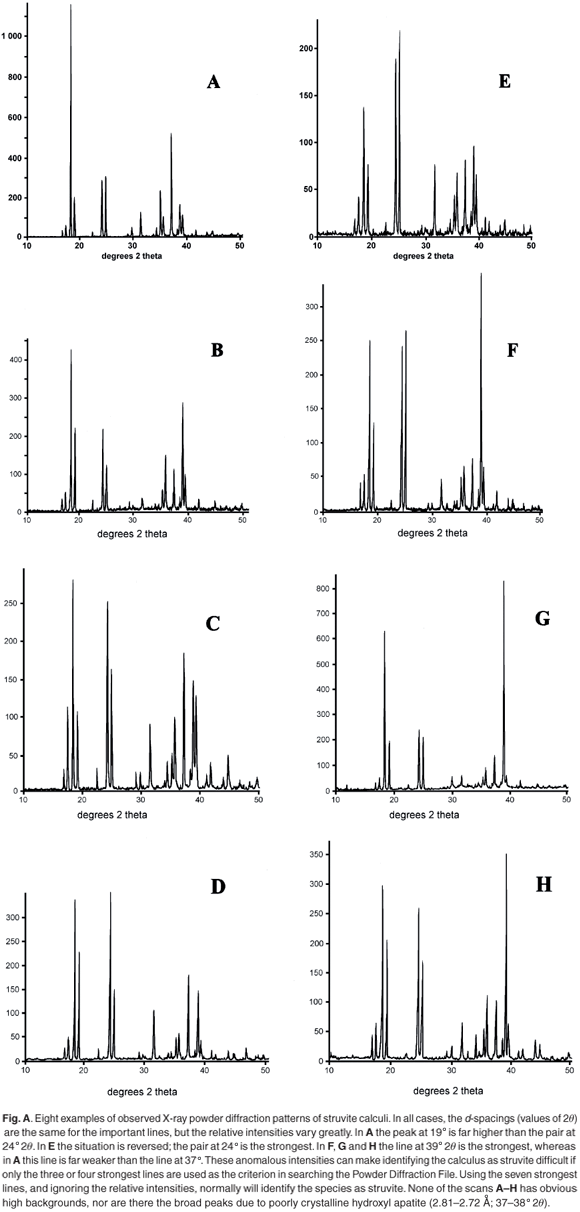
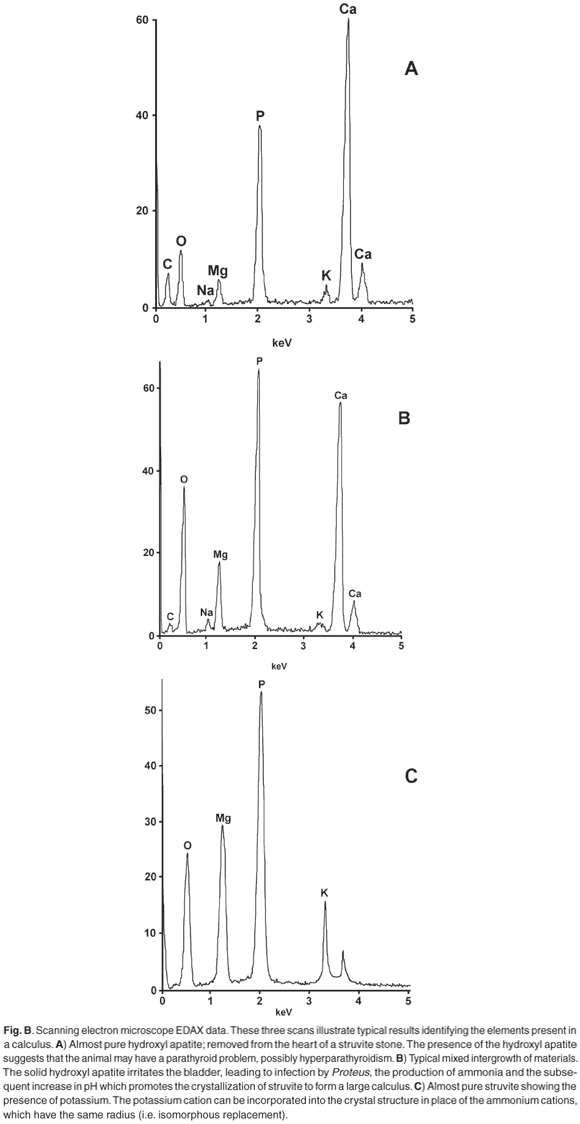
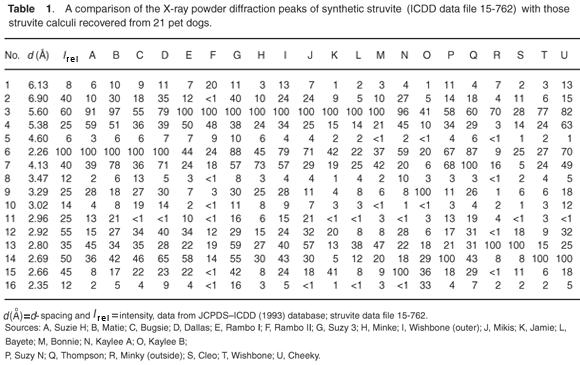
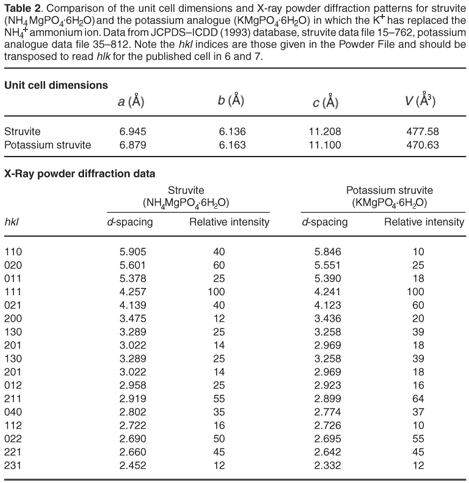
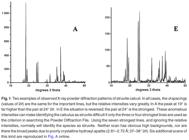
Identifying the crystalline components of a urinary calculus is a valuable aid to correct diagnosis, and subsequent treatment of the underlying cause of the problem. Calculus formation is often an end product brought about by urine with a high concentration of insoluble material causing bladder irritation. This promotes bacterial infection by Proteus, which not only raises the pH in the bladder and generates ammonia, but also provides sites for mineral nucleation and crystal growth. Treating the infection and removing the stone will not necessarily cure the disorder. Correct identification of a calculus as struvite and even its potassium analogue can be critical in choice of curative protocols, but this is not always straightforward. Our experience with 'problem calculi' is described.
 Thumbnail
 Thumbnail
 Thumbnail
 Thumbnail