
 Marion Island half a century ago: A glimpse into an earlier era of sub-Antarctic exploration
Don A. Cowan
Centre for Microbial Ecology and Genomics, University of Pretoria, Pretoria, South Africa
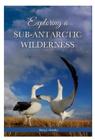
BOOK TITLE: Exploring a sub-Antarctic wilderness: A personal narrative of the first biological and geological expedition to Marion and Prince Edward Islands 1965/1966
AUTHOR: Brian J. Huntley
ISBN: 9780620705219 (softcover)
PUBLISHER: Antarctic Legacy of South Africa, Stellenbosch; ZAR250
PUBLISHED: 2016
My first thoughts on this book were unkind: 'It's a diary, so don't expect too much'. Yet this book is so much more than a diary.
As an historical document, this text has much of interest. There are detailed descriptions of many of the physical and biological aspects of Marion Island (and neighbouring Prince Edward Island), with sections as diverse as climate and animal behaviour, all supported by the author's own photographs and even some data figures. Modern and future Marion Island explorers will be able to see the evidence of changes in the locations, numbers and distributions of plant and animal populations in this intervening period. Sadly, some of the evidence of previous human activities seen by Huntley and his colleagues on Marion Island will disappear in the intervening years.
At first, the reader may find the structure of the book somewhat bamboozling, principally because the author sections the text into six different themes, such as 'Teamwork on a remote island' and 'Getting down to the research programme', each of which is supported by a selection of his diary notes and prefaced with explanatory comments by the author. This style does provide some subject-related focus, but breaks any attempt to establish a continuous temporal sequence. What I missed was the 'between the lines' evidence of the change in the author from 'newby' to 'old hand'.
The lay reader will also struggle with the place names. As a diary, virtually every daily record includes the names of the places visited during the author's daily marches. While this attests to his amazing level of strength and fitness, the lay reader may struggle to place these 'treks' into an 'island mind map'. As a reader who has visited Antarctica regularly but (sadly) never been to Marion, I found it difficult to keep track of the locations mentioned, even though one can refer to the map of Marion Island presented inside the front cover of the book.
But this criticism is minor compared to the pervading sense, throughout the text, of the wonderful audacity and integrity of the author and his colleagues. I was constantly reminding myself that the author had, at the time of the expedition, only just graduated with a BSc degree (and was keenly anticipating an honours degree in the year ahead). Yet the youthful Brian Huntley demonstrates amazing depths of experience, resilience, dedication, physical strength and scientific acumen. Working under extremely difficult conditions (references to rain, sleet, snow and/ or gale force winds appear on virtually every page of the book), he and his colleagues nevertheless undertook extensive biological, geological and meteorological surveys of much of the 29 000-ha island. It is perhaps not surprising that, 50 years later, Professor Brian Huntley, now retired, is a highly respected member of the national and international academic community.
So, who will benefit from and enjoy this book the most? The answer is obvious: other Marion Island explorers, who can see what Huntley describes in their own mind's eye, will find the book a fascinating - and even emotional - experience. Not that the book is written in an emotional style: the terse diary notations are fitting for a diary scribbled while the author lay prone in a damp tent pitched on rough ground. But the reader need not belong to this rather elite group to enjoy this text. Any natural history or outdoor enthusiast will be able to engage with the young Brian Huntley as he struggles across razor-sharp lava flows carrying a 70-lb pack in gale force winds with a hint of sleet.
Correspondence:

