Understanding pathogen transmission dynamics in waterbird communities: at what scale should interactions be studied?
Abstract
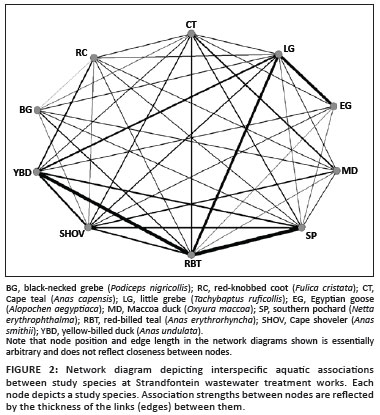
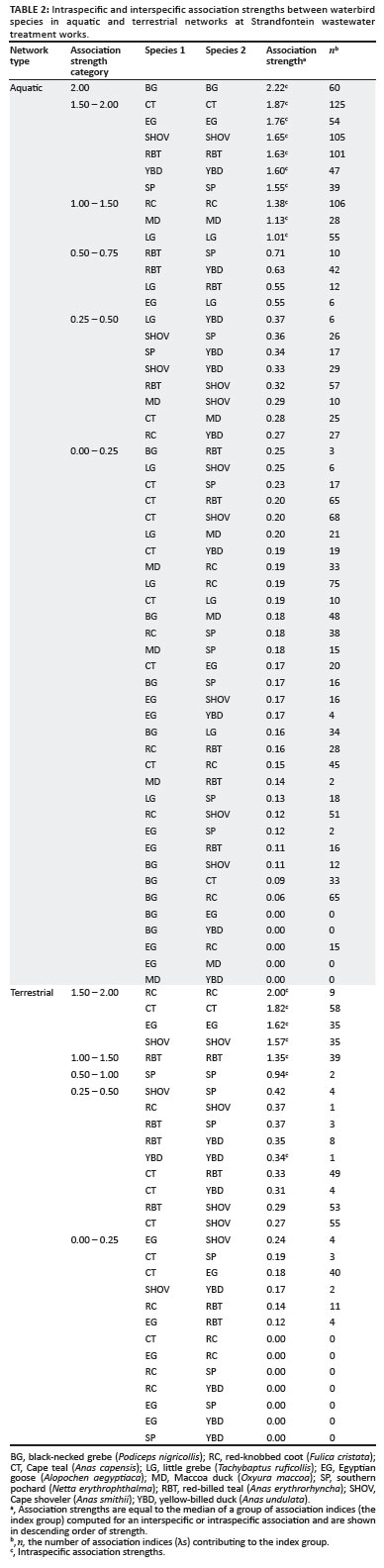
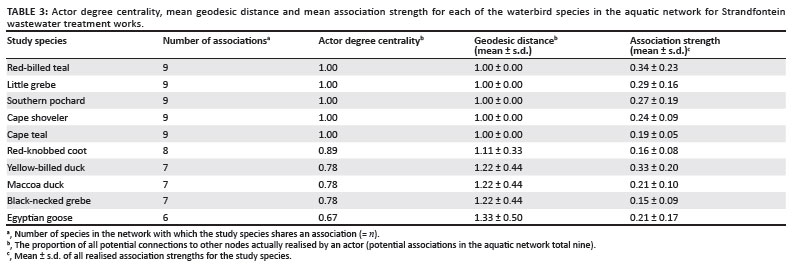
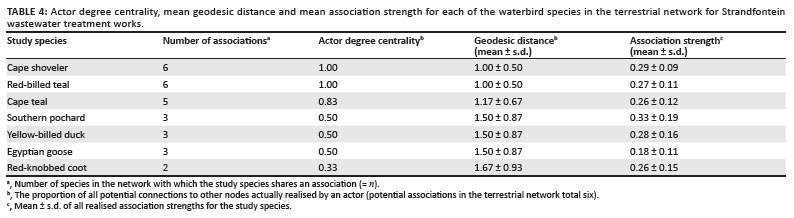
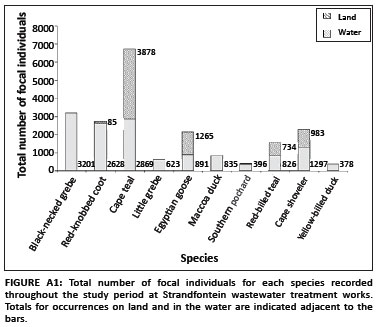
Pathogen transmission in animal populations is contingent on interactions between and within species. Often standard ornithological data (e.g. total counts at a wetland) are the only data available for assessing the risks of avian pathogen transmission. In this paper we ask whether these data can be used to infer fine-scale transmission patterns. We tested for non-randomness in waterbird assemblages and explored waterbird interactions using social network analysis. Certain network parameter values were then compared to a data set on avian influenza prevalence in southern Africa. Our results showed that species associations were strongly non-random, implying that most standard ornithological data sets would not provide adequate information on which to base models of pathogen spread. In both aquatic and terrestrial networks, all species regularly associated closely with other network members. The spread of pathogens through the community could thus be rapid. Network analysis together with detailed, fine-scale observations offers a promising avenue for further research and management-oriented applications.
 Thumbnail
 Thumbnail
 Thumbnail
 Thumbnail