
 The promise of the Fourth Industrial Revolution: A Global South perspective
Dean C. Langeveldt
Department of Education Studies, Faculty of Education, Sol Plaatje University, Kimberley, South Africa Email:
Book Title: Digital Capitalism and its Limits: Technotopia, Power and Risk
Editor: Vishwas Satgar
ISBN:9781776149407
(paperback, 208 pp, ZAR395) 9781776149445
(open access eBook, 208 pp)
Publisher: Wits University Press, Johannesburg
Published: 2025
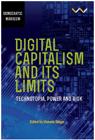
In the eighth volume of the Democratic Marxism series, decolonial international relations professor and Democratic Marxism Editor, Dr Vishwas Satgar, has assembled a compelling collection of chapters that critically examine the concept of "digital technotopia" - the widespread belief that digital technologies will inevitably solve humanity's problems while transforming society for the better. This volume focuses on the actual impact of artificial intelligence, digital platforms and algorithmic management on societies worldwide.
The volume addresses pressing questions about the Fourth Industrial Revolution (4IR) narrative that dominates global policy discussions. Rather than accepting technological determinism, the contributors examine how digital technologies intersect with existing power relations, labour processes and environmental challenges. The collection is structured around three themes: examining the risks of digital technotopia, analysing power dynamics in digitised labour processes, and exploring emancipatory alternatives.
In the opening chapter, Satgar provides an incisive and comprehensive framework that highlights what he calls the "dangerous contradictions" of digital capitalism. His analysis links surveillance capitalism, artificial intelligence risks, cyber warfare, and environmental extraction to broader patterns of capitalist crises. Drawing on Walter Benjamin's critique of industrial progress, Satgar positions current digital transformations within historical patterns of technological change under capitalism.
The empirical contributions in Part Two provide valuable insights into how digital technologies affect workers and communities. Ruth Castel-Branco, Seipati Mokhema and Edward Webster's study of digital platform workers across the Global South documents emerging forms of organisation among Uber drivers, delivery workers and other platform-based labourers. Their research challenges assumptions that organised labour has become irrelevant, showing instead how workers develop new strategies to contest algorithmic management.
Vincent Siwawa's examination of waste picker platforms in South Africa reveals how multinational corporations use digital technologies to organise informal recycling while maintaining control over workers. His detailed analysis of BanQu, Kudoti and Regenize platforms demonstrates the complex power dynamics within digitised informal economies.
Alex Mashilo's contribution draws on his experience as both an automotive worker and a union negotiator to examine how the adoption of robotics and digitalisation affects employment and bargaining power in South Africa's automotive sector.
Jane Duncan's analysis of mass digital surveillance offers informative context for understanding how intelligence agencies have adopted the 4IR ideology. Her examination of South Africa's National Communication Centre and the Constitutional Court's 2021 ruling on surveillance laws illuminates the tension between technological capabilities and democratic accountability.
Ujala Satgoor's chapter on libraries and digital equity in South Africa presents a nuanced perspective on the role of technology in addressing social issues such as literacy. Her analysis demonstrates how digital interventions can complement, but not replace, broader efforts to establish a reading culture, underscoring the importance of community-centred approaches to technology implementation.
The final section explores alternative approaches through Michel Bauwens and colleagues' commons economics framework and Michael Kwet's digital degrowth proposal. These authors' contributions connect digital transformation to environmental sustainability and decolonisation, arguing that technological change must be embedded within broader social and ecological transitions.
The collection's strength lies in its materialist analysis that situates digital technologies within existing social relations rather than treating them as autonomous forces. The international scope, particularly the attention to Global South experiences, provides perspectives that are often missing from technology debates dominated by Northern institutions. The integration of environmental concerns with digital politics addresses an important gap in critiques of contemporary technology.
The contributors successfully demonstrate that questions about artificial intelligence, platform work and digital surveillance cannot be separated from broader issues of democracy, inequality and ecological sustainability. The volume provides essential analytical tools for understanding how digital technologies both reproduce existing inequalities and create new possibilities for social organisation.
For scholars in political economy, labour studies and science and technology studies, this collection offers valuable frameworks for analysing contemporary technological change. The book's interdisciplinary approach and focus on power relations make it accessible to readers interested in understanding how digital technologies shape contemporary society.
The volume succeeds in challenging technotopian assumptions while identifying concrete examples of resistance and alternative approaches. Through thought-provoking analyses, the contributors demonstrate that with adequate analytical tools and effective political strategies, technological futures remain open to contestation and democratic shaping.
Published: 29 January 2026
