
 Between the dark and the light
Sally Swartz
Department of Psychology, University of Cape Town, Cape Town, South Africa Email:
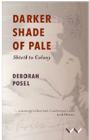
Book Title: Darker Shade of Pale: Shtetl to Colony
Author: Deborah Posel
ISBN: 9781776149711 (paperback, 368 pp)
Publisher: Wits University Press, Johannesburg; ZAR380
Published: 2025
Why write a memoir? And what is a memoir? It is more personal than a biography because it includes - or is focused on - the writer's memory. It also often has privileged access to an archive of anecdotes, photographs and letters privately curated. A memoir offers history, in that it holds truth claims: it is a factual rendition of a family, an individual life, or an event. As such, once published, it becomes a vouched-for record in the public space. Usually, it is more sharply focused on a life, or several lives, than the history of a particular period would be. Although it saturated in the economic and social backdrop against which the action unfolds, a memoir holds tenaciously to life accounting as trunk and branches. Context and the remembered life illuminate each other, but the life is foreground. So a memoir is not a biography, nor a history, but an intimacy shared, and this is perhaps why it is so popular a literary format.
Memoirs can be many things: a celebration of an extraordinary life; an account of a life lived in extraordinary circumstances; or an attempt to set the record straight, to correct an historical narrative gone awry. Fame and infamy are often in the mix, as are illness and recovery, trauma and resilience. They capture our attention because they let us into the intimate spaces of people we idealise or despise - the Obamas, upon whom such hopes were pinned, or serial killers we dread to stumble across in our own back yards. They work to materialise good and evil fantasies. But they frequently do something more magical than that: in recounting daily routines with all their deskfuls of receipts and bills, emails and bus tickets, they attach us firmly to the ordinary, and here lies one aspect of their significance. The mirror held up to the ordinary allows us to identify the memoir's subject, to see our lives mirrored there too, to find a way of belonging as our fantasies prompt us to do.
Posel's Darker Shade of Pale is a memoir - an account of the life of her grandfather Maurice. The circumstances were extraordinary, covering the migration of Jewish families out of the Russian Empire and the Pale of Settlement across the seas towards lands of opportunity in southern Africa. The shtetls left behind and the new communities that rapidly became home have been the subject of substantial research projects and carefully curated archives, mapping every aspect of the movement from the Pale to various parts of the world, including South Africa. The care of the curation has of course a mission: to record both persecution, death and loss, but also survival. Not just any survival - a flowering of success, whether that be measured in terms of education, wealth or influence. While covering some of these bases, Darker Shade - as its title implies - is not about a movement from the dark into the light; in fact it disrupts that narrative arc at every turn. Neither is it about an idealised past life lost, a collapse into a landscape of shadows. It sets the record straight, daring to dance between the dark and the light. The Jewish communities that emigrated from the Pale had mixed skills, access to wealth and family support. Some moved swiftly into wealth, fame and influence. Some remained relatively poor. For some migration brought betrayal, hardship and illness. Others flourished by dabbling in occupations of dubious legitimacy, getting entangled with speculation, fraud, the sex trade and disputatious family relationships. In a discursive tour de force, Posel turns on the one hand to the rags-to-riches histories of Jewish diasporas and seems to say: "We weren't all good, neither were we all victims who had to fight to survive." Then - quite brilliantly - she turns those who hold obdurately and judgmentally to a narrative of an inward-looking, exclusive and exploitative Jewish community, popularly represented in caricatures of Jews as avaricious money-lenders, and seems to say:
For each act of seclusion or exclusion, there were ten or fifteen of integration, and of mingling in defiance of colonial racism. Mingling for both profit and in the service of common humanity.
Darker Shade of Pale is therefore far more than a memoir of a grandfather. It does hold Maurice Posel in memory, with all his solidity and disappointments and silent demeanor. In the narrative surrounding him there are accounts of the excitements of archival hunts, and the painstaking work of building a family tree. What emerges is not only an understanding of how Maurice came to be as he was, but also sketches of shtetl life and gendered divisions of labour, journeys by ship, trade across the colonies of South Africa, of buying and selling land, of mining magnets and hardworking traders giving food and goods to miners, both white and black. And the recurrent tapestry across generations of family myths and farribels, a generous flow of connectedness carrying envy and animosity as well as protectiveness and love.
At a time in history when Jewish identity is more than ever the subject of heated debate and strong feeling, with the rifts between good and evil around the meaning of homeland and belonging producing horror headlines day after day, Darker Shade of Pale insists on a story that demands the reader pay attention to ambivalence, complexity, security shadowed by transience, and splits that break open and close endlessly. It is a gripping, artful and elegantly written book, with a deep scholarly reach that directs the interested reader beyond its pages to a wealth of knowledge, both academic and biographical.
Published: 29 January 2026
