Sexual dimorphism in the mandible of indigenous South Africans: a geometric morphometric approach
Abstract
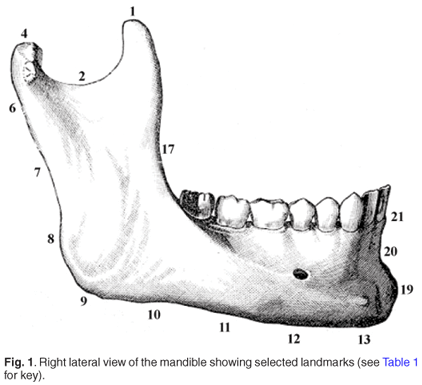
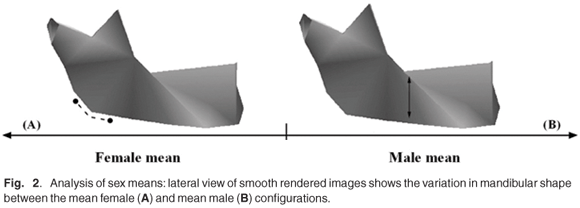
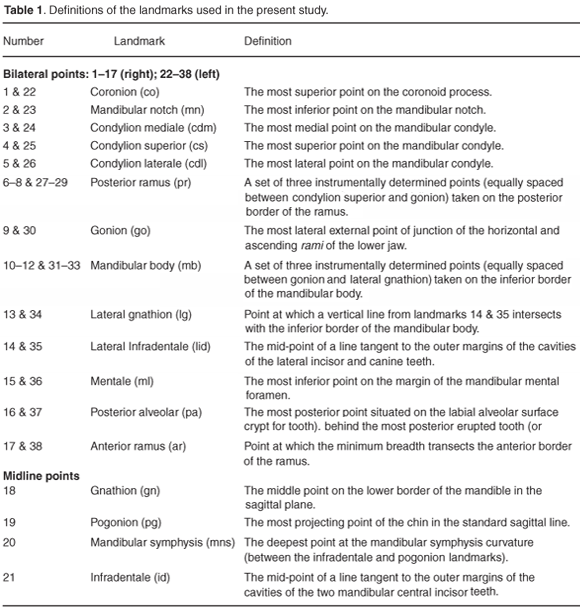
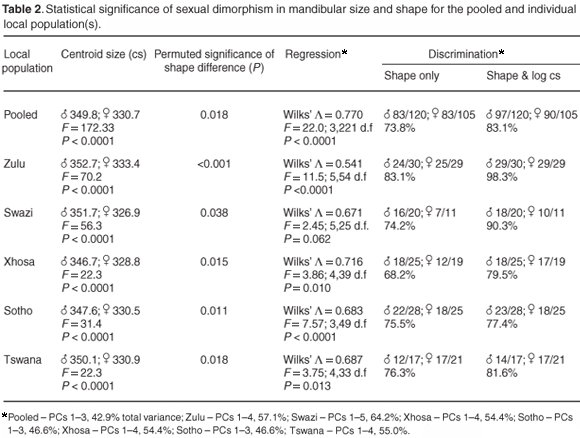
We report here on analyses of new landmark data which capture the range of variation in the expression and magnitude of mandibular sexual dimorphism in adult South African Bantu-speaking individuals. The sample examined, separately and pooled, comprises 225 (120 male and 105 female) individuals of known sex representing five local populations: Zulu, Swazi, Xhosa, Sotho and Tswana. Thirty-eight bilateral three-dimensional landmarks were acquired using a Microscribe G2X digitizer and were analysed using geometric morphometric methods. Multivariate statistics were applied to visualize the pattern, and assess the significance, of shape variation between the sexes. All samples demonstrate highly significant size and shape dimorphism, the condyle and ramus consistently being the most dimorphic region of the mandible. Our results also indicate that the mandible of individuals from this population is just as dimorphic, if not more so, than the cranium alone.
 Thumbnail
 Thumbnail