Proximate and fatty acid compositions of smoked underutilised South African mussel Choromytilus meridionalis
Abstract
Seafood is valued for its nutritional content; however, overfishing necessitates the focus on underutilised species to promote sustainable utilisation. This study investigated the proximate and fatty acid compositions of hot-smoked Choromytilus meridionalis (black mussels) using AOAC International methods and gas chromatography. Lipid nutritional quality indices were calculated. Moisture content in mussels significantly (p < 0.05) decreased by 19% after hot smoking, whilst ash, protein, lipid, and carbohydrate contents increased by 98%, 42%, 46% and 49%, respectively. Hot smoking significantly increased the polyunsaturated (37.70 ± 1.06%) and omega-3 fatty acid (33.36 ± 1.23%) contents. Conversely, omega-6 and saturated fatty acids of hot-smoked mussels were significantly (p < 0.05) lower than those for raw mussels. The atherogenicity index and thrombogenicity index showed a significant reduction (p < 0.05), whilst the hypocholesterolaemic to hypercholesterolaemic ratio and the sum of EPA+DHA showed significant increases. This study shows that C. meridionalis is a valuable food with a high protein content and a well-balanced fatty acid composition, rich in omega-3 fatty acids. This study was the first to investigate the macronutrients of C. meridionalis. SIGNIFICANCE: Choromytilus meridionalis is one of three bivalve species cultivated on a commercial scale along the West Coast of South Africa; however, it is underrealised as a commercial food product. The growing mussel industry has been considered a great potential for the alleviation of poverty, job creation, and food security. This research may provide mussel farmers, fish processing industries, and the community with information about processing opportunities using C. meridionalis. Successful product development may contribute to alleviating malnutrition and increasing food security.
Introduction
The demand for seafood has increased over recent years because of growth in the population along with knowledge of the health benefits associated with the consumption thereof.1-34,56 72,5
Seafood products, such as mussels, have been appreciated for their excellent source of essential long-chain polyunsaturated fatty acids (LC-PUFAs), including eicosapentaenoic acid (EPA), docosahexaenoic acid (DHA), docosapentaenoic acid (DPA), and, to a smaller degree, arachidonic acid (ARA).5,89,101112,1314,15
The mass production of mussels through aquaculture is sustainable, cost-effective, and environmentally friendly because they feed directly from the water column and therefore avoid the environmental pollution and impacts caused by feed production and nutrient input to the water column.5,1016Choromytilus meridionalis, commonly known as the black mussel, is native to southern Africa1718Choromytilus meridionalis has a blue-black shell that is more compressed than the common mussels Perna perna, Mytilus galloprovincialis, and Aulacomya atar.19,20
Female mussels can be distinguished from male mussels by the brown colour of their gonadal tissue, whereas the male individuals have yellow to off-white gonads.2121,22C. meridionalis is centred around growth, reproductive cycle and biology, accumulation rates of trace elements and toxins, and ecophysiology.23-25C. meridionalis, as well as the effects of heat treatment on the nutritional quality thereof.21,26,27C. meridionalis and the lipid NQIs thereof. The results from this study can assist in evaluating the effects of hot smoking on the quality and quantity of nutrients in ready-to-eat products of processed mussels, an underutilised species.
Materials and methods
Sample collection
Frozen half-shelled C. meridionalis mussels (20 kg) were obtained from a local seafood processor at Velddrif (32.7690°S, 18.1590°E), Western Cape, South Africa. The frozen mussels were directly transported to the laboratory in a cooler box containing ice. On arrival, the frozen mussels were stored at -20 °C until processing and analysis.
Sample preparation and hot smoking
The mussels were thawed overnight at 4 °C and removed from the shells. The mussels were randomly pooled from the 20 kg supply into six groups, each weighing 100 g. Each of the six groups was subsequently divided into two samples of equal weight (i.e. 50 g): one sample was randomly designated as a raw sample and the other was assigned for hot smoking. This process yielded six raw samples and six hot-smoked samples, effectively serving as six repetitions of the smoking process. Each of the six hot-smoke samples was individually smoked as follows: mussel meat was steamed for 5 min at 80 °C, followed by salting in a 4% NaCl brine solution for 15 min at 45 °C. The ratio of mussels to the brine was 1:2. The brined mussels were transferred onto a smoking tray and dried for 10 min at 60 °C, followed by smoking for 15 min at 80 °C in a smoker (Junior Butcherquip, model J536, South Africa). French oak wine barrel sawdust (LK's) was used to produce smoke within the smoker. Each 50 g sample served as a composite sample for analysis.
Cooking loss and sodium content
Cooking loss, expressed as a percentage, was determined by calculating the difference in weight between the raw and smoked samples. Sodium (Na) content was determined according to the Volhard method283)2] was added, and the flask was placed on top of a hot plate. A volume of 10 mL of nitric acid (HNO3) was slowly added to the mixture and left to boil for 10 min. The mixture was cooled down and 2 mL of nitrobenzene was added, followed by three drops of iron(III) indicator. The solutions were thoroughly mixed and titrated against 0.1 M ammonium thiocyanate (NH4SCN) until a reddish-brown colour was observed. The Na content was calculated according to Equations 1 and 2:

where Mr is the relative molar mass and N is the concentration.
Proximate composition
Moisture, ash, and protein contents were analysed following the official methods of analysis of AOAC International.29TMLeco). Crude fat was determined using the chloroform : methanol (2:1) solvent extraction method, containing 0.01% butylated hydroxytoluene as an antioxidant.30

where

Fatty acid composition
For the FA analysis, mussel samples were subjected to lipid extraction by chloroform : methanol (2:1) before being esterified according to Oyenihi et al.30
Lipid nutritional quality indices
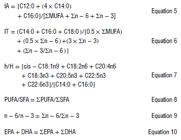
The NQI of the lipid proportion of raw and hot-smoked samples was calculated and expressed as mg/g of the total lipids using the FA composition data. Equations 5 313115
Statistical analysis
All samples were analysed in triplicate. Data analyses were performed using SpSS (version 28.0, 2021), and results are presented as mean ± standard deviation. A one-way analysis of variance was performed to test for a significant effect of hot smoking on each parameter considered. Significant differences between means were determined using a f-test and a probability value of p < 0.05 was considered statistically significant.
Results
Cooking loss, sodium, and proximate composition
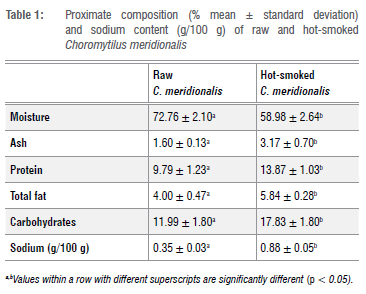
Hot smoking resulted in a cooking loss of 40.54 ± 6.24%. The Na content obtained for the raw mussels significantly (p < 0.05) increased after brining and hot smoking (Table 1). The mean moisture content for raw mussels was 72.76 ± 2.10%, whilst the smoked mussels had a significant (p < 0.05) moisture reduction of up to 19%. Hot smoking significantly increased the ash, protein, and total fat contents. Smoking resulted in a significant increase of 49% in carbohydrates.
Fatty acid composition
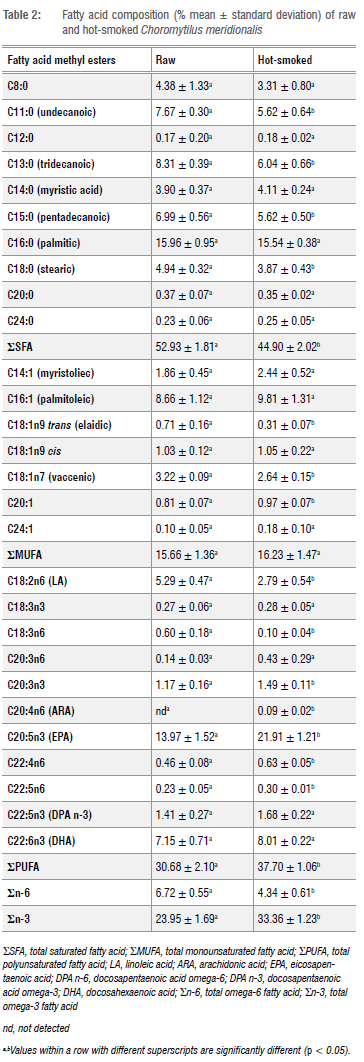
The FA composition of the raw and hot-smoked mussel presents a dominance of SFA and PUFA (Table 2). The sum of SFA identified in the raw mussels was 52.93 ± 1.81% followed by PUFA (30.68 ± 2.10%), and monounsaturated fatty acids (MUFAs). Within the SFA fraction for raw mussels, palmitic acid was the most abundant FA, followed by tridecanoic, undecanoic, pentadecanoic and stearic acids. Palmitoleic acid was the predominant MUFA in raw mussels with an average of 8.66 ± 1.12%, followed by vaccenic and myristoleic acids. The PUFAs were dominated, in decreasing amounts, by EPA (13.97 ± 1.52%), DHA (7.15 ± 0.71%), and linoleic acid (5.29 ± 0.47%). The total omega-3 and omega-6 obtained for the raw mussels were 23.96 ± 1.69% and 6.81 ± 0.52%, respectively.
The smoking process resulted in a significant (p < 0.05) decrease in the SFA, whilst a significant increase was observed in the PUFA content. Although there was an increase in the MUFA content, it was not significant (p > 0.05). The decrease in the SFA content may be a result of the significant (p < 0.05) reduction in tridecanoic, pentadecanoic and stearic acids. A significant decrease was observed for the MUFAs vaccenic acid and elaidic acid. The increased proportion of PUFAs was a result of an increase in the contents of EPA and DHA. Linoleic acid significantly decreased from 5.34 ± 0.42% to 2.79 ± 0.54% in the smoked mussels. The smoking process resulted in a significant decrease in the omega-6 content, whilst a significant increase was observed for omega-3 FAs.
Lipid nutritional quality indices
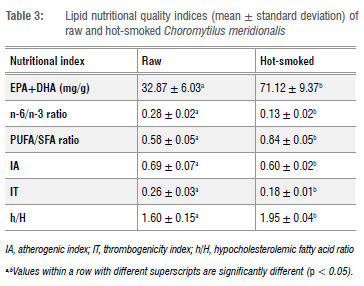
The NQIs (Table 3) were estimated in order to evaluate the nutritional quality and propensity of the mussels to influence the rate of coronary heart disease. Hot smoking resulted in a significant (p < 0.05) increase in the EPA+DHA value from 32.87 ± 6.03 mg/g to 71.12 ± 9.37 mg/g. The raw mussels had n-6/n-3 and PUFA/SFA ratios of 0.28 ± 0.02 and 0.58 ± 0.05, respectively. The n-6/n-3 ratio significantly decreased after smoking to 0.13 ± 0.02, whilst the PUFA/SFA ratio significantly increased.
The potential health benefits of the lipids in mussel meat were additionally assessed by the h/H, IA, and IT32
Discussion
The positive perception and consumption of seafood is increasing because of the growing recognition of its medicinal qualities, especially in terms of the presence of health-promoting macronutrients, micronutrients and nutraceuticals.33,34353637 3836
Sodium is predominantly consumed as salt (NaCI), an ingredient used in different amounts during the processing and preservation of seafood.39,40 41,42
The fat content for the raw mussels was higher than those reported by Firth2126434445 26,36,4346(Meretrix casta) (13.89%-15.67%) and Babylonia spirata47 4848,493248
Although mussels generally have a low lipid content, these lipids are a good source of essential PUFAs, such as EPA and DHA. The most dominant FA group in raw and hot-smoked mussels was SFA, followed by PUFA and MUFA. These findings are similar to those reported for M. galloprovincialis50 Perna viridis51(p > 0.05). Similar observations regarding SFA, MUFA, and PUFA contents were reported for raw and steamed oysters.375248
Mussels are generally valued for their content of essential n-3 PUFAs, mainly EPA, DPA, and DHA, which usually constitute 30-50% of the total FAs.5354M. galloprovincialis found that all cooking methods resulted in a general decrease in n-3 PUFAs, including EPA and DHA. The n-3 PUFAs are more sensitive to heat, oxygen, and light than n-6 PUFAs.55 55
The most dominant n-3 PUFAs in raw mussels were EPA and DHA, with a significant increase after smoking. DPA was lower than EPA and DHA. DPA is typically found at lower concentrations compared to EPA and DHA in mussels32,48,5657Perna canaliculus, across raw and processed samples for both male and female mussels, the concentration of DPA was consistently lower than both EPA and DHA.56 M. galloprovincialis, EPA and DHA were noted32Mytilus edulis from South Korea, DPA was consistently lower than both EPA and DHA across different seasons.48575557
The combination of EPA+DHA has been recognised and used greatly worldwide as a nutritional indicator.5853 5932,54M. galloprovincialis.
The PUFA/SFA ratio has been described as a useful indicator for evaluating the nutritional quality of food lipids.555,53
The IA and IT are usually used to evaluate the potential effects of FA compositions on cardiovascular health.31,59141414M. galloprovincialis32; however, a decrease in the h/H ratio was reported for the raw mussels (2.98 ± 0.15) after steaming (2.20 ± 0.17) at 90 °C for 10 min. Peycheva et al.32
Conclusions
The hot smoking of C. meridionalis had a positive effect on the nutrient indices investigated in this study. The hot-smoking process decreased the moisture content from 72.76 ± 2.10% to 58.98 ± 2.64%, whilst the ash, crude protein, total lipid, and carbohydrate values were significantly increased by 98%, 42%, 46%, and 49%, respectively. Hot-smoked black mussels contained significantly higher levels of the beneficial omega-3 PUFAs, EPA (21.91 ± 1.21%), and DPA n-6 (8.01 ± 0.72%) than their raw counterparts. The favourable n-6/n-3 (0.13 ± 0.02) and PUFA/SFA (0.84 ± 0.05) ratios of the smoked mussels may indicate an excellent source of essential FAs. The changes in the n-6/n-3, PUFA/SFA, IA, IT, h/H ratios, and EPA+DHA contents of the hot-smoked mussels also indicate that smoked C. meridionalis constitute good quality lipids and can be a good source of essential FAs in the human diet. The overall observations from the study indicate that hot-smoked C. meridionalis has potential as a functional food or as an ingredient to improve the nutritional quality of ready-to-eat proteins or omega-3-supplemented and omega-6-supplemented marine-based food products. This study is the first study to describe the effects of hot smoking on the proximate and FA compositions of the indigenous and underutilised South African C. meridionalis. Future studies should evaluate the mineral, vitamin, and amino acid contents in smoked C. meridionalis in addition to determining the shelf-stability in terms of FA stability and microbiological safety. Research to explore the consumer acceptance of the smoked mussel is also recommended, with the aim of investigating the potential larger-scale commercialisation and marketing of ready-to-eat smoked C. meridionalis.
Funding
This work was supported by the Cape Peninsula University of Technology Pre-Seed Fund and the South African National Research Foundation under the Thuthuka funding track (grant number 117998).
Data availability
The data supporting the findings of this study are openly accessible from the Cape Peninsula University of Technology figshare at https://doi.org/10.25381/cput.27014896.v1 under a CC BY-NC-SA 4.0 licence.
Declarations
We have no conflicts of interest to declare. The funders associated with this study had no role in the design of the study or in the collection and interpretation of the published results. We have no competing interests in the outcomes and/or results from this study as described. We have no AI or LLM use to declare. We included parts of this paper in a preprint at https://www.preprints.org/manuscript/20240/.0298/v1.
Authors' contributions
S.H.: Conceptualisation, methodology, data analysis, validation, data curation, writing - revisions, student supervision, project leadership, project management, funding acquisition. S.M.: Data collection, sample analysis, data analysis, data curation, writing - the original draft, writing - revisions. A.B.O.: Methodology, data collection, data analysis, validation, data curation, writing - the original draft, writing - revisions, student supervision. All authors read and approved the final version.
Acknowledgements
This study was supported by the Cape Peninsula University of Technology. We are grateful to Buhle Mpahleni (Functional Foods Research Unit) for technical assistance with the gas chromatography analysis.
References
-
1. Venugopal V, Gopakumar K. Shellfish: Nutritive value, health benefits, and consumer safety. Compr Rev Food Sci Food Saf. 2017;16:1219-1242. https://doi.org/10.1111/1541-4337.12312
» https://doi.org/10.1111/1541-4337.12312 -
2. Messina CM, Arena R, Ficano G, Randazzo M, Morghese M, la Barbera L, et al. Effect of cold smoking and natural antioxidants on quality traits, safety and shelf life of farmed meagre (Argyrosomus regius) fillets, as a strategy to diversify aquaculture products. Foods. 2021;10(11), Art. #2522. https://doi.org/10.3390/foods10112522
» https://doi.org/10.3390/foods10112522 -
3. Willer DF, Nicholls RJ, Aldridge DC. Opportunities and challenges for upscaled global bivalve seafood production. Nat Food. 2021;2:935-943. https://doi.org/10.1038/s43016-021-00423-5
» https://doi.org/10.1038/s43016-021-00423-5 -
4. Fisher R. Possible causes of a substantial decline in sightings in South Africa of an ecologically important apex predator, the white shark. S Afr J Sci. 2021;117(1/2), Art. #8101. https://doi.org/10.17159/sajs.2021/8101
» https://doi.org/10.17159/sajs.2021/8101 -
5. Tan K, Ma H, Li S, Zheng H. Bivalves as future source of sustainable natural omega 3 polyunsaturated fatty acids. Food Chem. 2020;311, Art. #125907. https://doi.org/10.1016/j.foodchem.2019.125907
» https://doi.org/10.1016/j.foodchem.2019.125907 -
6. Gephart JA, Golden CD, Asche F, Belton B, Brugere C, Froehlich HE, et al. Scenarios for global aquaculture and its role in human nutrition. Rev Fish Sci Aquacult. 2020;29:122-138. https://doi.org/10.1080/23308249.2020.1782342
» https://doi.org/10.1080/23308249.2020.1782342 - 7. South African Department of Environment, Forestry and Fisheries (DEFF). Status of the South African marine fisheries resources 2020. Cape Town: DEFF; 2020.
-
8. Panayotova V, Merdzhanova A, Stancheva R, Dobreva DA, Peycheva K, Makedonski L. Farmed mussels (Mytilus galloprovincialis) from the Black Sea reveal seasonal differences in their neutral and polar lipid fatty acids profile. Reg Stud Mar Sci. 2021;44, Art. #101782. https://doi.org/10.1016/j.rsma.2021.101782
» https://doi.org/10.1016/j.rsma.2021.101782 -
9. Hosomi R, Yoshida M, Fukunaga K. Seafood consumption and components for health. Glob J Health Sci. 2012;4:72-86. https://doi.org/10.5539/gjhs.v4n3p72
» https://doi.org/10.5539/gjhs.v4n3p72 -
10. Yaghubi E, Carboni S, Snipe RMJ, Shaw CS, Fyfe JJ, Smith CM, et al. Farmed mussels: A nutritive protein source, rich in omega-3 fatty acids, with a low environmental footprint. Nutrients. 2021;13(4), Art. #1124. https://doi.org/10.3390/nu13041124
» https://doi.org/10.3390/nu13041124 -
11. Carboni S, Kaur G, Pryce A, McKee K, Desbois AP Dick JR, et al. Fatty acid: Mussel consumption as a "food first" approach to improve omega-3 status. Nutrients. 2019;11(6), Art. #1381. https://doi.org/10.3390/nu11061381
» https://doi.org/10.3390/nu11061381 - 12. Cherifi H, Sadok S. Effects of marinating process on mussels physicochemical and microbiological quality attributes during refrigerated storage. Bull Inst Natl Sci Technol Mer Salammbô. 2016;43:5-17.
- 13. Ersoy B, Jereflijan H. The proximate composition and fatty acid profiles of edible parts of two freshwater mussels. Turk J Fish Aquat Sci. 2010;10:71-74.
-
14. Gualda IP de Santos VJ, Figueiredo IL, Petenuci ME, Visentainer JV. Centesimal composition, fatty acids profile and the nutritional quality index of four seafood species from the southern region of Brazil. Acta Sci Technol. 2018;40(1), Art. # e39351. https://doi.org/10.4025/actascitechnol.v40i1.39351
» https://doi.org/10.4025/actascitechnol.v40i1.39351 -
15. Santos-Silva J, Bessa RJB, Santos-Silva F. Effect of genotype, feeding system and slaughter weight on the quality of light lambs. II. Fatty acid composition of meat. Livest Prod Sci. 2002;77:187-194. https://doi.org/10.1016/S0301-6226(02)00059-3
» https://doi.org/10.1016/S0301-6226(02)00059-3 -
16. Grkovic N, Dimitrijevic M, Teodorovic V, Karabasil N, Vasilev D, Stajkovic S, et al. Factors influencing mussel (Mytilus galloprovincialis) nutritional quality. IOP Conf Ser Earth Environ Sci. 2019;333, Art. #012062. https://doi.org/10.1088/1755-1315/333/1/012062
» https://doi.org/10.1088/1755-1315/333/1/012062 -
17. Lombard AT, Grant WS. Biochemical population genetics of the black mussel Choromytilus meridionalis. S Afr J Zool. 1986;21:131-135. https://doi.org/10.1080/02541858.1986.11447969
» https://doi.org/10.1080/02541858.1986.11447969 - 18. Heinecken C, Japp D, Olivier D. Concept for a proposed sea-based aquaculture development zone in Saldanha Bay, South Africa. Cape Town: Capricorn Marine Environment Report; 2017.
- 19. Carpenter KE, de Angelis N. Mussels: Mytilidae. In: Carpenter KE, de Angelis N, editors. The living marine resources of the eastern central Atlantic. Vol. 2: Bivalve, gastropods, hagfishes, sharks, batoid fishes, and chimaeras. Rome: Food and Agriculture Organization of the United Nations; 2016. p. 708-711.
-
20. Grant WS, Cherry MI, Lombard AT. A cryptic species of Mytilus (Mollusca: Bivalvia) on the west coast of South Africa. S Afr J Mar Sci. 1984;2:149-162. https://doi.org/10.2989/02577618409504366
» https://doi.org/10.2989/02577618409504366 - 21. Firth DC. Temporal and inter-species variations in the proximate and contaminant compositions of farmed mussels, Choromytilus meridionalis and Mytilus galloprovincialis, from Saldanha bay, South Africa. Stellenbosch: Stellenbosch University; 2018.
-
22. Van Erkom Schurink C, Griffiths CL. Factors affecting relative rates of growth in four South African mussel species. Aquaculture. 1993;109:257-273. https://doi.org/10.1016/0044-8486(93)90168-X
» https://doi.org/10.1016/0044-8486(93)90168-X -
23. Du Plessis AJ. Larval development, settlement and growth of the black mussel Choromytilus meridionalis in the Saldanha Bay region. Trans R Soc S Afr. 1977;42:303-316. https://doi.org/10.1080/00359197709519919
» https://doi.org/10.1080/00359197709519919 -
24. Firth DC, O'Neill B, Salie K, Hoffman LC. Monitoring of organic pollutants in Choromytilus meridionalis and Mytilus galloprovincialis from aquaculture facilities in Saldanha Bay, South Africa. Mar Pollut Bull. 2019;149, Art. #110637. https://doi.org/10.1016/j.marpolbui.2019.110637
» https://doi.org/10.1016/j.marpolbui.2019.110637 -
25. Hubbart B, Pitcher GC, Krock B, Cembella AD. Toxigenic phytopiankton and concomitant toxicity in the mussel Choromytilus meridionalis off the west coast of South Africa. Harmful Algae. 2012;20:30-41. https://doi.org/10.1016/j.hai.2012.07.005
» https://doi.org/10.1016/j.hai.2012.07.005 -
26. Kyriacou K. Intertidal shellfish as a source of protein and energy for the Middle Stone Age inhabitants of the southwestern Cape and northern KwaZuiu-Natal, South Africa. Quat Int. 2017;438:30-39. https://doi.org/10.1016/j.quaint.2017.01.032
» https://doi.org/10.1016/j.quaint.2017.01.032 -
27. Matika S, Oyenihi A, Henning S. Proximate analysis and fatty acid composition of hot-smoked underutilised South African black mussel (Choromytilus meridionalis, Krauss 1848) [preprint]. Preprints.org. Version 1. 2024. https://www.preprints.org/manuscript/202407.0298/v1
» https://www.preprints.org/manuscript/202407.0298/v1 -
28. Haouet MN, Aitissimi MS, Framboas M, Gaiarini R. Validation of the Volhard method for chloride determination in food. Accredit Qual Assur. 2006;11:23-28. https://doi.org/10.1007/s00769-006-0116-x
» https://doi.org/10.1007/s00769-006-0116-x - 29. Association of Official Analytical Chemists (AOAC). Official methods of analysis of the Association of Official Analytical Chemists. 15th ed. Rockville, MD: AOAC; 1990.
-
30. Oyenihi AB, Opperman M, Alabi TD, Mpahleni B, Masola B. Centella asiatica alleviates diabetes-induced changes in fatty acid profile and oxidative damage in rat testis. Andrologia. 2020;52(10), Art. #e13751. https://doi.org/10.1111/and.13751
» https://doi.org/10.1111/and.13751 -
31. Uibricht TL, Southgate DAT. Coronary heart disease: Seven dietary factors. Lancet. 1991;338:985-992. https://doi.org/10.1016/0140-6736(91)91846-M
» https://doi.org/10.1016/0140-6736(91)91846-M -
32. Peycheva K, Panayotova V Stancheva R, Makedonski L, Merdzhanova A, Cammiller G, et al. Effect of steaming on chemical composition of Mediterranean mussel (Mytilus galloprovincialis): Evaluation of potential risk associated with human consumption. Food Sci Nutr. 2022;10:3052-3061. https://doi.org/10.1002/fsn3.2903
» https://doi.org/10.1002/fsn3.2903 -
33. Murray GD, Fail R, Fairbanks L, Campbell LM, D'Anna L, Stoll J. Seafood consumption and the management of shellfish aquaculture. Mar Policy. 2023;150, Art. #105534. https://doi.org/10.1016/j.marpol.2023.105534
» https://doi.org/10.1016/j.marpol.2023.105534 -
34. Nguyen L, Gao Z, Anderson JL. Perception shifts in seafood consumption in the United States. Mar Policy. 2023;148, Art. #105438. https://doi.org/10.1016/j.marpol.2022.105438
» https://doi.org/10.1016/j.marpol.2022.105438 -
35. Abu OMG, Eli NP. Effect of smoke drying on proximate composition and some heavy metals in shrimp and oyster from Buguma Creek, Rivers State, Nigeria. Int J Poult Fish Sci. 2018;2:1-5. https://doi.org/10.15226/2578-1898/2/1/00108
» https://doi.org/10.15226/2578-1898/2/1/00108 -
36. Biji KB, Shamseer RM, Mohan CO, Ravishankar CN, Mathew S, Gopal TKS. Effect of thermal processing on the biochemical constituents of green mussel (Perna viridis) in tin-free-steel cans. J Food Sci Technol. 2015;52:6804-6809. https://doi.org/10.1007/s13197-015-1757-8
» https://doi.org/10.1007/s13197-015-1757-8 -
37. Liu C, Ji W, Jiang H, Shi Y; He L, Gu Z, et al. Comparison of biochemical composition and non-volatile taste active compounds in raw, high hydrostatic pressure-treated and steamed oysters Crassostrea hongkongensis. Food Chem. 2021;344(5), Art. #128632. https://doi.org/10.1016/j.foodchem.2020.128632
» https://doi.org/10.1016/j.foodchem.2020.128632 -
38. Lawrie RA, Ledward DA. Lawrie's meat science. 7th ed. New York: CRC Press; 2006. https://doi.org/10.1533/9781845691615
» https://doi.org/10.1533/9781845691615 -
39. Muñoz I, Guardia MD, Arnau J, Dalgaard P, Bover S, Fernandes JO, et al. Effect of the sodium reduction and smoking system on quality and safety of smoked saimon (Salmo salar). Food Chem Toxicol. 2020;143, Art. #111554. https://doi.org/10.1016/j.fct.2020.111554
» https://doi.org/10.1016/j.fct.2020.111554 -
40. Cardinal M, Knockaert C, Torrissen O, Sigurgisladottir S, Mørkøre T, Thomassen M, et al. Relation of smoking parameters to the yield, colour and sensory quality of smoked Atlantic saimon (Salmo salar). Food Res Int. 2001;34:537-550. https://doi.org/10.1016/S0963-9969(01)00069-2
» https://doi.org/10.1016/S0963-9969(01)00069-2 -
41. Pedro S, Nunes ML. Reducing salt levels in seafood products. In: Beeren C, Groves K, Titoria PM, editors. Reducing salt in foods. Sawston: Woodhead Publishing; 2019. p. 185-211.https://doi.org/10.1016/B978-0-08-100890-4.00008-1
» https://doi.org/10.1016/B978-0-08-100890-4.00008-1 -
42. Pretorius B, Schönfeidt HC. The contribution of processed pork meat products to total salt intake in the diet. Food Chem. 2018;238:139-145. https://doi.org/10.1016/j.foodchem.2016.11.078
» https://doi.org/10.1016/j.foodchem.2016.11.078 -
43. Fernández A, Grienke U, Soler-Vila A, Guihéneuf F, Stengel DB, Tasdemir D. Seasonal and geographical variations in the biochemical composition of the blue mussel (Mytilus edulis L.) from Ireland. Food Chem. 2015;177:43-52. https://doi.org/10.1016/j.foodchem.2014.12.062
» https://doi.org/10.1016/j.foodchem.2014.12.062 -
44. Wright AC, Fan Y; Baker GL. Nutritional value and food safety of bivalve molluscan shellfish. J Shellfish Res. 2018;37:695-708. https://doi.org/10.2983/035.037.0403
» https://doi.org/10.2983/035.037.0403 -
45. Grkovic N, Teodorovic V Djordjevic V Karabasil N, Stajkovic S, Vasilev D, et al. Biochemical composition and biometric parameters of Mytilus galloprovincialis from Boka Kotorska Bay in Southern Adriatic Sea. J Hell Vet Med Soc. 2020;71:2338-2348. https://doi.org/10.12681/jhvms.25095
» https://doi.org/10.12681/jhvms.25095 -
46. Srilatha G, Chamundeeswari K, Ramamoorthy K, Sankar G, Varadharajan D. Proximate, amino acid, fatty acid and mineral analysis of clam, Meretrix casta (Chemnitz) from Cuddalore and Parangipettai Coast, South East Coast of India. J Mar Biol Oceanogr. 2013;2(2), Art. #1000111. https://doi.org/10.4172/2324-8661.1000111
» https://doi.org/10.4172/2324-8661.1000111 -
47. Periyasamy N, Srinivasan M, Devanathan K, Baiakrishnan S. Nutritional value of gastropod Babylonia spirata (Linnaeus, 1758) from Thazhanguda, Southeast coast of India. Asian Pac J Trop Biomed. 2011;1:S249-S252. https://doi.org/10.1016/S2221-1691(11)60164-0
» https://doi.org/10.1016/S2221-1691(11)60164-0 -
48. Neri TA, Nguyen TT, Nguyen THPP Rohmah Z, Jeong SB, Hwang DJ, et al. Effect of season and processing steps in nutritional components and bioactivities of blue mussel (Mytilus edulis). Int Food Res J. 2021;28(4):752-762. https://doi.org/10.47836/ifrj.28.4.12
» https://doi.org/10.47836/ifrj.28.4.12 -
49. Prato E, Biandolino F, Parlapiano I, Giandomenico S, Denti G, Calò M, et al. Proximate, fatty acids and metals in edible marine bivalves from Italian market: Beneficial and risk for consumers health. Sci Total Environ. 2019;648:153-163. https://doi.org/10.1016/j.scitotenv.2018.07.382
» https://doi.org/10.1016/j.scitotenv.2018.07.382 -
50. Merdzhanova A, Dobreva DA, Stancheva M, Makedonski L. Fat soluble vitamins and fatty acid composition of wild Black Sea mussel, rapana and shrimp. Ovidius Univ Ann Chem. 2014;25:15-23. https://doi.org/10.2478/auoc-2014-0003
» https://doi.org/10.2478/auoc-2014-0003 -
51. Chakraborty K, Chakkalakal SJ, Joseph D, Asokan PK, Vijayan KK. Nutritional and antioxidative attributes of green mussel (Perna viridis L.) from the southwestern coast of India. J Aquat Food Prod Technol. 2016;25:968-985. https://doi.org/10.1080/10498850.2015.1004498
» https://doi.org/10.1080/10498850.2015.1004498 -
52. Moruf OR, Ogunbambo MM, Taiwo MA, Afolayan OA. Marine bivalves as dietary source of high-quality lipid: A review with special reference to natural n-3 long chain polyunsaturated fatty acids. Bull Univ Agric Sci Vet Med Cluj-Napoca Food Sci Technol. 2020;78:11-18. https://doi.org/10.15835/buasvmcn-fst:2020.0064
» https://doi.org/10.15835/buasvmcn-fst:2020.0064 -
53. Swanson D, Block R, Mousa SA. Omega-3 fatty acids EPA and DHA: Health benefits throughout life. Adv Nutr. 2012;3(1):1-7. https://doi.org/10.3945/an.111.000893
» https://doi.org/10.3945/an.111.000893 -
54. Biandolino F, Parlapiano I, Denti G, di Nardo V, Prato E. Effect of different cooking methods on lipid content and fatty acid profiles of Mytilus galloprovincialis. Foods. 2021;10, Art. #416. https://doi.org/10.3390/foods10020416
» https://doi.org/10.3390/foods10020416 - 55. Akoh CC, Min DB. Food lipids. Chemistry, nutrition, and biotechnology. 2nd ed. New York: Marcel Dekker; 2002.
-
56. Zhou M, Balaban MO, Gupta S, Fletcher GC. Comparison of lipid classes and fatty acid profiles of lipids from raw, steamed, and high-pressure-treated New Zealand greenshell mussel meat of different genders. J Shellfish Res. 2014;33:473-479. https://doi.org/10.2983/035.033.0216
» https://doi.org/10.2983/035.033.0216 -
57. Bejaoui S, Rabeh I, Ghribi F, Aouini F, Chetoui I, Telahigue K, et al. Change in fatty acid composition and evaluation of lipids and protein oxidation in the commercial cooked clams (Ruditapes decussatus). Grasas Aceites. 2019;70(4), Art. #e324. https://doi.org/10.3989/gya.1045182
» https://doi.org/10.3989/gya.1045182 -
58. Chen J, Liu H. Nutritional indices for assessing fatty acids: A mini review. Int J Mol Sci. 2020;21:1-24. https://doi.org/10.3390/ijms21165695
» https://doi.org/10.3390/ijms21165695 -
59. Simopoulos AP. The importance of the ratio of omega-6/omega-3 essential fatty acids. Biomed Pharmacother. 2002;56:365-379. https://doi.org/10.1016/S0753-3322(02)00253-6
» https://doi.org/10.1016/S0753-3322(02)00253-6
Revised: 11 June 2025
Accepted: 11 June 2025
Published: 11 Aug. 2025
Editors: Annchen Mielmann, Leslie Swartz
Funding: Cape Peninsula University of Technology Pre-Seed Fund, South African National Research Foundation (grant no. 117998)