Contesting the long leash of evolved genomes
Wieland Gevers
Emeritus Professor of Medical Biochemistry, University of Cape Town, Cape Town, South Africa. Email:
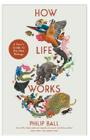
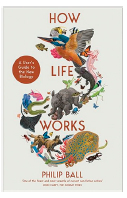
Book Title: How life works
Author: Philip Ball
ISBN: 9781529095999 (paperback, 560 pp)
Publisher: Picador/Pan Macmillan, London, UK; ZAR399
Published: 2023
Philip Ball, the author of How Life Works, is a polymathic and highly distinguished British science writer and communicator. Originally educated as a chemist and physicist, he has written books on topics as widely separated as music and the history of China, but his main focus has been on the public understanding of physics, chemistry and biology. An editor at Nature for 20 years, he has won many awards for his work, one of the most recent being the 2022 Wilkins-Bernal-Medawar Medal of the Royal Society for "excellence in a subject relating to the history of science, philosophy of science or the social function of science." He is a science writer at the top of his game, so to speak, and this is perhaps his most ambitious book.
How Life Works had its genesis in the author's feeling over the years that the main narratives in the life sciences seemed still to be mired in outdated metaphors and conceptual frameworks. This was in the face of unprecedented progress in analytical and experimental technologies and an exponential expansion of 'items of information' (multiple complete genomes of different species or of members of the same species, the vast arrays of '-omics' of various kinds, thousands of solved protein structures, etc.). The immediate catalyst was a three-month stay amongst Harvard faculty working at the cutting edge of many aspects of the biological sciences, talking, reading, analysing and synthesising. When he thought he had most of it right, he wrote How Life Works.
The result is a readable but very challenging book, one that demands to be taken seriously. I recommend it strongly to anyone who is interested in the question implied in the title, and that should obviously be a lot of people across many disciplines. The content of the book is clearly well informed (there are many direct quotes, for example, and a huge list of references) by close contact with the best-available expertise and well-considered opinion. The most basic of these positions (which I will be contesting up to a point below) are that 'the genes' collectively (as genomes) are not a 'blueprint' but merely essential contributors to the overall development of organisms and their ongoing life; every level of organisation, from organelle to cell to tissue to organism, has its own playbook and causal agents; life works because it 'has a point', meaning that unlike the sad physicist who said that the "universe was the more pointless the more he understood it," the most basic characteristic of living things is that they 'have a point', i.e. that they recognise meaning in their environment and engage purposefully with it to survive and live.
Ball lists and weaves into his narrative the key features that he thinks enable life to work: redundancy and complexity; modularity; canalisation of functions; multi-level, multi-directional and hierarchical organisation; combinatorial logic; agency and purpose; and distributed causal power. Each of these features is adumbrated more or less continuously throughout the text. He pungently captures their combined essence in the statement "It's cognition all the way down," from bacteria-sensing chemical gradients or over-crowding, and fighting off virus attacks, to humans embedded in societies, individually and collectively planning to make their environments more liveable, establishing amongst others healthcare systems of great complexity and scope, and, yes, wars and crime as well as art, music and literature. Thus non-deterministic meaning and purpose are key to how life works, and we can be grateful to Philip Ball for providing a clearly articulated argument for considering this to be the case.
Ball brings forth a number of insights that have a real 'aha!' quality to them. For example, the genetic regulatory mechanisms involved in recognising environments and responding appropriately to them are simpler and more robust in unicellular organisms (where the proteins concerned have more stable and defined structures) than is the general case in multicellular organisms, where signalling networks integrate information from many quarters. This happens through the presence of huge numbers of RNA transcripts of different (eventual) sizes that do not code for proteins but have complex and highly interactive regulatory roles, both at the primary transcriptional level and in determining the fate of already transcribed messenger RNA molecules. There are also a large number of regulatory proteins (transcription factors) with many unstructured regions of their polypeptide chains that facilitate multi-component 'soft' interactions and help to regulate the formation of messenger RNA molecules. Then there is the huge complication of preprogrammed epigenetic regulation of protein-coding and other genes. [Ball is silent on the second genomic entity in cells, the circular DNA molecules of the mitochondria, with their own interesting mutational playbook. He also does not mention the additional complexity of differential intracellular protein turnover rates, or the question of how active individual protein molecules are allowed to be by their interactions with small-molecule effectors. The truism in metabolic control that control of fluxes in pathways is generally shared between participating enzymes, with consequences for genotypes and phenotypes, is not touched on. But these omissions do not disrupt his main arguments for regarding different levels of organisation as having their own emergent playbooks for functioning.]
Ball sees the bewildering complexity of multicellular organisms as being 'simplified' by the presence of highly conserved genes that perform generic 'patterning' functions in development, networks of interactions between gene products that function (a little nebulously) as 'attractors', but especially by 'causal power' emerging through integration of physical and chemical forces with genetic signalling. He takes us step-by-step through the lives of cells, in principle autonomous but 'forced' to associate with other cells to form tissues and organs, and then bodies. It is always a story of responding to an environment with a repertoire of appropriate responses that draw on genetic information and exploit physicochemical forces in an integrated way. Difficult stuff, but he writes well and persuasively about it, making his espoused case for at least some genome-independent causal chains at every level.
Thus Ball, in this book, sets out to overturn, in a very forceful and sometimes combative manner, the 'gene-centric' and 'blueprint-dominated' way he believes most people have thought that living multicellular organisms develop from the moment of fertilisation to full autonomous existence and reproduction in their environments. I believe, however, that he is actually mostly over-interpreting newer knowledge into an apparently very different way of thinking about how life works. While his book is an engaging, refreshingly articulate and up-to-date description of the way in which he thinks the full development of a multi-cellular, multi-tissue, multi-organ body must of necessity involve some forces and mechanisms that are not initiated and controlled by genomes, he has minimised exploration of the 'deep' ways that highly evolved genomes ensure that every newly reproduced body conforms to the essential features of the anatomy and physiology (the reproductively capable phenotype) of the species concerned. What I call the 'long leash of the highly evolved genome' can, after all, legitimately be called a 'blueprint' provided this term is used to indicate a design that specifies both the number and nature of required components as well as instructions for how to put them together and make them work in a given settled geobiological environment. This would extend to include instructions for many kinds of repairs, immune defences against a host of invasive micro-organisms (the adaptive ones even including forms of rapid evolution in particular cells through multiple mutations and selection), and provisions for dealing with a wide range of environmental stressors in homeostatic ways. Clearly, there are limits to the reach of this genomic leash, witnessed in premature death and much in the way of disease pre-disposition or subtle kinds of diversity (gender, neuro-, etc.) or obvious abnormal development - but in the great majority of cases the products of the species-specific genomic specification will be near-identical versions (albeit usually as two dimorphic sexes) of animals and plants, and will work well in the 'reproductive prime' their genomes have been selected for. One can cite the fact that mono-zygotic (identical) twins almost always look anatomically identical, or take in the vast mammal herds on African grasslands, to be convinced that the rollout of the genomic 'blueprints' (as defined above) of different observed species is not exactly a fuzzy affair that can go every whichway through emergent causal chains. The playbooks Ball describes at different levels of organisation are nearly all built into, and subservient to, the long and highly evolved 'genomic leash'.
In the case of a large group of macroscopically identical organisms such as the massive herds of African mammals referred to above, the genomic 'blueprints' vary in the population, some of which may be expressed as phenotypic variation on closer inspection and some not, arising from a whole variety of causes ranging from within-species genotypic differences, environmentally caused differences in epigenetic controls, random post-zygotic somatic mutations during different stages of development, the effects of harmful agents, senescence-related changes not subject to natural selection, etc.
The only real problem with Ball's fine book is thus the repeatedly stated view that 'the genes' contribute but by no means determine the outcome of organismal development. It is true that the genome constitutes information, while the organism is material. But Ball fully agrees that the notion of "the genes" must be extended from their original formulation as "genomic sequences coding for proteins" to all parts of the genome that supply information ('coding') for cellular, tissue and organismal functioning. He also resists the temptation to claim any kind of as yet unsubstantiated Lamarckist 'top-down' mechanism in mutation-based natural selection. He sticks to random gene mutations (in the broad sense of altered germ-line genomes) being what organisms can inherit, but justifiably believes that mutated genes, if selected for, increase in frequency together with clusters of other genes with which they cooperate in network fashion to produce the favoured phenotype concerned. He especially emphasises (as I am doing) the extensive 'evolutionary memory' embedded in the genome of a species, of successful adaptations achieved in past evolutionary stages, not needing to be solved anew in every speciation process. At the end of the day, these are sound conceptions according to presently available evidence, and they support the idea of a genomic determination of form and function through an evolved design that not only specifies very precisely what materials and where living bodies will contain but how they are to be put together and kept functional over time, while obeying applicable physical and chemical laws, and permitting some emerging functionalities (like consciousness and free will) to assist in the overall task of remaining alive and reproducing within uncertain environments.
All in all, readers of this book will enjoy a veritable tour de force of first-class biological science writing and a truly wonderful introduction to much that is new in the understanding of how life works, with the reservation that the extraordinarily well-elaborated (evolved) role of genomes is systematically under-estimated and under-appreciated. Bearing this important fact in mind, they will certainly acquire a deeper understanding of what it means to say life has a purpose and/or meaning, the answer to the most important question(s) most of us can ever ask.
Published: 28 May 2024