Unveiling South African insect diversity: DNA barcoding's contribution to biodiversity data
Abstract
Insects are one of the most species-rich groups on Earth. They comprise much of animal diversity and play vital roles in ecosystems, including pollination, pest control, and decomposition. However, only a fraction of this diversity has been formally described. South Africa is recognised as one of the most biologically diverse countries globally, with an estimated 44 000 insect species. Many crops rely on insect pollinators, including canola, apples, oranges, and sunflowers. A shortage of wild pollinators currently threatens crop yields, yet our knowledge of insect diversity within South Africa is sparse. There are few taxonomic specialists relative to South Africa's biodiversity, and the methods used for insect identification can be time-consuming and expensive. DNA barcoding provides an important research tool to accelerate insect biodiversity research. In this review, we queried the public DNA barcoding BOLD (Barcode of Life Data System) database for records of "Insecta" within South Africa, and 416 211 published records assigned to 28 239 unique BINs (Barcode Index Numbers) were returned. We identified five taxonomic orders with more BINs than known species in southern Africa (Hymenoptera, Diptera, Thysanoptera, Plecoptera, and Strepsiptera). Most of the barcoded records were derived from Malaise trap sampling in Gauteng, Mpumalanga and Limpopo, while the rest of South Africa remains poorly sampled. We suggest that there is a need for a comprehensive national sampling effort alongside increased investment in taxonomic expertise to generate critical baseline data on insect biodiversity before species are lost to extinction. SIGNIFICANCE: Insects provide critical ecosystem services, but our knowledge of insect biodiversity is limited. DNA barcoding can help fill biodiversity knowledge gaps; however, within South Africa, sampling has been uneven. Well-sampled provinces include Gauteng, Mpumalanga and Limpopo, while the Eastern Cape, Free State, KwaZulu-Natal, Northern Cape, North-West and Western Cape remain under-sampled. We argue for a broad national Malaise trapping effort to generate crucial baseline data on insect biodiversity. Without urgent investment in taxonomic expertise and biomonitoring, we risk losing much of our biodiversity before it is even described.
DNA barcoding; biodiversity; insect; South Africa; conservation
Introduction
Insects comprise around 70% of animal diversity1223 4,5678
Insect predators and parasitoids can help control pests and insect vector abundance. Spiders, beetles, ants, and specific true bugs are considered to be the main groups of invertebrate predators9,1011121314
While the benefits of insect diversity are now becoming more widely appreciated, some insects can have negative impacts. Millions of lives are lost annually to human diseases carried by insect vectors1516(African trypanosomiasis) and malaria (Plasmodium falciparum), for example, are carried by the tsetse fly (Glossina sp.) and the female Anopheles mosquito, respectively, which infect their human hosts through blood feeding. It has been suggested that malaria-endemic countries have lower economic growth because of the negative impact that the disease has on worker productivity and population growth.171819
South Africa is recognised as being one of the most biologically diverse countries in the world. However, there is currently no comprehensive modern classification of higher insect taxa available for South Africa.202122-2425
DNA barcoding is a molecular method that has gained popularity over the last 20 years; it uses short, standardised genomic sequences to facilitate species identification and discovery.26I); this region has proven effective for species identification in animals.27,282930
Here, we review the contribution of DNA barcoding to documenting South Africa's rich insect diversity. We queried the public database BOLD for insect records in South Africa and explored their current coverage. Finally, we discuss how national barcoding efforts could be further extended.
Insect decline
Insects are particularly sensitive to environmental change3132-34. However, their sensitivity to environmental disruption also increases their vulnerability. Recent work has suggested that we may already be experiencing dramatic declines of insects in some regions.35353637 38394038
The taxonomic impediment, DNA barcoding and dark taxa
The taxonomic impediment refers to the limitations and deficiencies in the resources allocated to the field of taxonomy.4142,4324242444
Importantly, DNA barcoding is not a substitute for good taxonomy but a tool that allows researchers to match samples to previously described barcoded specimens. DNA barcoding has proven its effectiveness in cataloguing Earth's diversity454647-52 5225
In 2017, Bezeng et al.53
Here, we describe how DNA barcoding provides a valuable tool for generating baseline data on insect diversity to inform nationwide biomonitoring efforts for assessing future global change.22,545530,56,572
Progress on insect barcoding in South Africa
Here, we review current progress in barcoding insects of South Africa. In June 2023, we queried the BOLD public database for insect records ("Insecta") within "South Africa" and downloaded the specimen data. We identified 416 211 published records encompassing 3785 genera and 491 families. These records were assigned to 28 239 unique BINs. This is a massive sevenfold increase in numbers reported by Myburgh et al.3222th in the number of insect records on BOLD, which at the time of query had 7 497 794 publicly available insect records.
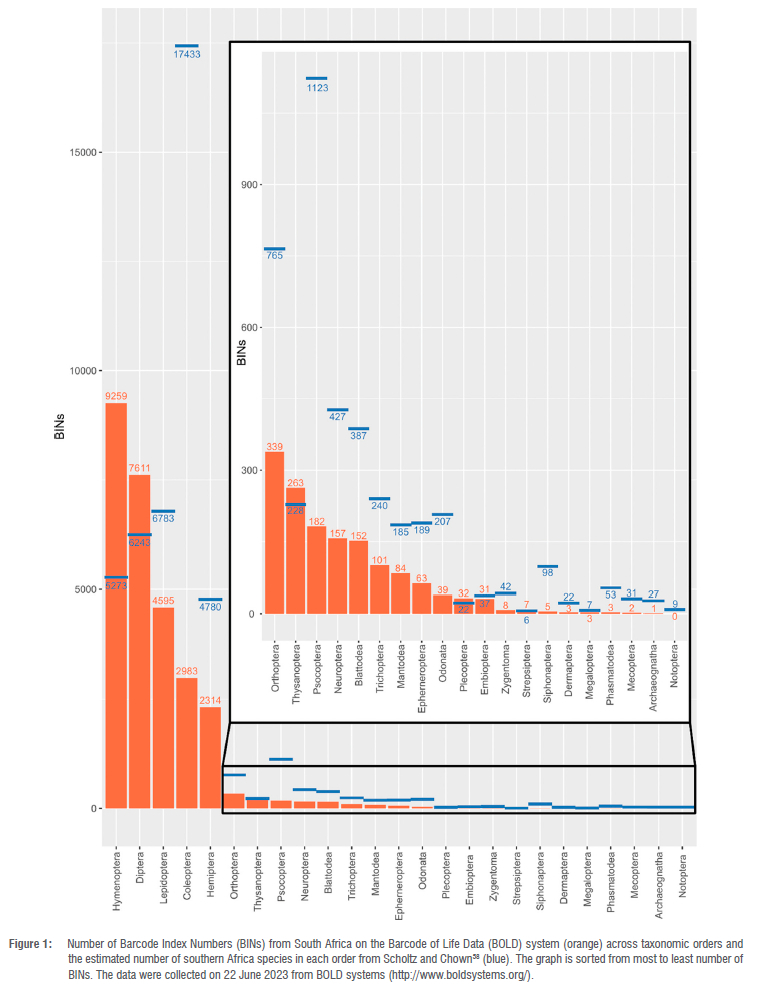
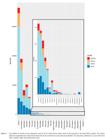
The number of unique BINs in BOLD for South Africa is equivalent to 65% (28 239) of the insect fauna estimated (43 565) by Scholtz and Chown58Figure 1). Our analysis thus suggests that the diversity in these species-rich groups may be greatly underestimated. The underestimation of Hymenoptera diversity is notable. South Africa is a centre of bee diversity5960
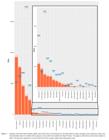
In contrast to results for Hymenoptera, the number of BINs for Coleoptera and Psocoptera is much lower than their estimated number of species. Coleoptera is generally considered the most species-rich order globally and accounts for roughly 25% (about 400 000 species) of all described animal species616262
Diptera contributes 49% (121 513 records) of the records that have been identified to family level (248 845), and, based on the number of BINs, it is the second most diverse insect group. Scholtz206364
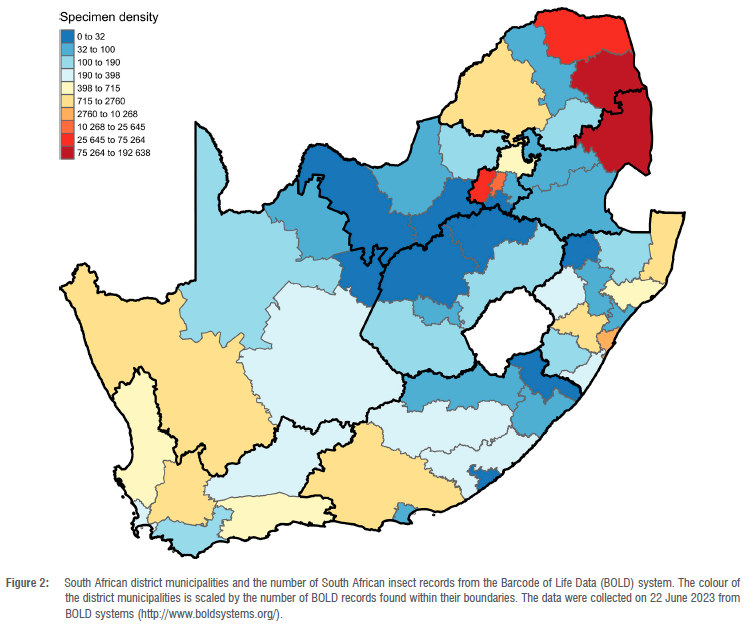
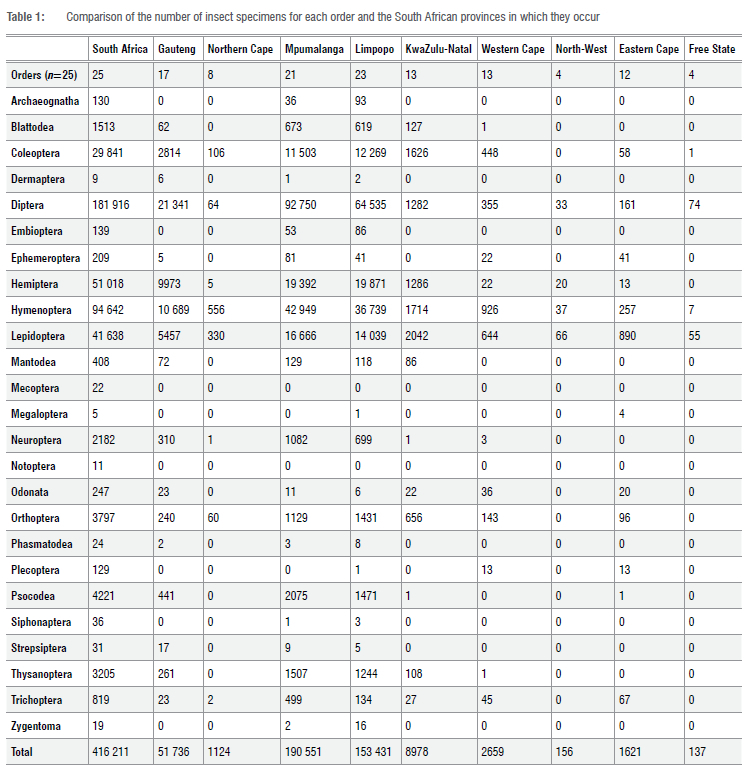
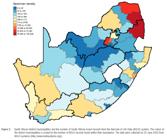
To date, most of the South African records on BOLD (343 166) have been collected in the northeast (Ehlanzeni, Mopani, and Vhembe) -where the Kruger National Park is located (Figure 2). South Africa's most significant contribution in a single submission to BOLD was the 339 193 specimens and about 260 000 sequences generated from a single project, the Kruger Malaise Programme.2258
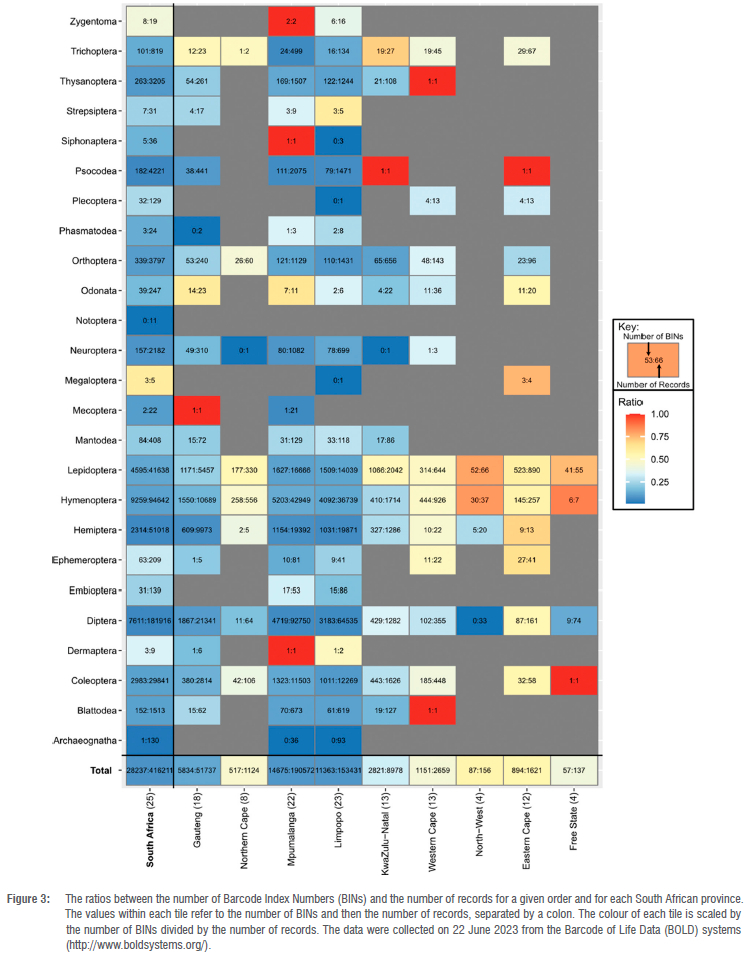
It is notable that winter rainfall areas, such as the Cape Floristic region and Succulent Karoo hot spots (Western Cape and Northern Cape), have a rich bee diversity59Figure 3; Table 1). It is likely that many Hymenoptera within these areas have not been described or barcoded.59,65Figure 3; Table 1). Recent collecting efforts using Malaise traps have thus provided much of the gains in barcode data for insects over the last few years. Malaise traps offer a passive sampling technique that requires little work from the collection team, but they are efficient at gathering a variety of insects including both flying and ground-dwelling species. Combined with DNA barcoding, this technique can provide a comprehensive overview of the insect community in an area.66
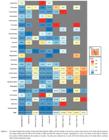
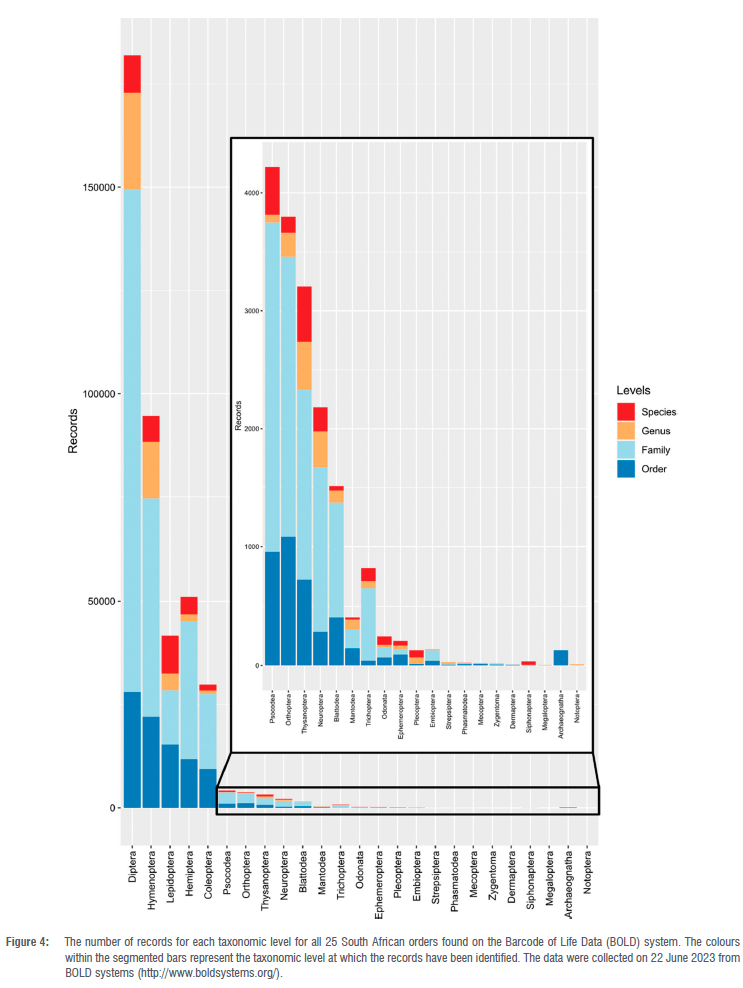
Malaise trapping contributed to at least 92% (384 523 records) of South African records on BOLD, with collection methods for the remaining 8% not specified on BOLD. However, out of the total 416 266 published records on BOLD, only 7.7% (31 855) have species names; the remainder represent 'dark taxa', at least at finer taxonomic levels. Our analysis shows that 59.8% (248 845) of records have been identified to family level, 21.8% (90 645) have been identified to order, and 10.8% (44 866) have been identified to genus (Figure 4). This lack of detailed taxonomic information limits the inference we can draw from such data; for example, species level classifications are required to document and understand drivers of taxonomic turnover and species loss.67
Several countries, including Ireland, Germany and Canada, have already invested in large-scale DNA barcode reference libraries for insects.6870
studies that have informed our understanding of global insect biodiversity. For example, a survey using DNA barcoding on wild urban bees in France used a robust reference library of 2931 specimens covering 157 bee species and identified 36 bee species in urban environments.4471
Biomonitoring in South Africa using DNA barcoding
Biomonitoring involves using organisms sensitive to pollutants, toxins, or other substances to assess environmental conditions. As anthropogenic impacts on the environment are accelerating, there is an urgent need to index these changes and how biodiversity responds to them. DNA barcoding is a powerful tool for biomonitoring as it can rapidly identify and classify organisms (including from partial or degraded samples) without the need for a taxonomic expert. When used in conjunction with mass-sample processing, such as Malaise trapping, barcoding techniques can additionally characterise the full community of organisms in a sample.722273,74
DNA barcoding has already been used to assess environmentally sensitive insect orders (Ephemeroptera, Plecoptera, and Trichoptera) in aquatic environments.752274
Conclusion
This review has shown how DNA barcoding has significantly increased the overall data on insect diversity within South Africa, emphasising underestimates of current taxonomic diversity, and has highlighted barcoding knowledge gaps within provinces and taxonomic orders. The provinces of Gauteng, Mpumalanga and Limpopo have been the best sampled, but some gaps still remain within them, and, in comparison, the rest of South Africa will require a much greater sampling effort. We therefore suggest that there is a need for a comprehensive national Malaise trapping effort to generate critical baseline data on insect biodiversity. A better knowledge of both the taxonomic and geographic distribution of insect diversity within South Africa would allow for more targeted conservation action to maintain the important ecological functions they provide. Combining DNA barcoding and Malaise trapping would also allow for improved monitoring of agricultural pests and pollinators, thus supporting food security. However, this effort must be accompanied by an investment in taxonomic expertise and biodiversity science.
Competing interests
We have no competing interests to declare.
Authors' contributions
R.D.S.: Data analysis, writing - the initial draft, writing - revisions. M.v.d.B.: Conceptualisation, writing - the initial draft, writing - revisions. T.J.D.: Conceptualisation, writing - the initial draft, writing - revisions.
References
-
1. Titley MA, Snaddon JL, Turner EC. Scientific research on animal biodiversity is systematically biased towards vertebrates and temperate regions. PLoS One. 2017;12(2), e0189577. https://doi.org/10.1371/journal.pone.0189577
» https://doi.org/10.1371/journal.pone.0189577 -
2. Stork NE. How many species of insects and other terrestrial arthropods are there on earth? Annu Rev Entomol. 2018;63(1):31-45. https://doi.org/10.1146/annurev-ento-020117-043348
» https://doi.org/10.1146/annurev-ento-020117-043348 -
3. Jolls CL, Inkster JN, Scholtens BG, Vitt P Havens K. An endemic plant and the plant-insect visitor network of a dune ecosystem. Glob Ecol Conserv. 2019;18, e00603. https://doi.org/10.1016/j.gecco.2019.e00603
» https://doi.org/10.1016/j.gecco.2019.e00603 -
4. Gous A, Willows-Munro S, Dirk ZH. Pollination: Impact, role-players, interactions and study - A South African perspective. S Afr J Sci. 2017;119(9/10), Art. #2016-0303. https://doi.org/10.17159/sajs.2017/20160303
» https://doi.org/10.17159/sajs.2017/20160303 -
5. Cane JH, Klein A-M, Vaissie BE, Steffan-Dewenter I, Cunningham SA, Kremen C, et al. Importance of pollinators in changing landscapes for world crops. Proc R Soc B. 2007;274:303-313. https://doi.org/10.1098/rspb.2006.3721
» https://doi.org/10.1098/rspb.2006.3721 -
6. Reilly JR, Artz DR, Biddinger D, Bobiwash K, Boyle NK, Brittain C, et al. Crop production in the USA is frequently limited by a lack of pollinators. Proc Biol Sci. 2020;287(1931):2-9. https://doi.org/10.1098/rspb.2020.0922
» https://doi.org/10.1098/rspb.2020.0922 -
7. Garibaldi LA, Aizen MA, Klein AM, Cunningham SA, Harder LD. Global growth and stability of agricultural yield decrease with pollinator dependence. Proc Natl Acad Sci USA. 2011;108(14):5909-5914. https://doi.org/10.1073/pnas.1012431108
» https://doi.org/10.1073/pnas.1012431108 -
8. Smith MR, Mueller ND, Springmann M, Sulser TB, Garibaldi LA, Gerber J, et al. Pollinator deficits, food consumption, and consequences for human health: A modeling study. Environ Health Perspect. 2022;130(12):1-12. https://doi.org/10.1289/EHP10947
» https://doi.org/10.1289/EHP10947 -
9. Brust GE, Wakil W, Qayyum MA. Chpater 8: Minor pests. In: Sustainable management of arthropod pests of tomato. Amsterdam: Elsevier; 2017. p. 183-214. https://doi.org/10.1016/B978-0-12-802441-6.00008-5
» https://doi.org/10.1016/B978-0-12-802441-6.00008-5 -
10. Bonning BC. Biotechnology and insects. In: Encyclopedia of insects. 2nd ed. Amsterdam: Elsevier; 2009. p. 105-108. https://doi.org/10.1016/B978-0-12-374144-8.00035-7
» https://doi.org/10.1016/B978-0-12-374144-8.00035-7 -
11. Wegensteiner R, Wermelinger B, Herrmann M. Chapter 7 - Natural enemies of bark beetles: Predators, parasitoids, pathogens, and nematodes. In: Vega FE, Hofstetter RWBTBB, editors. San Diego, CA: Academic Press; 2015. p. 247-304. https://doi.org/10.1016/B978-0-12-417156-5.00007-1
» https://doi.org/10.1016/B978-0-12-417156-5.00007-1 -
12. Kamdem MM, Otomo PV. Developmental performance of Eristalis tenax larvae (Diptera: Syrphidae): Influence of growth media and yeast addition during captive rearing. J Exp Zool Part A Ecol Integr Physiol. 2023;339(5):503-513. https://doi.org/10.1002/jez.2696
» https://doi.org/10.1002/jez.2696 -
13. Yang LH, Gratton C. Insects as drivers of ecosystem processes. Curr Opin Insect Sci. 2014;2:26-32. https://doi.org/10.1016/j.cois.2014.06.004
» https://doi.org/10.1016/j.cois.2014.06.004 -
14. Seibold S, Rammer W, Hothorn T, Seidl R, Ulyshen MD, Lorz J, et al. The contribution of insects to global forest deadwood decomposition. Nature. 2021;597(7874):77-81. https://doi.org/10.1038/s41586-021-03740-8
» https://doi.org/10.1038/s41586-021-03740-8 -
15. Tobias NJ. Insect vectors of disease : Untapped reservoirs for new antimicrobials? Front Micobiol. 2016;7:1-5. https://doi.org/10.3389/fmicb.2016.02085
» https://doi.org/10.3389/fmicb.2016.02085 -
16. Tudi M, Ruan HD, Wang L, Lyu J, Sadler R, Connell D, et al. Agriculture development, pesticide application and its impact on the environment. Int J Environ Res Public Health. 2021;18(1112):1-23. https://doi.org/10.3390/ijerph18031112
» https://doi.org/10.3390/ijerph18031112 -
17. Sachs J, Malaney P. The economic and social burden of malaria. Nature. 2002;415:680-685. https://doi.org/10.1038/415680a
» https://doi.org/10.1038/415680a -
18. Lucero JE, Arab NM, Meyer ST, Pal RW, Fletcher RA, Nagy DU, et al. Escape from natural enemies depends on the enemies, the invader, and competition. Ecol Evol. 2020;10(19):10818-10828. https://doi.org/10.1002/ece3.6737
» https://doi.org/10.1002/ece3.6737 -
19. Wingfield MJ, Brockerhoff EG, Wingfield BD, Slippers B. Planted forest health: The need for a global strategy. Science. 2015;349(6250):832-836. https://doi.org/10.1126/science.aac6674
» https://doi.org/10.1126/science.aac6674 -
20. Scholtz CH. The higher classification of southern African insects. Afr Entomol. 2016;24(2):545-555. https://doi.org/10.4001/003.024.0545
» https://doi.org/10.4001/003.024.0545 - 21. Scholtz CH, Holm E. Insects of southern Africa. Durban: Butterworths; 1985. p. 502.
-
22. D'Souza ML, van der Bank M, Shongwe Z, Rattray RD, Stewart R, van Rooyen J, et al. Biodiversity baselines: Tracking insects in Kruger National Park with DNA barcodes. Biol Conserv. 2021;256, Art. #109034. https://doi.org/10.1016/j.biocon.2021.109034
» https://doi.org/10.1016/j.biocon.2021.109034 - 23. McGeoch MA. Insect conservation in South Africa: An overview. Afr Entomol. 2002;10(1):1-10.
- 24. Hamer PM. A national strategy for zoological taxonomy (2013-2020). Pretoria: South African National Biodiversity Institute; 2013.
-
25. Kamdem MM, Ramoejane M, Otomo PV. Local-scale DNA barcoding of afrotropical hoverflies (Diptera: Syrphidae): A case study of the eastern free state of South Africa. Insect. 2023;14(8):692. https://doi.org/10.3390/insects14080692
» https://doi.org/10.3390/insects14080692 -
26. Hebert PDN, Cywinska A, Ball SL, deWaard JR. Biological identifications through DNA barcodes. Proc Biol Sci. 2003;270(1512):313-321. https://doi.org/10.1098/rspb.2002.2218
» https://doi.org/10.1098/rspb.2002.2218 -
27. Shearer TL, Van Oppen MJH, Romano SL, Wörheide G. Slow mitochondrial DNA sequence evolution in the Anthozoa (Cnidaria). Mol Ecol. 2002;11:2475-2487. https://doi.org/10.1046/j.1365-294x.2002.01652.x
» https://doi.org/10.1046/j.1365-294x.2002.01652.x -
28. Hebert PDN, Ratnasingham S, deWaard JR. Barcoding animal life: Cytochrome c oxidase subunit 1 divergences among closely related species. Proc Biol Sci. 2003;270(Suppl 1):S96-S99. https://doi.org/10.1098/rsbl.2003.0025
» https://doi.org/10.1098/rsbl.2003.0025 -
29. Ratnasingham S, Hebert PDN. Bold: The Barcode of Life Data system. Mol Ecol Notes. 2007;7:355-364. https://doi.org/10.1111/j.1471-8286.2007.01678.x
» https://doi.org/10.1111/j.1471-8286.2007.01678.x -
30. Ratnasingham S, Hebert PDN. A DNA-based registry for all animal species: The Barcode Index Number (BIN) system. PLoS One. 2013;8(7), e66213. https://doi.org/10.1371/journal.pone.0066213
» https://doi.org/10.1371/journal.pone.0066213 -
31. Harvey JA. Climate change-mediated temperature extremes and insects: From outbreaks to breakdowns. Glob Chang Biol. 2020;26(12):6685-6701. https://doi.org/10.1111/gcb.15377
» https://doi.org/10.1111/gcb.15377 -
32. Myburgh MMM, Thabang Madisha M, Coetzer WG. South Africa's contribution of insect records on the BOLD system. Mol Biol Rep. 2021;48(12):8211-8220. https://doi.org/10.1007/s11033-021-06822-y
» https://doi.org/10.1007/s11033-021-06822-y -
33. Gerlach J, Samways M, Pryke J. Terrestrial invertebrates as bioindicators: An overview of available taxonomic groups. J Insect Conserv. 2013;17(4):831-850. https://doi.org/10.1007/s10841-013-9565-9
» https://doi.org/10.1007/s10841-013-9565-9 -
34. Samways MJ. Insects in biodiversity conservation: Some perspectives and directives. Biodivers Conserv. 1993;2(3):258-282. https://doi.org/10.1007/BF00056672
» https://doi.org/10.1007/BF00056672 -
35. Hallmann CA, Sorg M, Jongejans E, Siepel H, Hofland N, Schwan H, et al. More than 75 percent decline over 27 years in total flying insect biomass in protected areas. PLoS One. 2017;12(10), e0185809. https://doi.org/10.1371/journal.pone.0185809
» https://doi.org/10.1371/journal.pone.0185809 -
36. Montgomery GA, Dunn RR, Fox R, Jongejans E, Leather SR, Saunders ME, et al. Is the insect apocalypse upon us? How to find out. Biol Conserv. 2020;241. https://doi.org/10.1016/j.biocon.2019.108327
» https://doi.org/10.1016/j.biocon.2019.108327 -
37. Costello MJ, Costello MJ, May RM, Stork NE. Can we name earth's species before they go extinct? Science. 2013;339(6118):413-416. https://doi.org/10.1126/science.1230318
» https://doi.org/10.1126/science.1230318 -
38. Wagner DL, Grames EM, Forister ML, Berenbaum MR, Stopak D. Insect decline in the Anthropocene: Death by a thousand cuts. Proc Natl Acad Sci USA. 2021;118(2), e2023989118. https://doi.org/10.1073/pnas.2023989118
» https://doi.org/10.1073/pnas.2023989118 -
39. Pirk CWW, Human H, Crewe RM, Van Engelsdorp D. A survey of managed honey bee colony losses in the Republic of South Africa - 2009 to 2011. J Apic Res. 2014;53(1):35-42. https://doi.org/10.3896/IBRA.1.53.1.03
» https://doi.org/10.3896/IBRA.1.53.1.03 -
40. Topp EN, Loos J. Local and landscape level variables influence butterfly diversity in critically endangered South African renosterveld. J Insect Conserv. 2019;23(2):225-237. https://doi.org/10.1007/s10841-018-0104-6
» https://doi.org/10.1007/s10841-018-0104-6 -
41. Engel MS, Ceríaco LMP Daniel GM, Dellapé PM, Löbl I, Marinov M, et al. The taxonomic impediment: A shortage of taxonomists, not the lack of technical approaches. Zool J Linn Soc. 2021;193(2):381-387. https://doi.org/10.1093/zoolinnean/zlab072
» https://doi.org/10.1093/zoolinnean/zlab072 -
42. McGeoch MA, Sithole H, Samways MJ, Simaika JP Pryke JS, Picker M, et al. Conservation and monitoring of invertebrates in terrestrial protected areas. Koedoe. 2011;53(2), Art. #a1000. https://doi.org/10.4102/koedoe.v53i2.1000
» https://doi.org/10.4102/koedoe.v53i2.1000 - 43. Ward DF, Larivière MC. Terrestrial invertebrate surveys and rapid biodiversity assessment in New Zealand: Lessons from Australia. New Zeal J Ecol. 2004;28(1):151-159.
-
44. Villalta I, Ledet R, Baude M, Genoud D, Bouget C, Cornillon M, et al. A DNA barcode-based survey of wild urban bees in the Loire Valley, France. Sci Rep. 2021;11(1), Art. #4770. https://doi.org/10.1038/s41598-021-83631-0
» https://doi.org/10.1038/s41598-021-83631-0 -
45. Gostel MR, Kress WJ. The expanding role of DNA barcodes: Indispensable tools for ecology, evolution, and conservation. Diversity. 2022;14(3):1-23. https://doi.org/10.3390/d14030213
» https://doi.org/10.3390/d14030213 -
46. Silva JMD, Willows-Munro S. A review of over a decade of DNA barcoding in South Africa: A faunal perspective. Afr Zool. 2016;51(1):1-12. https://doi.org/10.1080/15627020.2016.1151377
» https://doi.org/10.1080/15627020.2016.1151377 -
47. Hebert PDN, Penton EH, Burns JM, Janzen DH, Hallwachs W. Ten species in one: DNA barcoding reveals cryptic species in the neotropical skipper butterfly Astraptes fulgerator. Proc Natl Acad Sci USA. 2004;101(41):14812-14817. https://doi.org/10.1073/pnas.0406166101
» https://doi.org/10.1073/pnas.0406166101 -
48. Przybytowicz t, Tarcz S. Strong sexual dimorphism unraveled by DNA analysis - towards a better understanding of Pseudothyretes classification (Lepidoptera: Erebidae: Arctiinae). Zool J Linn Soc. 2015;173(1):22-54. https://doi.org/10.1111/zoj.12198
» https://doi.org/10.1111/zoj.12198 -
49. Méheust E, Alfonsi E, Le Ménec P Hassani S, Jung JL. DNA barcoding for the identification of soft remains of prey in the stomach contents of grey seals (Halichoerus grypus) and harbour porpoises (Phocoena phocoena). Mar Biol Res. 2015;11(4):385-395. https://doi.org/10.1080/17451000.2014.943240
» https://doi.org/10.1080/17451000.2014.943240 -
50. Pramual P Wongpakam K. Association of black fly (Diptera: Simuliidae) life stages using DNA barcode. J Asia Pac Entomol. 2014;17(3):549-554. https://doi.org/10.1016/j.aspen.2014.05.006
» https://doi.org/10.1016/j.aspen.2014.05.006 -
51. Sheerin E, Marie A, Daniel P David O, Esther H, Leigh A, et al. Evidence of phenotypic plasticity in Alloteuthis media (Linnaeus, 1758) from morphological analyses on North Sea specimens and DNA barcoding of the genus Alloteuthis Wülker, 1920 across its latitudinal range. Mar Biol. 2023;170(3), Art. #35. https://doi.org/10.1007/s00227-023-04178-4
» https://doi.org/10.1007/s00227-023-04178-4 -
52. Sethusa MT, Millar IM, Yessoufou K, Jacobs A, Van der Bank M, Van der Bank H. DNA barcode efficacy for the identification of economically important scale insects (Hemiptera: Coccoidea) in South Africa. Afr Entomol. 2014;22(2):257-266. https://doi.org/10.4001/003.022.0218
» https://doi.org/10.4001/003.022.0218 -
53. Bezeng BS, Davies TJ, Daru BH, Kabongo RM, Maurin O, Yessoufou K, et al. Ten years of barcoding at the African Centre for DNA barcoding. Genome. 2017;60(17):629-638. https://doi.org/10.1139/gen-2016-0198
» https://doi.org/10.1139/gen-2016-0198 -
54. Wagner DL. Insect declines in the anthropocene. Annu Rev Entomol. 2020;65:457-480. https://doi.org/10.1146/annurev-ento-011019-025151
» https://doi.org/10.1146/annurev-ento-011019-025151 -
55. Page RDM. DNA barcoding and taxonomy: Dark taxa and dark texts. Philos Trans R Soc B. 2016;371, Art. #20150334. http://dx.doi.org/10.1098/rstb.2015.0334
» http://dx.doi.org/10.1098/rstb.2015.0334 -
56. Gibbs J. DNA barcoding a nightmare taxon: Assessing barcode index numbers and barcode gaps for sweat bees. Genome. 2018;61(1):21-31. https://doi.org/10.1139/gen-2017-0096
» https://doi.org/10.1139/gen-2017-0096 -
57. Antil S, Abraham JS, Sripoorna S, Maurya S, Dagar J, Makhija S, et al. DNA barcoding, an effective tool for species identification: A review. Mol Biol Rep. 2023;50(1):761-775. https://doi.org/10.1007/s11033-022-08015-7
» https://doi.org/10.1007/s11033-022-08015-7 - 58. Scholtz CR, Chown SL. Insects in southern Africa: How many species are there? S Af J Sci. 1995;91:124-126.
-
59. Kuhlmann M. Patterns of diversity, endemism and distribution of bees (Insecta: Hymenoptera: Anthophila) in southern Africa. S Afr J Bot. 2009;75(4):726-738. https://doi.org/10.1016/j.sajb.2009.06.016
» https://doi.org/10.1016/j.sajb.2009.06.016 - 60. Michener CD. The bees of the world second edition. Baltimore, MD: Johns Hopkins University Press; 2007. p. 1-953.
-
61. Stork NE, McBroom J, Gely C, Hamilton AJ. New approaches narrow global species estimates for beetles, insects, and terrestrial arthropods. Proc Natl Acad Sci USA. 2015;112(24):7519-7523. https://doi.org/10.1073/pnas.1502408112
» https://doi.org/10.1073/pnas.1502408112 -
62. Forbes AA, Bagley RK, Beer MA, Hippee AC, Widmayer HA. Quantifying the unquantifiable: Why hHmenoptera, not Coleoptera, is the most speciose animal order. BMC Ecol. 2018;18(1), Art. #21. https://doi.org/10.1186/s12898-018-0176-x
» https://doi.org/10.1186/s12898-018-0176-x -
63. Stevens DM, Bishop J, Picker MD. Phylogenetic analysis reveals high local endemism and clear biogeographic breaks in southern African stoneflies (Notonemouridae, Plecoptera). Zootaxa. 2018;4483(3):428-l54. https://doi.org/10.11646/zootaxa.4483.3.2
» https://doi.org/10.11646/zootaxa.4483.3.2 -
64. Fochetti R, de Figueroa JMT. Global diversity of stoneflies (Plecoptera; Insecta) in freshwater. Hydrobiologia. 2008;595:365-377. https://doi.org/10.1007/s10750-007-9031-3
» https://doi.org/10.1007/s10750-007-9031-3 -
65. Melin A, Colville JF. A review of 250 years of South African bee taxonomy and exploration (Hymenoptera: Apoidea: Anthophila). Trans R Soc S Afr. 2019;74(1):86-96. https://doi.org/10.1080/0035919X.2019.1572670
» https://doi.org/10.1080/0035919X.2019.1572670 -
66. Perez KHJ, Sones JE, DeWaard JR, Hebert PDN. The Global Malaise Program: Assessing global biodiversity using mass sampling and DNA barcoding. In: Scientific abstracts from the 6th International Barcode of Life Conference. Genome. 2015;58(5):266. https://doi.org/10.1139/gen-2015-0087
» https://doi.org/10.1139/gen-2015-0087 -
67. Bevilacqua S, Anderson MJ, Ugland KI, Somerfield PJ, Terlizzi A. The use of taxonomic relationships among species in applied ecological research: Baseline, steps forward and future challenges. Austral Ecol. 2021;46(6):950-964. https://doi.org/10.1111/aec.13061
» https://doi.org/10.1111/aec.13061 -
68. Magnacca KN, Brown MJF. DNA barcoding a regional fauna: Irish solitary bees. Mol Ecol Resour. 2012;12(6):990-998. https://doi.org/10.1111/1755-0998.12001
» https://doi.org/10.1111/1755-0998.12001 -
69. Schmidt S, Schmid-Egger C, Morinière J, Haszprunar G, Hebert PDN. DNA barcoding largely supports 250 years of classical taxonomy: Identifications for Central European bees (Hymenoptera, Apoidea partim). Mol Ecol Resour. 2015;15(4):985-1000. https://doi.org/10.1111/1755-0998.12363
» https://doi.org/10.1111/1755-0998.12363 -
70. deWaard JR, Ratnasingham S, Zakharov EV, Borisenko AV, Steinke D, Telfer AC, et al. A reference library for Canadian invertebrates with 1.5 million barcodes, voucher specimens, and DNA samples. Sci Data. 2019;6(1):1-12. https://doi.org/10.1038/s41597-019-0320-2
» https://doi.org/10.1038/s41597-019-0320-2 -
71. Chaiphongpachara T, Changbunjong T, Laojun S, Nutepsu T, Suwandittakul N, Kuntawong K, et al. Mitochondrial DNA barcoding of mosquito species (Diptera: Culicidae) in Thailand. PLoS One. 2022;17:1-27. https://doi.org/10.1371/journal.pone.0275090
» https://doi.org/10.1371/journal.pone.0275090 -
72. Elías-Gutiérrez M, Valdez-Moreno M. Relevance of DNA barcodes for biomonitoring of freshwater animals. Front Environ Sci. 2023;11:1-8. https://doi.org/10.3389/fenvs.2023.1057653
» https://doi.org/10.3389/fenvs.2023.1057653 -
73. Ziervogel G, New M, Archer van Garderen E, Midgley G, Taylor A, Hamann R, et al. Climate change impacts and adaptation in South Africa. WIREs Clim Chang. 2014;5(5):605-620. https://doi.org/10.1002/wcc.295
» https://doi.org/10.1002/wcc.295 -
74. Jumaat AH, Hamid SA. Biological water quality indices performance based on aquatic insects in recreational rivers. Trop Life Sci Res. 2021;32(1):89-103. https://doi.org/10.21315/tlsr2021.32.L6
» https://doi.org/10.21315/tlsr2021.32.L6 -
75. Pilgrim EM, Jackson SA, Swenson S, Turcsanyi I, Friedman E, Weigt L, et al. Incorporation of DNA barcoding into a large-scale biomonitoring program: Opportunities and pitfalls. J North Am Benthol Soc. 2011;30(1):217-231. https://doi.org/10.1899/10-012.1
» https://doi.org/10.1899/10-012.1

Revised: 06 Mar. 2024
Accepted: 06 Mar. 2024
Published: 28 May 2024
Editor: Sydney Moyo