Trading on extinction: An open-access deterrence model for the South African abalone fishery
Abstract
South African rhinoceros (e.g. Diceros bicornis) and abalone (Haliotis midae) have in common that they both are harvested under open-access conditions, are high-value commodities and are traded illegally. The difference is that a legal market for abalone already exists. An open-access deterrence model was developed for South African abalone, using Table Mountain National Park as a case study. It was found that illegal poaching spiked following the closure of the recreational fishery. The resource custodian's objective is to maximise returns from confiscations. This study showed that a legal trade results in a 'trading on extinction' resource trap, with a race for profits, an increase in the probability of detection after a poaching event and the depletion of populations. In contrast with HS Gordon's seminal article (J Polit Econ 1954;62:124-142), profit maximisation does not automatically improve the sustainability of the resource. Under certain conditions (e.g. a legal trade with costly enforcement), profit maximisation may actually deplete abalone populations. The article also has implications for rhino populations, as a legal trade is currently proposed.
rhino; system dynamics; illegal harvesting; predator-prey; Table Mountain National Park
 Thumbnail
 Thumbnail
 Thumbnail
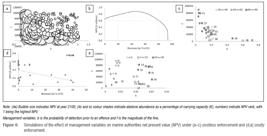 Thumbnail
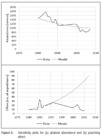 Thumbnail