Atmospheric observations and numerical weather prediction
Abstract
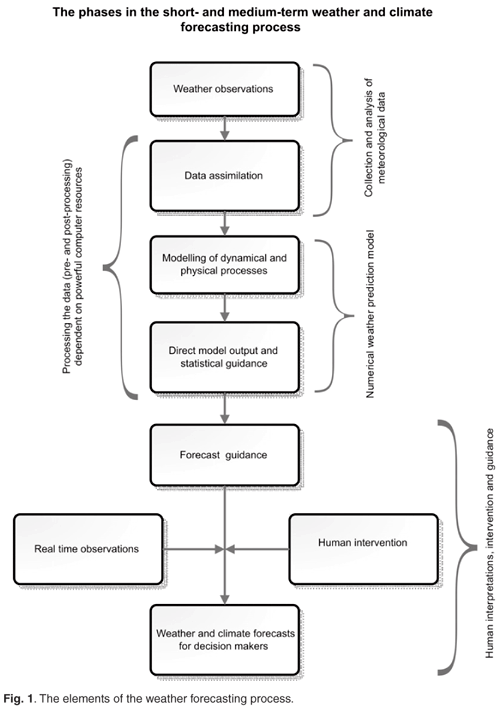
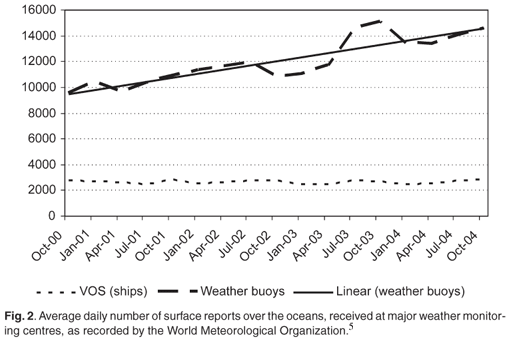
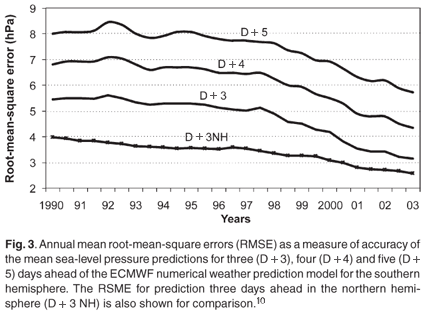
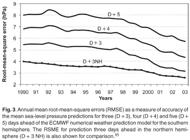
Today's 72-hour weather forecast is as accurate, globally, as the 24-hour forecast of the 1980s. The recent improvement in accuracy, for the southern hemisphere in particular, is remarkable. This achievement came about through scientific understanding of dynamical and physical processes in the atmosphere coupled with new and enhanced modelling techniques, increased availability of remote-sensing data from weather satellites, and progress in data assimilation techniques that incorporate weather observations into numerical prediction models. The great advances in computing power have also contributed significantly to the forecaster's performance. Further improvements in the accuracy and reliability of climate and weather forecasts are to be expected as a result of superior data observation and assimilation techniques and modelling. The challenge to the forecaster is to provide user-specific risk-management information on various time scales, so that the users of this information can realize the social and economic value of advanced weather and environmental predictions more fully.
 Thumbnail
 Thumbnail
 Thumbnail