Impact of nitrogen fertilisation on cactus pear mucilage functionality
Abstract
The spineless cactus pear (Opuntia ficus-indica) mucilage is a physically slimy, green extract that is sourced from the cladodes (modified stems) of the crop. The mucilage can be freeze-dried into a powder, and this powder has shown potential to be considered as a novel functional food biopolymer because it exhibits good functional properties, especially with regard to emulsification. The main objective of this study was to investigate whether nitrogen fertilisation had an effect on the functionality of O. ficus-indica (L.) Mill 'Morado' mucilage. The functionality of the mucilage was attributed to its protein content. Nitrogen is one of the main elements in soil that makes up proteins. Nitrogen fertilisers from three nitrogen sources (urea, limestone ammonium nitrate, and ammonium sulfate) were applied at four application levels (0 kg/ha, 60 kg/ha, 120 kg/ha and 240 kg/ha). The functionality of mucilage was also compared to high-protein content commercial food biopolymers known to have good functional properties. Of the parameters tested, the oil-holding and oil-absorption capacities of the mucilage were significantly affected by nitrogen fertilisation. Scanning electron microscopy revealed that all freeze-dried mucilage samples resembled broken glass or showed a flake-like structure. Different nitrogen fertilisation sources and levels appeared to have no visible morphological implications on the different freeze-dried mucilage samples evaluated. SIGNIFICANCE: • The study sheds light on the functionality of freeze-dried mucilage from spineless cactus pear. It highlights the impact of nitrogen fertilisation on mucilage properties. • The mucilage exhibits promising functional properties, particularly in emulsification. This makes it a potential novel biopolymer for food applications. • Understanding how nitrogen affects the mucilage functionality provides insights into crop management and sustainable food production. • The ammonium-sulfate-treated mucilage performs similarly to high-protein commercial biopolymers, suggesting its practical use in food formulations. • These findings contribute to food science knowledge and offer sustainable alternatives for food ingredient development.
cactus pear mucilage; nitrogen; functional ingredients; food production; sustainability
Introduction
The spineless Opuntia ficus-indica (L.) Mill., commonly known as cactus pear, is a crop from the Cactaceae family. The family Cactaceae consists of approximately 145 accepted genera and 1519 accepted species. The genus Opuntia Mill., to which O. ficus-indica belongs, currently includes 152 accepted species.12Opuntia ficus-indica cladodes (also called modified stems) contain insoluble fibre and soluble fibre. The insoluble fraction is mostly composed of cellulose, and the soluble fraction is composed of mucilage.3
Native mucilage has a unique, branched structure that contains various charged fractions.45 6
Mucilage has shown potential to be considered as a novel functional food biopolymer because it exhibits good functional properties, especially with regard to emulsification. The functionality of the mucilage has been attributed to its protein fraction.78
Soy protein isolate (SPI) is a fine surfactant with extensive application in the food industry because of its high functionality in stabilising oil-water emulsions and air-water foams.9101112
A previous study investigated the effect of nitrogen (N) fertilisation on the protein content of Opuntia mucilage.77Opuntia mucilage. According to LECO analysis, the protein content of the mucilage ranged from 1.5% to 7.0%. All the mucilage samples from the N fertilisation trial had higher protein contents than the control mucilage sample (0 kg N/ha). SPI and egg albumin, the high-protein content commercial biopolymers used in the study to compare the functionality of mucilage, recorded protein contents of 81.1% and 79.1%, respectively.774O. ficus-indica cultivars on the mechanical and microstructural properties of blended pectin and alginate biopolymer films. Mucilage was also studied for its potential as a functional bio-based polymer to address some limitations associated with homopolymer-pectin and homopolymer-alginate films.
In the current study, the same N fertilisation sources and levels were evaluated to assess their effect on the oil-holding capacity (OHC), the water-holding capacity (WHC), and stability and microstructures of the mucilage. These three fertiliser sources were chosen for application in this study because they are the most popular fertilisers sold by South African retailers, and they are also most commonly used by South African farmers. At present, the recommended fertiliser application levels in South Africa for cactus pear fruit production are 60 kg N/ha for 2-year-old trees and 90 kg N/ha for 3-year-old trees. The recommended application levels for phosphorus (P) are 13 kg P/ha and 16 kg/ha for 2-year-old and 3-year-old trees, respectively. For potassium (K), it is 60 kg K/ha and 80 kg K/ha for 2-year-old and 3-year-old trees, respectively.13
Recent research has shown that agronomic factors, such as irrigation and fertilisation, can influence the yield and quality of O. ficus-indica mucilage. Luna-Zapién et al.141516
In addition to food-related applications, mucilage and other hydrocolloid-rich materials from O. ficus-indica have gained increasing attention for their potential in environmental remediation. Recent studies have demonstrated that Opuntia mucilage and biomass can serve as effective, low-cost bio-adsorbents for removing dyes and other pollutants from wastewater, particularly in the textile industry. These findings underscore the versatility of Opuntia hydrocolloids and their relevance in both food and environmental applications.17-19
The effects of N fertilisation on the functional and structural properties of O. ficus-indica mucilage remain underexplored, particularly in relation to OHC, WHC, stability and microstructure. We aimed to address this gap by evaluating how different N sources and application levels influence these properties. The null hypothesis (Hq) is that N fertilisation will improve the functionality of Opuntia mucilage, whilst the alternative hypothesis (Ha) is that N fertilisation will have no effect.
Materials and methods
Sample preparation
Samples included freeze-dried mucilage powder from cladodes grown with different N fertiliser sources (urea, LAN and AmSul) at four application levels (0 kg/ha, 60 kg/ha, 120 kg/ha and 240 kg/ha), as previously described in Nkoi et al.77204
Protein content
The protein content of the samples used in this study has been previously determined and reported.7
Scanning electron microscopy
Freeze-dried mucilage (from all N sources and N levels), SPI powder and egg albumin powder were subjected to scanning electron microscopy (SEM) imaging according to the methods described in Van Rooyen et al.4
Functional properties
Water-related properties of dried mucilage powder
Water-holding capacity

Water-absorption capacity
Water-absorption capacity (WAC) is the volume of water (in mL) retained by a powder after centrifugation. It is calculated as the difference between the initial volume of water added and the volume of water recovered after centrifugation. This value reflects the amount of water absorbed and held within the powder matrix. WAC is expressed in mL of water absorbed per gram of powder (mL/g) and was calculated using Equation 224,25

Oil-related properties of dried mucilage powder
Oil-holdinq capacity
The methods described by Ayadi et al.222

Oil-absorption capacity
Oil-absorption capacity (OAC) was determined by using the method described by Samia El-Safy252

Statistical analysis
Data obtained for the functional properties of O. ficus-indica mucilage from different fertiliser sources and levels, along with SPI and egg albumin, were entered into a Microsoft Excel spreadsheet. The Excel package XLSTAT (2022) was used for statistical analysis. The means, standard deviations and coefficients of variation were calculated for each treatment. An analysis of variance was performed to detect significant differences (p < 0.05) between different fertiliser treatment means. A further post-hoc test, the Tukey's HSD (honestly significant difference), was conducted to determine the exact differences between the samples.
Results
Scanning electron microscopy
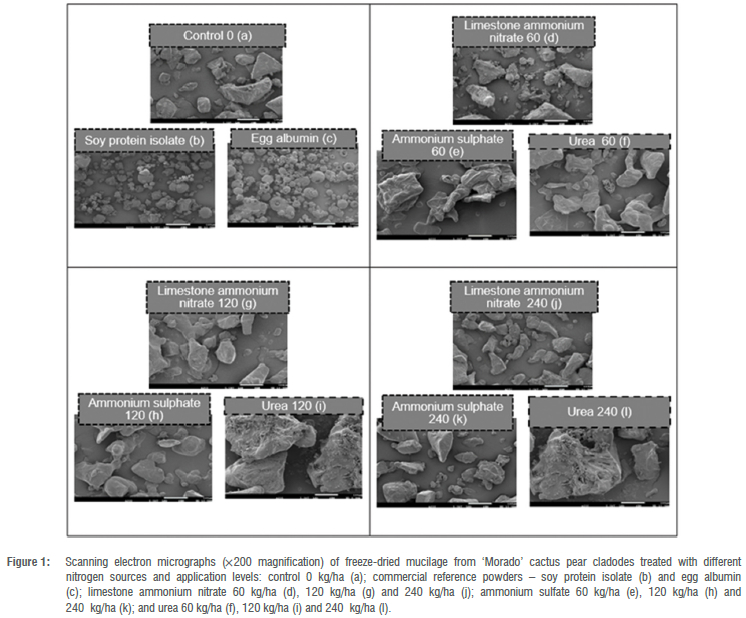
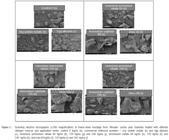
The microstructures of freeze-dried mucilage from 'Morado' cactus pear cladodes treated with different N sources and levels, along with those of the commercial powders - SPI and egg albumin - were observed using SEM, as shown in Figure 1. The results show that all freeze-dried mucilage samples resembled broken glass or showed a flake-like structure. The particle morphology had random sizes, shapes and orientations, and the particles randomly aggregated with one another. The freeze-dried mucilage was ground with a mortar and pestle, which resulted in varying degrees of fineness between the freeze-dried mucilage samples. Different N fertilisations had no visible morphological effects on the different freeze-dried mucilage samples evaluated. In contrast, the commercial SPI and albumin samples had consistent spherical-shaped particles of different sizes, with smooth surfaces and some dents. There was also aggregation of smaller particles into larger particles. The SPI and albumin particles were smaller than the freeze-dried mucilage particles.
Protein content
The protein content of the samples used in this study has been previously determined and reported77
Functional properties
Water-related properties of dried mucilage powder
Water-holding capacity
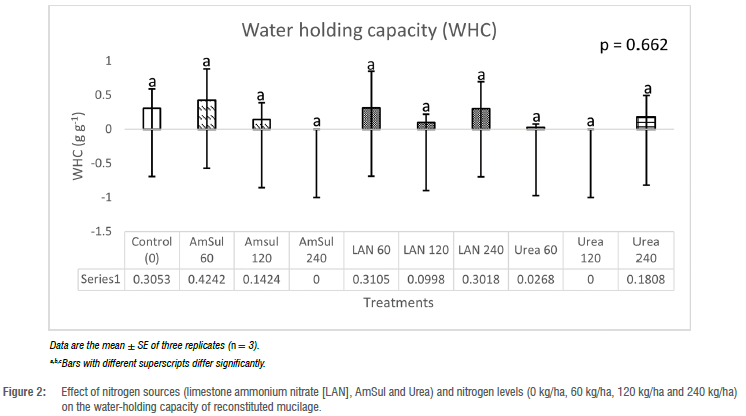
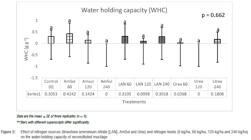
WHC is the amount of water that is held by the powder after the supernatant is decanted following centrifugation and the reaction tube inverted for 30 min.2,1720(p = 0.662) among the different N sources and N levels (Figure 2). The LAN treatments and the control recorded similar WHC on average, and their WHC was higher than those of the AmSul and Urea treatments. An interesting phenomenon occurred, namely AmSul 240 and Urea 120 recorded a WHC of 0 g/g, although the freeze-dried mucilage samples looked wet when they were measured for WHC. This happened because, when the supernatant was decanted after centrifugation, a portion of the mucilage sample was dissolved in the supernatant, and this portion of mucilage was decanted along with the supernatant. Therefore, the wet precipitate left in the reaction tube had less mucilage powder than initially reacted with the water. Therefore, the WHC calculation method should be modified to account for the loss of powder in samples that contained a highly soluble fraction.
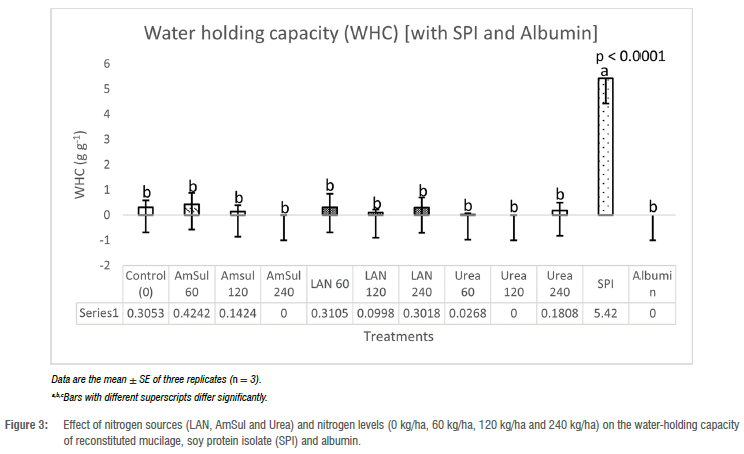
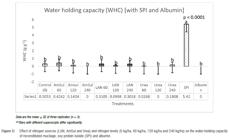
The WHC of the freeze-dried mucilage (all samples from N-fertilised plants) and albumin (Figure 3) differed significantly (p < 0.0001) from SPI as it recorded a WHC value (5.420 g/g) that is significantly higher than that of all the other samples. The hypothesis states that a higher protein content will result in a higher functionality of the sample.7 12
Water-absorption capacity
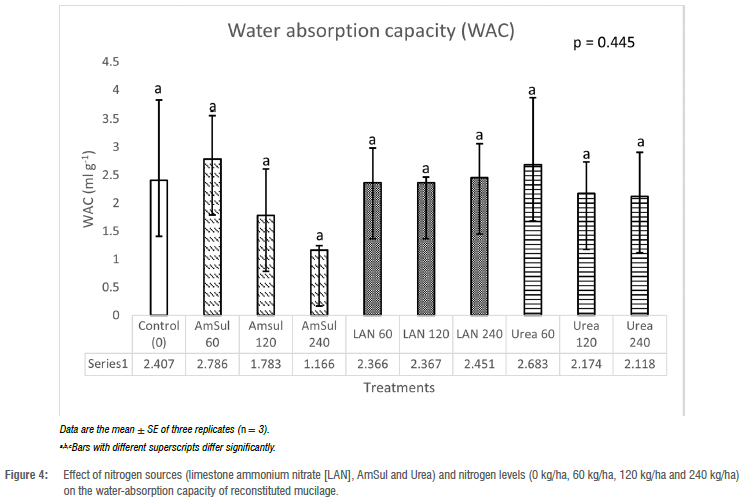
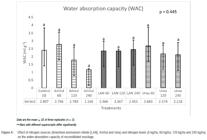
WAC is the volume of water (in mL) retained by a powder after centrifugation. It is calculated as the difference between the initial volume of water added and the volume of water recovered after centrifugation.2,25 2(p = 0.445) among the different N sources and N levels (Figure 4). The LAN treatments recorded a constant WAC as the N levels increased, and the control also recorded similar WAC values. The AmSul and Urea treatments showed similar trends, with WAC values decreasing with an increase in N level. As with WHC, AmSul 60 was also the best N treatment for the highest WAC.
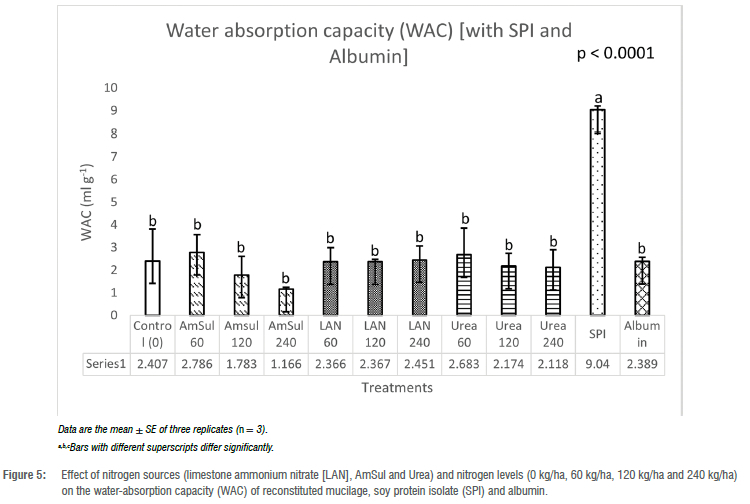
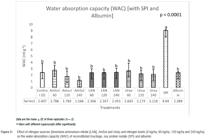
The WAC of the freeze-dried mucilage (all samples from N-fertilised plants) and albumin (Figure 5) differed significantly (p < 0.0001) from that of SPI (9.041 mL/g), which was significantly higher than that of all the other samples. The hypothesis states that a higher protein content will result in a higher functionality of the sample.77
Oil-related properties of dried mucilage powder
Oil-holding capacity
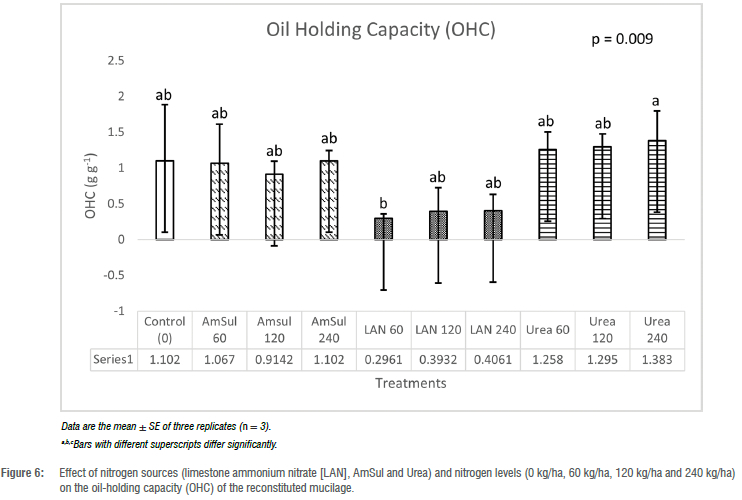
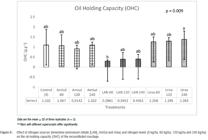
The OHC is the amount of oil that is held by the freeze-dried mucilage sample after the supernatant is decanted following centrifugation and the reaction tube is inverted for 12 h.2,2326 (p = 0.009) among the different N sources and N levels (Figure 6); specifically, the OHC of LAN 60 was significantly lower than that of Urea 240. The LAN treatments recorded the lowest OHCs, even lower than that of the control. The AmSul and Urea treatments recorded OHC values comparable to the control.
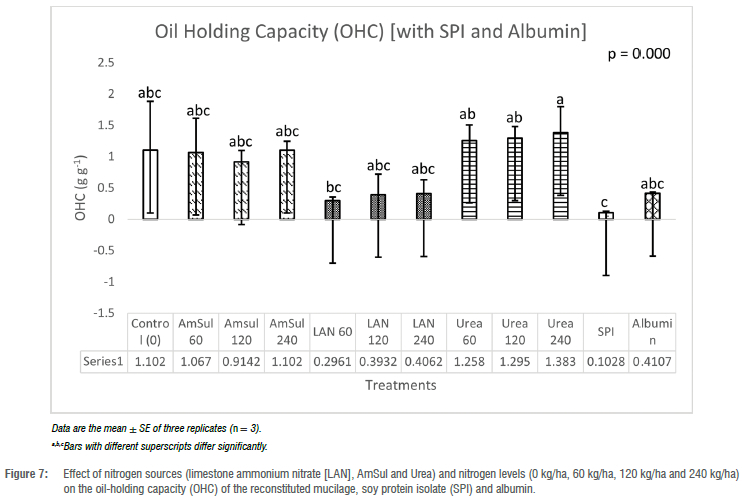
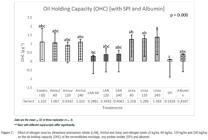
The OHC of the freeze-dried mucilage (all samples from N-fertilised plants), SPI and albumin (Figure 7) differed significantly (p < 0.000). SPI (0.1028 g/g) recorded an OHC that was significantly lower than that of the Urea 240 (1.383 g/g) freeze-dried mucilage sample. SPI also recorded the lowest OHC value compared to all the other mucilage samples. Albumin (0.4107 g/g) recorded a low OHC value compared to the control, AmSul and Urea treatments. The hypothesis states that a higher protein content will result in more functionality of the sample.77
Oil-absorption capacity
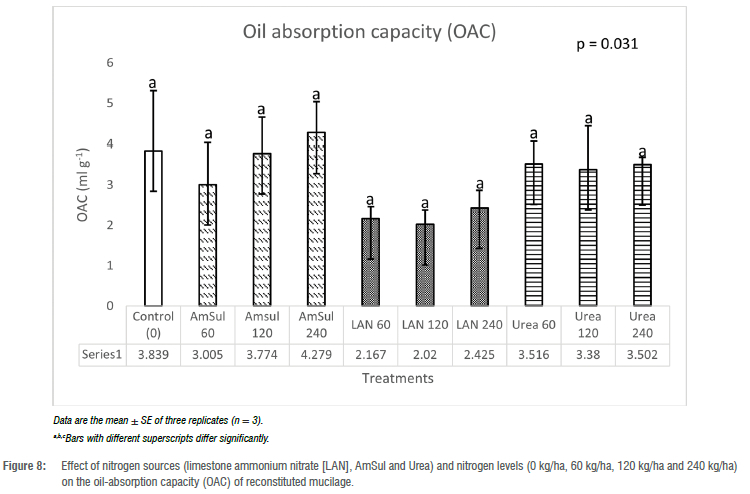
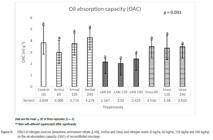
The OAC is the volume of oil (in mL) retained by a powder after centrifugation. It is calculated as the difference between the initial volume of oil added and the volume of oil recovered after centrifugation.2,25 (p = 0.031; Figure 8), indicating a potential overall effect of N fertilisation. However, post hoc comparisons (Tukey-Kramer) did not reveal statistically significant differences between specific treatment combinations. This suggests that, whilst there was some variation in OAC amongst treatments, the effect was not strong or consistent enough to attribute to any particular N source or level. The LAN group recorded the lowest mean OAC value, although this was not statistically distinct from the others.
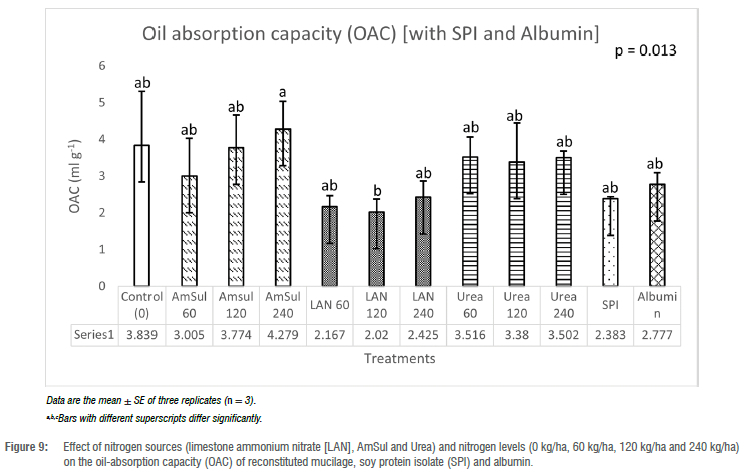
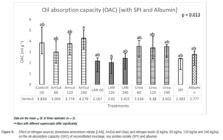
The OAC of the freeze-dried mucilage (all samples from N-fertilised treatments), SPI and albumin (Figure 9) differed significantly (p = 0.013). LAN 120 (2.020 mL/g) recorded an OAC that is significantly lower than that of AmSul 240's (4.279 mL/g) freeze-dried mucilage. SPI (2.383 mL/g) and albumin (2.777 mL/g) recorded lower OAC values compared to the control, AmSul and the Urea treatments.
Discussion
When comparing the influence that different N fertilisation sources and levels had on the morphology of the freeze-dried mucilage, no variation could be attributed to N fertilisation as all the mucilage samples had broken glass, flake-like microstructures. Similar broken glass, flake-like microstructures were observed for freeze-dried mucilage2272827292827
Although the freeze-drying method used in this study likely contributed to the formation of larger, irregularly shaped particles, it is also plausible that the observed differences in aggregate size and compactness were partially influenced by the protein content of the mucilage. Higher protein concentrations may promote intermolecular interactions, such as hydrogen bonding and hydrophobic associations, which could lead to the formation of more cohesive or denser aggregates during the drying process.30,31
In addition to the effects of the drying method and protein content, the potential presence of calcium oxalate crystals, commonly referred to as druses, may also warrant consideration. These crystals are frequently observed in the tissues of Opuntia species and are known to contribute to structural rigidity and a glass-like appearance under SEM. However, no calcium oxalate crystals were observed in the freeze-dried mucilage samples of previous studies, such as in Du Toit23233
WHC is related to the availability of polar amino groups of proteins for hydrogen bonding with water molecules.826O. ficus-indica freeze-dried mucilage (Figure 2). SPI recorded a WHC value that was significantly higher than those of the albumin and mucilage samples (Figure 3). With reference to the protein content of the mucilage samples7O. ficus-indica freeze-dried mucilage seem to exist. According to Du Toit222226
N fertilisation did not have a significant effect on the WAC of O. ficus-indica freeze-dried mucilage (Figure 4). As with the WHC, SPI recorded a WAC value that was significantly higher than those of the albumin and mucilage samples (Figure 5). There appear to be no research outputs on the effects of N fertilisation or any other form of fertilisation on the WAC of O. ficus-indica freeze-dried mucilage. According to Du Toit2222 24Opuntia mucilage samples (2.23 mL/g) in the current study is lower than the mean WAC recorded for okra mucilage (3.51 mL/g).34
The literature suggests a positive correlation between a high OHC and a protein structure consisting of many amino acids with nonpolar side chains.35Figure 6). SPI and albumin recorded OHC values that were lower than those of the mucilage samples (Figure 7). To postulate, compared to SPI and albumin, mucilage may have a higher fraction of amino acids with non-polar side chains. No scientific journal references on the effects of N fertilisation or any other form of fertilisation on the OHC of O. ficus-indica freeze-dried mucilage could be found. According to Du Toit22226
The OAC is commonly attributed to the physical entrapment of oil by the protein.2625Figure 8). Whilst a statistically significant overall effect of N fertilisation on OAC was observed, the lack of significant pairwise differences between treatments limits the strength of this conclusion. The observed variation may suggest a trend, but further studies with larger sample sizes or more sensitive designs are needed to confirm specific treatment effects. SPI and albumin recorded lower OAC values than most of the mucilage samples (Figure 9). The hypothesis states that a higher protein content will result in more/ higher functionality of the sample. Therefore, it was expected that SPI and albumin would perform much better than the freeze-dried mucilage samples in terms of OAC, but this hypothesis was not true. Of the freeze-dried mucilage samples, LAN 120 was expected to perform the best for OAC because of its protein value, but the hypothesis was not true. Urea 60 and the control samples were expected to perform the worst, and again this was not true for OAC. In essence, a high-protein content seems to not have had a positive effect on the OAC of SPI, albumin and freeze-dried mucilage samples. SPI and albumin may have recorded lower OAC values than the freeze-dried mucilage samples because they are more soluble in oil.
There appear to be no references on the effects of N fertilisation or any other forms of fertilisation on the OAC of O. ficus-indica freeze-dried mucilage. According to Du Toit22224Opuntia mucilage samples (3.19 mL/g) in the current study is higher than the mean OAC recorded for okra mucilage (2.69 mL/g).32
Conclusion
We have demonstrated that N fertilisation significantly influences the OHC of freeze-dried mucilage, with statistically significant differences observed amongst treatments. Our findings also show an overall, although not treatment-specific, effect on OAC. These findings have direct implications for optimising food-processing techniques and enhancing ingredient functionality within sustainable food systems. By understanding the impact of N fertilisation, farmers can fine-tune crop management practices to improve functionality in mucilage. Processors stand to gain by incorporating N-fertilised mucilage into food products, thereby enhancing texture and stability. Consumers benefit from healthier, functional foods. Environmentally, utilising mucilage - often considered waste - aligns with sustainability goals by reducing waste and optimising resource use. Economically, creating value-added products and streamlining processes benefit all stakeholders.
Funding
This work was supported by the University of the Free State Central Research Fund. We acknowledge GrainSA and the South African National Research Foundation (NRF) for funding provided to V.N.
Data availability
All data are included.
Declarations
We have no competing interests to declare. We have no AI or LLM use to declare.
Authors' contributions
V.N.: Methodology, investigation, writing - original draft, writing -review and editing, project leadership. M.d.W.: Conceptualisation, methodology, validation, writing - review and editing, supervision, project administration, funding acquisition. A.v.B.: Methodology, validation, review and editing, supervision. J.v.N.: Supervision, funding acquisition. B.v.R.: Methodology, investigation, review and editing. W.P.: Formal analysis, data curation. All authors read and approved the final manuscript.
References
-
1. Royal Botanic Gardens, Kew. Opuntia ficus-indica (L.) Mill. Plants of the world online [data repository]. No date [cited 2025 May 23]. Available from: https://powo.science.kew.org/taxon/urn:lsid:ipni.org:names:30000028-2
» https://powo.science.kew.org/taxon/urn:lsid:ipni.org:names:30000028-2 - 2. Du Toit A, De Wit M. Patent PA153178P - A process for extracting mucilage from Opuntia ficus-indica, Aloe barbadensis and Agave americana. Bloemfontein: University of the Free State; 2011.
-
3. Saenz C, Yoong M, Figuerola F, Chiffelle I, Estevez AM. Cactus pear cladodes powders as a source of dietary fibre: Purification and properties. Int J Food Sci Nutr. 2012;63(3):283-289. https://doi.org/10.3109/09637486.2011.624492
» https://doi.org/10.3109/09637486.2011.624492 -
4. Van Rooyen B, De Wit M, Osthoff G, Van Niekerk J, Hugo A. Effect of native mucilage on the mechanical properties of pectin-based and alginate-based polymeric films. Coatings. 2023;13, Art. #1611. https://doi.org/10.3390/coatings13091611
» https://doi.org/10.3390/coatings13091611 -
5. Du Toit A, De Wit M, Fouche H, Taljaard M, Venter SL, Hugo A. Mucilage powder from cactus pears as functional ingredient: Influence of cultivar and harvest month on the physicochemical and technological properties. J Food Sci Technol. 2019;56(5):2404-2416. https://doi.org/10.1007/s13197-019-03706-9
» https://doi.org/10.1007/s13197-019-03706-9 -
6. Saha D, Bhattacharya S. Hydrocolloids as thickening and gelling agents in food: A critical review. J Food Sci Technol. 2010;47(6):587-597. https://doi.org/10.1007/s13197-010-0162-6
» https://doi.org/10.1007/s13197-010-0162-6 -
7. Nkoi V, De Wit M, van Biljon A, van Niekerk JA. Comparison and integration of cactus mucilage protein and soy protein in functional food systems. Acta Hortic. 2022;1343:425-434. https://doi.org/10.17660/ActaHortic.2022.1343.54
» https://doi.org/10.17660/ActaHortic.2022.1343.54 -
8. Foegeding EA, Davis JP. Food protein functionality: A comprehensive approach. Food Hydrocoll. 2011;25:1853-1864. https://doi.org/10.1016/j.foodhyd.2011.05.008
» https://doi.org/10.1016/j.foodhyd.2011.05.008 -
9. Zhang X, Qi B, Xie F, Hu M, Sun Han L, et al. Emulsion stability and dilatational rheological properties of soy/whey protein isolate complexes at the oil-water interface: Influence of pH. Food Hydrocoll. 2021;113, Art. #106391. https://doi.org/10.1016/j.foodhyd.2020.106391
» https://doi.org/10.1016/j.foodhyd.2020.106391 -
10. Chatterjee C, Gleddie S, Xiao CW. Soybean bioactive peptides and their functional properties. Nutrients. 2018;10, Art. #1211. https://doi.org/10.3390/nu10091211
» https://doi.org/10.3390/nu10091211 -
11. Du Toit A, De Wit M, Naudé S, Taljaard M, Fouche H, Hugo A, et al. Functional properties and sensory evaluation of mucilage from South African cactus pear cladodes. Acta Hortic. 2019;1247:251-260. https://doi.org/10.17660/ActaHortic.2019.1247.34
» https://doi.org/10.17660/ActaHortic.2019.1247.34 -
12. Sim SYJ, Srv A, Chiang JH, Henry CJ. Plant proteins for future foods: A roadmap. Foods. 2021;10(8), Art. #1967. https://doi.org/10.3390/foods10081967
» https://doi.org/10.3390/foods10081967 - 13. Potgieter JFP Guidelines for the cultivation of spine-less cactus pears for fruit production. 2nd ed. Pretoria: Group 7 Trust Printers; 1997.
-
14. Luna-Zapién EA, Zegbe JA, Meza-Velázquez JA, Contreras-Esquivel JC, Morales-Martínez TK. Mucilage yield, composition, and physicochemical properties of cultivated cactus pear varieties as influenced by irrigation. Agronomy. 2023;13(2), Art. #419. https://doi.org/10.3390/agronomy13020419
» https://doi.org/10.3390/agronomy13020419 -
15. Hasanzadeh H, Arba M, Bouasriya A. Effect of removing the spring flush and nitrogen and phosphorus fertilization on the late ripening of cactus pear (Opuntia ficus-indica (L.) Mill). World J Adv Sci Technol Sustain Dev. 2024;5(2):13-22. https://doi.org/10.53346/wjast.2024.5.2.0033
» https://doi.org/10.53346/wjast.2024.5.2.0033 -
16. Quintero-García M, Gutiérrez-Cortez E, Bah M, Rojas-Molina A, Cornejo-Villegas MDLA, Del Real A, et al. Comparative analysis of the chemical composition and physicochemical properties of the mucilage extracted from fresh and dehydrated Opuntia ficus-indica cladodes. Foods. 2021;10(9), Art. #2137. https://doi.org/10.3390/foods10092137
» https://doi.org/10.3390/foods10092137 -
17. Boumezough Y, Arris S, Carabineiro SA, Viscusi G. Optimized removal of methylene blue using chemically activated and thermally modified Opuntia ficus-indica bioadsorbent. Biomass Convers Biorefin. 2025;15:17427-17444. https://doi.org/10.1007/s13399-024-06370-y
» https://doi.org/10.1007/s13399-024-06370-y -
18. Otálora MC, Wilches-Torres A, Lara CR, Cifuentes GR, Gómez Castaño JA. Use of Opuntia ficus-indica fruit peel as a novel source of mucilage with coagulant physicochemical/molecular characteristics. Polymers. 2022;14(18), Art. #3832. https://doi.org/10.3390/polym14183832
» https://doi.org/10.3390/polym14183832 -
19. Das N, Ojha N, Mandal SK. Wastewater treatment using plant-derived bioflocculants: Green chemistry approach for safe environment. Water Sci Technol. 2021;83(8):1797-1812. https://doi.org/10.2166/wst.2021.100
» https://doi.org/10.2166/wst.2021.100 - 20. Du Toit A. Selection, extraction, characterization and application of mucilage from cactus pear (Opuntia ficus-indica and Opuntia robusta) cladodes [PhD thesis]. Bloemfontein: University of the Free State; 2016.
-
21. Traynham TL, Myers DJ, Carriquiry AL, Johnson LA. Evaluation of water-holding capacity for wheat-soy flour blends. J Am Oil Chem Soc. 2007;84:151-155. https://doi.org/10.1007/s11746-006-1018-0
» https://doi.org/10.1007/s11746-006-1018-0 -
22. Ayadi MA, Maksoud W, Ennouri M, Attia H. Cladodes from Opuntia ficus-indica as a source of dietary fiber: Effect on dough characteristics and cake making. Ind Crops Prod. 2009;30:40-47. https://doi.org/10.1016/j.indcrop.2009.01.003
» https://doi.org/10.1016/j.indcrop.2009.01.003 -
23. López-Cervantes J, Sánchez-Machado DI, Campas-Baypoli ON, Bueno-Solano C. Functional properties and proximate composition of cactus pear cladodes flours. Ciênc Tecnol Aliment. 2011;31:654-659. https://doi.org/10.1590/S0101-20612011000300016
» https://doi.org/10.1590/S0101-20612011000300016 -
24. Oladele AK, Aina JO. Chemical composition and functional properties of flour produced from two varieties of tiger nut (Cyperus esculentus). Afr J Biotechnol. 2007;6:2473-2476. http://doi.org/10.5897/AJB2007.000-2391
» http://doi.org/10.5897/AJB2007.000-2391 - 25. Samia El-Safy F. Evaluation and utilization of cladodes flour in formulating functional sponge cake. World Appl Sci J. 2013;27:512-523.
- 26. Nguyen DQ, Mounir S, Allaf K. Functional properties of water holding capacity, oil holding capacity, wettability, and sedimentation of swell-dried soybean powder. Sch J Eng Tech. 2015;3:402-412.
-
27. Zhao JH, Liu LS, Sablani SS, Peng Xiao H, Bai J, et al. Comparison of the thermal transitions of spray-dried and freeze-dried egg whites by differential scanning calorimetry. Food Bioprocess Technol. 2020;13:1329-1341. https://doi.org/10.1007/s11947-020-02477-y
» https://doi.org/10.1007/s11947-020-02477-y -
28. Bordón MB, Gabriela P, Maria B, Andrea C, María R, Pablo MM. Microencapsulation of chia seed oil (Salvia hispanica L.) in spray and freeze-dried whey protein concentrate/soy protein isolate/gum Arabic (WpC/SPI/GA) matrices. Proceedings. 2020;53(1), Art. #22. https://doi.org/10.3390/proceedings2020053022
» https://doi.org/10.3390/proceedings2020053022 -
29. León-Martínez FM, Méndez-Lagunas LL, Rodríguez-Ramírez J. Spray drying of nopal mucilage (Opuntia ficus-indica): Effects on powder properties and characterization. Carbohydr Polym. 2010;81(4):864-870. https://doi.org/10.1016/j.carbpol.2010.03.061
» https://doi.org/10.1016/j.carbpol.2010.03.061 -
30. Harnkarnsujarit N, Kawai K, Suzuki T. Effects of freezing temperature and water activity on microstructure, color, and protein conformation of freeze-dried bluefin tuna (Thunnus orientalis). Food Bioprocess Technol. 2015;8:916-925. https://doi.org/10.1007/s11947-014-1460-1
» https://doi.org/10.1007/s11947-014-1460-1 -
31. Allmendinger A, Hâuser C, Kumar L, Vollrath I. Formulation design for freeze-drying: Case studies of stabilization of proteins. In: Jameel F, editor. Principles and practices of lyophilization in product development and manufacturing. Cham: Springer; 2023. p. 83-101. https://doi.org/10.1007/978-3-031-12634-5_5
» https://doi.org/10.1007/978-3-031-12634-5_5 -
32. Sáenz C, Yoong M, Figuerola F, Chiffelle I, María Estevez A. Cactus pear cladodes powders as a source of dietary fibre: Purification and properties. Int J Food Sci Nutr. 2012;63:283-289. https://doi.org/10.3109/09637486.2011.624492
» https://doi.org/10.3109/09637486.2011.624492 -
33. Rojas-Molina I, Gutiérrez-Cortez E, Bah M, Rojas-Molina A, Ibarra-Alvarado C, Rivera Muñoz E, et al. Characterization of calcium compounds in Opuntia ficus-indicaas a source ofcalcium forhuman diet. J Chem. 2015;7,Art. #710328. https://doi.org/10.1155/2015/710328
» https://doi.org/10.1155/2015/710328 -
34. Gemede HF, Haki GD, Beyene F, Rakshit SK, Woldegiorgis AZ. Indigenous Ethiopian okra (Abelmoschus esculentus) mucilage: A novel ingredient with functional and antioxidant properties. Food Sci Nutr. 2018;6:563-571. https://doi.org/10.1002/fsn3.596
» https://doi.org/10.1002/fsn3.596 - 35. Hopkins WG, Hüner NPA. Nitrogen assimilation. In: Witt K, Foxman J, Muriello L, editors. Introduction to plant physiology. Hoboken, NJ: John Wiley & Sons; 2008. p.
Revised: 28 May 2025
Accepted: 16 June 2025
Published: 11 Aug. 2025
Funding: University of the Free State (Central Research Fund)