Alcohol use before pregnancy recognition among women in seven South African communities
Abstract
South Africa has the highest prevalence of foetal alcohol spectrum disorder, caused by prenatal alcohol exposure, globally. In this retrospective, exploratory document study, we evaluated data from intake interviews for an antenatal support programme to investigate the participants' drinking behaviour prior to pregnancy. Participants in the antenatal programme who reported alcohol use before pregnancy and were enrolled between March 2021 and April 2025 were drawn from seven communities in the Northern Cape Province, South Africa. Participants consumed on average 7.51 standard drinks on one occasion (SD = 5.23), most often commercial beer from large containers (≥750 mL) followed by wine from large containers (≥3 L) and home-brewed alcohol. An analysis of variance (ANOVA) comparing the effect of drink type on total consumption was significant (p < .001), with the highest consumption associated with wine followed by beer. An ANOVA comparing the effect of container size in total consumption was also significant (p < .001), with the larger containers associated with higher consumption. This pattern of alcohol use was reported among women during the 3 months prior to pregnancy recognition, even though there was a high level of awareness of foetal alcohol spectrum disorder. An informal survey of alcohol pricing by container size showed a significant decrease in cost per standard drink as container size increased. Container size and type of alcohol purchased play a role in total alcohol consumption, likely driven by availability and affordability. Supply reduction interventions may therefore have a positive impact on the prevalence of prenatal alcohol exposure. SIGNIFICANCE: • This paper adds to the discussion around alcohol harm reduction by highlighting the impact of container size on alcohol use. Motivating or encouraging the purchase of smaller containers over larger containers may improve alcohol use behaviour. • The impact of alcohol price per unit is also highlighted, adding to the conversation around the implementation of minimum unit pricing.
prenatal alcohol exposure; foetal alcohol spectrum disorder; alcohol; drinking behaviour
Introduction
Prenatal alcohol exposure is a leading cause of birth defects and intellectual disability. The sequelae of the teratogenic nature of alcohol fall under the umbrella of foetal alcohol spectrum disorder (FASD).12,3 To date, South Africa has the highest reported FASD prevalence, with an estimated national prevalence of 111.1/1000345267
Alcohol consumption in general is influenced by unit price, so the availability of low-cost alcohol could increase the risk of prenatal alcohol exposure if this holds among pregnant consumers.89,10 Alcohol use before pregnancy recognition can also be associated with a lack of knowledge about FASD. Knowing what the patterns of alcohol use are in a community, identifying possible factors that contribute to increased alcohol use, and gauging FASD awareness in the community can be valuable in developing and implementing FASD prevention interventions. It can also inform what level of intervention is necessary.
Objectives
In this study, we used data from an antenatal support and FASD prevention intervention - the Foundation for Alcohol Related Research (FARR) Healthy Mother Healthy Baby (HMHB) Programme - to explore participants' drinking prior to pregnancy recognition. The key questions related to type of alcohol consumed, that is, homebrew/traditional beer or commercial alternatives, and if commercial, what specific type, as well as container size, as size could have an impact on the amount of alcohol used. We calculated the difference in price per unit based on the container size to understand the drivers of beverage size choice. We furthermore evaluated the drinking context in terms of the number of people sharing a specific drink.
Materials and methods
Study design
This was a retrospective, exploratory document study using de-identified, historical data from the HMHB Baby Programme. Data were initially gathered during intake interviews. Given the retrospective nature of the study, no additional quantitative or qualitative data could be gathered to improve analyses. The HMHB Programme intervention received ethical approval from the Faculty of Medicine and Health Sciences' Health Research Ethics Committee at Stellenbosch University (reference number N09/03/080).
Setting
The HMHB programme has been implemented in multiple provinces and at multiple study sites since the overarching studies' inception. For this analysis, we used data from seven towns at five study sites in three municipal areas in the Northern Cape Province. Three sites were individual towns in the Emthanjeni municipality, one site consisted of three towns in the Renosterberg municipality, and one site was a town in the Dawid Kruiper municipality.
Participants
Participants were recruited for the HMHB programme between March 2021 and April 2025 and completed an intake interview and informed consent upon recruitment. Participants were enrolled at the primary healthcare clinics as they attended their first antenatal visit. Recruitment for the HMHB programme proceeded continuously over the initial study period. As all data were de-identified, no demographic variables are available. Participants were, however, recruited from primary healthcare facilities in areas with low socio-economic status in these municipalities. These areas were previously disadvantaged, with high levels of unemployment and poverty, poor infrastructure and limited access to health care. From all client records, only those participants who reported alcohol use before pregnancy were included in the study. Any incomplete or missing data were removed from the database during initial data capture.
Materials
Intake interview
Upon intake, community workers obtained informed consent, documented a client's pregnancy history and completed an Alcohol Use Disorder Identification Test (AUDIT). A short interview was then conducted in which clients were asked to recall a single occasion of alcohol use in the previous 3 months. Community workers documented what type of alcohol was used, in what amounts (generally reported in container size), and whether the alcohol was shared with others. After the interview, community workers calculated the number of standard drinks consumed using the information provided. The intake interview also contained a short FASD awareness questionnaire. These data were captured separately from demographic and intervention data.
Standard drink calculation
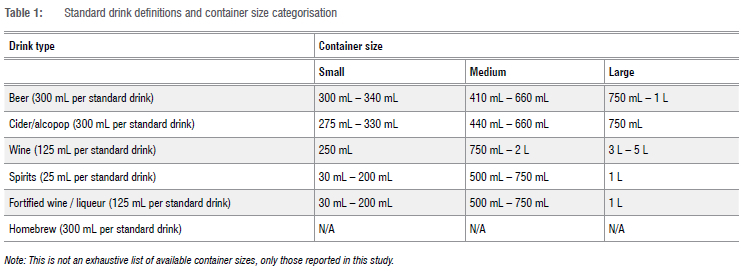
A standard drink in South Africa is defined as 11-12 g of pure ethanol. However, given the variation in alcohol content of the various drinks reported, and because the goal of the interview was to determine the risk of prenatal alcohol exposure, the calculations were simplified for ease of administration. For beer, one standard drink was defined as 300 mL, but containers up to 330 mL were also classified as one standard drink in this study. For all ciders, wine coolers and alcopops (all referred to as cider/alcopop in this study), one standard drink was defined as 300 mL; containers of 275-330 mL were also counted as one standard drink in this study. All wine was calculated as 125 mL per standard drink, as were all fortified wine and liqueurs (although these generally have a higher alcohol content). A standard drink of spirits was defined as 25 mL. Home-brewed beer (homebrew) was treated the same as beer (300 mL per standard drink) to account for the variation in alcohol content and rather to overestimate than underestimate risk. The alcohol content for home-brewed traditional South African beer (umqombothi) is generally 2-3.5% by volume, depending on fermentation time and brewing process.111213Table 1 for an overview of the calculations.
Container size calculation
Participants reported multiple container sizes for the various types of drinks. Not all brands reported had the same container sizes, especially among ciders, wine coolers and alcopops. For the analyses, the container size was collapsed into three categories: small, medium and large. Homebrew containers were not included as there were no standard sizes, with reports varying from "glasses" to "20 L". See Table 1 for the grouping of containers.
Alcohol price per standard unit
To allow for a comparison of alcohol prices per standard unit in the current study, a community worker conducted an informal survey in June 2025 to estimate the difference in price for one standard unit of alcohol based on container size. To do this, she went to four different liquor stores spread over one of the study sites and noted the difference in price for specific brands between the various sizes available for purchase. As these data were not available for the period of enrolment, the focus of the analysis was on the comparative price, as this was expected to remain relatively consistent, especially in the short time elapsed between the study data collection and the informal survey.
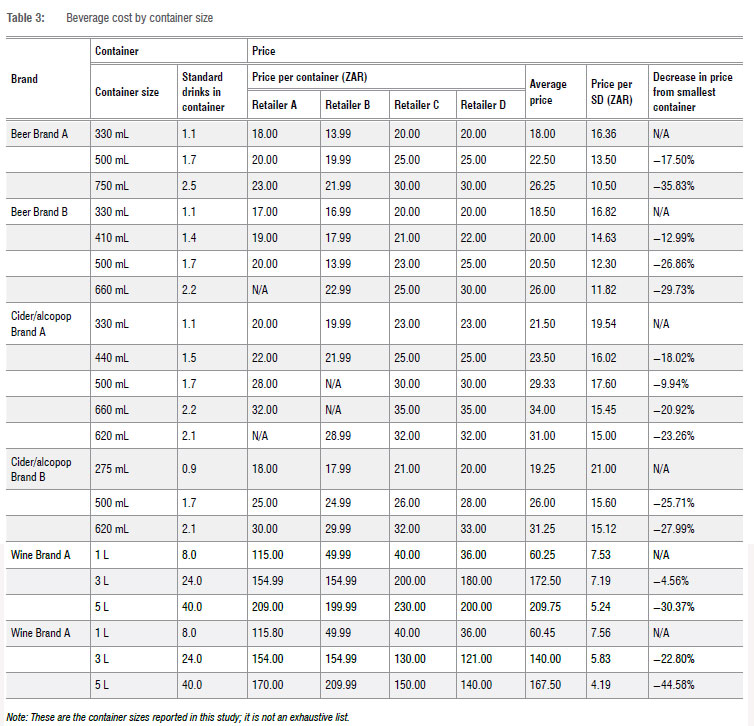
The number of units per container was calculated by dividing the container size by the number of millilitres per standard drink size as above; the unit price was then calculated by dividing the container price by the number of standard drinks in the container. Prices are stated in South African rands (ZAR); an exchange rate of USD 1.00 = ZAR 18.00 was applicable at the time. The lack of contemporary pricing data or trends in pricing was a limitation from the outset, as was relying on one study site to provide an estimate for all five. It had been anecdotally reported to community workers by participants in the HMHB programme that it was less expensive to purchase larger containers and that this influenced purchasing decisions. The informal survey was an attempt to get more objective confirmation of this perception, as no qualitative data or corroboration could be obtained.
Data analysis
Data were captured and managed using REDCap electronic data capture tools1415
Results
Alcohol use
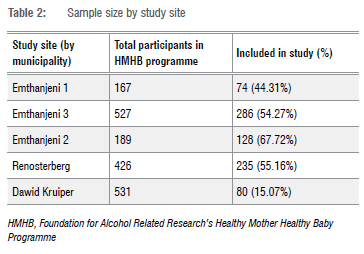
Of the 1840 clients in the HMHB, 802 (43.59%) reported alcohol use in the 3 months before enrolling in the HMHB; see Table 2 for a breakdown by study site. Of these clients, 520 (64.8%) reported using only one type of alcohol, 238 (29.68%) reported two, and 29 (3.62%) reported three. On average, alcohol was shared with three people (M = 3.14, SD 2.45). Only 65 clients (8.10%) reported drinking alone, while two groups as large as 19 people sharing alcohol were reported. The mean number of standard drinks reported was 7.51 (SD = 5.23), with a minimum of 0.6 and a maximum of 36.
Alcohol unit price
For the two brands of beer, two brands of cider and two brands of wine, the cost per standard drink was ZAR 12.80 (SD = 5.19) on average, with a minimum price of ZAR 4.19 and a maximum of ZAR 21.00. Purchasing the largest container size was 31.5% cheaper per standard drink (SD = 7.98). Wine was cheaper per standard drink than beer and cider/alcopop, regardless of the wine (see Table 3 for details). No cost information was available for homebrews.
Alcohol type and container size
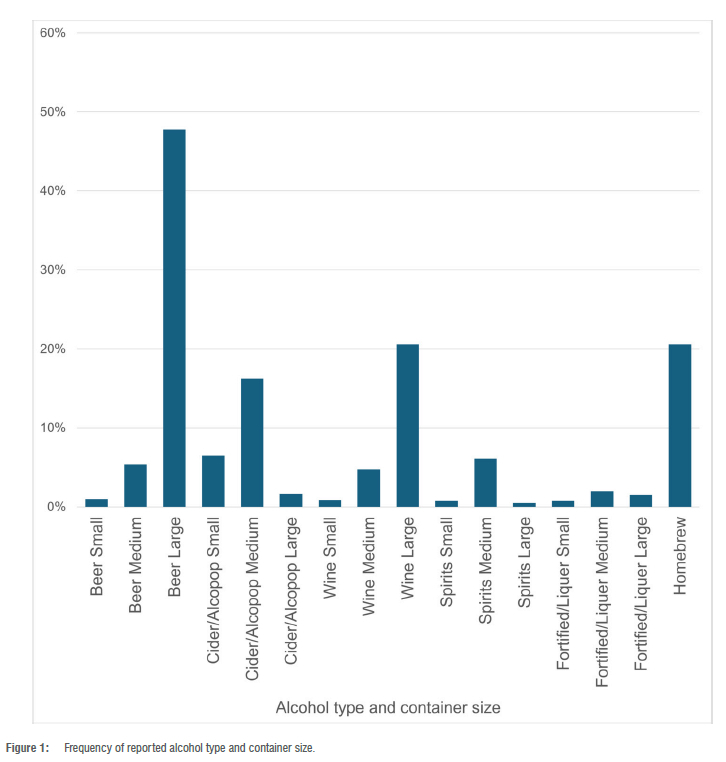
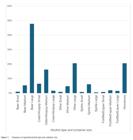
Beer consumption was reported most frequently, with 434 (54.11%) participants drinking beer, 208 (25.94%) wine, 186 (23.19%) cider/alcopop, 165 (20.57%) home-brewed alcohol, 62 (7.73%) spirits and 34 (4.24%) fortified wine or liqueur. In terms of container size, all types of alcohol were typically purchased in medium or large containers. Beer and wine were predominantly purchased in the largest available size available (Figure 1).
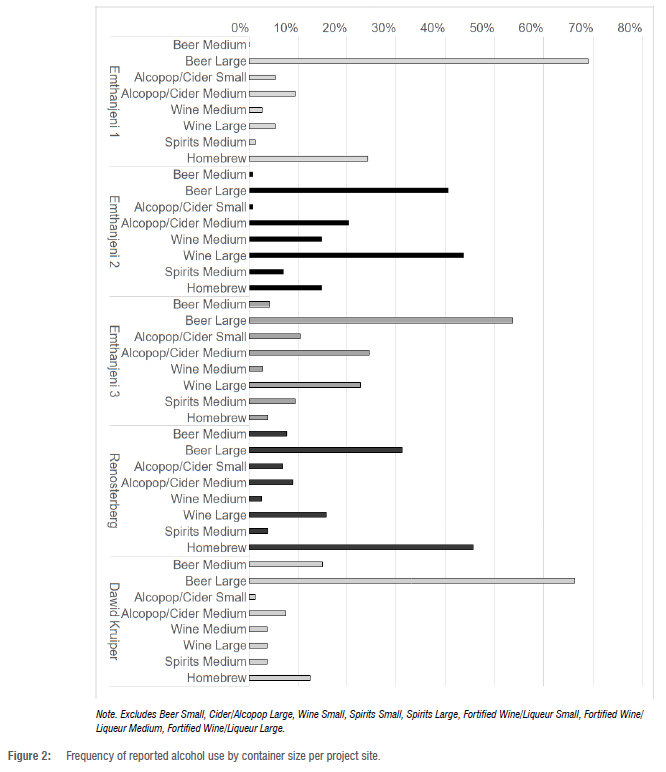
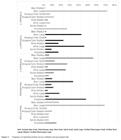
When comparing the type of alcohol and container size per project site, categories reported by fewer than 16 participants (2%) were excluded from the graph (Figure 2). Beer in large containers was the most often reported in Emthanjeni 1, Emthanjeni 3 and Dawid Kruiper. In Emthanjeni 2, the most often reported drink was wine in large containers. It was only in Renosterberg that the most often reported drink was not commercially produced, with the most frequently reported drink being homebrew.
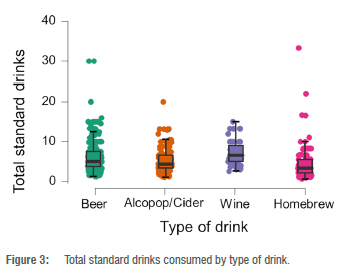
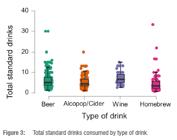
Spirits and fortified wine/liqueur were not included in the ANOVA on alcohol type and total alcohol consumed, as only three participants reported drinking only spirits and only five reported drinking only fortified wine or liqueur. With the remaining alcohol types, there was a significant effect (F(3,517) = 8.347, p < .001). A post-hoc Tukey's honestly significant difference test found a significant difference (p < .001) in total standard drinks between participants reporting beer consumption (M = 6.343, SD = 4.078) and those reporting homebrew consumption (M = 4.512, SD = 4.456). There was also a significant difference (p = .034) between those reporting alcopop/cider (M = 5.597, SD = 3.208) consumption and those reporting wine (M = 7.303, SD = 2.911; p = .034) consumption, as well as between those reporting wine (M = 7.303, SD = 2.911) and those reporting homebrew (M = 4.512, SD = 4.456) consumption (p < .001). See Figure 3 for an overview of the distribution of total drinks by alcohol type. The highest average standard units consumed was for wine (M = 7.303, SD = 2.911), then beer (M = 6.343, SD = 4.078), alcopop/cider (M = 5.597, SD = 3.208) and finally homebrew (M = 4.512, SD = 4.456).
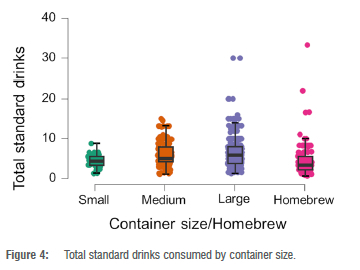
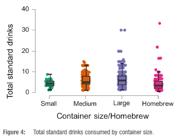
The ANOVA comparing the effect of container size or homebrew use to total alcohol consumed found a significant effect (F(3,520) = 9.699, p < .001). A post-hoc Tukey's honestly significant difference test found a significant difference (p = .007) in total standard drinks between participants reporting small container sizes (M = 4.351, SD = 1.881) and those reporting large containers (M = 6.649, SD = 4.060). There was also a significant difference (p = .02) between those reporting medium container size (M = 6.027, SD = 3.166) and those reporting homebrew (M = 4.512, SD = 4.456), as well as between those reporting large containers (M = 6.649, SD = 4.060) and those reporting homebrew (M = 4.512, SD = 4.456) (p < .001). See Figure 4 for an overview of the distribution of total drinks by container size.
FASD Knowledge
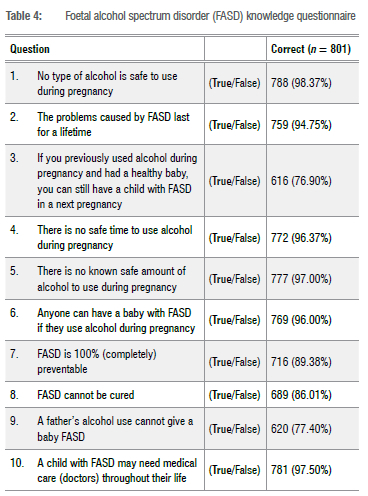
On the 10-item FASD knowledge questionnaire, completed before starting the HMHB Programme, the average score was 9.09 (SD = 1.17). The only questions that less than 90% of participants got correct were about being able to have a child with FASD after one child is born healthy, whether FASD is preventable, whether FASD can be cured, and whether a father's drinking can cause FASD. See Table 4 for the questions and scores.
Discussion
In the total population of participants in the HMHB programme, there was a high prevalence of alcohol use during pregnancy (43.59%), even though there was awareness of the risks of alcohol exposure during pregnancy. The primary drink of choice was commercially produced beer from large containers (≥750 mL), followed by commercially produced wine in large containers (≥3 L) and home-brewed beverages. Drinking from larger containers was associated with drinking more standard drinks per occasion, while purchasing larger containers was significantly cheaper per standard drink compared to buying the smallest containers.
It has long been accepted that universal awareness is a necessary, but not sufficient, part of preventing FASD.161718,19.
Part of the awareness information shared in the area included that any type of alcohol can be harmful during pregnancy, and the participants reported being aware of this on the FASD knowledge questionnaire. This suggests that it is likely that the perceived level of risk of a specific type of alcohol did not play a role in the choice of beverage. It is possible that participants considered what they perceived as relative harm when deciding on alcohol; however, that would have likely been reflected in fewer standard drinks per sitting. This possibility could not be properly investigated using the available data set.
The results of this study also highlight the availability of alcohol, even in more isolated areas. The Emthanjeni and Dawid Kruiper project sites are situated on one of the major highways in South Africa, while Renosterberg is more isolated. Instead of the remoteness being associated with a reduction in alcohol use, the participants just turned to a different and clearly readily available source of alcohol. It is therefore not surprising that it is the only site where home-brewed beverages dominated alcohol consumption. This highlights that supply reduction on its own may not eliminate the risk of prenatal alcohol exposure, which is supported by the findings on the COVID-19 alcohol ban in South Africa.20
Commercially produced alcohol was associated with the highest number of standard drinks used. Wine, which was generally purchased in containers equal to or larger than 3 L, was associated with the highest number of standard drinks. Participants might think they are choosing to have "one drink" but pour significantly more than one standard drink, given the difficulty estimating the volume of one standard drink.9,10
In terms of commercially produced alcohol, the decrease in price per standard unit of alcohol as container size increases, and the association between container size and the number of standard drinks consumed, is concerning. Participants are incentivised to buy larger containers due to the price per standard drink; alcohol use is inversely correlated with price8
Although it is more expensive to buy a 750 mL or a 1 L container compared to a 300 mL container, the larger containers are cheaper per standard drink, and, in this population, participants do not drink alone, therefore sharing the cost among multiple people. This means that a standard drink volume is available for purchase at a lower price, even if the large container on its own is more expensive than buying a smaller one. The decrease in price per standard drink is also significant across all beverages evaluated. This suggests that the price per standard unit of alcohol plays a role in beverage choice.
Minimum unit pricing for alcohol could disincentivise the purchasing of larger containers, and can have a positive impact on overall alcohol consumption.21,22 When not drinking from standard sized containers and using pouring into glasses, the actual volume of alcohol poured is generally underestimated, with one reported drink containing more than one standard unit of alcohol.9
Given the limited nature of the data set, no conclusion could be drawn about the impact of participant demographics. It would have been of value to see if certain age groups or ethnicities were more likely to drink homebrew, for example. Combined with measurement bias, the lack of this information leaves significant gaps in the study. There are, however, preliminary conclusions that can be drawn.
The findings of this study highlight the need for a multifaceted approach to FASD prevention which must include demand- and supply-side interventions. Awareness is not enough and effective campaigns need to be direct and focused on harm reduction. Further research is needed into the impact of advertising targeting women, and whether current awareness campaigns are effective and fit for purpose. The availability of inexpensive alcohol in larger containers seems to be a serious risk factor for FASD. This paper supports research into the use of minimum unit pricing or other legislative measures to decrease supply.21
Finally, the study shows that alcohol use during pregnancy is also a community concern. Alcohol use occurs in groups; therefore, interventions targeting drinking norms in communities can support abstinence during pregnancy. Changing the narrative from a personal to a community responsibility can reduce stigma and create a more supportive environment for women to make healthier choices.
Limitations
The most significant limitation of this study was the nature of the data available for analysis. As the data had been de-identified, which included removing demographic details including age and ethnicity, only a broad picture of alcohol use could be established, with no further demographic breakdown possible. Limitations also include reliance on self-reports of alcohol use using a non-validated measurement. Participants may not have correctly recalled or mentioned all the alcohol they used and may have under-reported for fear of stigmatisation. It is also possible that the number of standard drinks consumed by participants reporting homebrew was overestimated given the variable alcohol content; however, this would have understated the relationship between alcohol use and container size, not overestimated it.
The study could also not factor in the additional risks posed by homebrew, which can include food-borne illnesses1123,24 Given how often drinking homebrew was reported, this is a significant limitation. The lack of data on the actual alcohol content of homebrew in the study communities is also a limitation. The validity of standard drink analyses relies on the alcohol content of homebrew being equal to, or less than, beer, which could not be assessed.
The calculation of cost per standard drink should be generalised with caution, as the survey was done on only six different beverages at one study site. These were, however, beverages that were reported by the brand in the intake interview. It is likely that the decrease in price based on container size would generally hold in other areas. It was not possible to compare the prices of home-brewed alcohol to those of commercially produced alcohol.
The FASD knowledge questionnaire was not originally used as a research tool but rather as a counselling tool, and may overestimate the level of awareness of FASD in the communities, especially in communities where less intervention and awareness work has been done. It is unlikely that such a high average level of knowledge would be found if there was no awareness that alcohol poses a risk during pregnancy.
Conclusion
Alcohol exposure during pregnancy remains a significant concern, even in areas with a high level of awareness of the risks. In this study, women tended to drink from larger containers, and the alcohol was generally commercially produced. While homebrew is of concern as well, this paper shows that there is a serious need for policy changes to address the supply and demand of alcohol in large containers at low prices.
This paper is limited by the retrospective nature of the data set, the lack of demographic variables, and methodological limitations including using non-validated measures of alcohol use and the use of an informal survey. Further study is required to expand on these findings and to draw firm conclusions. However, this paper serves to highlight concerns and to suggest proactive policy decisions.
Funding
Funding for this study was received from Scatec ASA.
Data availability
The data supporting the results of this study have not been made available by the authors in any format.
Declarations
The Foundation for Alcohol Related Research receives funding from various entities in the public sector, including Aware.org, an alcohol industry funded NPO. Funding for the studies reported in this paper was received from Scatec ASA, a renewable energy company. The funders had no input into the study design or implementation, nor input or oversight regarding this current paper. No data or intellectual property rights are shared with the funders. We have no AI or LLM use to declare. Ethical approval was obtained from Stellenbosch University's Health Research Ethics Committee (reference number: N09/03/080).
Authors' contributions
J.G.L.: Conceptualisation, methodology, sample analysis, formal analysis, validation, data curation, writing - original draft, writing - review and editing. M.B.: Conceptualisation, investigation, validation, data curation, project administration, writing - review and editing. D.L.V.: Conceptualisation, project leadership. L.O.: Conceptualisation, writing - review and editing, funding acquisition, project leadership.
Acknowledgements
We acknowledge the community workers and project coordinators at the Foundation for Alcohol Related Research.
References
-
1. Popova S, Charness ME, Burd L, Crawford A, Hoyme HE, Mukherjee RAS, et al. Fetal alcohol spectrum disorders. Nat Rev Dis Primers. 2023;9(1), Art. #11. https://doi.org/10.1038/s41572-023-00420-x
» https://doi.org/10.1038/s41572-023-00420-x -
2. Popova S, Lange S, Probst C, Gmel G, Rehm J. Estimation of national, regional, and global prevalence of alcohol use during pregnancy and fetal alcohol syndrome: A systematic review and meta-analysis. Lancet Glob Health. 2017;5(3):e290-e299. https://doi.org/10.1016/S2214-109X(17)30021-9
» https://doi.org/10.1016/S2214-109X(17)30021-9 -
3. Lange S, Probst C, Gmel G, Rehm J, Burd L, Popova S. Global prevalence of fetal alcohol spectrum disorder among children and youth: A systematic review and meta-analysis. JAMA Pediatr. 2017;171(10):948-956. https://doi.org/10.1001/jamapediatrics.2017.1919
» https://doi.org/10.1001/jamapediatrics.2017.1919 -
4. Louw JG, Broodryk M, White L, Acker D, Viljoen DL, Olivier L. A multi-year, multi-site study of the prevalence of fetal alcohol syndrome in South Africa. Alcohol Clin Exp Res. 2024;48(5):867-879. https://doi.org/10.1111/acer.15306
» https://doi.org/10.1111/acer.15306 -
5. May PA, De Vries MM, Marais A, Kalberg WO, Buckley D, Hasken JM, et al. The prevalence of fetal alcohol spectrum disorders in rural communities in South Africa: A third regional sample of child characteristics and maternal risk factors. Alcohol Clin Exp Res. 2022;46(10):1819-1836. https://doi.org/10.1111/acer.14922
» https://doi.org/10.1111/acer.14922 - 6. Adusi-Poku Y, Bonney AA, Antwi GD. Where, when and what type of alcohol do pregnant women drink? Ghana Med J. 2013;47(1):35-39.
-
7. Colvin L, Payne J, Parsons D, Kurinczuk JJ, Bower C. Alcohol consumption during pregnancy in nonindigenous West Australian women. Alcohol Clin Exp Res. 2007;31(2):276-284. https://doi.org/10.1111/j.1530-0277.2006.00303.x
» https://doi.org/10.1111/j.1530-0277.2006.00303.x -
8. Wagenaar AC, Salois MJ, Komro KA. Effects of beverage alcohol price and tax levels on drinking: A meta-analysis of 1003 estimates from 112 studies. Addiction. 2009;104(2):179-190. https://doi.org/10.1111/j.1360-0443.2008.02438.x
» https://doi.org/10.1111/j.1360-0443.2008.02438.x -
9. Witbrodt J, Kaskutas LA, Korcha R, Armstrong MA. Under-estimation of alcohol consumption among women at-risk for drinking during pregnancy. Contemp Drug Probl. 2008;35(1):37-58. https://doi.org/10.1177/009145090803500103
» https://doi.org/10.1177/009145090803500103 -
10. Mantzari E, Marteau TM. Impact of sizes of servings, glasses and bottles on alcohol consumption: A narrative review. Nutrients. 2022;14(20), Art. #4244. https://doi.org/10.3390/nu14204244
» https://doi.org/10.3390/nu14204244 -
11. Hlangwani E, Adebiyi JA, Doorsamy W, Adebo OA. Processing, characteristics and composition of umqombothi (a South African traditional beer). Processes. 2020;8(11), Art. #1451. https://doi.org/10.3390/pr8111451
» https://doi.org/10.3390/pr8111451 -
12. Tsenang M, Pheko T, Mokgadi J, Phokedi GN. A validated liquid-liquid extraction method for the quantitative analysis of ethanol in the different types of home-brewed alcoholic beverages of Botswana using gas chromatography flame ionization detector. Chem Afr. 2023;6(1):417-427. https://doi.org/10.1007/s42250-022-00520-3
» https://doi.org/10.1007/s42250-022-00520-3 -
13. Pujiati, Sulistyarsi A, Prafitasari NF. The quality test of fermented ginger drink (ginger ale) produced from various types of indonesian ginger. In: Handhika J, Hatmawan AA, Mayasari T, Nugraha DA, Pradana LN, Rudyanto HE, editors. Proceedings of the 2nd International Conference on Education and Technology (ICETECH 2021); 2021 August 25-26; Madiun, Indonesia. Paris: Atlantis Press; 2022. p. 152-159. https://doi.org/10.2991/assehr.k.220103.023
» https://doi.org/10.2991/assehr.k.220103.023 -
14. Harris PA, Taylor R, Minor BL, Elliott V, Fernandez M, O'Neal L, et al. The REDCap consortium: Building an international community of software platform partners. J Biomed Inform. 2019;95, Art. #103208. https://doi.org/10.1016/j.jbi.2019.103208
» https://doi.org/10.1016/j.jbi.2019.103208 -
15. Love J, Selker R, Marsman M, Jamil T, Dropmann D, Verhagen J, et al. JASP: Graphical statistical software for common statistical designs. J Stat Softw. 2019;88(2):1-17. https://doi.org/10.18637/jss.v088.i02
» https://doi.org/10.18637/jss.v088.i02 - 16. Institute of Medicine. Fetal alcohol syndrome: Diagnosis, epidemiology, prevention, and treatment. Washington, DC: Institute of Medicine; 1996.
-
17. Noel JK, Sammartino CJ, Rosenthal SR. Exposure to digital alcohol marketing and alcohol use: A systematic review. J Stud Alcohol Drugs Suppl. 2020;2020(s19):57-67. https://doi.org/10.15288/jsads.2020.s19.57
» https://doi.org/10.15288/jsads.2020.s19.57 -
18. Atkinson AM, Meadows BR, Emslie C, Lyons A, Sumnall HR. 'Pretty in Pink' and 'Girl Power': An analysis of the targeting and representation of women in alcohol brand marketing on Facebook and Instagram. Int J Drug Policy. 2022;101, Art. #103547. https://doi.org/10.1016/j.drugpo.2021.103547
» https://doi.org/10.1016/j.drugpo.2021.103547 -
19. Lyons AC, Kersey K, Emslie C, Dimova E, Burrows A. Digital alcohol marketing and gender: A narrative synthesis. Drug Alcohol Rev. 2024;43(6):1361-1387. https://doi.org/10.1111/dar.13849
» https://doi.org/10.1111/dar.13849 -
20. Theron M, Swart R, Londani M, Parry C, Petersen Williams P, Harker N. Did COVID-19-related alcohol sales restrictions reduce alcohol consumption? Findings from a national online survey in South Africa. Int J Environ Res Public Health. 2022;19(4), Art. #2422. https://doi.org/10.3390/ijerph19042422
» https://doi.org/10.3390/ijerph19042422 -
21. Van Walbeek C, Chelwa G. The case for minimum unit prices on alcohol in South Africa. S Afr Med J. 2021;111(7):680-684. https://doi.org/10.7196/SAMJ.2021.v111i7.15430
» https://doi.org/10.7196/SAMJ.2021.v111i7.15430 - 22. Giles L, Mackay D, Richardson E, Lewsey J, Beeston C, Robinson M. Evaluating the impact of minimum unit pricing (MUP) on sales-based alcohol consumption in Scotland at three years post-implementation. Edinburgh: Public Health Scotland; 2022.
-
23. Makhubele JC. Hazardous substances in homemade alcohol in rural areas of Limpopo Province, Republic of South Africa: A public health concern. Stud Ethno-Med. 2017;11(1):114-122. https://doi.org/10.31901/24566772.2017/11.01.17
» https://doi.org/10.31901/24566772.2017/11.01.17 - 24. Londani M, Morojele NK, Nel E, Parry CDH. Manufacturing homemade alcohol in the city of Tshwane, South Africa. Afr J Drug Alcohol Stud. 2019;18(1):43-54.

Revised: 21 May 2026
Accepted: 02 June 2026
Published: 29 Sep. 2026
** Current: Research in the Community, Arts and Culture Development Department, City of Cape Town, Cape Town, South Africa
Editor: Vusi Gumede
Funding: Scatec ASA