The search for Pleistocene lion tracks with Indigenous San trackers on South Africa's coast
Abstract
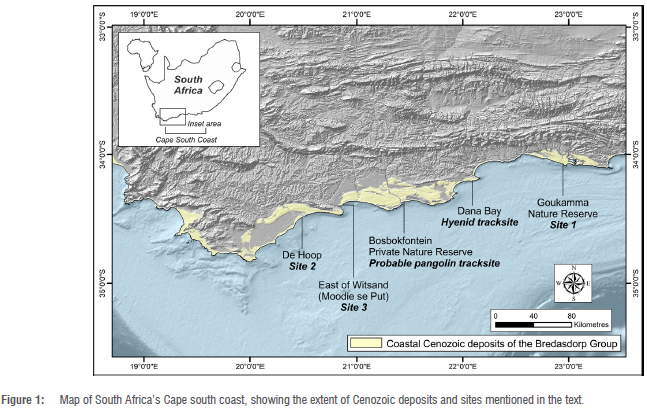
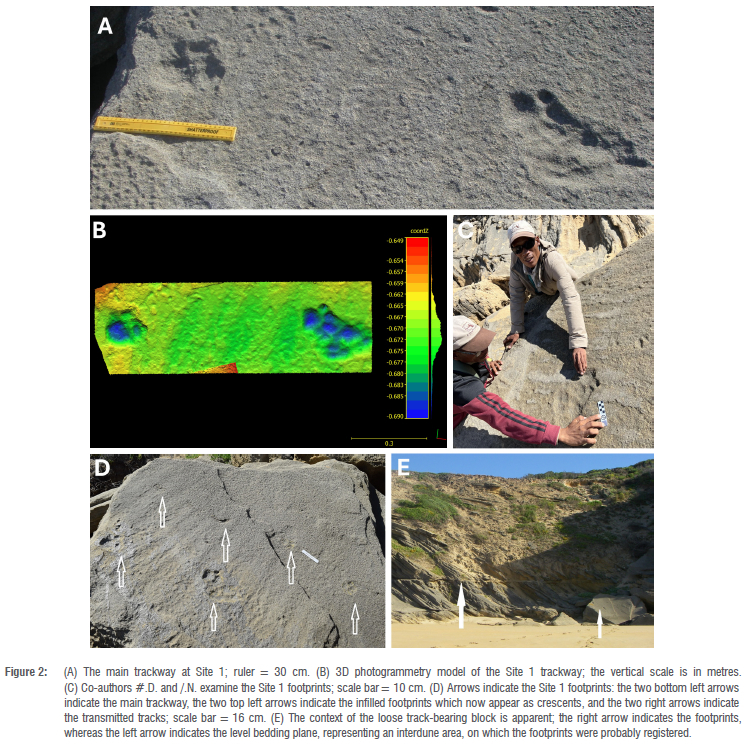
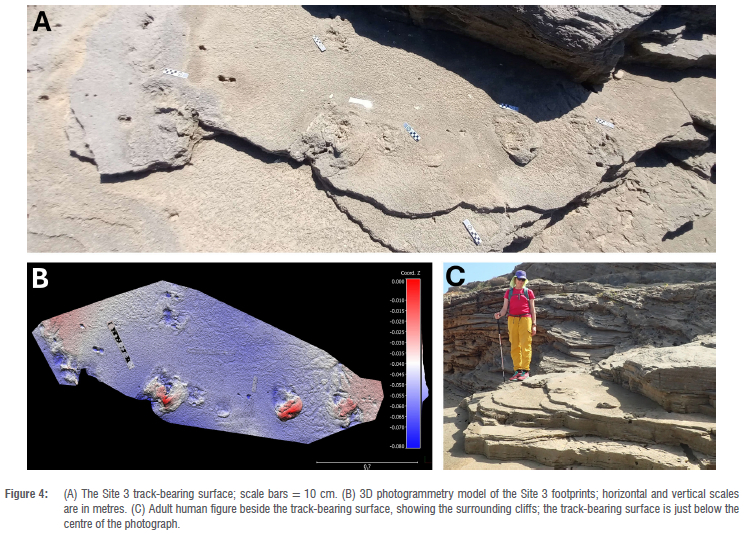
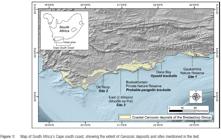
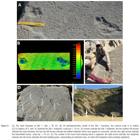
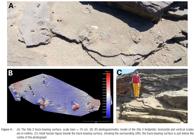
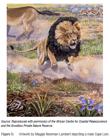
The African record of fossil large felid tracks is sparse. Three Pleistocene sites (one previously reported and two described here for the first time) add to this record, and provide the only reported fossilised probable lion tracksites in southern Africa. All three sites are preserved on aeolianite surfaces on South Africa's Cape south coast. Trackmaker and trackway identification and interpretation were made as a collaboration between Western-trained scientists and Ju/'hoansi San Master Trackers from Namibia. The value of the integration of Western science and Indigenous knowledge and expertise has thus been demonstrated, and has led to a deeper understanding of the trackmakers and their behaviours. SIGNIFICANCE: • Three African large felid (probable lion) fossil tracksites have been identified on South Africa's Cape south coast. • All three sites date to the Pleistocene epoch. • These tracksites add to a sparse African record of fossilised large felid footprints. • Trackmaker identifications and interpretations were made as a collaboration between Western scientists and Ju/'hoansi San Master Trackers from northeastern Namibia, which led to refined identifications and behavioural interpretations.
lion tracks; aeolianites; Cape south coast; Pleistocene; Indigenous San trackers
 Thumbnail
 Thumbnail
 Thumbnail
 Thumbnail