Access and trust in scholarly communication and scholarly publishing
Elizabeth Le Roux
Department of Information Science. University of Pretoria, Pretoria, South Africa. Email:
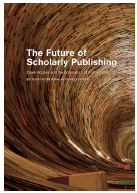
Book Title: The future of scholarly publishing Open access and the economics of digitisation
Editors: Peter Welngart and Niels Taubert (translated by Marc Welngart and Charles Heard)
ISBN: 9781928331537 (softcover, 277 pp. ZAR200); 9781928331544 (ebook. 277 pp. open access)
Publisher: African Minds, Cape Town, South Africa
Published: 2017
"It is obvious," this excellent collection begins, that scholarly communication and scholarly publishing are changing, that digital technology is having a huge impact on how we produce, share and consume knowledge, and that current systems are far from ideal. What is less obvious is the complexity of this system, the consequences of its rapid growth, and how to make sense of the multiple role-players and dynamics affecting the context. The value of this book lies in its insistence on complexity and nuance, to a large extent based on an analytical heuristic that manages to be both comprehensive and rooted in real contexts at the same time.
The analytical framework that the editors of the book propose consists of four key components: the increasing digitisation of scholarly communications and publishing; the growing importance of profits and economic rationales for publishing; the use of metrics and other quantifiable indicators to measure publication outputs and their impact; and the "medialization" of research, or the importance of the public understanding of science within a context in which science has lost public trust. This framework is very useful for considering how publishing has changed, but also how universities, academic libraries, scholars, and the nature and objectives of research itself have changed. Its key strength, I would argue, is that it brings into conversation several debates that usually happen separately considers how they interact, and foregrounds questions such as infrastructure, which tend to be seen as subsidiary The well-rehearsed structural problems and crises of scholarly publication, including shrinking library budgets, the politics of access, and the erosion of trust in self-regulating mechanisms like peer review, are given a fresh spin when examined through this conceptual lens.
Issues of access and trust underlie most of the contributions to the book. Digital technologies have created possibilities for making scholarship available to a wider audience than could previously have been imagined. The contributions make a compelling case for the importance of opening up access to research data and results. At the same time, the treatment of open access is highly nuanced and built on detailed case studies and extensive data collected from interviews and policy documents. Access is situated within the results of consultative meetings on policy and open access mandates, discipline-specific and highly divergent views on the value of and ways of working with open access, and evolving models that go beyond the established green and gold routes. The hoped-for economic efficiency and other benefits of open access are interrogated, as well as the effects (both positive and unintended) on scholars' publishing behaviour. There is still a refreshing wariness of technological optimism, and of the potential risks of relying on technology companies pursuing their own agendas and profits. More than one chapter points out that the digital is not neutral; it can be affected by changes in software or hardware, business strategy laws, political systems and ethical mores - with potentially far-reaching consequences for scholarship.
Chapters consider a wide range of role-players, including scholars, universities, funders and policymakers, academic libraries, and publishers. As a scholar of publishing studies, I am always alarmed whenever discussions on scholarly communication suggest that publishers' role in this ecosystem should be weakened (as one of the chapters in this collection does). Part of the reason that scholarly publishers tend to be criticised or even dismissed in this way is that they are regarded as support or service institutions, rather than as an integral part of the scholarly communications value chain. With its attention to questions of infrastructure and its insistence on the reality that digitisation is neither free nor cheap, this book manages to avoid some of the more simplistic views that criticise publishers' business models without proposing sustainable alternatives or considering the importance of a plurality of models. Moreover, the persistence of print and the cost of parallel publishing complicates the view that digital technology has completely overturned existing operations and procedures. Publishers' perspectives are included in several chapters, highlighting their investment in digital infrastructures for scholarly communications (including core issues of metadata, rights management and production), their part in archiving, and their differential policies on open access. Legal matters and copyright are also relevant perspectives here, covered in separate chapters in the collection, and give food for thought in the current debates on the role of generative Al and text mining. As is discussed, in the absence of over-arching international law, a single global guideline is impractical and unachievable, but pragmatic solutions are essential as we grapple with these challenges and possibilities.
The collection has some limitations, although it is a thought-provoking contribution to our understanding of scholarly publishing. While the chapters aim to be as diverse as possible, considering different disciplinary approaches and the role of different stakeholders, the focus falls more heavily on journals rather than monographs, and on publicly funded research. Inevitably too, the collection focuses on the German and European experiences, but a special effort is made to show how the challenges and potential solutions are applicable in many contexts globally The point is made that local conditions are still relevant, even in a global and primarily digital environment. It is clear that the current structure is a hierarchy in which the larger publishers, well-funded institutions and established researchers gain the most from digitisation and open access. This analysis could be extended in the South African domain by including our particular situation in the Global South, taking into account the uneven power dynamics in output, visibility and finances in scholarly communications. The funding situation for science and technology is vastly different in the South African context. In addition, in a smaller context, the role of publishers should be reconsidered -as important stakeholders in producing and disseminating locally relevant research and publications.
An English translation of the work, originally published in German, is thus a relevant and useful contribution to debates on scholarly publishing, in South Africa as well as elsewhere.
Published: 07 November 2024