MRI evaluation of the anterior cruciate ligament graft post-arthroscopic reconstruction - A non-invasive comprehensive assessment
Abstract
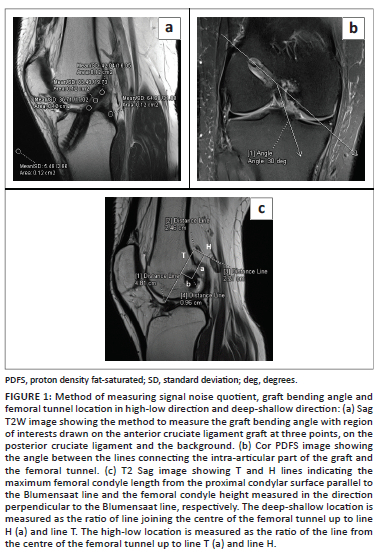
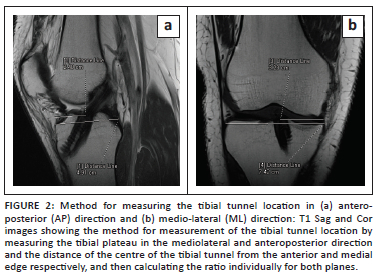
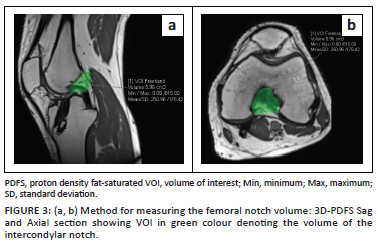
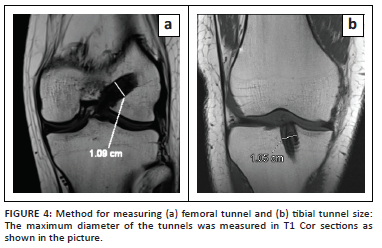
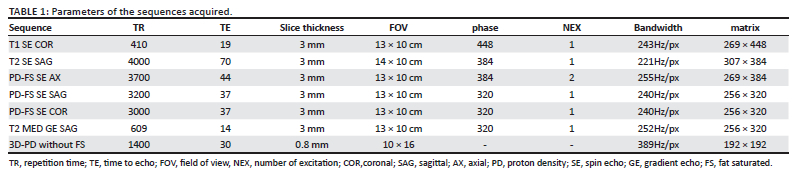
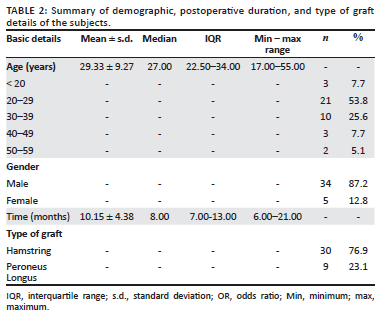
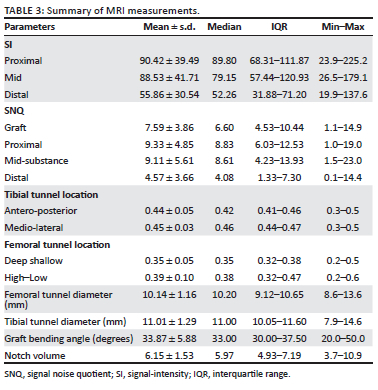
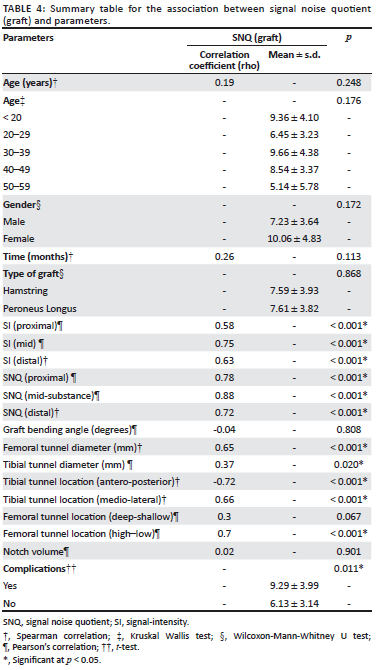
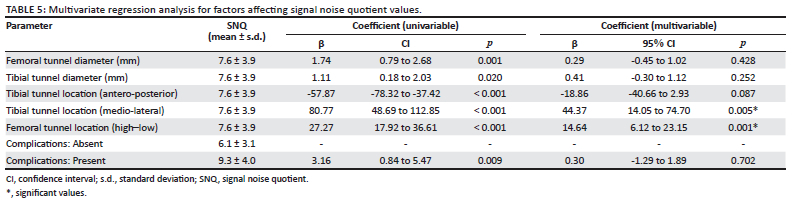
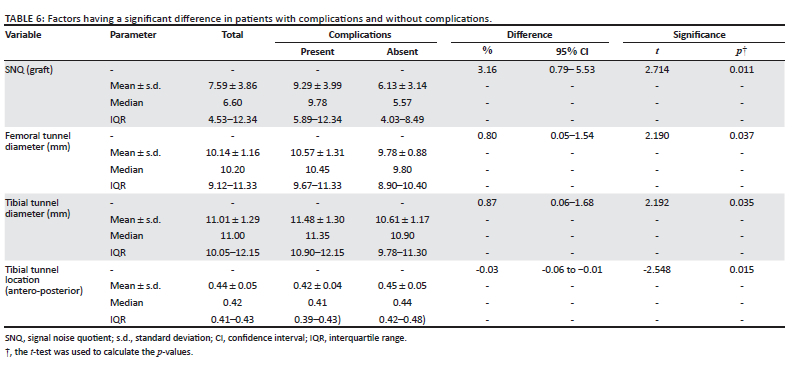
BACKGROUND: Anterior Cruciate Ligament (ACL) reconstruction is a common orthopaedic procedure, the success of which is ultimately affected by the graft healing process. Quantification of graft healing can be performed non-invasively, using signal-intensity (SI) or signal noise quotient (SNQ) on MRI, however, the variable factors affecting graft healing are still being studied OBJECTIVES: To non-invasively evaluate the normal morphology of the ACL graft on MRI and assess factors affecting graft healing post-arthroscopic ACL reconstruction METHOD: A single-centre cross-sectional study was performed using MRI scans for assessment of the ACL graft at 6 months to 2 years post-surgery. Signal noise quotient was correlated with tibial tunnel diameter, femoral tunnel diameter, tibial tunnel location (antero-posterior and medio-lateral), femoral tunnel location (high-low and deep-shallow), graft bending angle (GBA) and notch volume RESULTS: Twenty-four of 42 patients had normal grafts (mean ± standard deviation post-operative time: 10.15 ± 4.38 months). The SNQ levels were highest at the proximal part of the graft. Graft SNQ correlated positively with tibial (p = 0.020) and femoral (p ≤ 0.001) tunnel diameters, tibial tunnel location in the medio-lateral direction (P ≤ 0.001), femoral tunnel location in the high-low direction (p ≤ 0.001) and patients having complications. Graft SNQ correlated negatively with tibial tunnel location in the antero-posterior (AP) direction (p ≤ 0.001). Univariate analysis revealed a significant correlation between SNQ and tibial and femoral tunnel diameter, tibial tunnel location in both AP and medio-lateral directions, femoral tunnel location in high-low direction and patients having complications. Multivariate analysis showed the tibial tunnel location (medio-lateral) and the femoral tunnel location (high-low) as the significant independent factors CONCLUSION: Intraoperative factors, predominantly the positions of the tibial and femoral tunnels, are the major factors affecting graft healing CONTRIBUTION: This study provides greater awareness regarding the factors affecting graft healing, helps establish MRI as an effective non-invasive post-operative imaging modality, and helps surgeons in providing a better individualised approach to surgery
MRI; ACL graft; signal noise quotient; tibial tunnel; femoral tunnel; signal intensity
 Thumbnail
 Thumbnail
 Thumbnail
 Thumbnail